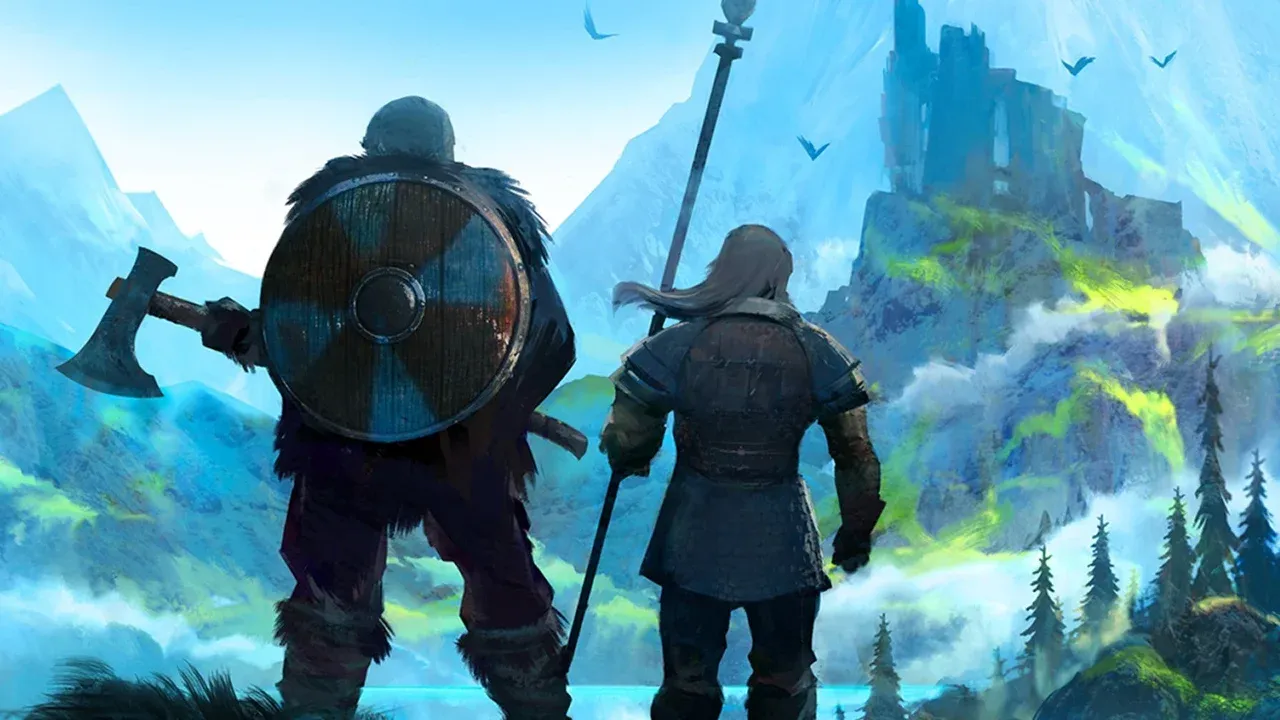
Valheim Review: How a Low-Poly Viking Saga Redefined Survival
Valheim isn't just a game; it's a phenomenon that arrived with the quiet force of a blizzard. In a genre often defined by punishing realism or aimless sandboxes, Iron Gate Studio’s Viking survival saga carved out a new space by masterfully blending exploration, RPG mechanics, and Norse myth into a cohesive whole that feels both epic and intimate. Its staggering commercial success—selling over five million copies while still in Early Access—isn't a fluke, but a testament to a world that captures a specific, powerful fantasy: being a lost warrior forging a legacy in a forgotten realm.
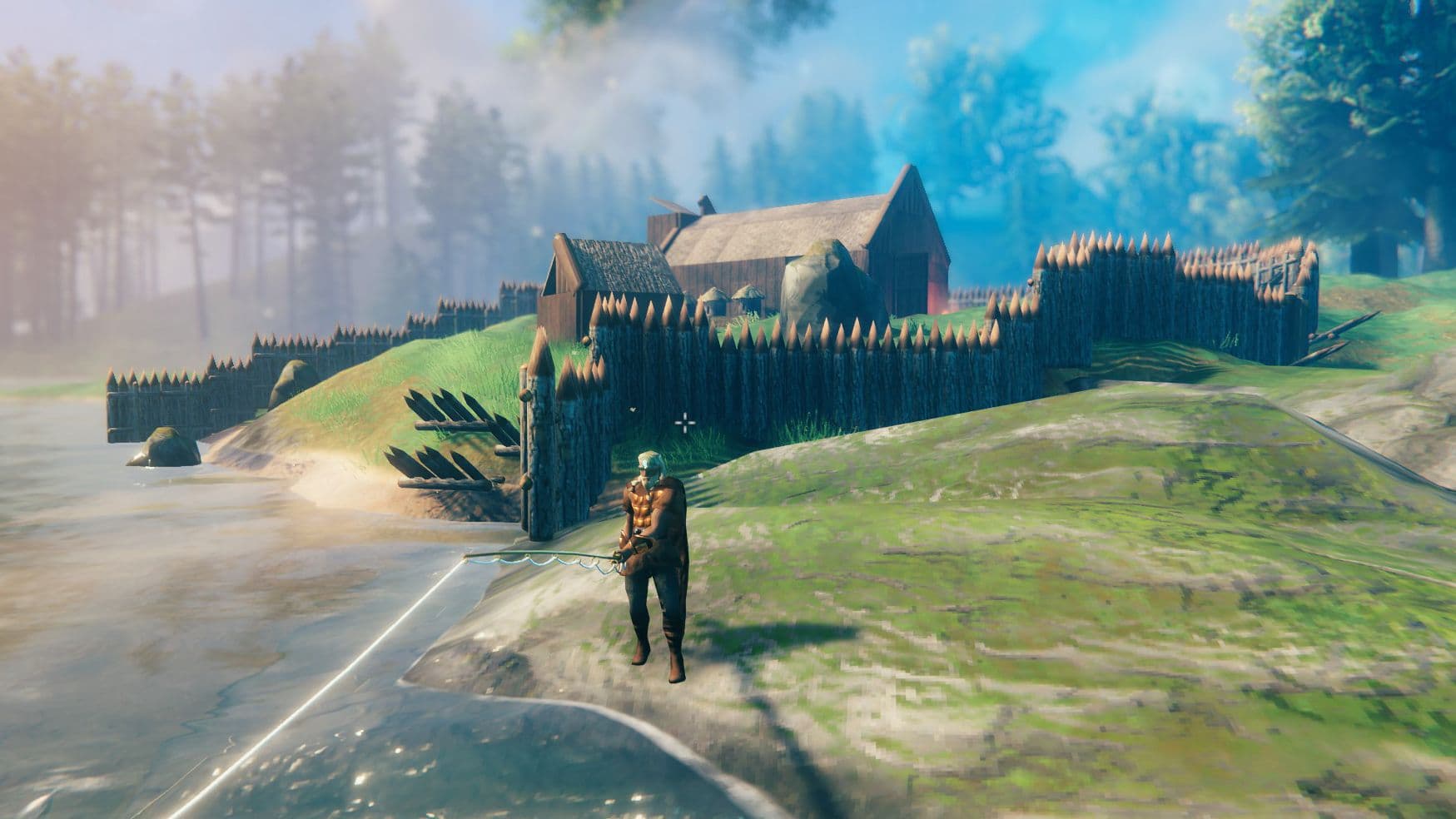
Valheim blends traditional survival mechanics with a unique low-poly aesthetic.
The game’s identity is immediately established through its minimalist narrative delivery. You are a fallen warrior, carried by a crow through a thunderstorm and deposited into the serene yet foreboding Meadows. There’s no lengthy exposition. Instead, red runes scrawled on stones and the cryptic guidance of Hugin the raven whisper of your purpose: to conquer the monstrous Forsaken and prove your worth to Odin. This isn't a story told through cutscenes, but one discovered through environmental clues and player-driven ambition. The sense of mystery is palpable from the first moment, a design choice that places the weight of the saga directly on your shoulders.
What elevates this premise from a simple setup to an immersive atmosphere is the marriage of its low-poly visual charm and a hauntingly beautiful score. The 32x32 pixel textures and blocky models are transformed by AAA-quality lighting—dappled sun through pine forests, the ominous glow of the Swamp, the aurora dancing over mountain peaks. Combined with a melodic, evocative soundtrack that shifts seamlessly from peaceful exploration themes to thunderous combat arrangements, Valheim crafts a sense of awe that belies its technical simplicity.
This is the core magic of Valheim. It understands that atmosphere isn't just about graphical fidelity, but about cohesion and feeling. The world feels ancient and alive, a place where every biome tells a story through its flora, fauna, and weather. You don't just survive here; you slowly earn your place within its mythology, one boss trophy and hand-built longhouse at a time. From its quiet, rune-scattered beginnings to its climactic battles against colossal beasts, Valheim’s opening hours masterfully establish a tone of grounded wonder, proving that the most compelling Viking sagas aren't just watched—they're lived.
The Valheim Gameplay Loop: Progression Gated by Gods
The genius of Valheim isn't that it asks you to punch trees or build a shelter—it's that it gives those familiar tasks a divine purpose. Your progression isn't dictated by a skill tree or experience points, but by the wrath and trophies of the Forsaken, colossal bosses who act as the literal gatekeepers to the next tier of your Viking life. This creates a gameplay loop of profound clarity: you don't just gather resources to survive; you gather them to gear up for a godly confrontation, the victory from which unlocks the very resources you need to do it all again.
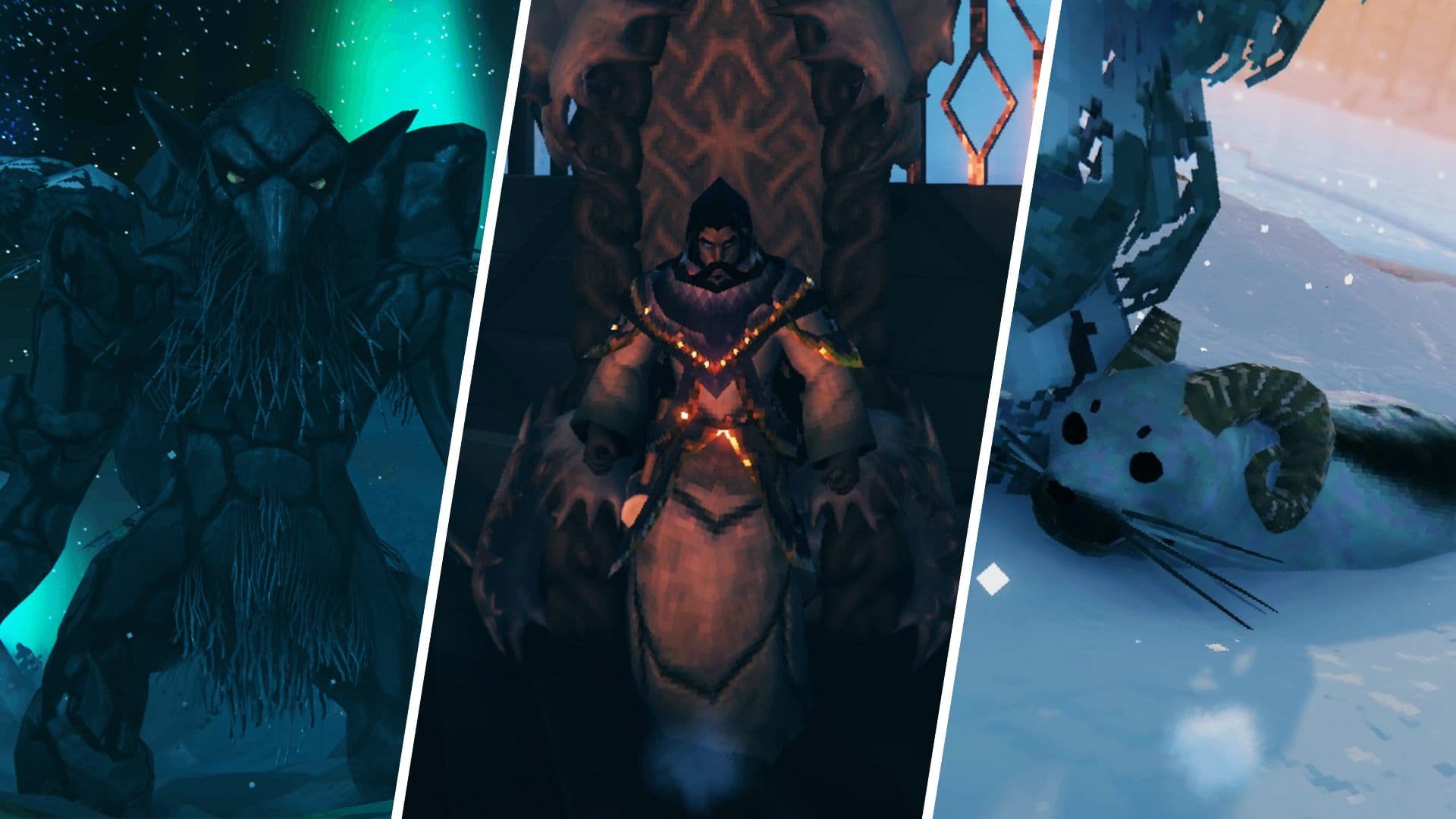
Valheim's biome-based progression introduces increasingly dangerous enemies like the rocky troll.
This boss-gated system is the game’s masterstroke of pacing. You begin in the Meadows, learning by doing. Picking up wood and stone automatically unlocks recipes, a brilliant piece of organic tutorializing that prevents the aimless floundering common to the genre. But the moment you need to graduate from stone to metal, the game presents its first hard gate: you need a pickaxe. To get one, you must hunt deer, craft a bow, and gather leather to summon and defeat Eikthyr the Stag. His antlers become your first pickaxe, unlocking access to tin and copper in the Black Forest. It’s a perfect, self-contained cycle of goal-setting, preparation, and climactic reward that the entire game is built upon.
This structure transforms the world from a sandbox into a layered, hierarchical challenge. Valheim’s biomes are not just aesthetic zones; they are difficulty tiers with escalating demands. The Black Forest introduces trolls and dungeons. The Swamps demand poison resistance mead and confront you with relentless, stamina-draining terrain. The Mountains require frost resistance potions and careful planning to avoid freezing to death. Each new area is a puzzle box you must solve through crafting and exploration before you can even think of tackling its guardian boss.
Where this elegant hierarchy stumbles, however, is in its most notorious transition: the Swamp. This is Valheim’s most punishing difficulty spike, and it’s where many player journeys end. The combination of perpetually drenched, stamina-sapping terrain, constant poison threats, and tough enemies like Draugr in tight, dark crypts creates a uniquely oppressive experience. The frustration is compounded before you unlock portals, forcing long, vulnerable treks back to your base. It’s a biome designed to break you, and while overcoming it is immensely satisfying, the sheer unforgiving nature of its design can feel like a wall rather than a mountain to climb.
For context, this loop is a significant time investment. A focused campaign to defeat all currently available bosses will consume 60-80 hours, and that’s before you’ve built your dream mead hall or fully explored every nook of your procedurally generated world. For completionists and master builders, that number easily balloons to 150-200 hours or more. Valheim respects your time by making every gathering session feel purposeful—you’re always hunting for that next key resource to overcome a divine obstacle—but it also demands it in return. This isn't a weekend Viking fantasy; it's a saga, and you write each chapter with an axe, a hammer, and the favor of the gods you slay.
Survival Mechanics: Why Valheim Feels More Forgiving Than Its Peers
Most survival games treat hunger as a ticking time bomb, a constant nag that punishes you for daring to explore. Valheim flips this script entirely, and in doing so, liberates its players. Here, food isn't a meter to be managed under duress; it’s a reward system that empowers you. You have a base health pool, but eating up to three different food items simultaneously—a handful of berries, a piece of cooked boar meat, a honey treat—actively boosts both your maximum health and stamina for a generous duration. The design intent is brilliant: instead of creating anxiety around scarcity, it encourages mindful consumption and experimentation. You’re not eating to avoid death; you’re feasting to become stronger for the hunt or the boss fight ahead. This transforms the act of gathering ingredients from a chore into a preparatory ritual, a quiet moment of strengthening yourself before stepping back into the wild.
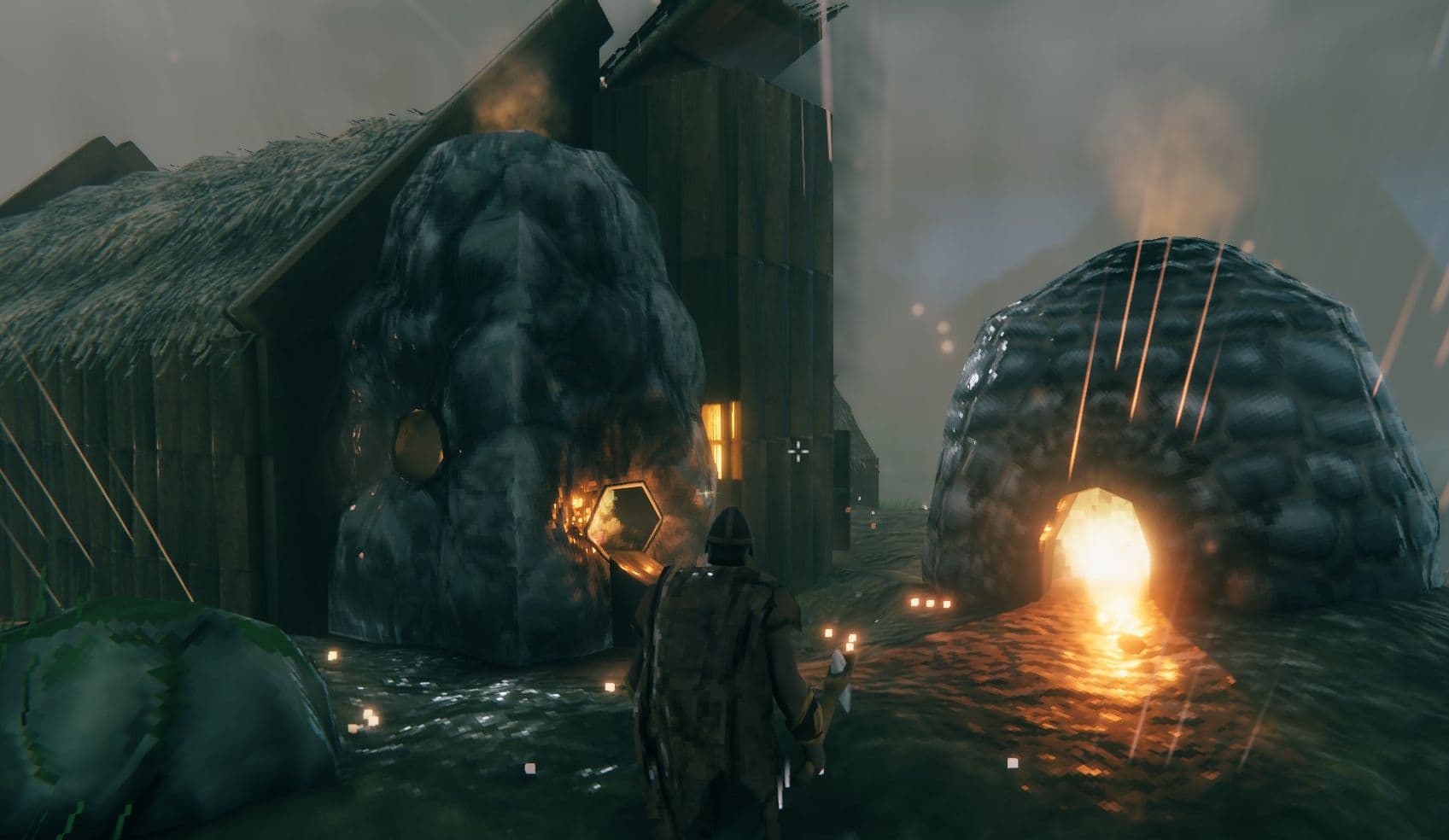
Valheim's building and cooking systems offer depth without the typical survival grind.
This philosophy of empowerment over punishment extends to the game’s non-traditional skill system. There’s no experience bar to fill. Instead, your proficiency with every action improves simply by doing it. Chop more wood, and your Woodcutting skill slowly climbs, making trees fall faster. Block more attacks with your shield, and your Blocking skill increases, reducing the stamina cost of parries. It’s a system borrowed from early MMORPGs like RuneScape, and it works because it’s perfectly organic. You’re always progressing, even during mundane tasks, and your character’s growth feels like a direct reflection of your lived experience in the world. This creates a satisfying, if subtle, sense of mastery that makes even the hundredth tree feel like it’s contributing to your legend.
Where Valheim truly distances itself from the punitive norms of its genre is in its remarkably forgiving quality-of-life features. Repairing any weapon, tool, or piece of armor at a workbench costs nothing—no materials, just a click. Deconstructing a building with your hammer refunds every single resource used in its construction, down to the last nail. This is a masterclass in player-friendly design. It removes the fear of experimentation, encouraging you to tweak your base layout or try a new weapon without the sting of permanent loss. In a genre where other games might make you grind for hours to replace a broken sword, Valheim understands that the real challenge should be in conquering the world, not maintaining your gear.
However, the game does hold onto one classic, brutal survival trope: the death penalty. When you fall, you drop every single item in your inventory and respawn either at the world's starting altar or your last destroyed bed, which can be a grueling, 20-minute real-world trek away from your corpse. This creates the infamous “corpse run,” a high-anxiety journey where you must navigate back to your gear—often through the very dangers that killed you—armed with nothing but your fists and wits. It’s a punishing mechanic that can lead to cascading failures, especially in the treacherous Swamps or Mountains. While it certainly raises the stakes and makes victory sweeter, it can also feel disproportionately harsh in a game that is otherwise so generous with its systems.
This tension between forgiveness and consequence defines Valheim’s meta-game of preparation. Success isn't just about having the best gear; it's about managing a web of interconnected buffs and conditions. The "rested" bonus—earned by spending time near a fire inside a sheltered, properly ventilated home—is arguably the most important buff in the game, dramatically speeding up health and stamina regeneration. Conversely, being "cold" or "wet" cripples your stamina recovery, making even simple exploration a struggle in later biomes. This pushes you to engage deeply with the crafting systems, brewing frost resistance mead for mountain climbs or poison resistance mead for swamp delves. Your effectiveness is a direct product of your foresight. Valheim doesn’t just test your reflexes in combat; it tests your ability to plan like a Viking preparing for a long, harsh winter. This layer of strategic preparation is what elevates it from a simple survival game to a thoughtful simulation of mythic endurance.
Combat and Enemies: From Pests to Colossal Trolls
Combat in Valheim isn’t its flashiest feature, but it’s the crucible where every other system—your gear, your food, your preparation—is put to the ultimate test. What begins as a simple, almost clunky hack-and-slash against forest boars evolves into a deliberate dance of stamina management and tactical positioning against towering trolls and spectral wraiths. The journey from pest control to god-slaying is where the game’s mechanical heart beats loudest, and recent updates have thoughtfully reshaped that rhythm.
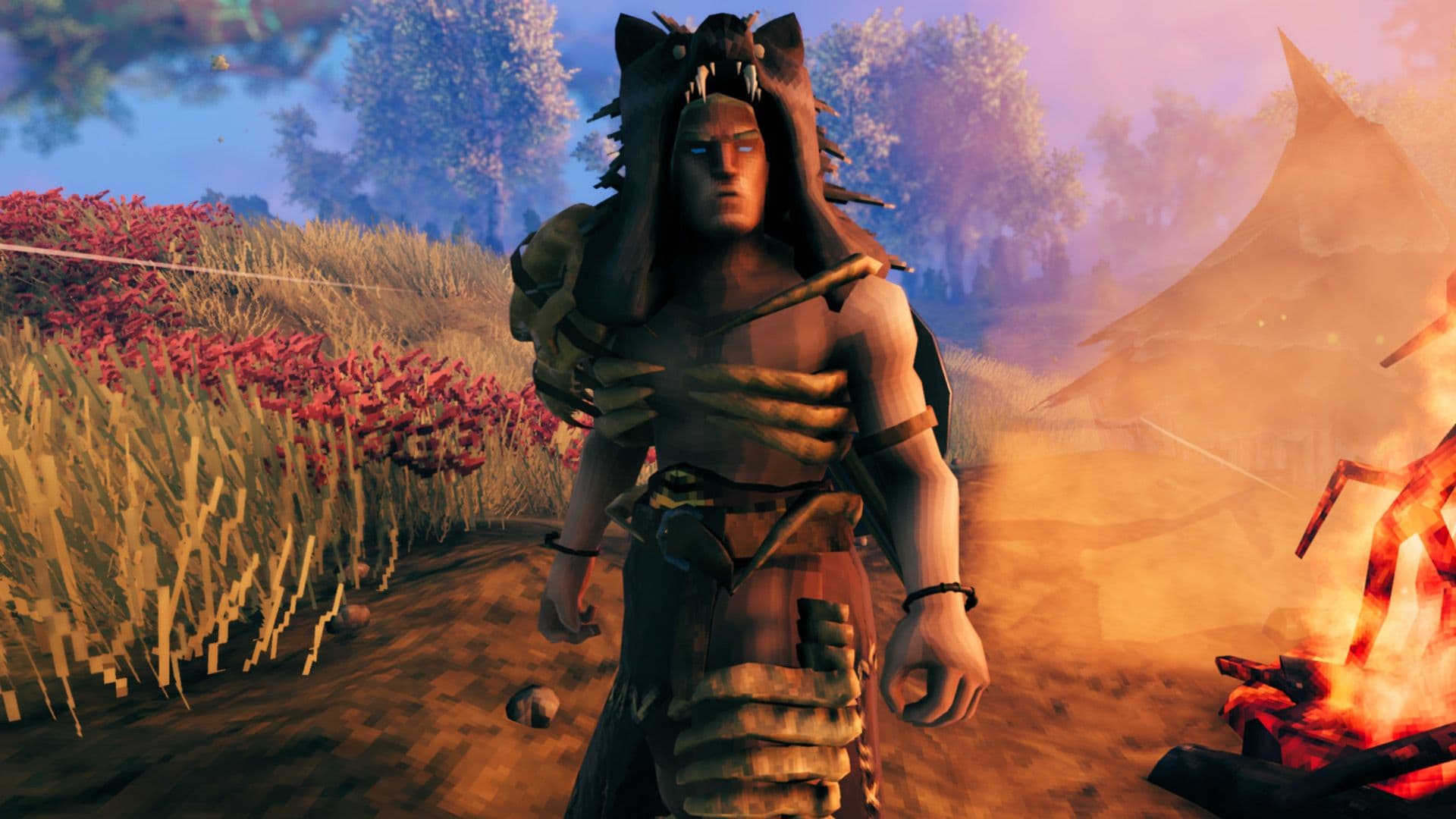
The Call to Arms update introduced new equipment like the Bjorn set to improve melee viability.
The foundation is a stamina-based system that borrows the deliberate pacing of Souls-likes without the punishing precision. Every swing, block, dodge-roll, and sprint drains a shared stamina bar, forcing you to choose between aggression and defense. This creates a satisfying ebb and flow to encounters, especially against larger foes. The parry system is a particular highlight: a well-timed block with a shield not only negates damage but staggers the enemy, opening them up for a heavy critical strike. It’s a risk-reward mechanic that feels immensely gratifying to master, transforming a defensive tool into an offensive weapon. Similarly, the projectile physics for bows—where arrows have a realistic drop over distance—adds a layer of skill to ranged combat that goes beyond simple point-and-click.
Where this combat ecosystem truly excels is in its capacity for emergent, unscripted storytelling. Valheim’s physics engine doesn’t just govern your axe swings; it governs the world. A troll doesn’t just hit you—it can knock down a swath of trees you were meaning to chop, or accidentally demolish your outpost wall. Chopping a pine tree can see it topple and crush you or an unwary enemy. These are not scripted events but dynamic consequences of a living world, creating campfire-worthy tales of catastrophe and narrow escape that are entirely your own.
This solid foundation is elevated by the game’s true showstoppers: the Forsaken boss fights. These encounters are climactic capstones to each biome, requiring not just reflexes but extensive preparation. You don’t stumble into fighting Eikthyr or the swamp-dwelling Bonemass; you must gather specific summoning materials, craft resistance potions, and forge the best gear available. The fights themselves are multi-phase affairs that test everything you’ve learned. The third and fourth bosses, in particular, are noted for being “almost absurdly difficult” solo, a design that strongly encourages the camaraderie of co-op. Defeating them isn’t just a victory; it’s the culmination of hours of strategic planning and resource gathering, and the key that unlocks the next chapter of your saga.
However, not all enemy interactions are so rewarding. The Greydwarves of the Black Forest are a persistent, almost comical flaw in an otherwise thoughtful combat suite. These skulking creatures are less a threat and more an ambient nuisance—flies that need constant swatting. They spawn in groups, deal negligible damage to even basic armor, and exist primarily to interrupt your mining or building with their endless, nagging attacks. They offer no meaningful combat challenge, no valuable loot to speak of, and their constant presence turns the early-game Black Forest from a place of mystery into a zone of mild irritation. For a game so good at creating memorable adversaries, the Greydwarf is a baffling misstep that overstays its welcome.
This is where the recent ‘Call to Arms’ update proves that Iron Gate Studio is listening. The patch introduces a new ‘trinket’ equipment slot that builds an ‘adrenaline’ meter through combat, unleashing a super-charged effect when full. More impactful are the changes to core mechanics: ‘perfect blocks’ no longer consume stamina, making shield builds far more sustainable, and a new ‘perfect dodge’ opens the door for viable, shield-less melee playstyles. These additions directly address a long-standing community observation—that stealthy archery was often the safest path—by injecting more depth and reward into melee skirmishing. The update also adds a new bear enemy, positioned between Greydwarves and trolls in difficulty, which finally provides a meaningful, aggressive melee challenge in the early game areas and crafts into a fitting ‘berserker’-style gear set.
In Valheim, combat is the punctuation to your saga—the exclamation points at the end of long sentences of preparation. It’s a system that can feel rudimentary at first glance, but reveals surprising nuance through stamina management, physics, and the sheer scale of its boss encounters. While it’s marred by tedious low-level annoyances, the ‘Call to Arms’ refinements show a clear path toward a more balanced and engaging fighting experience. Ultimately, your most memorable battles won’t be against the Greydwarves you mindlessly cleave through, but against the world itself: a desperate fight against the cold on a mountain pass, or a chaotic, unscripted brawl with a troll amid your own falling lumber. That’s the real combat loop of Valheim—not man versus monster, but Viking versus an entire, reactive ecosystem.
Building and Physics: Engineering Your Viking Legacy
If there's one system in Valheim that transforms it from a survival game into a living Viking legacy, it's the building. This isn't just about slapping down four walls and a roof for a rested bonus; it's a physics-based engineering puzzle where every beam and thatch tile must earn its place. Valheim treats your longhouse like it treats your character—something that must be built with intention, supported by a strong foundation, and capable of withstanding the harsh realities of the tenth world. The result is a building system that offers immense satisfaction and a tangible sense of place, even as its rough edges occasionally threaten to collapse your ambitions.
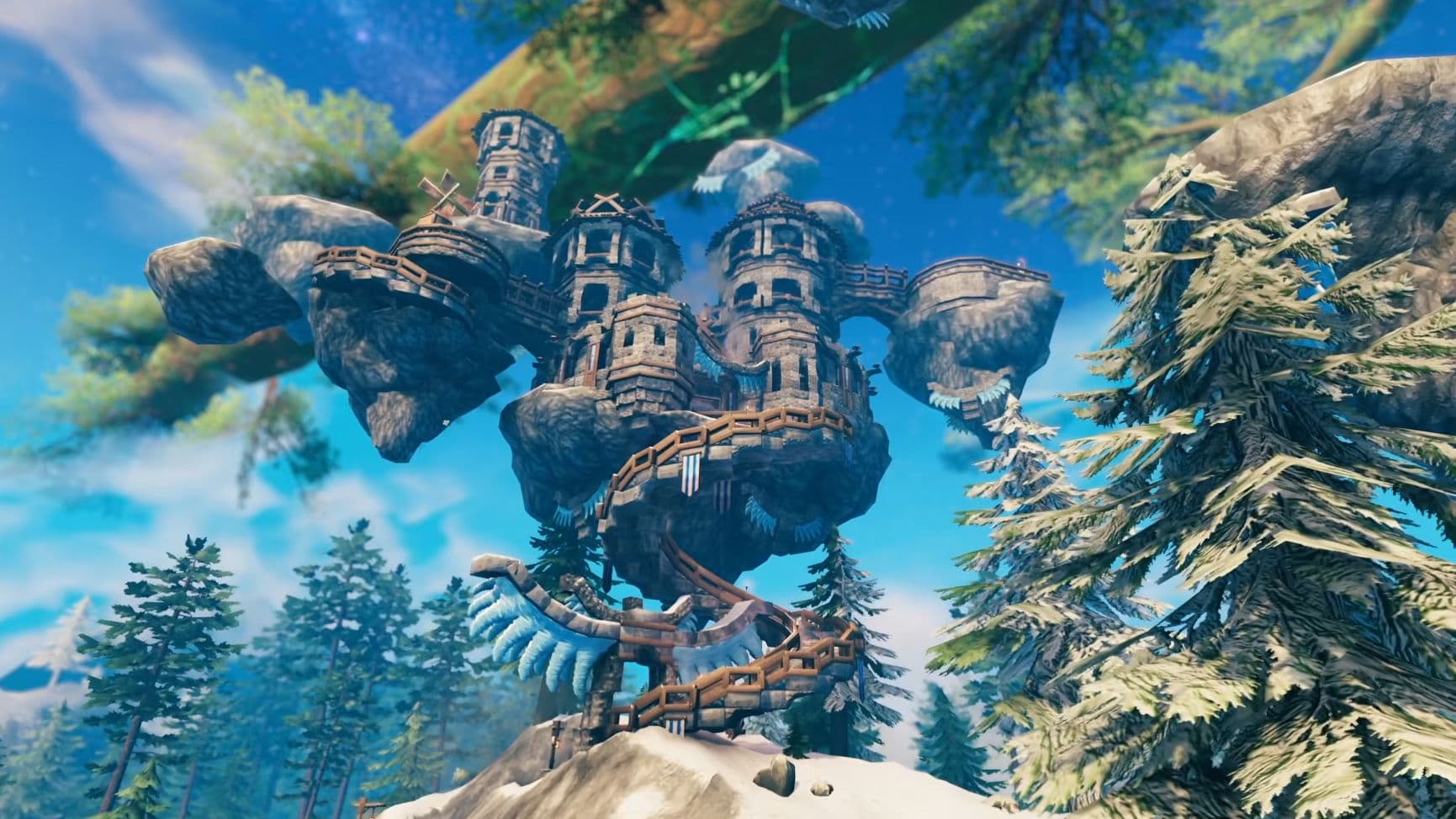
Advanced engineering allows for massive structures like this floating castle.
The core brilliance lies in its structural integrity mechanics. Unlike the magical, floating blocks of other sandboxes, here every piece has weight and requires support. A simple visual system—color-coding pieces from blue (fully supported) to red (unsupported)—provides immediate, intuitive feedback. This forces you to think like a real carpenter. You can't just build a massive mead hall; you need to plan its spine with core wood pillars, reinforce its roof with angled beams, and ensure your stone foundations are wide enough to bear the load. The moment your first multi-story tower stands firm against a gale, you feel a pride of ownership that transcends simple decoration. You didn't just place blocks; you engineered a fortress.
This commitment to grounded physics is what makes Valheim's architecture feel earned. Your sprawling base isn't just a collection of resources; it's a monument to your understanding of the game's internal logic. When a troll smashes its club against your outer wall and the structure holds, the victory isn't just in the combat—it's in the validation of your design.
However, the foundation of your grand designs—the literal ground—is often the most frustrating part. The game’s voxel-based terrain modification tools are notoriously clunky and imprecise. The leveling tool, intended to create flat building plots, often leaves behind jagged, uneven terrain or bizarre floating grass tufts. Trying to seamlessly integrate a structure into a hillside can result in walls clipping through the earth or floors hovering awkwardly above it. Compared to the surgical precision of Minecraft’s terraforming, Valheim’s tools feel like using a sledgehammer for fine woodcarving. This forces builders into a choice: spend an inordinate amount of time fighting the terrain system, or accept a certain rustic, "built-into-the-land" aesthetic that may not match your vision. For a game so focused on player creation, this is a significant barrier to architectural elegance.
This friction continues upward. While the variety of building pieces expands dramatically in the mid-to-late game with stone and dark wood, the early-game structural variety is disappointingly limited. You're largely confined to basic wood walls, roofs, and a handful of support beams for your first dozen hours. More critically, constructing anything vertical remains a fiddly chore. Stairs, ladders, and roof slopes behave inconsistently, and building multi-story interiors often devolves into a frustrating game of scaffolding-hopscotch where you must constantly deconstruct and rebuild temporary platforms to reach the next level. The absence of a simple, temporary scaffolding system—a la Minecraft—is a glaring omission that turns ambitious projects into tedious exercises in patience over creativity.
Yet, when your construction efforts extend beyond your homestead's borders, Valheim reveals another dimension of its engineering soul: sailing. Constructing your first raft, and later a Longship, is a rite of passage. The sailing mechanics are satisfyingly complex, requiring you to master the wind direction, manage your speed with different sail positions, and navigate treacherous coastlines and sudden storms. The controls are deliberately weighty and unassisted—there's no auto-pilot here. This "clunkiness" is a feature, not a bug; it demands skill and respect for the sea. A poorly timed turn can smash your vessel on rocks, and a storm can blow you wildly off course, transforming a simple supply run into a desperate fight for survival. This isn't fast travel; it's an adventure in itself, and the payoff of spotting a new continent on the horizon after a perilous voyage is unmatched.
In the end, Valheim’s building and physics systems embody the game's core philosophy: rewarding effort with profound satisfaction, but never hiding the effort itself. Your Viking legacy is not given; it is engineered, plank by heavy plank, across a landscape that resists your touch and seas that defy your command. The systems can be unwieldy, the tools imperfect, but the final product—a thriving port city you sailed to, on a continent you charted, built from a fortress you designed to stand the test of time and trolls—is uniquely, powerfully yours. It’s here, hammer in hand, that you stop being a visitor to Valheim and truly become its architect.
Art and Performance: The Beauty of 32x32 Textures
Valheim’s visual identity is a masterclass in artistic alchemy, proving that atmosphere isn’t bought with polygon counts but crafted with cohesive vision. The game’s low-poly aesthetic—built from humble 32x32 pixel textures and models that evoke PlayStation 1 nostalgia—should feel dated. Instead, it’s elevated into something timeless and beautiful by a suite of modern rendering tricks. The true star is the AAA-quality lighting and water refraction. Sunlight filters through dense pine forests in the Meadows, casting long, dappled shadows. The Swamp’s oppressive gloom is pierced by eerie, glowing wisps, while the ocean’s surface churns with realistic wave physics that catch the light of a setting sun. This marriage of simple geometry with sophisticated lighting creates a painterly, fairy-tale ambiance that consistently takes your breath away, transforming every biome into a distinct and memorable painting you live within.
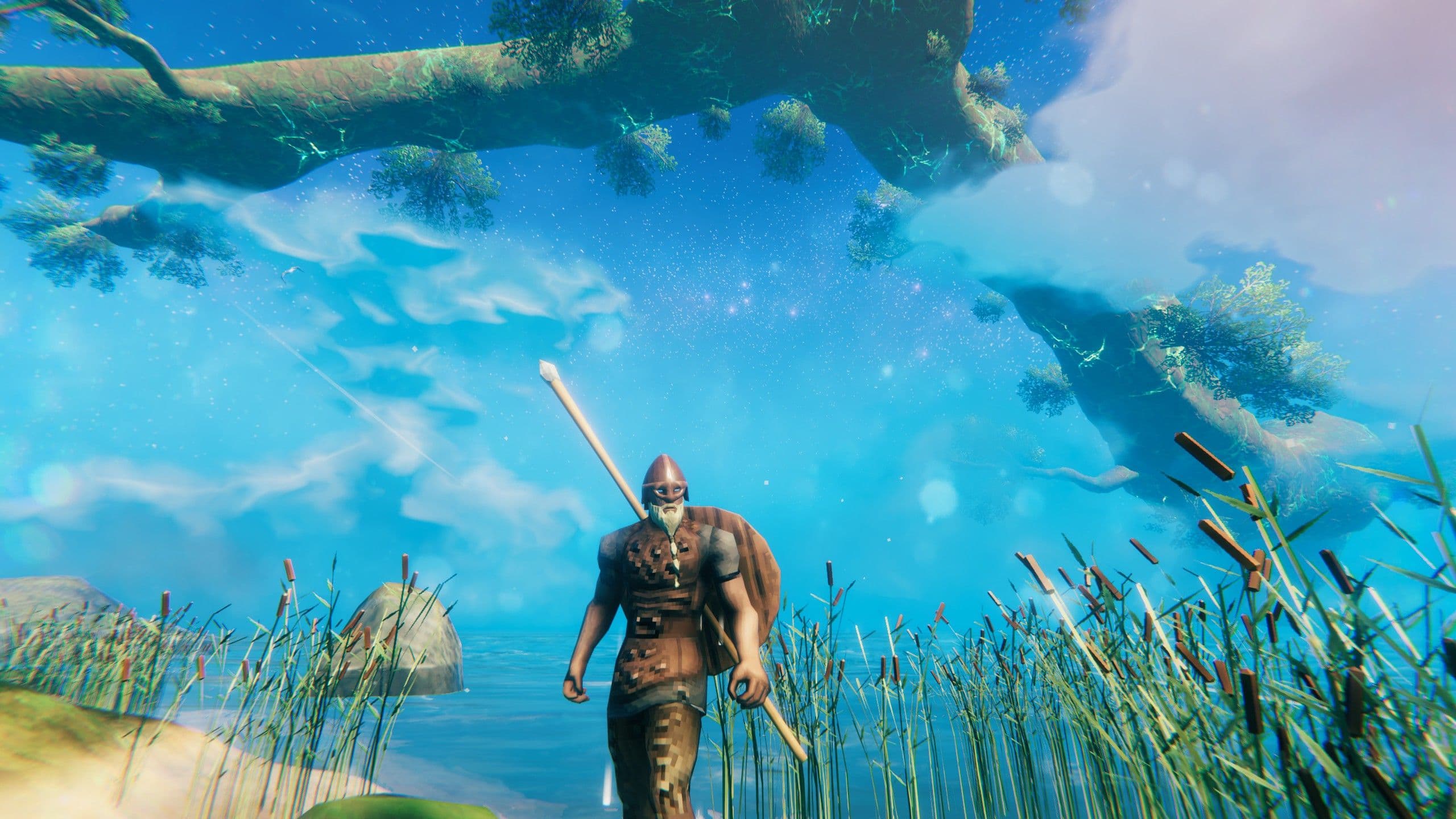
Valheim's lo-fi aesthetic ensures accessibility for players with older hardware.
This artistic direction is a technical marvel in its own right, achieving its vast, immersive scope within a remarkably small technical footprint. The entire game client weighs in at just over 1GB—a fraction of the size of a single modern AAA texture pack. This efficiency is a deliberate design triumph, making Valheim accessible on older hardware and allowing its vast, procedurally generated worlds to be streamed and explored with minimal loading. The small file size belies the density of the experience, proving that a world’s grandeur is measured in its artistic cohesion, not its gigabyte count.
However, this elegant facade can crack under the weight of the very creativity it inspires. The game’s performance is a tale of two engines: one that renders serene wilderness flawlessly, and another that struggles under player ambition. While exploring untouched biomes or sailing the open seas, frame rates are typically smooth. The problem emerges back at base. In areas dense with player-built structures—especially large settlements with complex structural physics, numerous torches, and terraformed land—the frame rate can plummet. Dips to the mid-20s or even lower are common, as the game’s CPU-intensive physics and object persistence calculations buckle under the strain. This isn’t a minor stutter; it’s a significant drag on the experience, turning your hard-earned Viking metropolis into a slideshow during busy moments. For builders, this is Valheim’s most frustrating technical ceiling: your ambition is ultimately gated not by resources, but by performance.
This technical strain is most keenly felt—and most easily mitigated—in multiplayer. Valheim supports up to 10 players on a server, but its true social sweet spot is a tighter crew of 3-5 friends. In a smaller group, the shared labor of ambitious projects feels collaborative rather than chaotic, and the division of roles—one player mining ore while another ferries it home by longship, a third tending the smelters and cooking feasts—creates a deeply satisfying ecosystem of interdependence. The performance hits from large builds are also distributed and less burdensome when the social payoff is so high. More importantly, multiplayer transforms Valheim’s challenges from solitary trials into shared sagas. Navigating a pitch-black swamp crypt is tense alone; with friends, it’s a coordinated raid, full of shouted warnings and triumphant loot hauls. The unscripted, physics-driven chaos—a troll smashing through the forest as your party scrambles—becomes a legendary story you’ll recount long after the session ends.
Ultimately, Valheim’s art and performance embody the game’s core promise and its primary friction. It presents a stunning, cohesive world that runs on a potato, inviting you to lose yourself for hundreds of hours. Yet, it also subtly warns that your most grand Viking ambitions will be tempered by the old-world tech running beneath its beautiful surface. The trade-off is clear: you get a timeless, atmospheric canvas for an unparalleled survival saga, but you must paint on it with an awareness of the engine’s very real limits. For most, the beauty is worth the occasional stutter.
Final Verdict: Is Valheim the Ultimate Survival Saga?
After 150 hours and two freshly toppled Forsaken, the question looms: does Valheim’s epic, often-grindy saga justify its monumental time investment? The answer depends entirely on what you seek from a survival game. This isn't a polished theme park ride to the end credits; it's a persistent, reactive world that trades speed for weight, where every ounce of progress feels earned through labor and blood. The ultimate verdict isn't found in its feature list, but in whether you crave a world to master or a story to be told.
The game's depth is revealed slowly as players master combat and crafting.
Let's be blunt about the grind: it's real, and it's the game's most significant barrier to universal acclaim. While the early and mid-game loops of boss-centric progression are masterfully paced, the late game can devolve into real-world days of repetitive resource harvesting. Crafting a full set of high-tier padded armor or a decked-out longship doesn't require a few mining trips—it demands entire dedicated expeditions to strip-mine distant continents, hauling thousands of pounds of ore back via perilous sea voyages. The game’s genius economy, where weight and inventory space are severely limited, turns a simple upgrade into a logistical odyssey. This is where the delicate balance tips: the satisfaction of finally forging that gear is immense, but the hours spent staring at a mining node can feel less like heroic preparation and more like a second job. Valheim respects your effort, but it sometimes forgets that effort should be consistently engaging.
This focus on grounded, methodical progression is what sets Valheim apart from its genre peers. It’s more goal-oriented and structured than the boundless sandbox of Minecraft, where progress is self-defined. Conversely, it’s more physically grounded and less frenetic than a creature-collector like Palworld. You won’t be hatching eggs or automating factories here. Valheim’s magic is in the tangible weight of every action: the heft of the axe swing, the strain of the cart, the slow, deliberate construction of a civilization from the dirt up. It’s a game for those who find profound satisfaction in systemic, interconnected loops, not just explosive moments.
This shapes the ideal audience. Valheim is not for the impatient or the lone wolf seeking a tightly scripted narrative. It is, at its absolute best, a cooperative long-term project for 3-5 friends. The division of labor—a miner, a sailor, a builder, a cook—transforms the grind into a collaborative economy, and the shared terror of a swamp crypt or a troll attack becomes the stuff of legend. Solo players can find a tense, immersive experience, but they must steel themselves for a steeper climb, especially against bosses the game almost begs you to tackle with a crew. The true target is the player who loves seeing a shared vision realized over dozens of hours, where the journey—building a bustling port town, mapping an entire continent, stocking a legendary mead hall—is the entire point.
With that in mind, the value proposition is staggering. For its $20 price point, even in Early Access, Valheim offers a scope that shames many full-priced AAA titles. A focused run to defeat all current bosses is a 60-80 hour commitment, and that’s merely the “campaign.” For builders, explorers, and completionists, the game readily offers 150-200 hours or more of content, a figure that only grows with the free, substantial updates like Mistlands and Ashlands. The sheer volume of bespoke biomes, unique enemies, and intricate crafting tiers contained within a tiny 1GB package is a technical and artistic marvel. You are buying a world, not just a game.
Final Verdict: A Flawed Masterpiece of Patient Ambition
Is Valheim the ultimate survival saga? For a specific player, yes—absolutely. It’s a landmark achievement that redefined the genre’s potential for atmosphere and systemic depth. But its crown is heavy, and wearing it requires enduring its rougher edges.
Pros:
- Unmatched Atmosphere: A timeless, beautiful world built from lo-fi parts and AAA lighting, backed by a phenomenal soundtrack that creates constant awe.
- Rewarding Progression Loop: The boss-gated advancement provides crystal-clear goals and a powerful sense of hierarchical achievement.
- Forgiving, Player-Friendly Core: Free repairs, full deconstruction refunds, and a food system that empowers rather than punishes are genre-leading quality-of-life features.
- Physics-Driven Sandbox: From structural engineering to treacherous sailing, the world feels reactive and alive, generating endless unscripted stories.
- Phenomenal Co-op Experience: The definitive way to play, transforming labor into shared legacy and challenge into camaraderie.
Cons:
- The Late-Game Grind: Resource gathering for top-tier gear can cross the line from satisfying preparation into tedious, repetitive busywork.
- Performance Hurdles: Ambitious building is punished with severe frame rate drops in dense settlements, capping creative potential.
- Inconsistent Combat Nuance: While boss fights shine, early-game nuisance enemies and occasionally clunky melee can detract from the polished whole.
- Fiddly Building Tools: Imprecise terrain manipulation and awkward vertical construction mechanics frustrate architectural ambitions.
Valheim is a game of profound highs and patient lows. It asks for your time, your friends, and your willingness to engage deeply with its systems. In return, it offers a world that feels truly earned—a saga written not in cutscenes, but in the creak of your longship’s hull, the glow of your forge at midnight, and the silent, hard-won view from the mountain peak you finally conquered. If that promise speaks to you, there is nothing else like it. Step into the tenth world, and start writing your legend. Just be ready to do some heavy lifting.