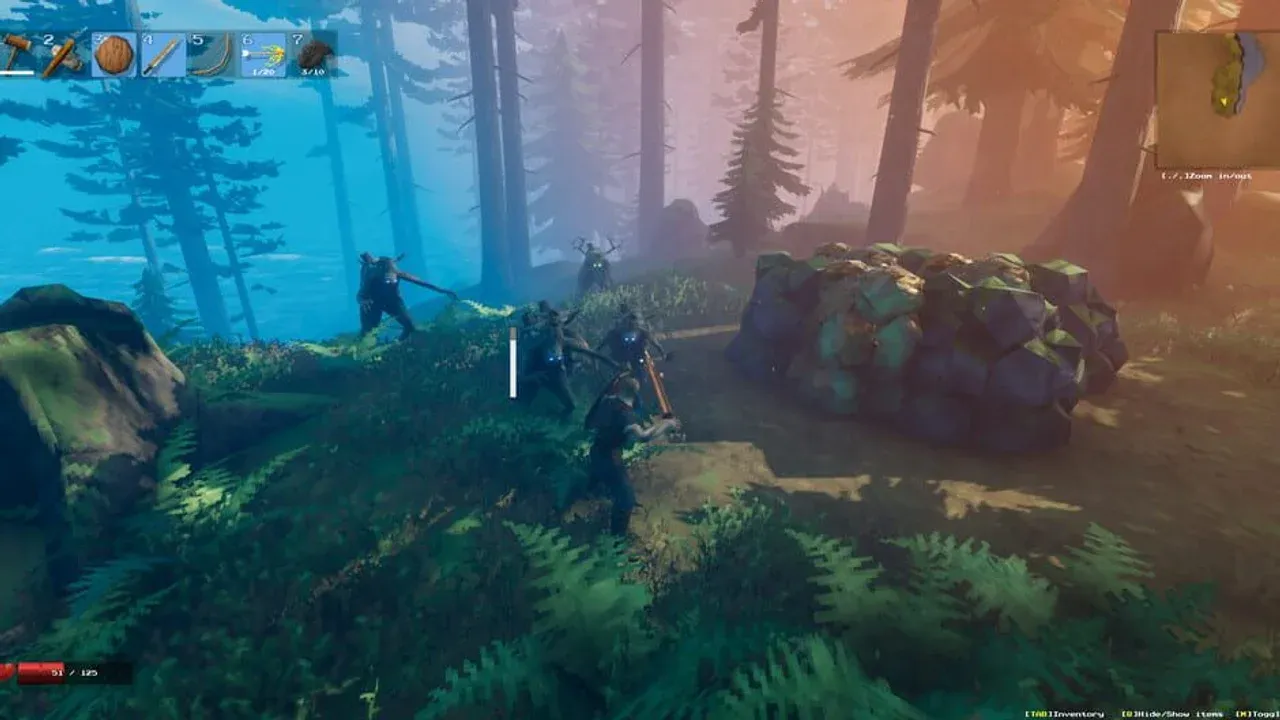
Valheim’s bosses are not one evil faction. The game’s own texts describe a wilderness spirit, a Yggdrasil-born ruler, the residue of a dead war, a dragon dynasty, a conquered people’s sorcerer, and an insect monarch. Odin compresses all of them into one verdict: the Forsaken.
That label is the story’s quietest act of power. The runestones preserve Odin’s victory, but the trophies preserve replies from the defeated. Read together, they suggest that Odin did not erase six equivalent villains; he turned incompatible survivors into a single category so every execution could look like the completion of one righteous sentence.
“Forsaken” is a category, not a biography
The Meadows lore gives the official version. Odin united the worlds, defeated the Vanir, giants, and older creatures, and sent the greatest of his enemies to Valheim when they could not be killed. The runestone calls the exiles “Forsaken” and presents Valheim as their eternal refuge.
That account explains the player’s assignment, but it does not provide a complete list of crimes. The Elder is explicitly condemned for pride. The Fuling are punished for challenging the gods. Other bosses receive no comparable charge. The text asks you to accept a single verdict before it gives you a consistent reason.
The game reinforces that verdict through objects rather than speeches. Vegvisir stones direct you to the altars. The trophies return to the Sacrificial Stones. A Mountain inscription records Odin’s message to Astrid: “Slay the Forsaken. Chain their heads. I will come.” The player is not sent to investigate the banishment. The player is sent to maintain it.
That is the canon. The political reading follows from its structure: Odin’s authority is everywhere in the mission, but Odin himself is absent from the trial.
Eikthyr and The Elder make nature the first defendant
Eikthyr is the first crack in the official story because his trophy does not speak like a defeated criminal. He mocks the player’s softness, then says Odin may have broken his form but “the wilderness will never submit to his rules.”
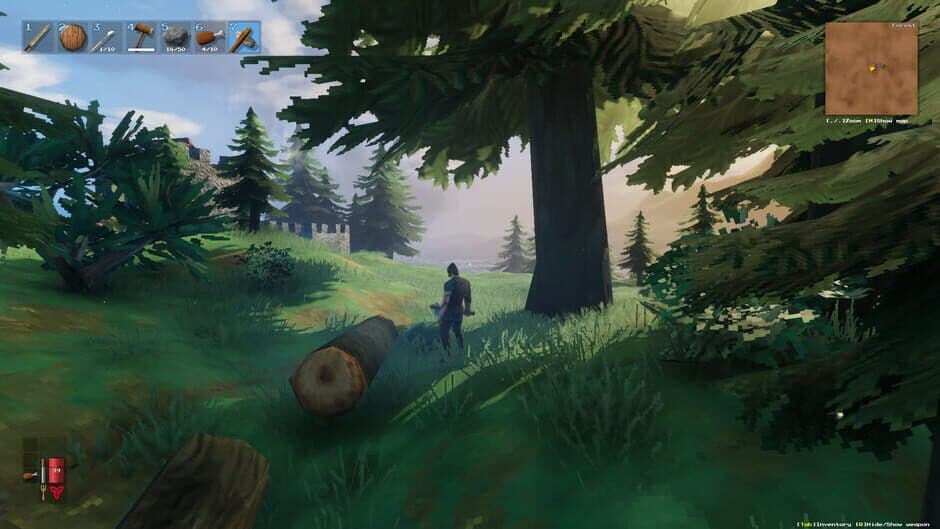
The Black Forest makes the conflict over trees literal.
The line matters because Eikthyr is not defending a kingdom or explaining a betrayal. He is defending noncompliance itself. The first Forsaken is the world’s refusal to become orderly property, and the player’s first victory reads differently once the trophy answers back: you have not proved that Odin was right; you have proved that Odin’s rule can be enforced.
The Elder receives a clearer accusation, but it is also an argument over land. A Black Forest runestone remembers him as a shoot of Yggdrasil and a force of wisdom from an age when men and trees were friends. It says he scorns the axe, opposes the works of the gods, and was banished “for his pride.”
Odin’s charge is pride. The evidence describes a conflict over whether forests exist as living powers or as material for settlement. Calling The Elder a criminal makes resistance to the axe sound like arrogance. Calling him a guardian makes the same resistance sound like self-preservation. Valheim never appoints a neutral narrator to settle that difference.
Bone, blood, and dragon ancestry survive the sentence
Bonemass is where the lore stops behaving like a case file. A Swamp inscription refuses to name the thing beneath the water, calling it a “bitter mass of bone and sin.” Another reduces its history to bone speaking to bone and remembering flesh. There is no explicit banishment story for Bonemass, only the atmosphere of one.
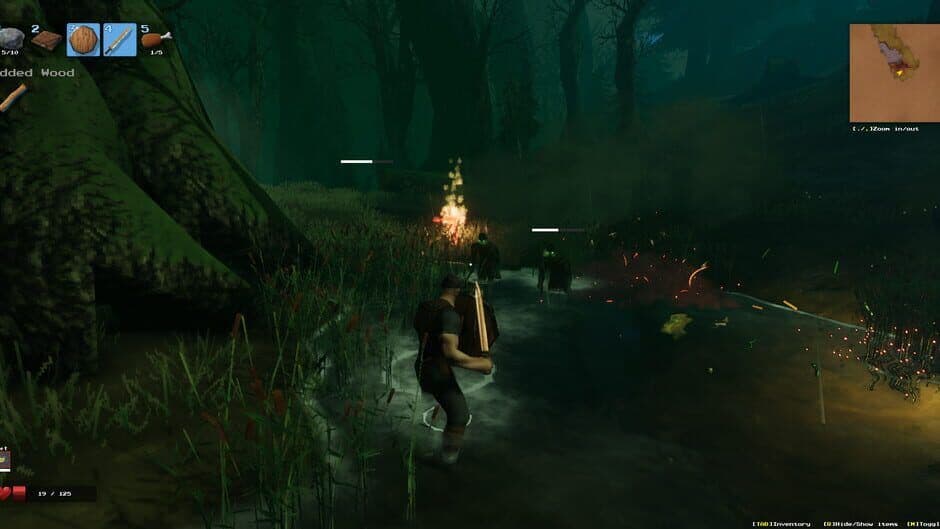
The Swamp preserves the aftermath of an older war.
That silence places him beside the Swamp’s dead civilization. Other runestones describe Draugr as warriors caught between life and death after their people fought the Aesir and Vanir. The game does not say Bonemass is the remains of that civilization, so the connection should remain an interpretation, not a fact. What the setting does make clear is that the Swamp is full of consequences that Odin’s victory did not resolve.
Moder carries a different kind of continuity. A Mountain runestone recalls that humans pushed drakes back in Midgard while the Vanir cast their mother into Valheim. It describes a dragon lineage displaced by divine and human violence, but does not name a personal crime committed by Moder.
Her trophy supplies her position: her reign is ending, but “those who come after me are greater still.” That is a ruler’s language, not a monster’s confession. The sentence can remove Moder; it cannot make her dynasty irrelevant.
Yagluth is the most explicit political case. Plains runestones describe the Fuling as an ancient people who built cities and towers, then say Odin punished their pride, crushed their armies, and tore Yagluth’s body in half when he refused to bend. The last of his people mourned him while his remains crumbled into the earth.
Yet the same account says the Fuling shamans still draw on Yagluth’s unseen force, which grows as their people spread. Odin defeated the king’s body and failed to end his rule as a source of meaning. The Fuling’s continued ritual turns the boss fight into an attempted purge of memory, not merely a duel with a powerful enemy.
The Queen makes the verdict future tense
The Queen is sealed inside the Infested Citadel, and her confinement is presented differently from the exposed altars of the earlier bosses. Dvergr writing tells you that the door was sealed and its key scattered. It does not give you an Odin speech explaining what crime required the lock.
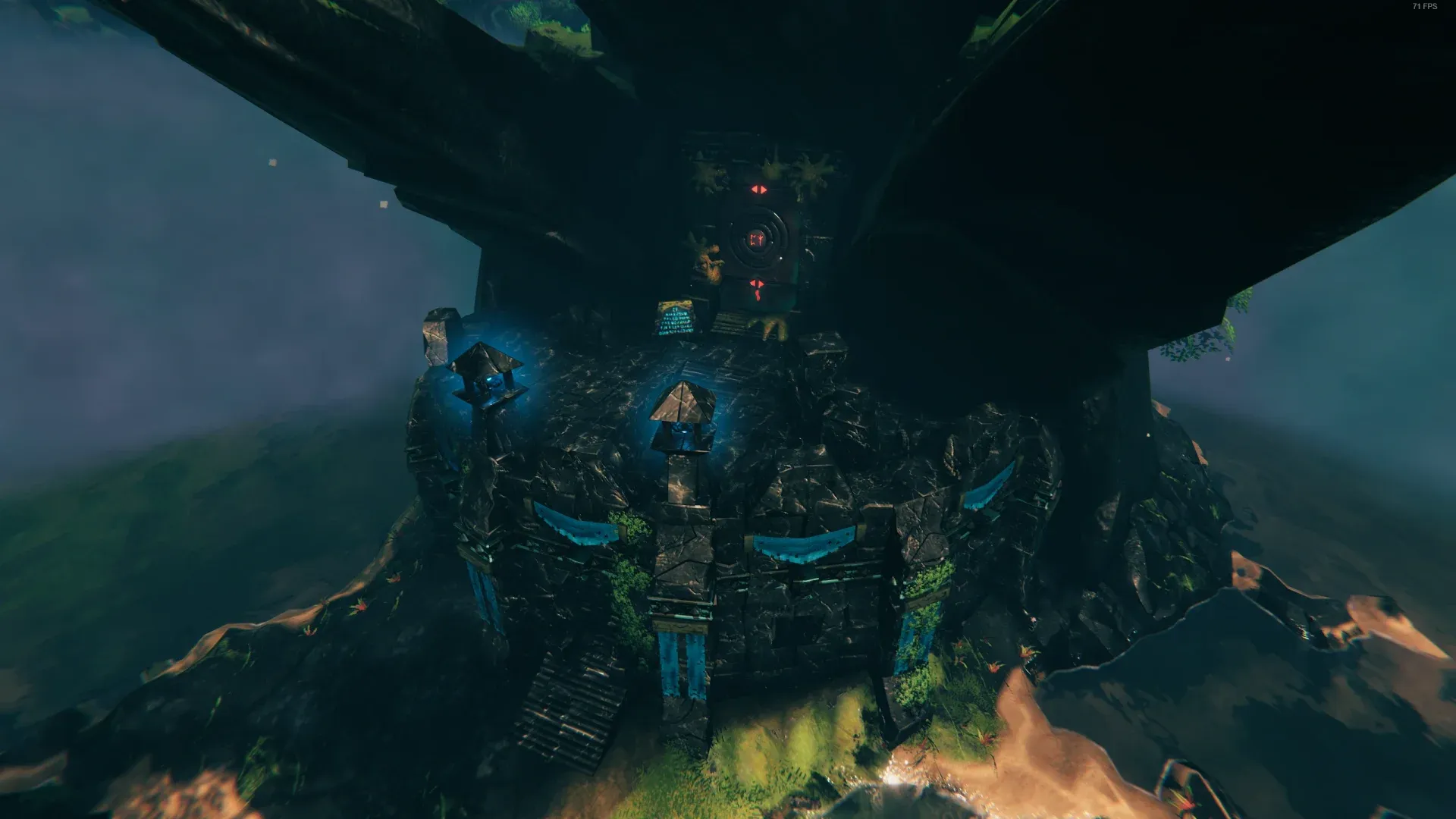
The Queen’s prison turns the final boss into a question of succession.
Her trophy answers the missing explanation with a threat: “A monarch never dies.” Her kin will bring forth another. The Queen’s defeat is therefore not framed as the end of a person’s influence, but as one interruption in a line of succession.
This is the sharpest contradiction in the Forsaken label. Odin’s system is built around final objects — severed heads, altar offerings, powers claimed after death. The Queen’s last words deny finality. A trophy can certify that one body is gone; it cannot certify that the kingdom beneath the title has ended.
The canon stops there. The larger claim — that the Queen turns exile into reproduction and succession — is interpretation, but it is grounded in the only promise her trophy gives you. The prison holds an individual. It does not control what comes after her.
The player inherits Odin’s unfinished sentence
Valheim’s player-facing inscriptions make the role explicit. Astrid’s stone records Odin’s command, and another Viking concludes that the warriors are Odin’s hands whose worth lies in doing his will. The campaign is not a search for the truth behind the sentence. It is a test of whether you will carry it out.
That is why the six bosses matter as a group. Their stories do not line up: Eikthyr resists imposed rules, The Elder resists the axe, Bonemass embodies an unresolved aftermath, Moder speaks for a lineage, Yagluth survives through cultural memory, and The Queen promises succession. “Forsaken” is the only thing Odin’s system makes them share.
The next time a trophy speaks from your wall, listen for the part the altar cannot record. The head proves that you won the fight. The voice tells you whose history the fight was built to preserve.