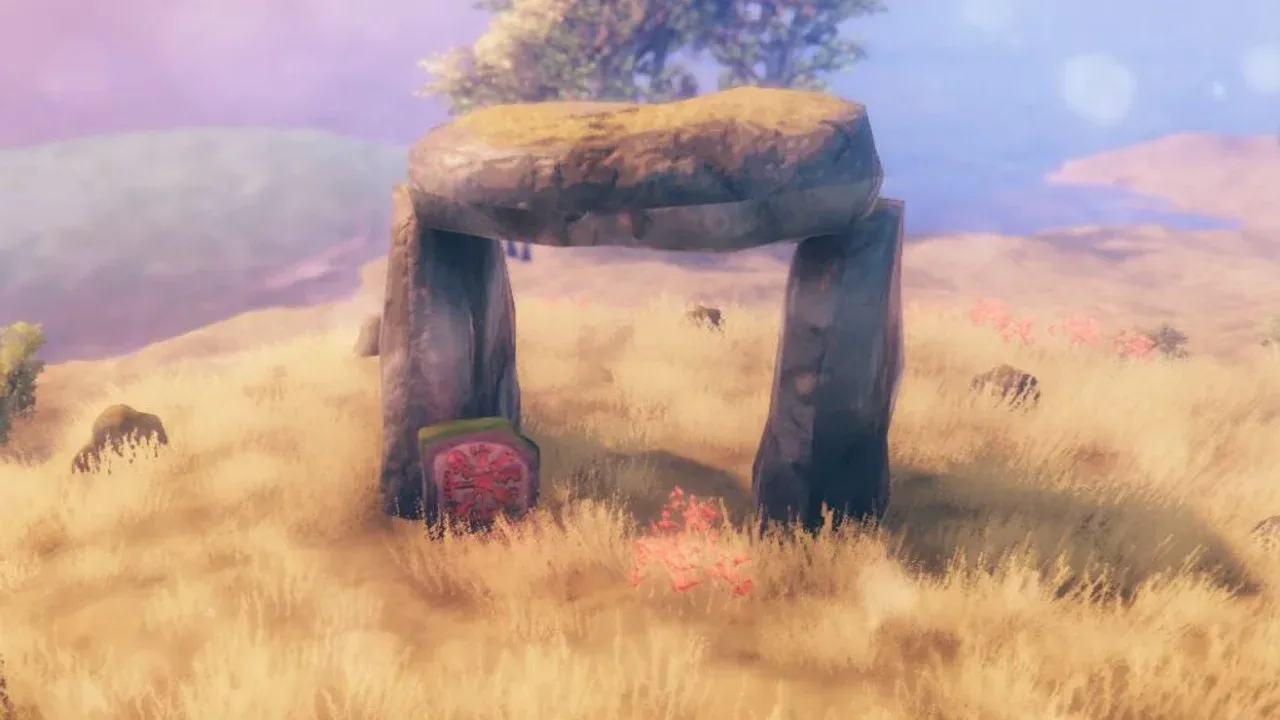
Valheim’s runestones are not equally valuable. A Vegvisir can save an expedition, a mountain warning can save your stamina and your life, and a memorial stone may only give you a better question about the ruin in front of you. The useful way to read them is to rank each type by the decision it changes: map first, preparation second, progression third, and lore last.
That ranking is about immediate utility, not literary value. The low-ranked stones are often the ones that make Valheim feel inhabited. They simply do less to tell you what to do next.
1. Vegvisirs Change the Map
A Vegvisir is the runestone with the clearest mechanical payoff. Interact with one and it marks the nearest altar for its corresponding Forsaken on your map. It does not summon the boss, reveal the whole biome, or mark every altar of that type. It turns an uncertain search into a destination.
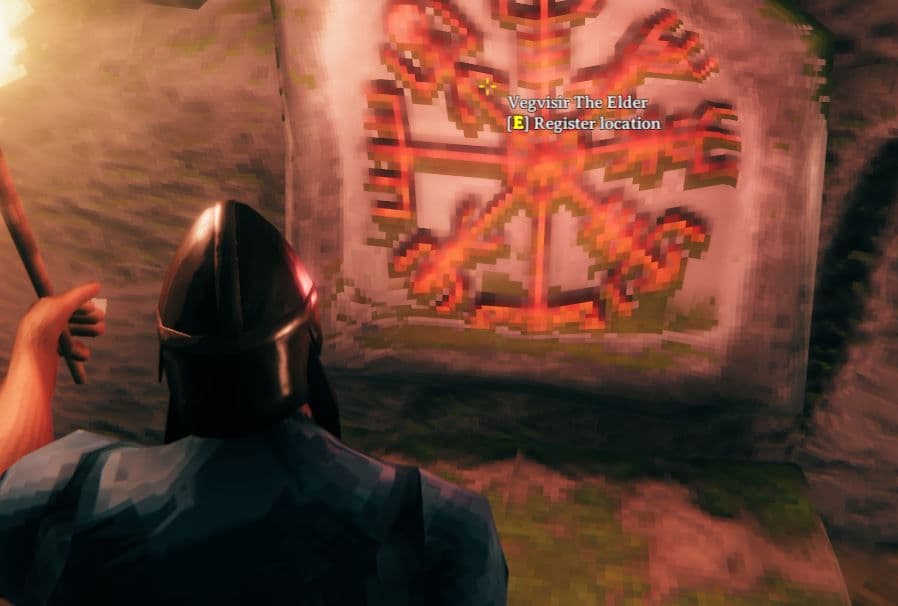
A Vegvisir registers the nearest matching Forsaken altar.
The search pattern changes by biome:
- Eikthyr: the Vegvisir sits at the Sacrificial Stones, so the first boss is introduced at the start.
- The Elder: look in Black Forest Burial Chambers and around ruined towers.
- Bonemass: search Swamp Sunken Crypts and the towers around the swamp.
- Moder: search Mountain Frost Caves and stone towers.
- Yagluth: check the Plains near Stonehenge-like rock formations.
- The Queen: search Infested Mines in the Mistlands.
- Fader: search Charred Fortresses in the Ashlands, with rarer examples on Charred Ruins.
Register one as soon as you find it. The stone points to the closest matching altar from its own position, so a second Vegvisir can add nothing if that altar is already marked. You can summon a boss without activating a Vegvisir; the stone removes the search, not the offering.
2. Creature and Biome Stones Change Your Preparation
Ordinary runestones are the best practical part of Valheim’s environmental tutorial. Many stand near the creature, resource, or hazard they describe, so their advice is attached to a place you can test rather than delivered as a detached rule.
Read them as a preparation checklist:
- Meadows stones introduce the boar and the possibility of taming it.
- Black Forest troll stones tell you to respect a creature that can flatten trees and punish an early fight. Greydwarf stones add both a weakness—fire—and an origin story built from rot, rain, wood, rock, and moss.
- Swamp stones warn about poison, Draugr, and the danger below the waterline. The Surtling stone tells you to keep to high ground, while another points toward iron as the biome’s forge material.
- Mountain stones are direct: bring thick furs, build strong fires, and keep a bow ready. Drake stones explain why nests matter and why the larger females are dangerous.
- Plains stones point toward buried halls and treasures beneath a biome that looks more open than it is.
This is the highest-value use of an ordinary runestone: it changes your loadout before the biome does. The text does not replace food, resistance meads, or scouting, but it tells you which of those preparations deserves priority.
3. Altar Runestones Explain One Ritual
The runestone beside a Forsaken altar is a short ritual clue. It tells you what the place is for and hints at the offering, but it is not the Vegvisir that led you there. The distinction matters: one finds the altar, the other explains the interaction waiting at it.
These stones are useful exactly once—when you have reached the altar and are working out what to place there. After that, their value is mostly ceremonial. They are not a second navigation system and they do not make the boss fight easier.
Treat an altar stone as confirmation, not discovery. If you are still looking for the altar, search for a Vegvisir or explore the relevant biome structures. If you are standing at the altar, read the nearby stone before spending a trophy or sacrificial item.
4. Sacrificial Stones Turn Bosses Into Progression
The seven stones around the Sacrificial Stones are the most important runestones for progression, even though they rarely help you survive the next room. Their verses identify the Forsaken through images instead of names:
- Eikthyr is the antlered storm, with iron-like branches, thunderous hooves, and a howling gale.
- The Elder is the first forest king, whose roots grow where cities once stood.
- Bonemass is the mass of a thousand bones dragging the traveller to doom.
- Moder is the mother from the mountain, with black wings and rain-like tears.
- Yagluth is the crowned remnant beneath a blood-red sky.
- The Queen is a mother without a crown, ruling below.
- Fader is the proud father who once flew through fire before madness warped him.
The poetry is a boss-identification system. Once a Forsaken is defeated, hang its trophy on the matching stone to unlock that boss’s Forsaken Power. You may read these verses as flavour, but the stones are also a permanent interface for Valheim’s progression loop.
5. Memorial and Lore Stones Preserve Testimony
The lowest tier for immediate utility is the most valuable tier for interpretation. Memorial stones, survivor accounts, and creature histories do not usually mark a destination or prescribe a loadout. They explain what happened to the people and creatures who occupied Valheim before you.
The Swamp’s Draugr stones are a good example. One calls destroying the undead a mercy; another describes an ancient people who built towers, challenged the Aesir and Vanir, and returned as Draugr after Odin destroyed their cities. The text does not change your weapon choice, but it changes what a ruined tower means.
Mountain stones use the same device more personally. Ulf records where he saw a drake and why he will not return. Astrid describes Odin’s command to slay the Forsaken as words frozen into pebbles inside a Frost Cave. These are witness statements, not a neutral history book.
That distinction prevents a common lore mistake. The text calling the player a “dwindling echo” of the First Men is recorded as unused, while the active Surtling stone warns about the creatures without naming the First Men. Read both as evidence of Valheim’s layered history, but do not promote an unused line into the game’s uncontested canon.
What to Do When You Find One
Use the ranking immediately:
- Vegvisir: register it and confirm the altar marker before leaving.
- Creature or biome stone: adjust your food, resistance, weapon, or route.
- Altar stone: read it before offering anything.
- Sacrificial Stone: return defeated trophies there to unlock Forsaken Powers.
- Memorial stone: note the name, place, or contradiction it adds to Valheim’s history.
The right question is not “What does this stone say?” It is “What can I do with what it says?” That keeps the navigation clues useful, the preparation warnings actionable, and the lore ambiguous in the way Valheim intends.
Frequently Asked Questions
- Which Valheim runestone is worth seeking first? A Vegvisir has the greatest immediate value because it marks a Forsaken altar on your map. Ordinary biome stones are the next most useful because they change your preparation.
- Can I summon a boss without finding a Vegvisir? Yes. A Vegvisir only marks the altar; the correct offering is what enables the summon.
- What is the difference between a Vegvisir and an altar runestone? A Vegvisir points to the nearest matching altar. An altar runestone is found at the ritual site and gives a clue about the offering.
- Do ordinary runestones give exact resource locations? No. They describe what belongs in an area or what danger to expect, but they do not replace exploration or map markers.