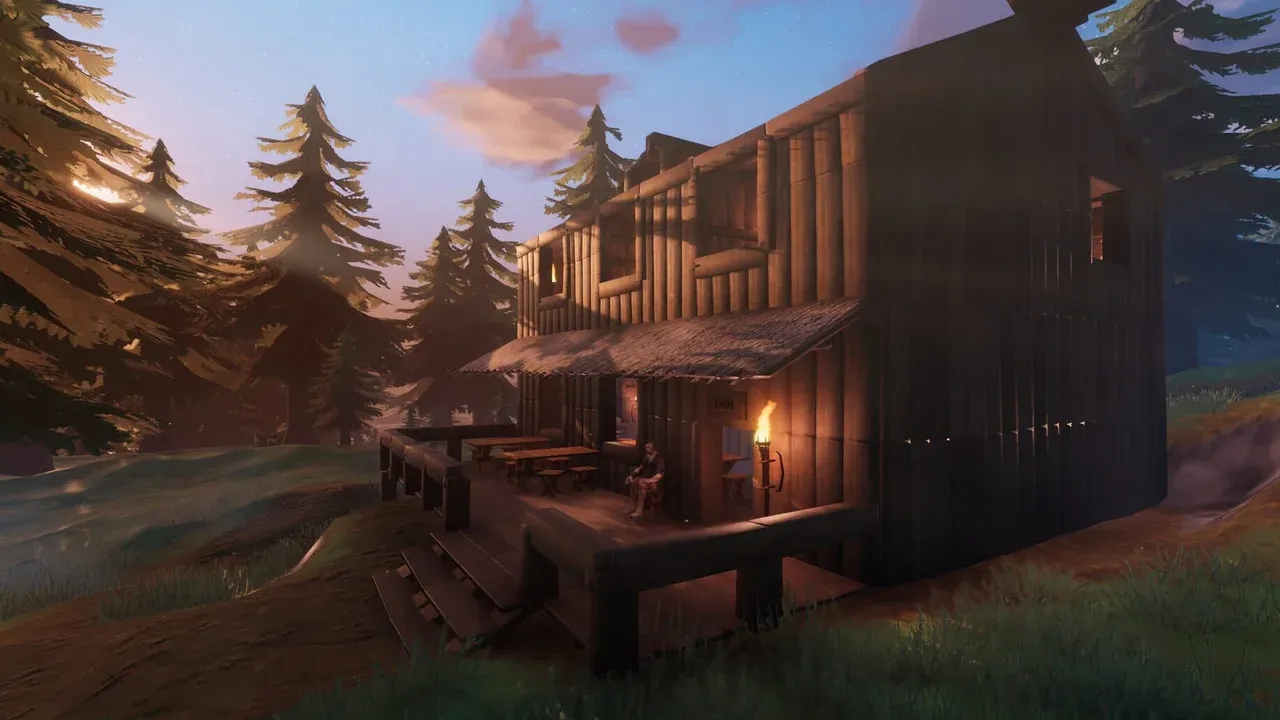
Valheim's lore is a chain of command with the commander missing. Odin creates the conditions, the Valkyries deliver the dead, Hugin supplies the briefing, and the player performs the violence. The game never needs the Allfather to stand before you and explain himself because every layer of the world already carries his authority. The mystery is not whether Odin is involved. It is why a god who built Valheim as a prison prefers to inspect the result from the tree line.
The One-Eyed Stranger Is a Signature
The hooded figure is Odin's clearest signature because it is the only clue that behaves like a sighting rather than a piece of history. After The Elder has been defeated, Odin can appear at night as a black-cloaked traveler with a staff and a single glowing eye. He does not speak or attack. Approach him and he vanishes into blue smoke.
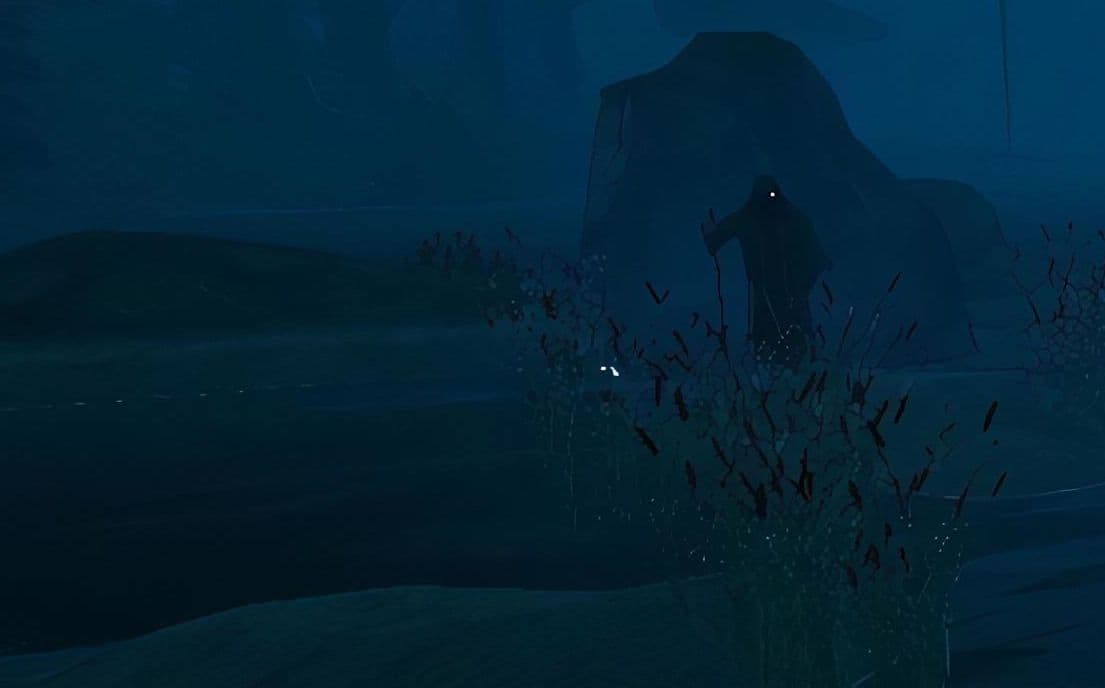
The watcher appears at a distance and vanishes when approached.
That encounter borrows the shape of Odin's mythic disguise—a wandering old man carrying a staff—and strips it down to recognition. The missing eye does not explain the god; it identifies him. The game trusts you to connect the silhouette to the Allfather before any runestone finishes the sentence.
The disappearance is the important part. An ordinary NPC would turn the encounter into a conversation, a reward, or a new objective. Odin turns it into proof that he can enter the frame without becoming part of your story. He is not a quest giver waiting to be found. He is the authorial mark that says your progress has been noticed.
The Stones Give Odin a Prison to Manage
The runestones supply the history that the apparition withholds. In the Meadows, an inscription describes Odin uniting the worlds and exiling enemies he could not kill to Valheim. The opening lore makes the player one of the dead warriors brought there by a Valkyrie, with Valhalla held out as the reward for surviving the test.
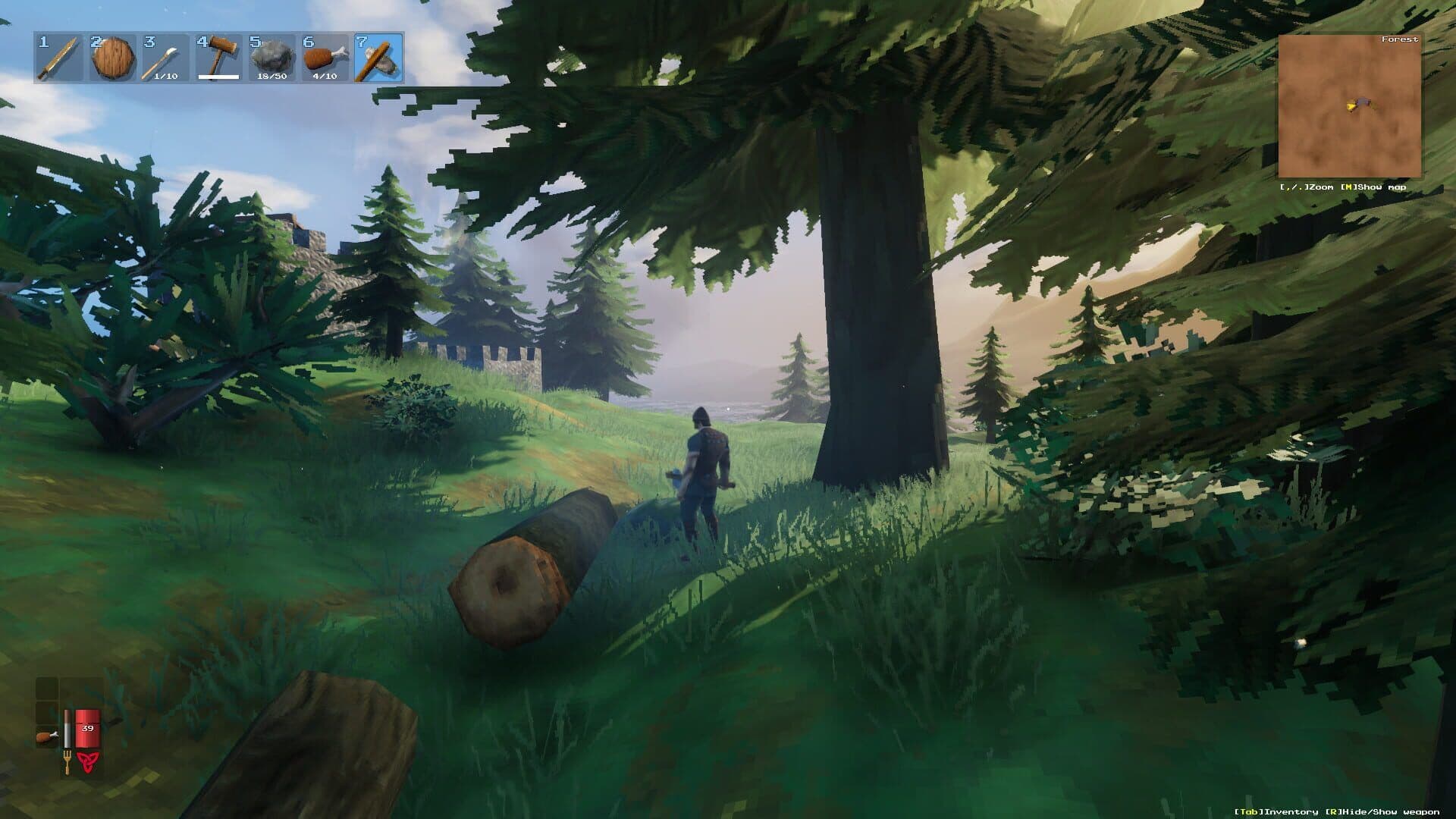
Runestones turn Valheim's history into a trail of evidence.
That makes the Forsaken more than a sequence of boss encounters. Eikthyr, The Elder, Bonemass, Moder, Yagluth, and The Queen are the inmates of Odin's old solution to a problem he could not solve cleanly. Every boss trophy is therefore both progression and evidence: the player is repairing an order that predates their arrival.
The wording keeps Odin morally inconvenient. A runestone remembers that “Odin's eye was turned from Valheim,” while a Mountain inscription associated with Astrid turns his return into a command: slay the Forsaken, then wait for him. The stones do not present a caring patron who explains the plan. They present a ruler who abandoned a prison, watched it decay, and resumed issuing orders when the mess became impossible to ignore.
Hugin Makes the System Feel Merciful
Hugin, the raven who greets new arrivals, is the soft edge of the same authority. He translates Valheim's systems into advice at the moment each piece of knowledge becomes useful, but he never removes the risk from the lesson. A warning about a new creature still leaves you to meet it. An explanation of a trophy still leaves you to decide when to challenge the next altar.
That restraint keeps Hugin from becoming a companion who can negotiate with Odin on your behalf. He is a messenger and an interpreter, not a rescuer. His presence makes the test feel fair enough to continue without making it feel kind.
The mythology reinforces the arrangement. Hugin is one of Odin's named ravens, so even the tutorial has a second layer: you are learning how to survive from an agent of the power that sent you here. The raven does not tell you whether Odin is protecting you or merely collecting results. He only makes the system legible enough for you to participate in it.
The Test Is Odin's Alibi
Odin's distance gives him plausible deniability. The world is his prison, the Forsaken are his old enemies, and the player is his chosen labor—but none of that requires him to answer for what happens inside. When a civilization sinks into the Swamps or the remnants of older kingdoms become enemies, the player inherits the consequences while Odin remains a silhouette at the edge of the screen.
That is why the one-eyed watcher is more revealing than a final cutscene would be. His appearance confirms that the god behind the runestones can see the work. His silence confirms that seeing it is enough. Valheim's central divine relationship is not worship, friendship, or rebellion; it is a worker being evaluated by an absent employer.
The most unsettling reading of Odin is therefore also the simplest: he does not need to persuade you that the test is just. He only needs you to keep moving through the world he made.