Treat Surtling Cores as a queue, not a spare material. In a normal first playthrough where you do not already have coal stored, five cores buy fuel production and the next five buy metal production. That is why the kiln and Smelter usually beat an early portal. If you already have coal, reverse those first two purchases; if a multiplayer base is being built around shared access, a portal or Ward can move up once the first Smelter exists.
The First Ten Cores Build Bronze, Not Comfort
Your early cores come from Burial Chambers in the Black Forest. Later, Surtlings near fire geysers in the Swamp provide a repeatable source. Until that second source is available, spend cores on the structure that opens your next material tier.
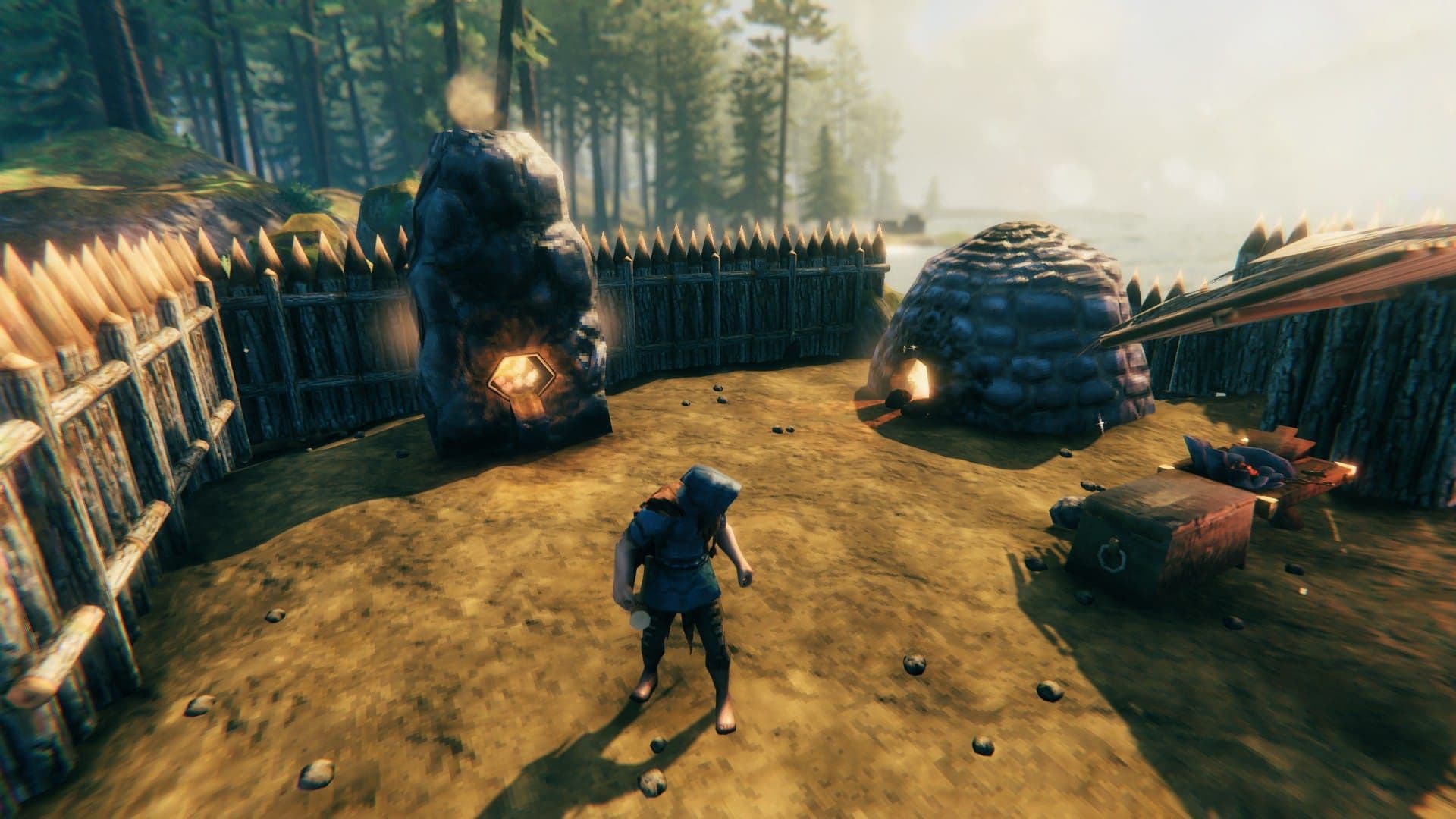
The kiln and Smelter are the first production loop that turns Black Forest ore into bronze.
| Structure | Surtling Cores | Other materials | What it unlocks |
|---|---|---|---|
| Charcoal Kiln | 5 | 20 Stone | Turns Wood into Coal |
| Smelter | 5 | 20 Stone | Turns ore into metal |
| Portal | 2 | 20 Fine Wood, 10 Greydwarf Eyes | Fast travel between matching portals |
| Ward | 1 | 5 Fine Wood, 5 Greydwarf Eyes | Locks doors and building access |
| Bonfire | 1 | 5 Fine Wood, 5 Ancient Bark, 5 Core Wood | A larger fire that stays lit in rain |
| Blast Furnace | 5 | 20 Fine Wood, 10 Iron, 20 Stone | Processes Black Metal Scrap |
| Stone Oven | 4 | 15 Iron, 20 Stone | Bakes prepared food |
The first two rows are the early-game pair. Build the Charcoal Kiln first when coal is the bottleneck: it converts ordinary wood into the fuel the Smelter needs. Build the Smelter first only when you already have enough coal to keep it working. Once both stand, feed the kiln and smelter together; that is the production loop that turns Black Forest copper and tin into bronze-era equipment.
If you are stuck with exactly five cores, a temporary rotation is possible. Hammer-deconstructing a Smelter returns its building materials, so you can run a kiln long enough to make coal and then reclaim the five cores for a Smelter. It saves cores, not time: the two stations cannot work simultaneously, so use this only when a missing fifth core is delaying your first metal run.
Do not confuse the first five with the first portal. A portal saves a route; the kiln and Smelter change what your character can make. That difference is the reason the production pair wins in a fresh world.
A Portal Pays Off When It Replaces a Route
A portal costs two Surtling Cores, but a useful connection costs four because it needs a home endpoint and a destination endpoint. Across the pair, you also need 40 Fine Wood and 20 Greydwarf Eyes.
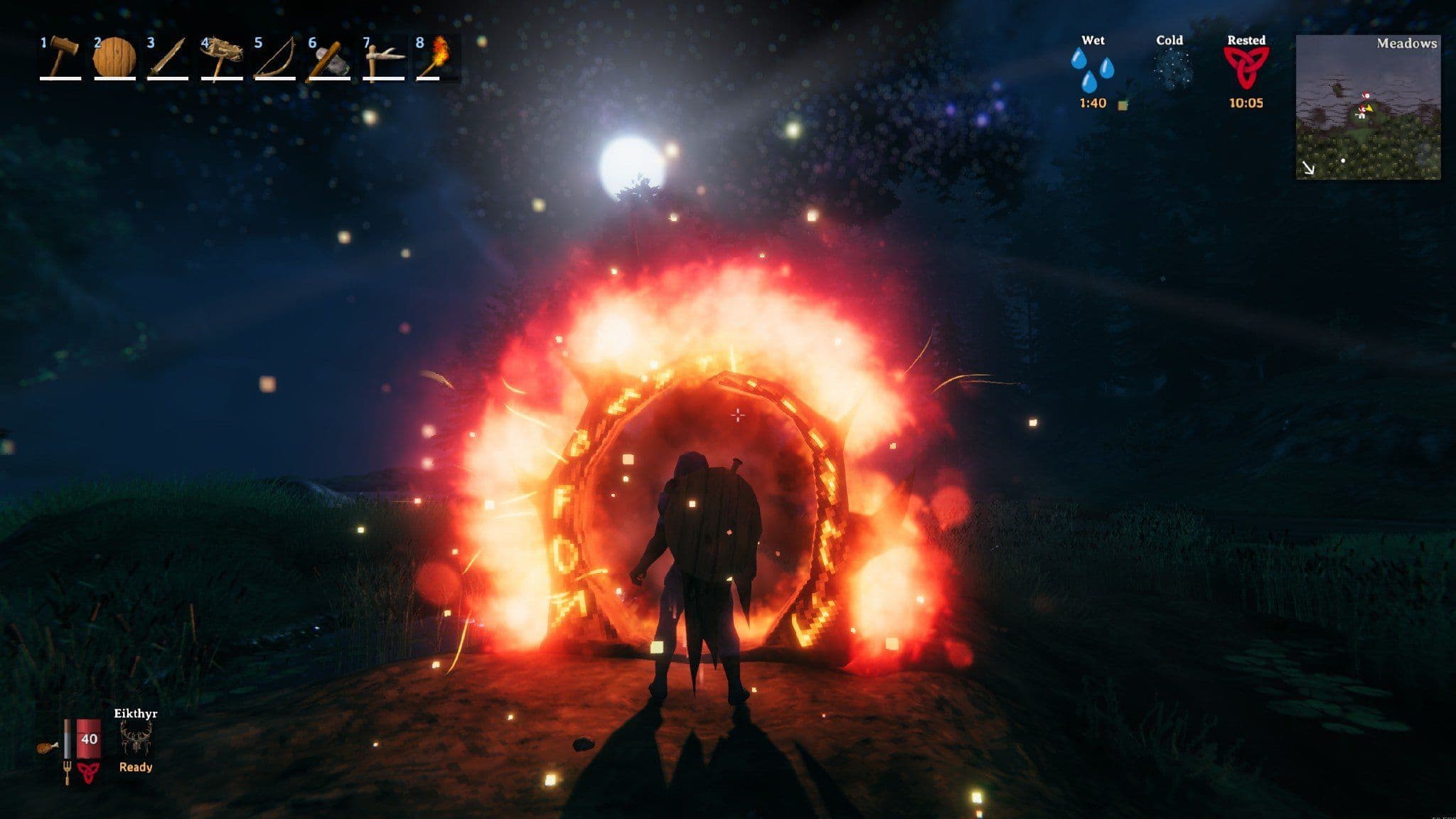
A portal pair earns its cores when it replaces a dangerous or repeated route.
Build that pair immediately after the first Smelter when your base is far from the Black Forest, a mining coast, or a recovery point you expect to revisit. If your copper route is a short walk, keep the four cores in reserve instead. The portal becomes valuable when it removes a repeated corpse run, a dangerous night crossing, or a long trip between a protected base and a resource camp.
The shortcut has a hard limit: portals do not transport ores or processed metal. They can move you, food, tools, and most building supplies, but copper, tin, bronze, iron, silver, and Black Metal still need a cart or boat. Plan the portal around the route you want to travel without metal, not around the ore you still need to haul home.
A Ward costs one core, five Fine Wood, and five Greydwarf Eyes. It is a multiplayer access tool: it locks doors and prevents unauthorized building, but it does not make the base indestructible. Put it ahead of a portal only when controlling a shared base matters more than shortening your exploration route. In a solo world, that condition rarely arrives before the first portal pair.
Past the First Ten, Let the Biome Choose
The other core-powered structures arrive with later materials, so their priority should follow the biome you are actually entering.
Build the Bonfire after the Swamp has supplied Ancient Bark and your base needs a weatherproof fire. It is a meaningful comfort upgrade, but it does not open a new metal tier, so it should not take cores away from a portal pair or the next progression station.
Build the Blast Furnace after you have an Artisan Table and Black Metal Scrap to process. It is the right late-game claim on five cores when Black Metal is blocking your next weapons and armor. The Stone Oven also waits for the Artisan Table; choose it when prepared food is the bottleneck instead of equipment. Its value is real, but it is a cooking upgrade, not a reason to delay the furnace in a Plains push.
The practical order is conditional but easy to follow: kiln before Smelter when coal is scarce, Smelter before kiln when coal is already covered, then a four-core portal pair when it removes a route. A Ward belongs to a shared base, a Bonfire belongs after the Swamp, and the Blast Furnace or Stone Oven belongs to the late-game bottleneck in front of you.