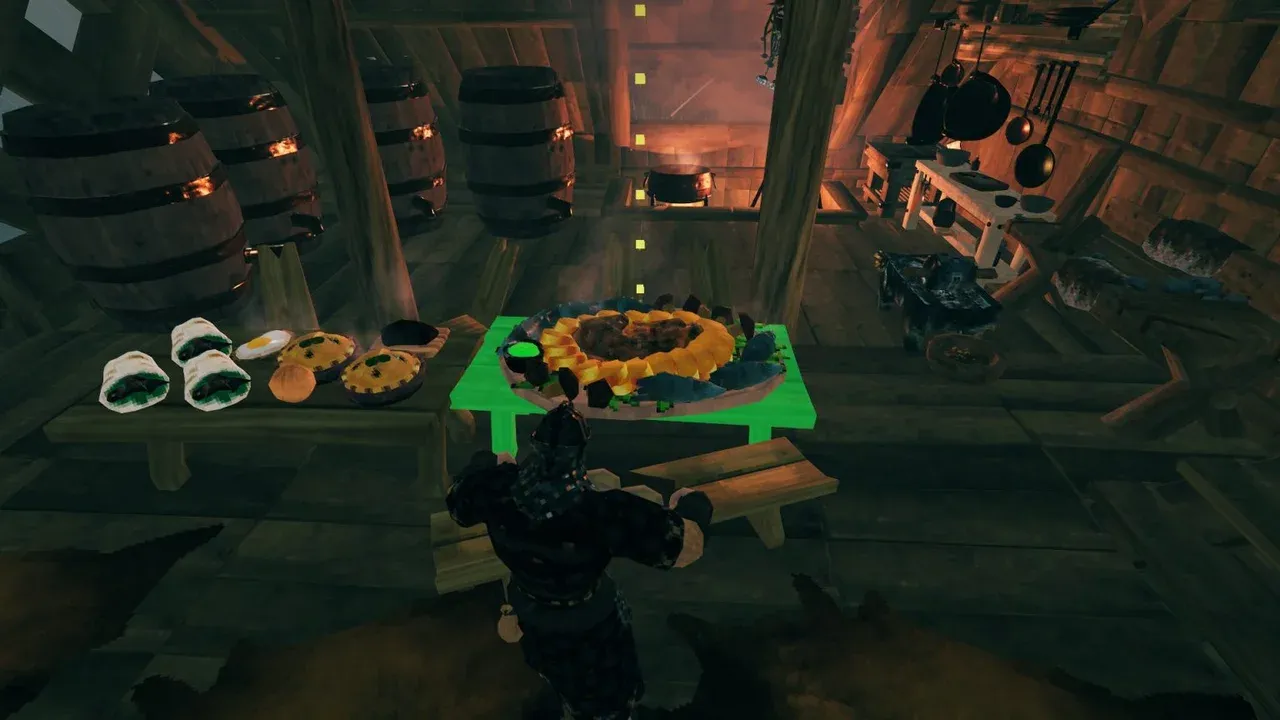
Valheim’s feasts look like a progression ladder: Meadows first, Ashlands last, with bigger numbers as the biomes get harsher. But that ranking is only half the story. Every feast is a placed meal with 10 total servings and a 50-minute duration, so its real value depends on whether you are feeding a settlement, staging a voyage, hauling ore, or supporting a mixed party.
The biome label also does not tell you the moment the recipe becomes available. The Bog Witch’s spice gates and the ingredient chain can push even the early feasts into a post-The-Elder kitchen, while Sailor’s Bounty sits on an Ocean detour rather than a straight land-biome route. The result is a set of useful but deliberately balanced meals, not eight automatic best-in-slot foods.
This guide compares all eight live feasts by their biome theme, ingredients, stat profile, unlock boundary, and the session each one supports. Use the order to understand progression, then choose the meal that removes your largest logistical problem—not simply the one with the highest stat line.
Feasts turn one food-prep session into a shared 50-minute expedition buffer
A feast is a food station, not an inventory item. You prepare it at the Food Preparation Table, place it with the Serving Tray, and eat from the placed meal. Each feast provides 10 servings total across the group and lasts 50 minutes, turning one preparation session into a shared buffer for an expedition or work shift.
That format changes the tradeoff compared with ordinary food. You can keep three different foods active and tailor them to health, stamina, or eitr, while a feast gives the group a balanced profile instead of specializing in one role. A fighter, builder, and magic user can all share the same meal, but each may still want individually optimized foods for demanding combat.
The setup has real overhead. The Food Preparation Table costs 5 Iron, 20 Finewood, and 15 Leather Scraps, and rain damages it, so place it under cover. The Cooking skill can reduce preparation time and sometimes produce bonus food, making a regular settlement kitchen more efficient. Once served, though, plan the placement carefully: a partially eaten feast yields nothing if you remove or dismantle it.
For a multiplayer party, the practical use is straightforward: prepare the feast at a covered base, place it before everyone leaves, and let the group take its servings before the expedition begins. That is more convenient than asking every player to carry the same meal, but less flexible than individual food loadouts. Treat the feast as a shared 50-minute resource—not personal food storage—and its logistical advantage becomes clear.
The remaining question is whether a feast’s named biome tells you when that shared meal is actually available.
The biome ranking tracks recipe themes and gates, not the moment you first unlock a feast
The eight live feasts follow these biome labels: Meadows, Black Forest, Swamp, Ocean, Mountains, Plains, Mistlands, and Ashlands. That order is useful because it groups recipes by their ingredients, progression tier, and setting. It is not a promise that you can craft each feast as soon as you enter its named biome.
The main reason is the Bog Witch’s spice system. Woodland Herb Blend becomes available only after defeating The Elder, while Seafarer’s Herbs requires a Serpent kill. Mountain Peak Pepper Powder is gated behind Moder, Grasslands Herbalist Harvest behind Yagluth, Herbs of the Hidden Hills behind The Queen, and Fiery Spice Powder behind Fader. The feast’s biome label therefore describes its theme and approximate tier; the spice determines whether that tier has actually opened for your character.
That boundary affects the first three labels most clearly. Whole Roasted Meadow Boar, Black Forest Buffet Platter, and Swamp Dweller’s Delight all require Woodland Herb Blend, so they are commonly post-The-Elder settlement meals despite their early-biome names. You may have the deer, boar, berries, thistle, turnips, or other supporting ingredients well before then, but the feast system still keeps all three behind the same trader progression point.
Ocean also breaks a strict land-biome ladder. Sailor’s Bounty belongs to the Ocean category because its access and theme depend on maritime resources and Serpent progression, but sailing is a side route rather than a mandatory step between the Swamp and Mountains. Treat it as an Ocean detour that becomes relevant when your group has committed to coastal travel, not as the inevitable fourth feast in a linear campaign.
The same logic applies at the other end of the list. The current pre-1.0 game has no verified Deep North feast, so the eight-feast comparison ends with Ashlands rather than implying a ninth recipe for the unreleased biome. When planning a meal, use the biome order to find the recipe tier you want, then check its spice gate and ingredient bottleneck against your actual progression. That makes the early feasts easier to place: they are shared kitchen stockpiles unlocked at a common boundary, which is why their recipes are best compared together next.
Meadows, Black Forest, and Swamp feasts are settlement meals with rising preparation costs
Once the biome labels are treated as recipe themes rather than instant unlocks, the first three feasts form a clear settlement progression. Their stat lines barely change; the real escalation is in the kitchen supply chain.
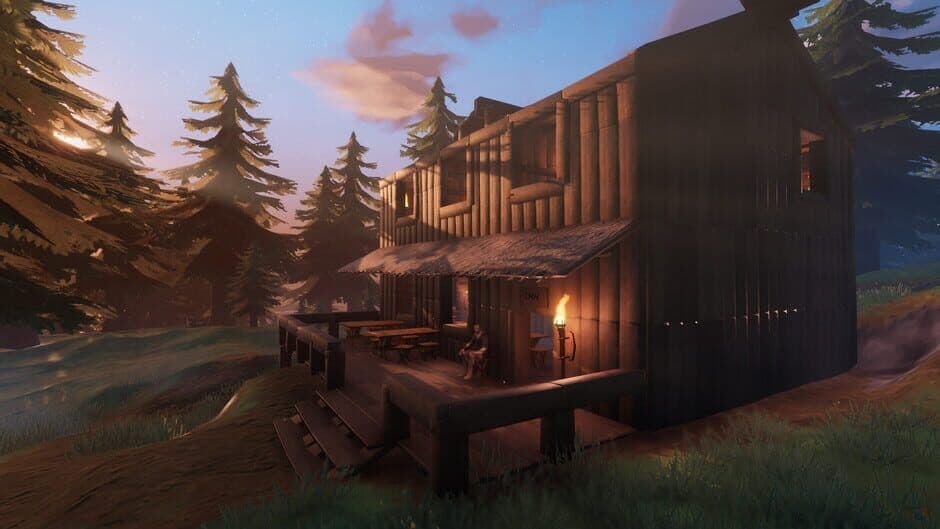
A settlement kitchen is the natural staging point for shared feasts.
| Feast | Ingredients | Stats | Access gate | Best fit |
|---|---|---|---|---|
| Whole Roasted Meadow Boar | Cooked Deer Meat ×2, Cooked Boar Meat ×5, Dandelion ×4, Woodland Herb Blend ×1 | 35 health, 35 stamina, 2 hp/tick, 50 minutes | The Elder → Woodland Herb Blend | The lowest-effort shared base meal |
| Black Forest Buffet Platter | Deer Stew ×3, Thistle ×5, Queen’s Jam ×4, Woodland Herb Blend ×1 | 35 health, 35 stamina, 3 hp/tick, 50 minutes | The Elder → Woodland Herb Blend | A kitchen with established stew and preserve production |
| Swamp Dweller’s Delight | Sausages ×8, Bloodbag ×4, Turnip Stew ×2, Woodland Herb Blend ×1 | 35 health, 35 stamina, 3 hp/tick, 50 minutes | The Elder → Woodland Herb Blend | A settlement sustaining Swamp hunting, farming, and cooking |
Whole Roasted Meadow Boar is the simplest starting point because its ingredients stay close to the Meadows food chain: deer, boars, and dandelions. It still requires cooked meats rather than raw drops, plus Woodland Herb Blend, but it avoids the layered sub-recipes used by the other two. Choose it when your group wants a dependable communal meal with the least preparation overhead.
Black Forest Buffet Platter is more demanding because the complete 10-serving feast requires three Deer Stews and four Queen’s Jams. The Black Forest supplies much of the supporting chain—berries, thistle, carrots, and mushrooms—but the feast rewards a settlement that has already standardized its cooking rather than a player making one emergency meal. Its healing improves to 3 hp/tick, but its health and stamina remain 35/35, so the benefit is convenience and recovery, not a major power increase.
Swamp Dweller’s Delight shifts the burden from layered pantry work to sustained Swamp logistics. Eight Sausages require a large supply of entrails, boar meat, and thistle; Bloodbags come from Leeches; and Turnip Stew depends on cultivated turnips. Once bloodbags, turnips, and sausages are already part of your settlement’s routine, the recipe becomes practical. Before then, its ingredient list can be more work than the identical 35/35 stat profile justifies.
All three also share the same progression boundary: Woodland Herb Blend is unavailable from the Bog Witch until after The Elder. That makes them commonly post-The-Elder stockpile meals, even if the named biome ingredients were collected earlier. In practice, you are choosing between three kitchens at the same progression point: Meadow for the lowest preparation burden, Black Forest when Deer Stew and Queen’s Jam production is established, and Swamp when your group can sustain bloodbags, turnips, and sausages.
That makes the early feast choice a base-session decision rather than a race toward the highest number. Prepare whichever recipe matches the supply chain your settlement can maintain, then use it to feed a group before a long work period or expedition. The next comparison leaves the shared early kitchen behind and looks at two more specialized detours: an Ocean voyage and a Mountain resource run.
Ocean and Mountains reward detour planning more than linear progression
The Ocean and Mountain feasts are both mid-progression meals with a 45 health, 45 stamina, and 3 hp/tick profile lasting 50 minutes. Their value depends less on numerical superiority than on where your next session takes you and which ingredient chain your settlement can sustain.
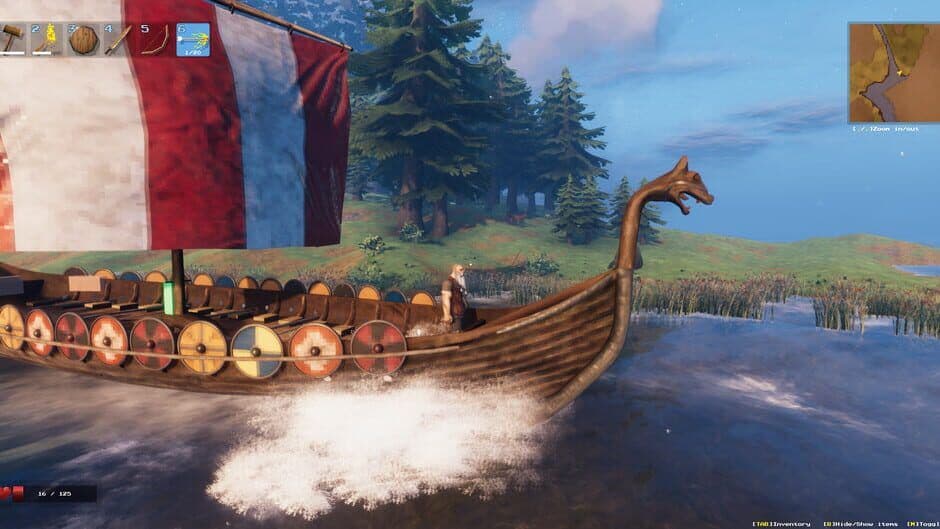
Sailor’s Bounty is best staged at the coast before a voyage.
| Feast | Ingredients | Stats | Access gate | Best fit |
|---|---|---|---|---|
| Sailor’s Bounty | Cooked Fish ×5, Thistle ×4, Cooked Serpent Meat ×2, Seafarer’s Herbs ×1 | 45 health, 45 stamina, 3 hp/tick, 50 minutes | Serpent kill → Seafarer’s Herbs | Coastal staging, fishing, and voyages |
| Hearty Mountain Logger’s Stew | Wolf Skewer ×2, Onion Soup ×3, Carrot ×4, Mountain Peak Pepper Powder ×1 | 45 health, 45 stamina, 3 hp/tick, 50 minutes | Moder → Mountain Peak Pepper Powder | Mountain hauling and resource expeditions |
Sailor’s Bounty is constrained by its ingredient and spice gates: you need five cooked fish and two Cooked Serpent Meat, and killing a Serpent is also what unlocks Seafarer’s Herbs from the Bog Witch. That makes it a voyage meal for a group already committed to sailing and coastal supply work, rather than a recipe you prepare simply because you have reached the shoreline.
Stage it at a coastal base before departing. Although the feast is designed for shared eating, its Serving Tray requirement makes a shipboard setup impractical: the useful moment to serve it is while the crew is gathered at a stable shore kitchen, not while the party is moving between islands. A fishing trip, coastal construction run, or planned voyage can then use the 45/45 profile without asking every player to organize the same food individually.
Hearty Mountain Logger’s Stew follows the same balanced-stat principle but fits a different supply chain. Two Wolf Skewers, three Onion Soups, and four Carrots turn Mountain ingredients into a prepared meal suited to hauling ore, gathering resources, or exploring snowy terrain. Its Mountain Peak Pepper Powder is locked behind Moder, so the recipe is not automatically available when you first reach the biome. It becomes a practical expedition stockpile once wolf, onion, and carrot production is already established and the group has crossed that boss boundary.
Their equal health and stamina values are useful when a session mixes travel, harvesting, building, and manageable encounters; for a combat-heavy Mountain run, use food selected specifically for health or stamina. Choose Sailor’s Bounty when the bottleneck is keeping a coastal crew supplied, and choose Mountain Logger’s Stew when the bottleneck is sustaining a long resource expedition. After that, the Plains feast raises both sides of the balanced profile again and becomes the stronger all-purpose option for extended land sessions.
Plains Pie Picnic is the strongest balanced logistics step before eitr enters the table
Plains Pie Picnic improves on the earlier balanced feasts without changing their basic role. It provides 55 health, 55 stamina, 4 hp/tick, and a 50-minute duration, making it the strongest non-eitr feast currently verified. Those gains matter most when you need one meal to cover a long session rather than a short, specialized fight.
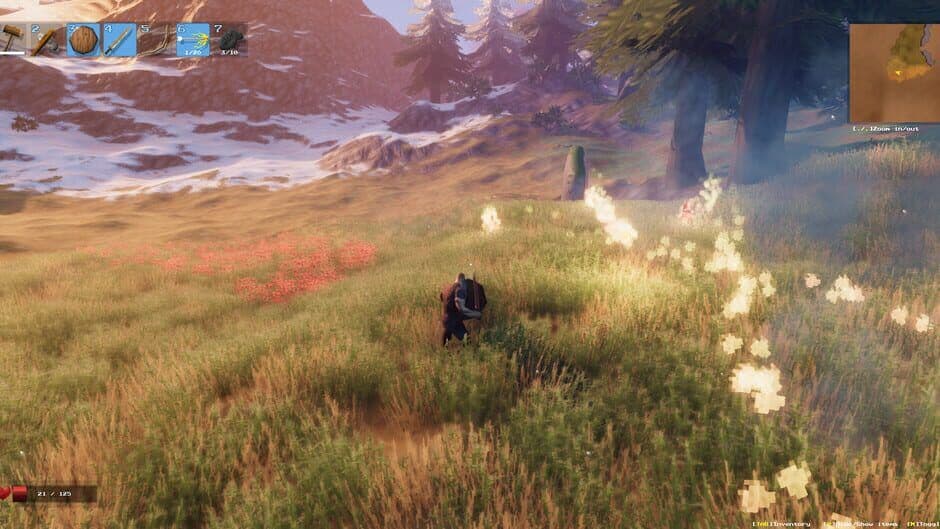
Plains Pie Picnic is built for long harvesting and construction sessions.
Its recipe is also a Plains-scale supply project: Bread ×3, Lox Meat Pie ×2, Cloudberries ×5, and Grasslands Herbalist Harvest ×1. The barley products, cloudberries, and lox all tie the feast to Plains production, while Grasslands Herbalist Harvest remains locked behind Yagluth. Reaching the biome is therefore not enough; you want a reliable barley-and-lox kitchen and the required spice access before treating this as a regular stockpile meal.
For a long Plains harvesting or construction session, the 55/55 profile lets you work, travel, and handle manageable encounters for most of an hour without repeatedly stopping to reorganize food. The same is true for a large building project supplied by several players: one placed picnic can provide a predictable shared buffer while everyone gathers materials or moves between work sites.
Because Valheim still gives you only three active food slots, use them for more specialized health- or stamina-focused foods during a boss fight or a role built around blocking, dodging, or sustained attacks. Prepare the picnic when your priority is reducing food micromanagement during extended Plains logistics; switch to specialized foods when combat performance becomes the session’s main constraint.
The remaining feasts raise the numbers again and introduce the first feast with eitr, shifting the comparison from all-purpose logistics toward mixed-party and endgame use.
Mistlands and Ashlands offer the strongest feasts, but specialized foods still win roles
The late-game feasts raise the balanced-food ceiling and introduce eitr. Their long duration and equal health-and-stamina profile make them useful for mixed parties, with the specific role tradeoffs becoming clearer in each recipe below.
| Feast | Ingredients | Stats | Access gate | Best fit |
|---|---|---|---|---|
| Mushrooms Galore à la Mistlands | Misthare Supreme ×1, Cooked Seeker Meat ×3, Yggdrasil Porridge ×1, Herbs of the Hidden Hills ×1 | 65 health, 65 stamina, 33 eitr, 5 hp/tick, 50 minutes | The Queen → Herbs of the Hidden Hills | Mixed Mistlands exploration |
| Ashlands Gourmet Bowl | Cooked Asksvin Tail ×3, Vineberry Cluster ×5, Scorching Medley ×2, Fiery Spice Powder ×1 | 75 health, 75 stamina, 38 eitr, 6 hp/tick, 50 minutes | Fader → Fiery Spice Powder | Post-progression endgame gatherings |
Mushrooms Galore à la Mistlands is the first feast that supports eitr users. Its ingredients combine Misthare Supreme, Seeker meat, and a Yggdrasil Porridge, tying the recipe to hares, Seekers, Jotun Puffs, sap, and royal jelly from the Mistlands supply chain. Herbs of the Hidden Hills is also gated behind The Queen, so entering the biome does not immediately make the feast available.
The porridge deserves careful attention when planning the ingredient list: Yggdrasil Porridge uses Sap ×4, Barley ×3, and Royal Jelly ×2. A conflicting listing uses barley flour, but that version is stale or erroneous and should not guide your preparation. Once the recipe chain is established, the feast gives a mixed party a useful compromise: fighters and explorers receive substantial health and stamina, while magic users gain 33 eitr from the same placed meal.
For a mage-led run, 33 eitr is a compromise: dedicated eitr foods provide a stronger magic-focused profile. Use Mushrooms Galore à la Mistlands when a group is exploring together and does not want to split into completely different food plans. A party with a mage, a shield user, and a gatherer can share the feast before moving through the Mistlands, then reserve individual food slots for role-specific priorities.
Ashlands Gourmet Bowl is the numerical peak of the current feast set: 75 health, 75 stamina, 38 eitr, 6 hp/tick, and 50 minutes. Its recipe is correspondingly demanding. Three Cooked Asksvin Tails require Ashlands combat, five Vineberry Clusters and the ingredients for two Scorching Medleys draw on the region’s late-game farming and foraging, and Fiery Spice Powder is locked behind Fader.
That progression makes the bowl a reward for completing the Ashlands route, not an entry meal for attempting it. The biome’s boiling water, cinder rain, and dense hostile population make gathering the ingredients part of the endgame challenge. By the time you can reliably produce the bowl, you have already overcome the access and survival problems that might have made it most useful as preparation.
Its best scenario is therefore an established endgame kitchen preparing a group meal after Fader. The bowl can support a post-progression building session, a return expedition, or a multiplayer gathering where balanced health, stamina, and some eitr are more valuable than forcing every player into the same specialized role. It is the strongest feast, but its advantage is convenience across a group rather than dominance in any single combat role.
Use Mushrooms Galore à la Mistlands for mixed exploration parties that value shared survivability and a modest eitr contribution. Reserve Ashlands Gourmet Bowl for a sustainable endgame kitchen and post-Fader sessions. Once the recipe, spice, and ingredient gates are all satisfied, choose between them according to the group’s actual activity—not simply the larger number on the Ashlands bowl.
Choose the feast by session, bottleneck, and party composition
The highest-stat feast is not automatically the best choice. Because you can have only three foods active, specialized health-, stamina-, or eitr-focused foods can outperform a balanced feast when combat or magic is the session’s main constraint. Feasts are strongest when a group wants one shared meal that covers a broad activity for most of its 50-minute duration.

Choose the feast that fits the group’s shared session.
Use the progression order as a practical decision path:
- Base stockpile: Choose Whole Roasted Meadow Boar, Black Forest Buffet Platter, or Swamp Dweller’s Delight according to the kitchen chain your settlement already sustains.
- Coastal voyage: Stage Sailor’s Bounty at a coastal base when the group is fishing, sailing, or preparing maritime supplies.
- Mountain hauling: Use Hearty Mountain Logger’s Stew for a long resource run where balanced health and stamina matter more than combat specialization.
- Plains logistics: Prepare Plains Pie Picnic for extended harvesting, building, or travel sessions that benefit from fewer food interruptions.
- Mixed Mistlands party: Choose Mushrooms Galore à la Mistlands when fighters, gatherers, and magic users need a shared compromise rather than identical specialized loadouts.
- Post-Fader gathering: Reserve Ashlands Gourmet Bowl for an established endgame kitchen and group sessions after its progression and ingredient gates are secure.
Before crafting, check four constraints: whether the required spice is unlocked, whether the ingredient chain is sustainable rather than assembled for one meal, whether the party can use a placed shared meal, and whether anyone’s combat role needs specialized food more urgently. If the group is split between builders, explorers, fighters, and magic users, a feast can simplify preparation; if everyone is entering a demanding fight, individual food choices may be more valuable.
Choose the feast that removes the session’s largest logistical bottleneck, then reserve the remaining food slots for the role-specific stats the group cannot afford to compromise.