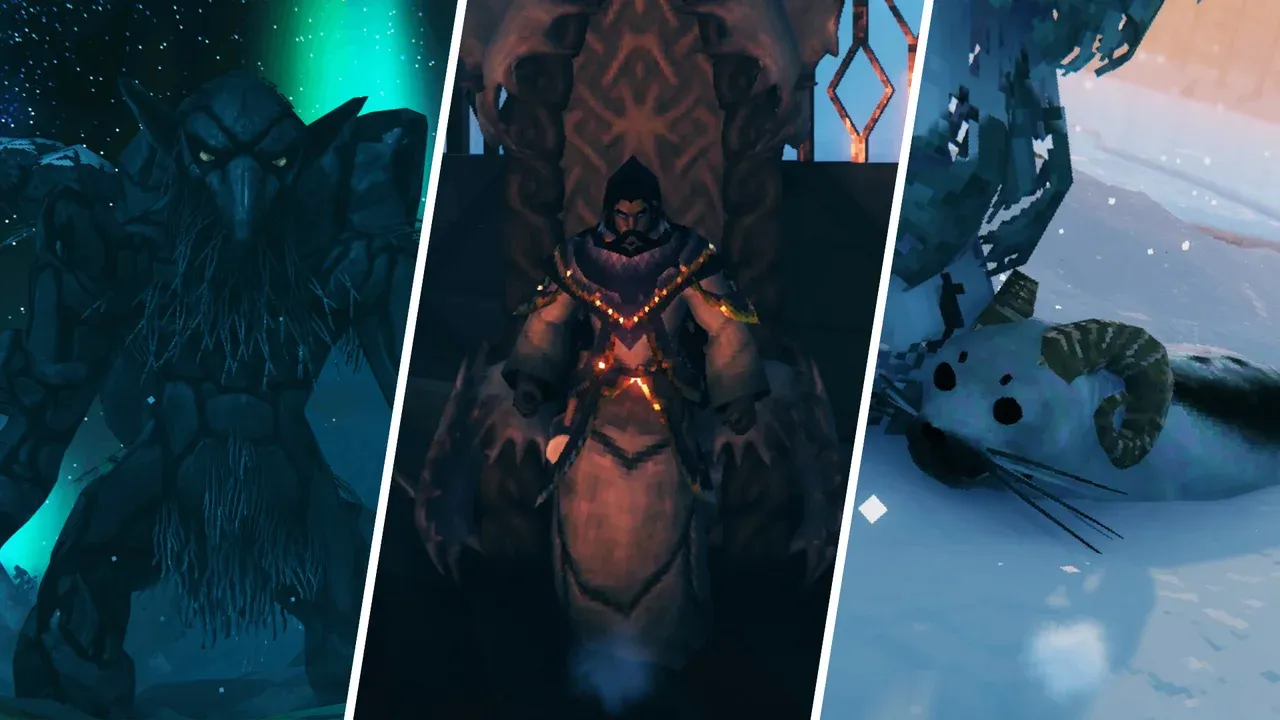
Valheim’s final biome is not being built as a longer climb up the Mountains. Iron Gate’s preview points to a region that can appear across a large part of a 1.0 world and be entered earlier than its final-biome label suggests. Its danger comes from how the terrain, creatures, dungeons, and resources complicate your route—not from a simple “bring endgame gear” gate.
That makes Deep North more important than another tier of weapons. It asks you to read the map differently: ice is not ordinary ground, a resource node can fight back, and a short tunnel can be more dangerous than a long trek across open snow.
The Deep North has a date, but not a complete blueprint
On June 7, Iron Gate announced that Valheim 1.0 will launch on September 9, 2026, with Deep North, new enemies, bases, and weapons. The release also adds PlayStation 5 and Nintendo Switch 2 versions, with full crossplay across platforms. A June 24 developer post confirmed that Deep North is part of that 1.0 launch.
The date is firm; the full feature list is not. Iron Gate’s public material has not named every final enemy, resource, crafting tier, or boss. It has also said there will be no Public Test Branch for 1.0, so the preview details are the clearest look available before the finished release.
What follows is therefore a map of the confirmed direction, not a complete Deep North database. That distinction matters most when the community fills in the gaps with expectations.
The final biome is built for rerouting
PC Gamer’s hands-on preview describes Deep North as closer to the Meadows or Black Forest than to the Mountains. A lot of it will generate in a 1.0 world, and it is intended to be accessible early, with new resources and environmental hazards rather than a single endgame corridor.
The snow itself does not slow the player down; Iron Gate decided that would not be fun. Frozen lakes are slippery, though, and the preview expedition met threats of different difficulty as it pushed farther into the biome. Deep North can therefore sit on a route you choose for convenience while still making that shortcut costly.
That is the useful contrast with the Mountains. The Mountains ask whether you have the right protection and gear for a hostile altitude. Deep North asks whether the route you picked leaves you an escape when the ground, visibility, or next encounter turns against you.
Every resource stop carries a risk
The surface encounters reinforce that map problem. Seals are friendly, like deer in the Meadows. Moose can be tamed and mounted, but they are still capable of turning an apparently quiet clearing into a fight. The preview also showed Barka, a giant creature described as what a Greydwarf becomes just before it morphs into an elder.
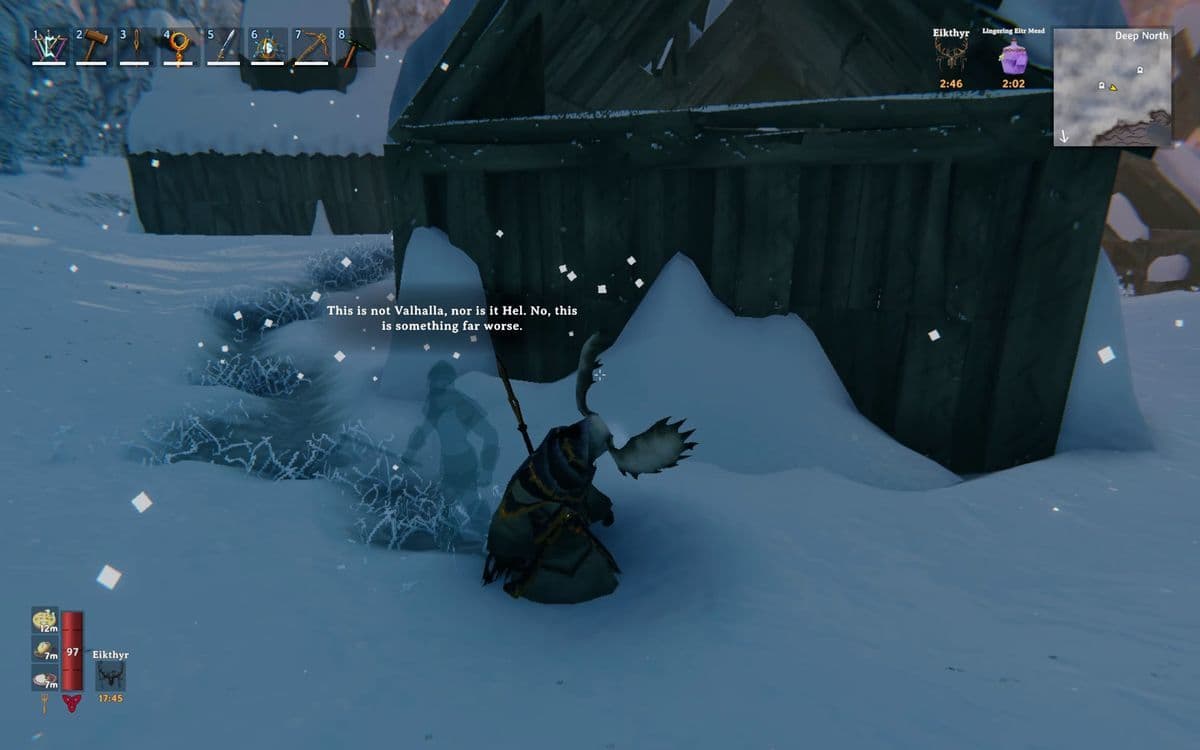
A quiet clearing can still become a Deep North encounter.
Abandoned villages add a different kind of uncertainty. Ghostly Vikings wander through them and talk without responding to the player, while Iron Gate said some spirits will “gift you stuff.” The region is not only asking you which enemy to fight; it is making the landmarks themselves part of the story.
Gammeltrolls push the idea into resource gathering. They are living mining nodes that provide a large supply of raw materials, but they are much more aggressive than the Leviathans in the Ocean. The preview demonstrated using explosives to remove a Gammeltroll’s legs before harvesting its ore. In Deep North, stopping to mine is also a decision about whether you have the space and time to survive the stop.
Winding Tunnels turn exploration inward
Deep North’s Winding Tunnels are the clearest example of the biome changing how you navigate. The hands-on preview entered one and found tight turns and cramped spaces: a familiar Valheim dungeon structure, but with more opportunities to lose your bearings. It also encountered an Eyeless One inside.
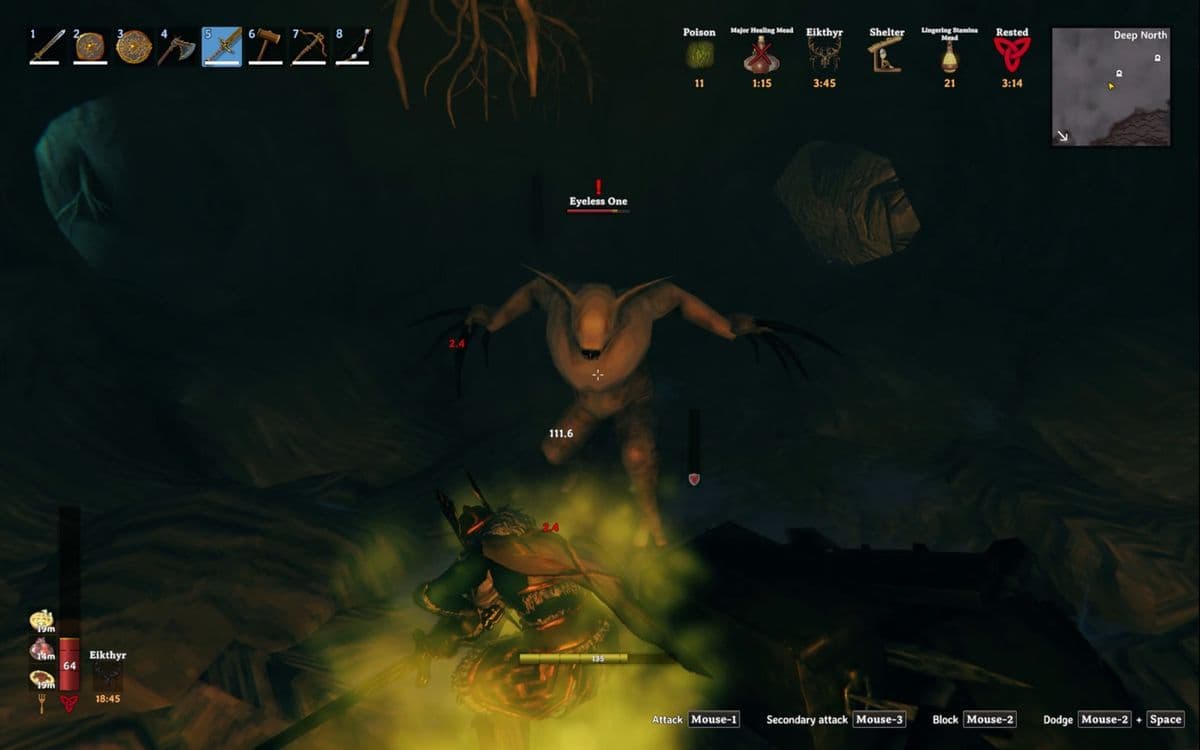
The Winding Tunnels preview includes an encounter with the Eyeless One.
A second dungeon entrance stood behind a large gate wrapped in golden chains, but the preview did not establish what lies beyond it. That leaves the useful conclusion intact without inventing a boss or reward: Winding Tunnels are confirmed, Eyeless One is confirmed, and the locked entrance signals another layer of escalation.
The surface makes every resource stop costly; Winding Tunnels make every turn costly. Together, they give Deep North an identity beyond “the snowy biome.”
Starting fresh protects the reveal
Iron Gate’s 1.0 FAQ makes the world decision straightforward:
- Existing worlds remain playable and receive new content.
- New biome generation works properly only in areas you have not explored.
- You can head straight to Deep North, but Iron Gate recommends starting over for the best experience.
If your group has a large build it does not want to abandon, keep the world and leave the far north unexplored. If you want the 1.0 journey to reveal the biome as intended—and want achievements to track from the update onward—start a fresh world on September 9.
Do not wait for an Ocean overhaul alongside it: Iron Gate says 1.0 focuses on Deep North, with no update specifically for the Ocean. It has also left the timing of any future content open. For now, the practical choice is clear: preserve an unexplored north in your old world, or make a new map where the final biome can change the route from the first expedition.