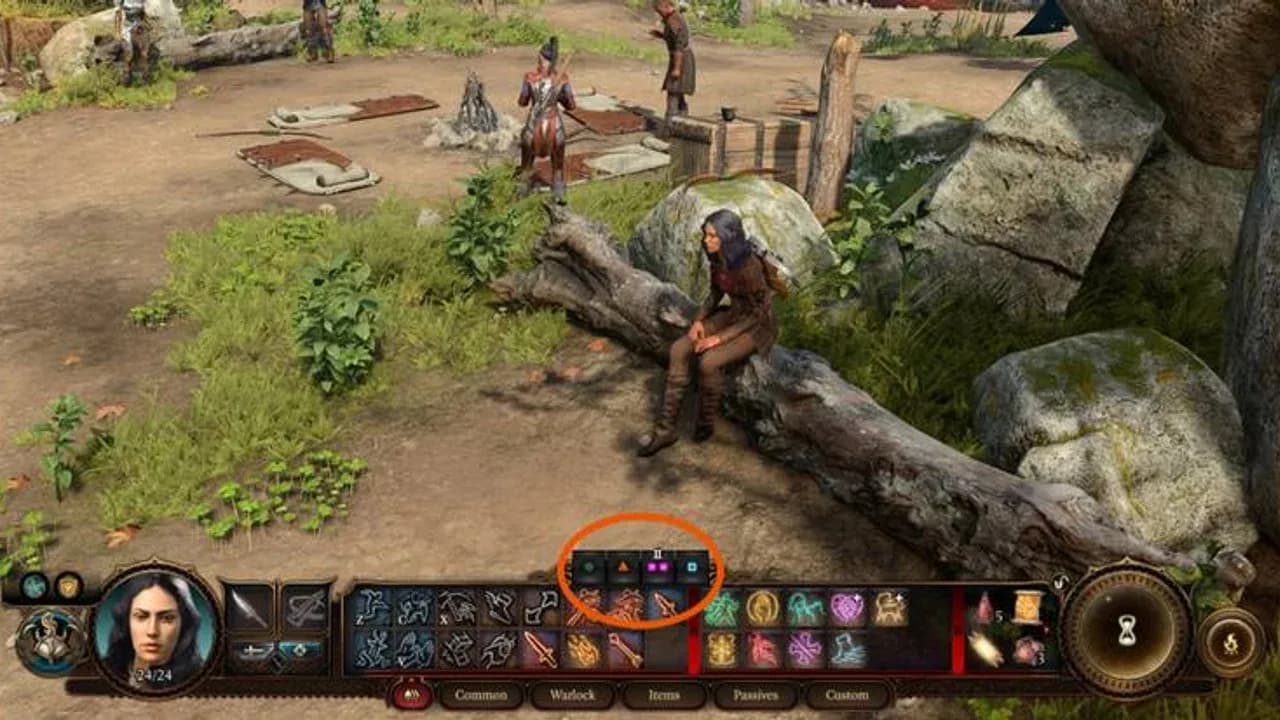
How to Use the Short and Long Rest Systems in Baldur's Gate 3
Your adventure in Baldur's Gate III is built on a foundation of moments spent at camp—a place to recover, reflect, and connect. But before you can share a drink with a companion or restore your spell slots, you need to know how to get there. This guide starts by explaining the core UI and access methods for Baldur's Gate 3's resting systems, so you can confidently manage your party's resources from the very beginning.
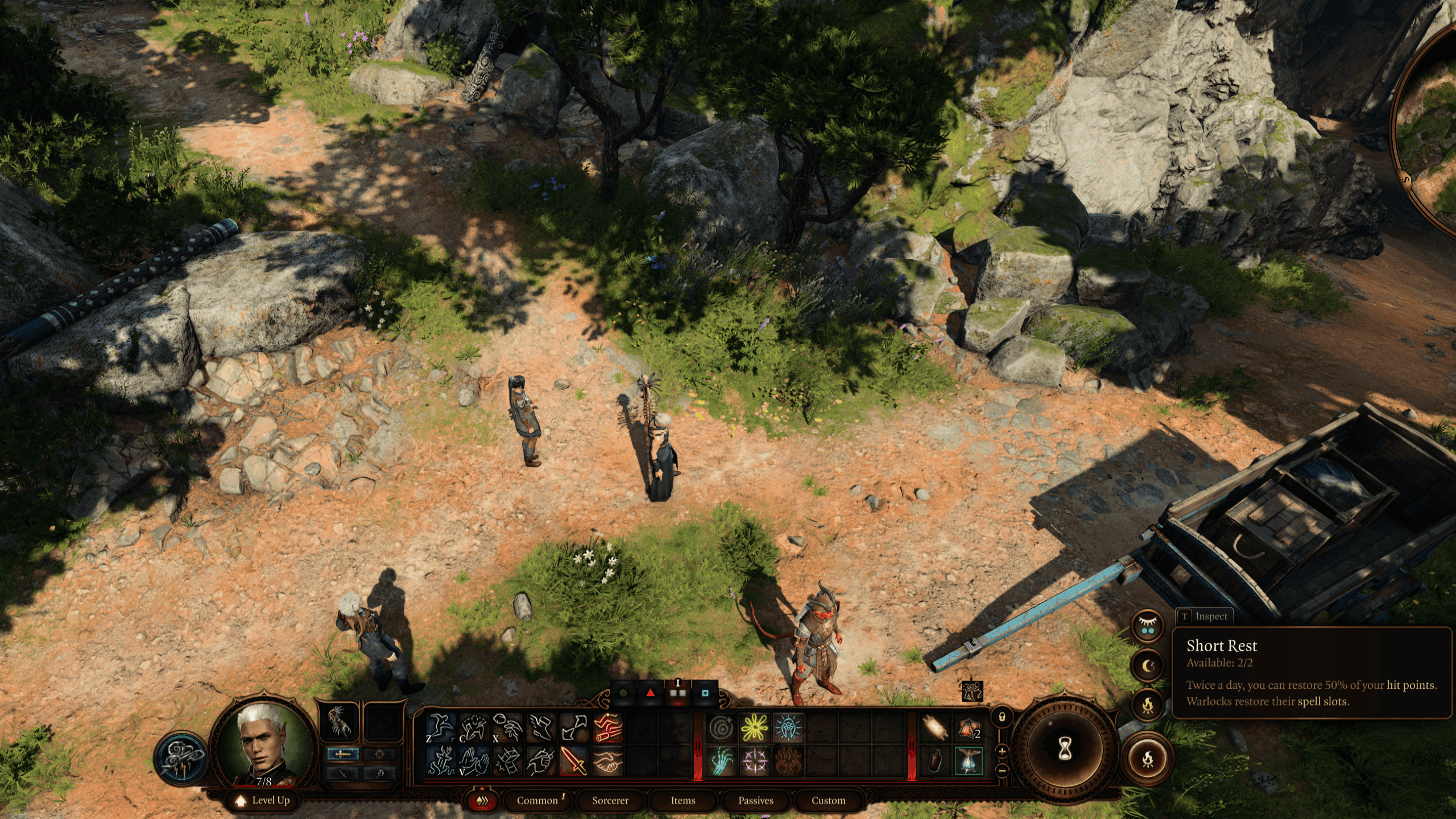
Access the resting menu via the campfire icon in the bottom right of the UI.
The Hub of Your Adventure: Accessing the Camp and Rest Menu
Think of your camp as your portable home base. You'll return to it constantly, not just to sleep, but to swap party members, manage your gear, and progress the story. The gateway to all of this is the campfire icon, located in the bottom right corner of your screen. Clicking this icon opens your primary resting menu, presenting three clear choices: Go to Camp, Short Rest, and Long Rest.
Selecting Go to Camp instantly transports your party to the campsite hub without initiating a rest. This is perfect for when you need to speak to a companion who's waiting back at camp, rummage through the Traveller's Chest for a specific item, or visit Withers to change your class. It's your fast-travel ticket to your home away from home.
When you're ready to end the day and fully recover, you'll need to initiate a Long Rest. After using Go to Camp, you'll see your camp in its daytime state. To begin the rest process, interact with a bedroll or the central campfire—this is the End the Day action. This transitions the scene to nighttime, where companions may approach you for conversations. To finalize the rest, you must then interact with your assigned bedroll a second time and select Go to Bed. This opens the supply selection screen where you'll allocate 40 camp supplies for a full rest.
You can Go to Camp anytime you're in a safe area, even right after a tough fight. It's a free way to check in with companions for urgent story conversations without consuming any resources.
With these basic controls mastered, you're ready to strategically manage your party's stamina and story. Let's move on to understanding what each type of rest actually does for you.
Short Rest Mechanics and Class-Specific Benefits
Think of a Short Rest in Baldur's Gate III as your party's tactical breather—a quick, on-the-fly patch-up that keeps the momentum going without a full retreat to camp. It’s the clutch heal between skirmishes, and for certain classes, it’s the key to unleashing their most powerful tricks again and again.
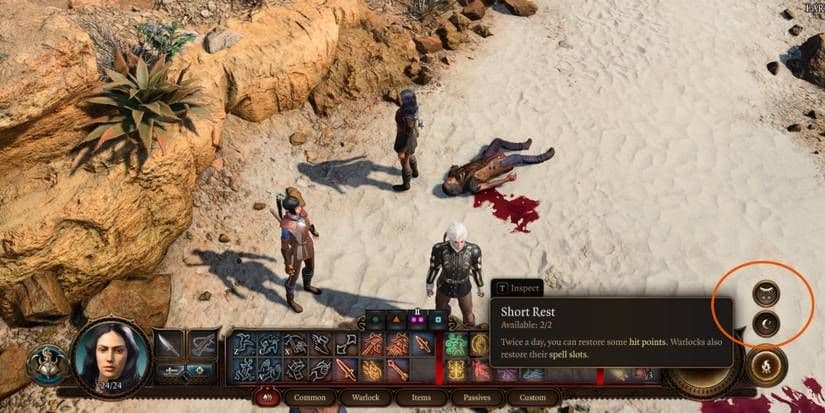
Short rests allow the party to recover health and abilities while exploring the world.
Your access to this vital tool is the closed eye icon with two blue dots beside your hotbar. You get two per day, and they reset only by taking a Long Rest. Click it, and your entire active party immediately regains 50% of their HP. No supplies needed, no travel required. It’s pure efficiency.
Get in the habit of using a Short Rest after any moderately tough fight. Saving your spell slots and potions for the real emergencies is a cornerstone of smart resource management in Baldur’s Gate III.
But the real magic of a Short Rest isn’t just the health—it’s the class-specific resets. This is where your party’s endurance is truly tested.
- Warlocks are the short-rest kings. Their precious Warlock Spell Slots are restored fully during a Short Rest, letting them blast out their most potent spells far more frequently than other casters.
- Fighters get a major boost, refreshing game-changing skills like Action Surge and Second Wind. If you’re playing a Battle Master Fighter, your Superiority Dice also come back, ready for more precise and powerful maneuvers.
- Monks operate on a different energy. All of their Ki Points—fuel for flurries of blows, stunning strikes, and incredible mobility—are restored on a Short Rest.
- Druids can tap back into nature, refreshing up to two uses of their Wild Shape.
- Clerics and Paladins regain their divine authority, with Channel Divinity and Channel Oath charges returning to their arsenal.
- Bards of level 5 or higher get their Bardic Inspiration charges back, ready to tip the scales of skill checks and combat once more.
- Even Sorcerers with the Wild Magic subclass get a quirky benefit: their Tides of Chaos feature is refreshed, letting them gamble on chaos for advantage.
If you’ve been leaning solely on Long Rests, you’re missing half the strategy. Mastering when to use these free, instant refreshes—especially for your Warlocks, Fighters, and Monks—is what separates a struggling party from an unstoppable one.
How to Manage Camp Supplies and Long Rest Costs
Think of Camp Supplies as your party's pantry—the stack of food and drink that fuels your adventures in Baldur's Gate III. Managing this resource effectively is the difference between a well-rested, spell-slinging powerhouse and a limping, cantrip-only crew. Here’s how to master the economy of rest.
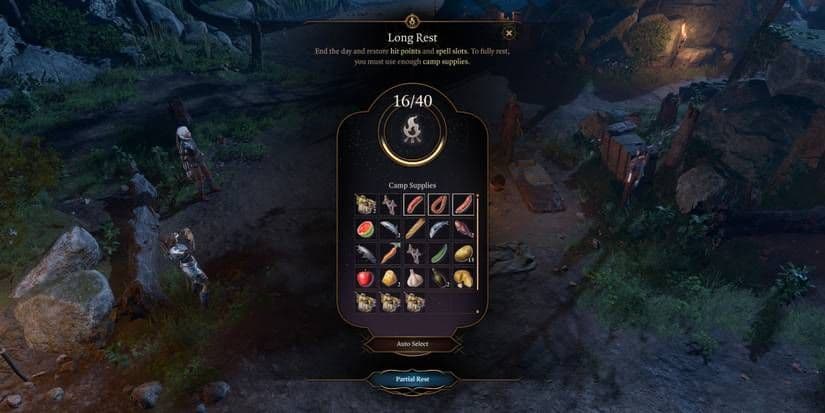
The camp supplies management screen allows you to select food for a Long Rest.
The core rule is simple: a Long Rest requires 40 Camp Supplies on the game's standard difficulty. These supplies are any food or drink items you loot, from simple apples to fine bottles of wine, each with a point value listed in its description. When you click to start a Long Rest, you’ll see a menu where you can manually select items or use the handy Auto-Select Supplies button, which automatically picks enough items to meet the 40-point threshold. This is a lifesaver for avoiding the tedium of counting cabbages.
Always use the Auto-Select button. It’s optimized to use your most common, low-value food first (like potatoes and salami), saving your rare, high-value feasts for when you really need them.
But what if your pack is looking bare? If you have fewer than 40 supplies, you can still choose to End the Day, but you’ll only get a Partial Rest. This option, selected with 0 supplies, restores only half of your party’s hit points and spell slots (rounded down) and crucially does not refresh your two Short Rest charges. It’s a stopgap for when you're desperate to advance companion storylines without the full resource recovery.
Difficulty dramatically changes the math. If you're playing on Tactician or Honour Mode, the cost of a full Long Rest doubles to 80 Camp Supplies. This turns resource management from a minor concern into a core survival challenge. You’ll need to be far more diligent in looting every crate and barrel, and think twice before burning through your best spells.
Later in the game, you can even get supplies delivered. In Act Three, when you first reach Rivington, a young refugee named Yenna will approach your camp. If you let her stay, she brings her cat, Grub, who conveniently sells a daily helping of soup that counts as Camp Supplies. It’s a small but steady source of rest fuel when you need it most.
The key takeaway? Treat food as currency. Pick up everything, use auto-select, and understand that a higher difficulty means a hungrier party. With smart management, you’ll never be caught without the supplies you need to face whatever Faerûn throws at you.
How to Advance Companion Stories and Romance Through Resting
Camp is where your adventure breathes—where the quiet moments between battles in Baldur's Gate III become the heart of the story. While you're out there saving the world, your companions are waiting back at your Campsite with secrets to share, personal crises to navigate, and, yes, romantic possibilities to explore. If you're not resting enough, you're missing over half the story.

Long rests at night provide essential opportunities to speak with companions.
The key to unlocking this content is simple: pay attention to your companions when you go to camp. Keep an eye out for the exclamation point icon above a companion's head—this signals they have critical dialogue available that can advance their personal quest or open up a romance path. This is your cue to talk to them before you end the day. When you're ready to trigger these nighttime scenes, you must select your bedroll to initiate the rest. This Nighttime Conversations mechanic is where most intimate and story-defining moments happen, from a quiet drink with Shadowheart to a pivotal confession from Astarion.
If multiple companions have something to say, prioritize the one whose story you're most invested in. Their scene will play first, and some high-priority events can push others back.
The game manages these moments through a Camp Event Queue. If you've triggered several story beats at once—say, after a major quest resolution—the game will play these narrative scenes across consecutive rests in order of priority. This is why it's a good idea to take a few rests in a row after big events; you might need two or three nights to see everything the game has queued up for you.
Some events are landmark moments for relationships. The Tiefling Refugee Celebration that occurs at camp after saving the Emerald Grove in Act 1 is a prime example. This event has unique script triggers that can bypass standard romance checks and is a golden opportunity to express interest in multiple companions. Other events are tied to the core narrative, like when your Dream Guardian visits your camp, triggered by the Artifact. These visits unlock your Illithid Power progression and are essential cutscenes you won't want to miss.
Remember, camp is also your functional hub. Early in Act 1, you'll recruit Withers from the Dank Crypt, and he'll take up permanent residence at your campsite. His role is to provide respec and resurrection services, ensuring your party is always ready for the next challenge.
So, trust me: stock up on camp supplies and rest often. The bonds you forge over a campfire are just as important as the battles you win on the battlefield. With a mindful resting strategy, you're ready to experience the full, rich tapestry of stories Baldur's Gate III has to offer.
Time-Sensitive Quests and Long Rest Consequences in Baldur's Gate 3
In Baldur's Gate III, the world doesn't wait for you to catch your breath. While resting is essential for recovery and story, pressing the "end day" button at the wrong moment can have dire, irreversible consequences for people and quests across Faerûn.

Sleeping advances time, which may lead to the death of NPCs in danger.
This guide is your safeguard against those unintended failures. We'll break down the key time-sensitive triggers and show you how to manage your rests without missing out on the rich narrative Baldur's Gate III offers.
Critical World Events and NPCs in Peril
The most immediate dangers are world events you stumble upon. If you see a burning building or trapped NPCs, the clock is already ticking. A classic example is Waukeen's Rest in Act One. If you discover soldiers holding a door against attackers and decide to take a Long Rest before helping, you'll return to find the door broken, soldiers dead, and hostages taken. The same principle applies elsewhere: the Mother Owlbear in the Owlbear Cave will be killed by goblins if you rest after finding her, and survivors in various locations can perish if you rest or fast travel away.
⚠️ Watch out: If an NPC mentions something happening "tomorrow" or "the next day," that's a direct signal. Taking a Long Rest will trigger that event. Plan accordingly.
Companion Urgencies and Quest Deadlines
Your companions' fates are also tied to your rest schedule. Gale's Arcane Hunger is a prime example. At camp, Gale will urgently request enchanted items to stabilize the magical orb within him. If you fail or refuse to give him 3 enchanted items when he asks, he will permanently leave the party after enough Long Rests. Similarly, if you've agreed to help Minthara raid the Emerald Grove, she states the attack begins "the next day"—one Long Rest later, the assault is on.
Other quests have hard progression gates. True Soul Nere in the Grymforge will die if you Long Rest more than once after interacting with the rubble trapping him. In Act Three, Counsellor Florrick will be executed after your fifth Long Rest following certain story beats in Wyrm's Rock.
The Strategic Impact of Resting
Beyond urgent events, resting has several automatic, gameplay-defining consequences you must factor into your strategy.
First, all Temporary Bonuses with a duration of 'Until Long Rest' expire when you sleep. This includes the effects of all Elixirs and any buffs from spells or items with that specific duration. If you're relying on a crucial damage or defense boost for a tough fight ahead, make sure you complete that encounter before bedding down.
Second, progressing the story past major choke points will resolve—and often close off—many quests in previous areas. The game gives you a warning pop-up before these points, which include entering the Rosymorn Monastery Trail, the Shadow-Cursed Lands, the Shadowfell, or leaving Act Two for Baldur's Gate. Once you cross these thresholds, many unresolved events in prior regions will conclude without you, potentially failing quests.
Managing Camp and Mitigating Risk
Your Traveller's Chest at camp is your lifeline here. It's a permanent storage container that persists across all camp variants and story progressions. Before heading past a point of no return, stash any unique or quest items here to ensure they aren't lost if a campsite becomes inaccessible.
To experience story scenes without risking world progress, use Partial Rests. They advance the camp event queue and trigger cutscenes without consuming Camp Supplies or advancing time-sensitive world states. This is perfect for seeing companion conversations back-to-back.
Here’s your actionable plan to avoid disaster:
- Resolve urgent situations immediately. If you see fire, hostages, or a companion in crisis, deal with it before you rest.
- Listen for "tomorrow." Treat any NPC mention of the next day as a literal timer for your next Long Rest.
- Use Partial Rests for story. Clear your camp event queue with Partial Rests to unlock scenes without pushing the world forward.
- Heed the warning pop-ups. When the game suggests you tie up loose ends, it means it. Finish what you can in the current region.
By understanding these rhythms, you can rest easy, knowing your choices—and your fireball slots—won't accidentally write a tragic ending for someone in need.
Special Resting Items and Environmental Restoration
Don't let a shortage of camp supplies grind your adventure to a halt. In Baldur's Gate III, the world is filled with clever alternatives for regaining your strength without dipping into your food stockpile. From rare potions to ancient machinery, here are the game's best-kept secrets for getting a full recharge on the fly.
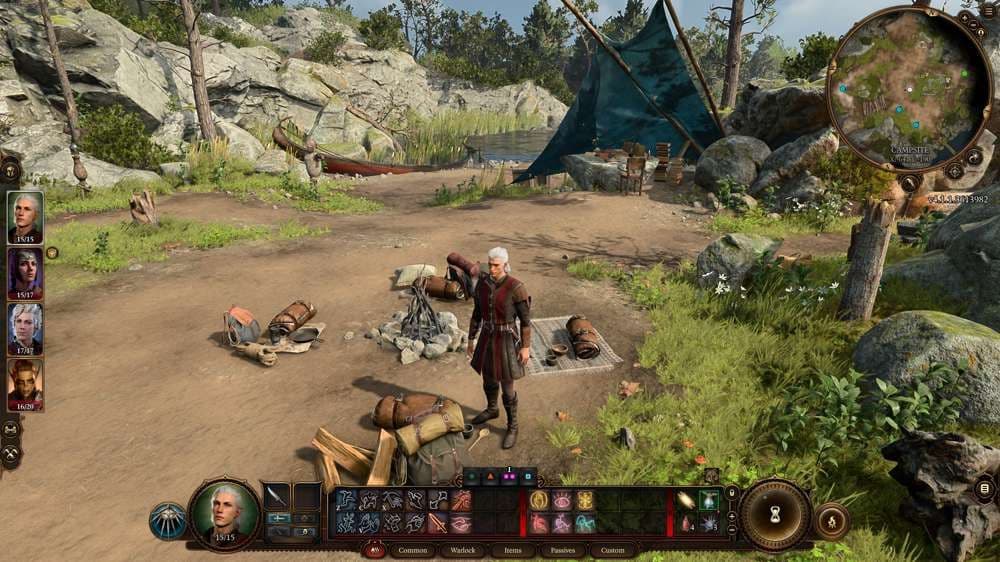
Camp supplies are typically required for a full long rest.
Potions of Power
When you're deep in a dungeon and a standard rest isn't an option, two unique consumables can be literal game-changers. The Potion of Angelic Reprieve acts as a Short Rest in a bottle. If the drinker remains uninterrupted for 2 turns, it restores hit points and refreshes short-rest abilities like a Fighter's Action Surge. Its more powerful counterpart, the Potion of Angelic Slumber, grants the full benefits of a Long Rest under the same 2-turn condition, fully restoring health, spell slots, and all other resources. These are incredibly rare, so save them for when you're truly backed into a corner with no other way out.
Class Abilities That Mimic Rest
Certain classes have built-in tools to cheat the resting economy. For Bards, the Song of Rest feature unlocked at Level 2 is your best friend. As an action, it provides an additional Short Rest for the entire party, effectively giving you a third free refresh between long rests. For Clerics, the ultimate trump card is Divine Intervention: Opulent Revival. This Level 10 ability provides a party-wide Long Rest effect, revives downed allies, and can even be used in combat. The catch? It's a once-per-character ability for your entire playthrough, so time this miracle perfectly.
Use Song of Rest right before you expend your last short rest charge. It effectively extends your adventuring day by 50%, letting you push much further before needing camp supplies.
Environmental Restoration
Scattered across Faerûn are a few mysterious devices that offer complete restoration. You'll find Restoration Pods in specific, story-critical locations: aboard the Nautiloid during the prologue, within the Mind Flayer Colony in Act Two, and later in the House of Hope and High Hall in Act Three. Interacting with one restores your party as if you'd taken a Long Rest, but with a crucial advantage: it doesn't end the day or consume supplies, and beneficial effects like Elixirs or summoned creatures (like those from Goodberry) remain active. If you find one, use it—it's a free reset.
With these strategies in your back pocket, you can face the challenges of Baldur's Gate III with confidence, knowing your next recovery is never more than a clever trick away.