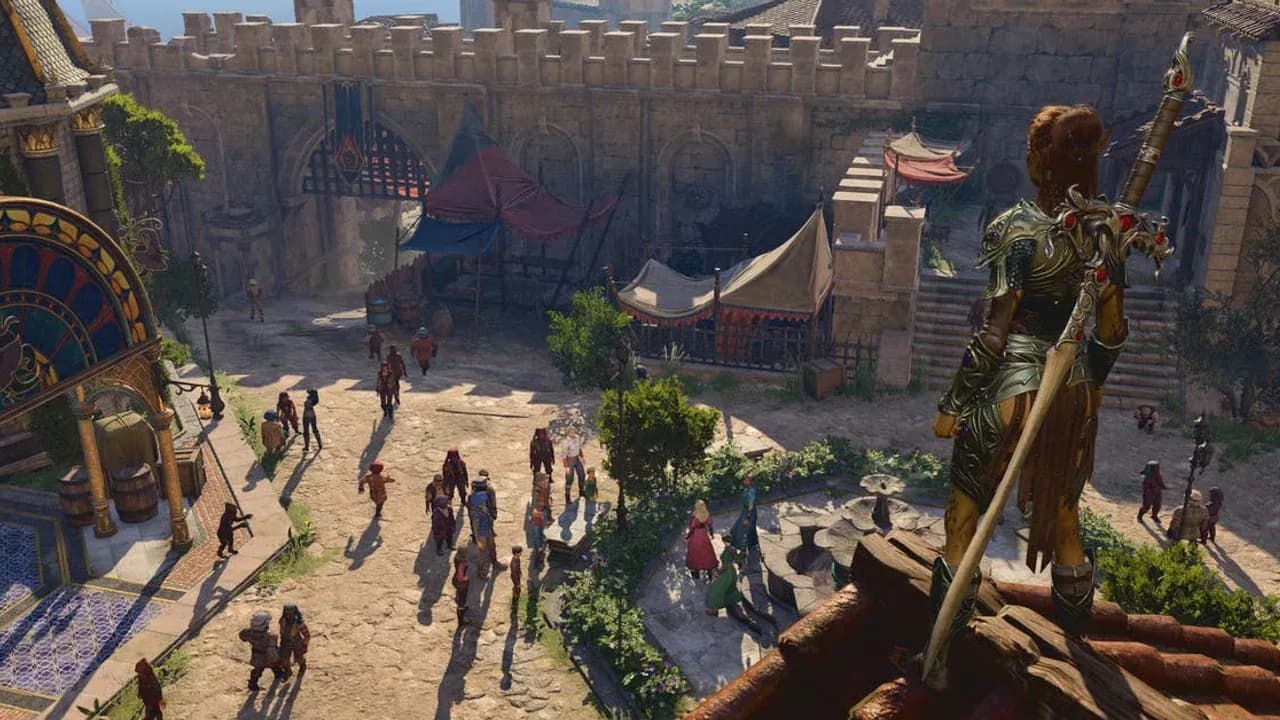
Baldur's Gate 3: A Landmark Achievement in Player Agency
There’s a moment early in Baldur's Gate III where you can win a boss fight by goading a zombie into a drinking contest and having him drink himself to death. It’s a ridiculous, creative solution that the game not only allows but rewards—and it perfectly encapsulates the monumental achievement Larian Studios has delivered. This isn’t just a video game; it’s the most faithful and ambitious digital translation of the tabletop Dungeons & Dragons experience ever crafted, setting a new high-water mark for CRPGs by prioritizing player agency above all else.
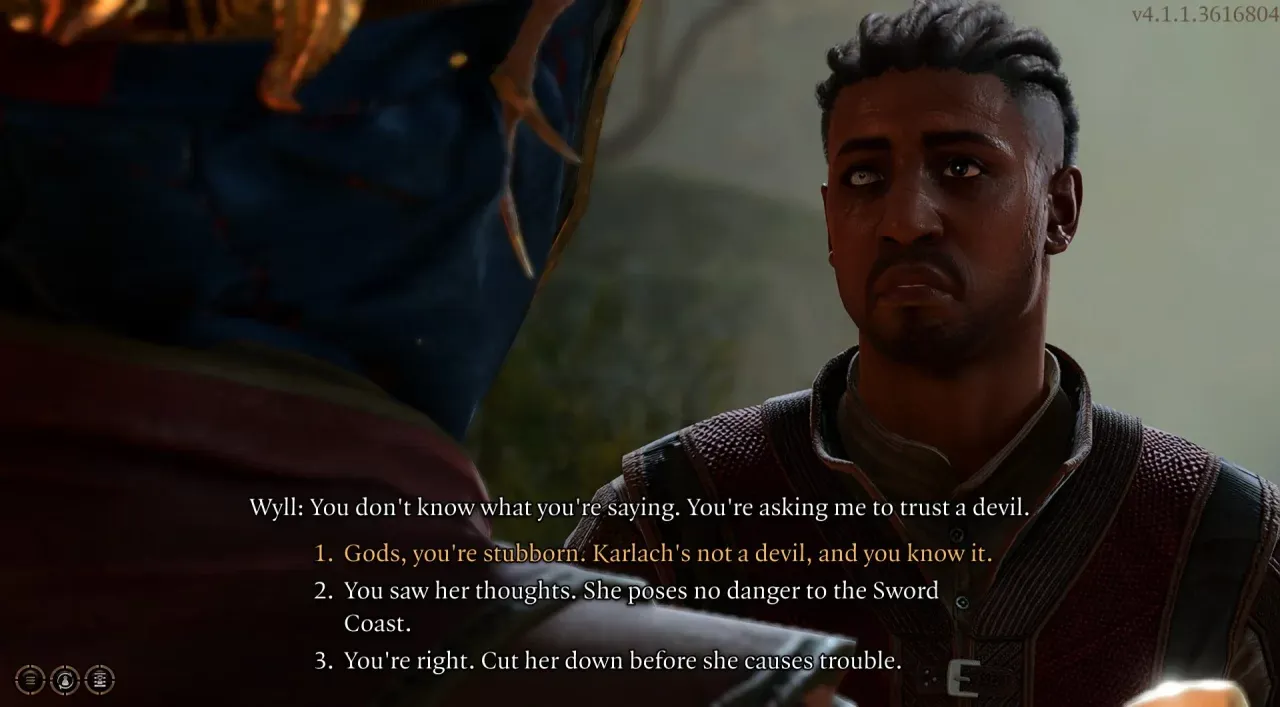
Dialogue choices in Baldur's Gate 3 allow for significant narrative freedom.
The premise is a classic fantasy hook with a ticking clock: you and a ragtag group of survivors are infected with a Mind Flayer parasite, a tadpole that will eventually transform you into a monstrous Illithid. The urgent search for a cure provides the narrative spine, but Baldur's Gate III immediately proves it is far more than a linear quest. From the moment you crash-land on the shores of Faerûn, the world reacts to your choices with staggering granularity. You can pry an intellect devourer from a skull to keep as a pet, decide the fate of your first companion before even speaking to her, or accidentally wipe out an entire village through a series of misguided decisions. The game’s design ethos is to emulate the spirit of a live Dungeon Master—it rarely tells you “no.” Whether you’re using a spell like Gaseous Form to bypass a force field, stacking boxes to scale a castle wall, or convincing a demon to fight its own soldiers, the systems bend to accommodate your imagination, not restrict it.
This systemic density creates a world that feels genuinely alive and responsive, where failure is often just a different, more interesting path forward rather than a dead end.
This unparalleled freedom is woven into a narrative of staggering scale. A single completionist playthrough spans 100 to 130 hours across three distinct acts, moving from wilderness exploration to shadowy horror and finally to dense urban intrigue in the titular city. Crucially, your decisions don’t just culminate in a final choice; they reshape the world in real time. NPCs remember your actions dozens of hours later, companions will leave or turn hostile based on your moral compass, and the fate of factions and entire settlements hinges on your diplomacy or brutality. The game meticulously tracks your journey, making forged alliances and bitter enmities feel earned and consequential. Baldur's Gate III understands that true role-playing isn't about picking a pre-written ending from a list; it’s about living through the consequences of every swing of your axe, every whispered lie, and every mercy shown. This is where the game earns its reputation as a landmark—it makes you feel like the author of your own epic, flawed, and uniquely personal saga.
Baldur's Gate 3 Combat: Tactical Depth Meets Environmental Anarchy
Baldur's Gate III’s combat is a masterclass in turning a tabletop rulebook into a dynamic battlefield where every crate, chandelier, and puddle is a potential weapon. This is where the game’s promise of freedom is stress-tested and proven, transforming its turn-based system from a simple translation of Dungeons & Dragons’ Fifth Edition into a playground of tactical anarchy. Where many RPGs treat combat as a separate, sterile mode, Baldur's Gate III seamlessly integrates it with the same systemic logic as its exploration, rewarding players who treat the world as a physics sandbox.
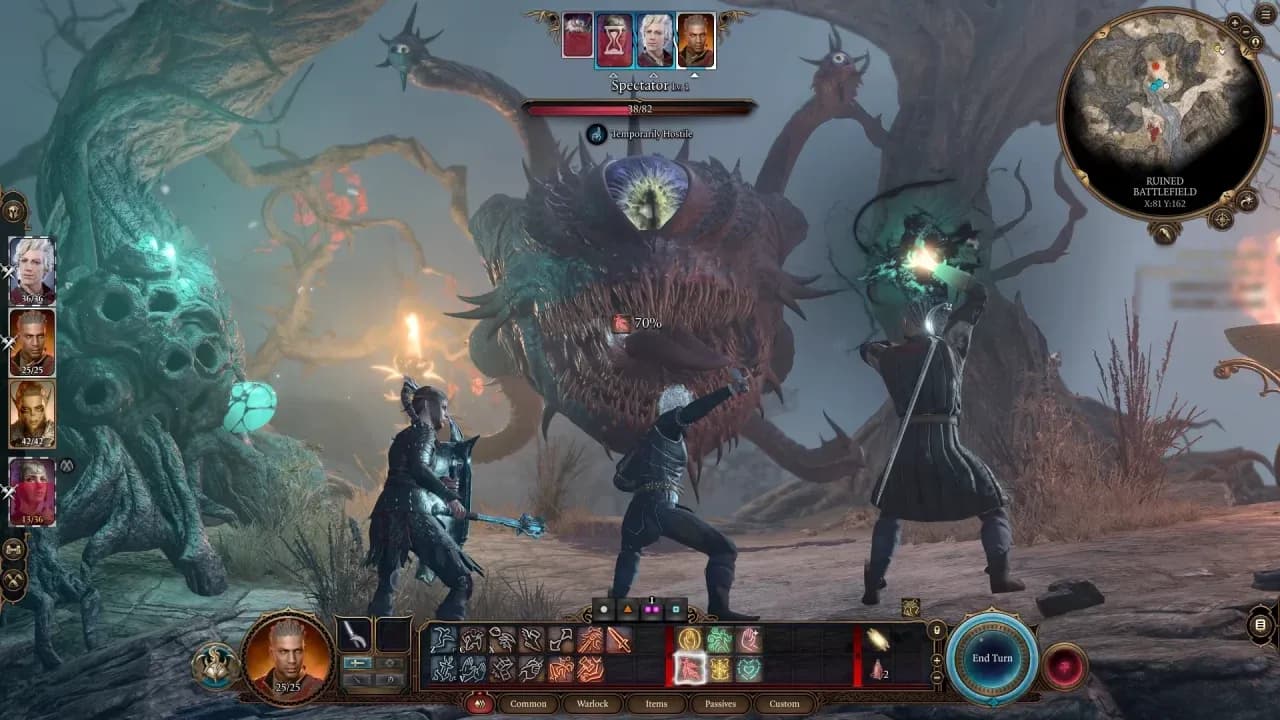
Turn-based combat against a Spectator highlights the game's tactical depth.
The tactical depth is immense, built on a foundation of meticulously designed encounters that actively discourage repetitive strategies. The AI, especially on the punishing Tactician difficulty, is cunning; it will flank your squishy spellcasters, focus fire on weakened party members, and exploit environmental hazards you left unattended. You’ll face teleporting imps that split your formation, insectoids that petrify on hit, and bosses with multiple phases that force you to adapt on the fly. This isn’t a game of simply trading blows until a health bar depletes. Victory demands you engage with the full suite of tools: positioning for high-ground advantage, using spells like Grease to create slippery zones, or shoving a heavily armored foe off a cliff with a well-timed bonus action. The system’s genius is in how it layers these possibilities, ensuring that by the time you reach level five and unlock game-changing abilities like a Ranger’s multi-attack or a Wizard’s Fireball, you’re already thinking three dimensions ahead.
This is where the environmental chaos truly sings. You can electrify a puddle a foe is standing in, collapse a bridge mid-fight, or drop a chandelier on a group of guards—moments that feel less like using an ability and more like outsmarting the game’s own physics.
However, this brilliance is gated behind a notoriously brutal early-game learning curve. For the first four levels, your party is fragile, your resources are scarce, and a single unlucky critical hit from a goblin can mean a reload. This is a direct, and perhaps overly faithful, adaptation of D&D’s low-level lethality. A character with 10 HP can be felled in one turn, and spell slots are so limited you might enter a second fight with only cantrips. For newcomers, this period can feel punishing, demanding either careful environmental exploitation—like dropping heavy objects on enemies from stealth—or a resigned acceptance of the quicksave button. It’s a design choice that authentically captures the desperation of low-level adventuring but risks alienating players before the glorious power fantasy of later levels takes hold.
This reliance on dice rolls is the system’s double-edged sword. While it creates thrilling moments of triumph—a natural 20 on a desperate persuasion check to avoid a fight—it also seeds frustration. A crucial boss fight can be lost because three attack rolls in a row missed despite a 85% hit chance. The game’s openness encourages creative, non-combat solutions, like convincing a boss to drink itself to death or using high Charisma to talk your way past entire encounters, which is a phenomenal strength. Yet, when combat is unavoidable, the sheer randomness can make certain victories or failures feel unearned, pushing players towards the “save-scumming” loop of reloading until the dice fall favorably. It’s the inherent tension of adapting a tabletop game where a human Dungeon Master might fudge a roll for the sake of the story; here, the silicon DM is merciless.
Ultimately, Baldur's Gate III’s combat is its most convincing argument for being a digital D&D experience. It is deep, demanding, and gloriously unpredictable. The frustration of a missed roll is balanced by the sheer joy of executing a plan that uses every element of the battlefield, proving that your most powerful weapon isn’t a +3 sword, but your imagination.
Character Progression and the D&D 5th Edition Ruleset
The character creator in Baldur's Gate III is a deceptive beast—a playground of cosmetic freedom that masks a labyrinth of mechanical consequence. This is where the game’s profound commitment to its source material is both its greatest strength and its most significant barrier to entry. Baldur's Gate III doesn’t just use the Dungeons & Dragons Fifth Edition ruleset as inspiration; it implements it with a fidelity that borders on devotion, creating a system of unparalleled depth for those who speak the language, while leaving newcomers to decipher a complex lexicon of saving throws, proficiencies, and attribute synergies on their own.

Dice rolls dictate the success of many character choices in Baldur's Gate 3.
From the outset, the sheer volume of choice is staggering. The selection of 12 classes, each branching into multiple subclasses, and 29 subraces isn't just cosmetic window dressing. Your choice of a Githyanki over a Tiefling grants you access to unique racial spells like Misty Step and psionic jumps, fundamentally altering your tactical mobility. Picking a background like "Charlatan" or "Sage" determines which skills you're proficient in, which in turn unlocks specific dialogue options and approaches to challenges throughout the world. This isn't a system where you simply pick the coolest-looking elf; it's one where every selection seeds your character's potential identity in the narrative and their effectiveness in combat. The flexibility is intoxicating, allowing for wildly specific fantasies—like a stealthy, lock-picking Half-Orc Wizard or a charismatic, spell-slinging Dwarven Sorcerer.
This is the uncomfortable truth: Baldur's Gate III assumes you either know D&D 5E or are willing to learn its intricacies through trial, error, and frequent wiki visits.
Where the system truly sings is in its mid-to-late game buildcraft. The introduction of multiclassing—allowing you to mix levels from different classes—opens a pandora's box of synergistic possibilities. You can create a Paladin/Warlock hybrid who smites with eldritch power or a Rogue/Ranger who is a master of both stealth and ranged devastation. This is further augmented by a staggering array of magic items that don't just offer stat boosts but grant entirely new abilities, like boots that let you teleport once per day or gloves that add elemental damage to your punches. The game actively encourages this experimentation through the respec system offered by the skeletal NPC Withers, who, for a mere 100 gold, lets you completely rebuild any character from the ground up. This is a masterstroke of accessibility, allowing you to salvage a poorly planned build or endlessly tinker with party composition without being locked into early mistakes.
However, this glorious depth is built on a foundation that the game does a poor job of explaining. The tutorials are inadequate, offering basic controls but little insight into core D&D concepts. New players won't intuitively understand why their high-strength Fighter keeps failing Dexterity saving throws against fireballs, or how Advantage/Disadvantage mechanics work. The journal's tooltips help, but the burden of knowledge is squarely on the player. This creates a steep initial cliff that smoothens into a plateau of immense power. By the time your party reaches the level 12 cap, the careful balance of early-game fragility completely evaporates. A well-built character can achieve an Armor Class of 25, land three to six attacks per turn with a 95% hit chance, and become virtually untouchable by standard enemies. This power leap is exhilarating, but it trivializes even the Tactician difficulty in the final act, replacing tactical tension with a power fantasy that, while fun, lacks the nail-biting stakes of the journey's first half.
Ultimately, Baldur's Gate III's progression system is a landmark achievement in digital adaptation, faithfully capturing the creative joy of building a character at a table with friends. Its complexity is a feature, not a bug, for the audience it serves. Yet, the game's reluctance to properly tutor players in its own rules remains a significant, self-imposed obstacle. It asks for a leap of faith, promising that the initial confusion will give way to one of the most rewarding and personalized power curves in the genre—a promise it overwhelmingly keeps, even if the path to getting there feels needlessly obscured.
The Companions of Faerûn: Writing, Romance, and Friction
The true magic of Baldur's Gate III doesn't lie in its sprawling landscapes or its tactical combat, but in the six flawed souls who accompany you. This is a game where the most compelling quests aren't found on a map, but in the complex, often messy hearts of your companions. Larian Studios hasn't just written a party; they've crafted a dysfunctional family of survivors, bound by a shared parasite and a desperate need for connection, whose stories of trauma, faith, and redemption become the emotional core of your journey.
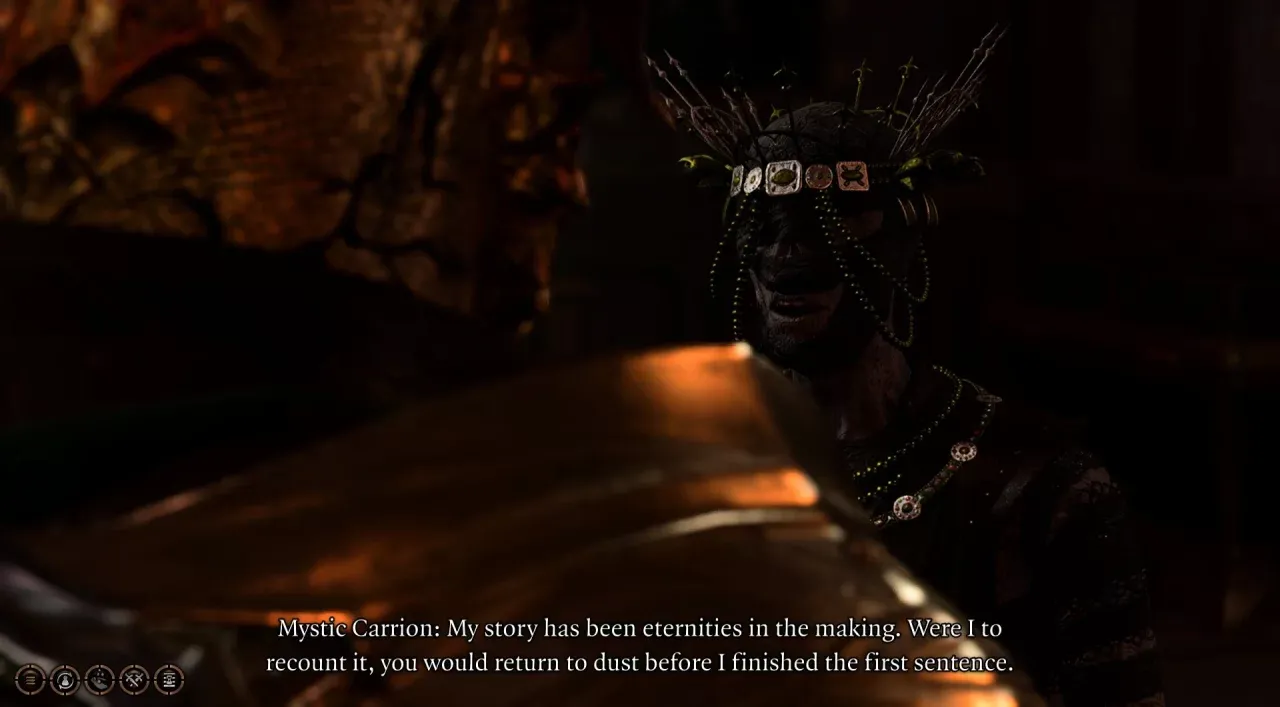
The game features high-quality writing for both main and supporting characters.
From the moment you meet them, these characters announce themselves with a clarity of voice that is nothing short of masterful. The devout, secretive Shadowheart clutches her artifact with palpable anxiety, while the arrogant wizard Gale masks a profound vulnerability with theatrical verbosity. The vampire spawn Astarion drips with performative charm that barely conceals centuries of abuse, and the tiefling Karlach radiates a joyful, furious passion born from a literal infernal engine in her chest. This isn't achieved through exposition dumps, but through hundreds of small, reactive moments: Lae’zel’s disdain for "istik" customs, Wyll’s tortured nobility as the Blade of Frontiers, and the way they bicker and snipe at each other while exploring. The high-fidelity, performance-captured facial animations sell every smirk, glare, and moment of vulnerability, rivaling high-budget cinema and making conversations feel less like dialogue trees and more like genuine interactions.
The voice acting is a symphony of talent, from Amelia Tyler’s wry, omnipresent Narrator who ties the experience together, to the distinct personalities given to every incidental NPC and even animals (courtesy of the Speak with Animals spell), creating a world that feels densely populated with real lives.
Crucially, the party dynamic in Baldur's Gate III thrives on friction, not harmony. These aren't friends who met at a tavern; they're rivals for a cure, forced into an alliance of convenience. Your choices will constantly test these fragile bonds. Side with the tieflings against the goblins, and the githyanki warrior Lae’zel will scorn your "softness." Spare a villain out of mercy, and the vengeful Wyll might question your leadership. This creates relationships that often feel like begrudging respect rather than deep friendship, which is a far more authentic and compelling dynamic for a group united by survival. It makes those rare moments of earned camaraderie—like sharing a drink with Karlach or helping Shadowheart confront her faith—feel immensely powerful, because you’ve had to work to bridge the ideological gaps between you.
The romance system is a natural extension of this deep character work, and it represents a mature evolution for the genre. Relationships aren't unlocked by a single charm check or a gift-giving minigame; they are slow-burn narratives woven into the main story. Romancing the wizard Gale involves listening to his poetic, self-aggrandizing tales of magical hubris and helping him grapple with the literal bomb in his chest. Pursuing Astarion means navigating his trauma and the predatory survival instincts it has forged. The game focuses on sensual wordplay, emotional vulnerability, and character-defining moments over explicit depiction. A famous example is the ability to romance the druid Halsin in his bear form—a moment that is less about titillation and more a bizarre, humorous, and strangely revealing test of boundaries that perfectly fits his character.
However, this exceptional focus on companion depth creates a noticeable contrast with some of the game's antagonists. While main villains like the cult of the Absolute possess complex motives, many mid-tier foes, particularly goblins and drow in the early acts, can feel like two-dimensional vessels for "lust for evil." This isn't a dealbreaker—the game needs cannon fodder—but it stands out in a world where even a random ox might have a tragic backstory revealed through a spell. After spending hours peeling back the layers of your companions' psyches, mowing down hordes of cackling, mustache-twirling goblins can feel like a regression to simpler fantasy tropes.
This richness is further amplified by the Origin Character system. You can choose to play as Astarion, Shadowheart, Gale, or others from the start, experiencing the world through their eyes and their unique story triggers. Playing as the amnesiac, bloodthirsty Dark Urge provides a uniquely harrowing narrative that ties directly into the game’s deepest lore. While most players will rightly experience these characters as companions first, the Origin system offers profound narrative replayability, allowing you to see how the world treats a githyanki outsider or a vampire spawn when they are the ones holding the reins. It’s a bold design that trusts players to find their own fun in the margins of a story they already know, and it pays off by making Baldur's Gate III feel like a collection of several great novels, not just one.
Exploring the Forgotten Realms: From Wilderness to Urban Sprawl
The journey through Baldur's Gate III is a masterclass in pacing and density, where every rock overturned reveals not a piece of filler, but a fully realized story. This is a game that respects your time by filling it with meaningful discovery, where a 130-hour completionist run feels less like a marathon and more like a guided tour through a living museum of handcrafted experiences. The world of Faerûn is so meticulously populated with micro-narratives, from a murder mystery in a barn to a gnome trapped in a windmill, that the standard open-world concept of "content" is completely redefined. In Baldur's Gate III, even the most minor note or stray book can blossom into a multi-hour quest with its own moral quandaries and lasting consequences, ensuring that curiosity is consistently, richly rewarded.
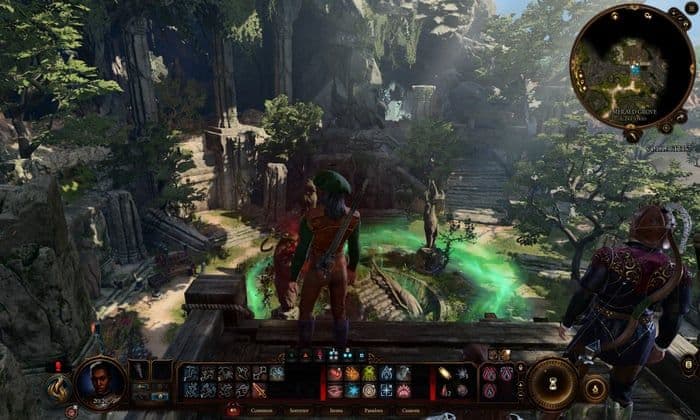
Exploring the overgrown wilderness and ancient ruins of the Forgotten Realms.
This density is expertly structured across the game's three-act arc, each serving as a distinct tonal and geographical evolution. Act I is a sprawling, sun-drenched wilderness tutorial in freedom, where you navigate the conflict between druids, tieflings, and goblins. The sense of possibility here is intoxicating, with multiple paths—including the haunting, vertical expanse of the Underdark—leading to the same destination. Act II sharply pivots into gothic horror, plunging you into the shadow-cursed lands where light is a precious resource and the atmosphere is thick with dread. This act is a masterstroke of environmental storytelling, trading the wide-open exploration of the first act for a more focused, oppressive descent that raises the narrative stakes. Finally, Act III delivers the promised urban sprawl of Baldur's Gate itself, a dense, bustling city teeming with political intrigue, personal vendettas, and the culmination of dozens of plot threads.
The game’s reactivity is its secret weapon, a narrative memory that makes your choices feel monumentally consequential. Characters you saved—or doomed—in Act I will seek you out in the city streets of Act III, offering thanks, demanding vengeance, or simply continuing their lives in a way that acknowledges your intervention.
This living world is further fleshed out by spells that function less as combat tools and more as keys to hidden narrative layers. Speak with Animals and Speak with Dead are not mere utilities; they are essential lenses for understanding the world. The former transforms every squirrel, bird, and ox into a potential quest-giver or source of hilarious, poignant commentary, while the latter allows you to interrogate nearly every corpse, turning crime scenes into solvable puzzles and adding tragic depth to anonymous enemies. These systems ensure exploration is rewarded not just with gold and gear, but with lore, character, and a profound sense that every being in this world has a story.
However, the sheer ambition of Act III is where the seams of this magnificent tapestry begin to show. Upon reaching the titular city, the game’s elegant pacing can buckle under the weight of its own narrative ambition. Dozens of major questlines—companion resolutions, faction wars, personal mysteries—converge simultaneously, creating a paralyzing logjam of critical objectives. The fear of progressing one story and irrevocably locking out another is palpable, leading to a cautious, checklist-like approach that contrasts with the organic flow of earlier acts. While the content itself remains of the highest quality, the overwhelming density and the occasional bugginess associated with this late-game complexity can make the final act feel less focused, transforming a climactic urban adventure into a sometimes stressful management sim of narrative threads.
Visually, each act is a distinct postcard from Faerûn, rendered with astonishing fidelity. From the dappled sunlight of the Emerald Grove to the oppressive gloom of Moonrise Towers and the rain-slicked, lantern-lit streets of the lower city, the environmental art is consistently breathtaking. This is matched by the character presentation; the high-fidelity, performance-captured faces of hundreds of NPCs convey nuance and emotion that rival cinematic productions, selling every lie, flirtation, and moment of despair. This technical polish is what sells the world’s reality, making the dense, reactive storytelling land with emotional impact. While the journey’s final leg may test your organizational skills, the unforgettable vistas and characters you meet along the way ensure that exploring the Forgotten Realms in Baldur's Gate III is, from start to nearly-finish, an absolute privilege.
Technical Performance and User Interface Challenges
For all its narrative and mechanical brilliance, Baldur's Gate III stumbles at the finish line, not in its storytelling ambition, but in the technical scaffolding that holds it all up. This is where the game’s staggering scope collides with the limitations of its engine and polish, transforming the triumphant final act into a gauntlet of performance dips, interface frustrations, and the occasional game-breaking bug. It’s a testament to the game’s quality that these issues feel like blemishes on a masterpiece rather than fundamental flaws, but they are impossible to ignore, especially for players on last-generation hardware or those diving into the ambitious local co-op mode.
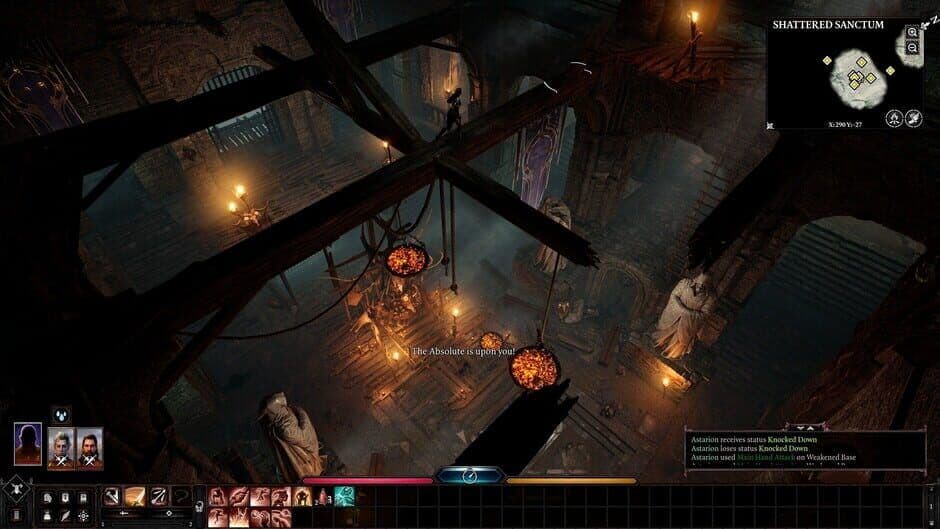
High-fidelity environmental rendering in Baldur's Gate 3.
The most pervasive issue is performance degradation in the dense, NPC-packed city of Baldur's Gate itself. While Acts I and II run smoothly on modern PCs, Act III introduces consistent frame rate stutters and drops, even on high-end hardware like an RTX 3080. This isn’t about hitting a perfect 60fps; it’s about the game’s engine visibly struggling to manage the sheer volume of active scripts, dynamic lighting, and crowds in the lower city. The result is a choppiness that can disrupt the flow of exploration and, more critically, the precision of turn-based combat. When every action point counts, a sudden frame drop during a spell targeting sequence is more than an annoyance—it’s a direct impediment to the tactical gameplay the game otherwise perfects. On consoles, particularly the PS5 in split-screen co-op, reviewers note this stuttering becomes significantly worse, with Act III described as having “consistently poor” frame rates that can sour the climax of a 100-hour journey.
The camera system, while serviceable in open wilderness, becomes a genuine antagonist in multi-story buildings and the vertical dungeons of the Underdark. Its inability to manually adjust the Z-level—essentially, to properly look up or down—makes targeting enemies on different floors a frustrating exercise in guesswork and forced perspective shifts.
This technical friction extends to the user interface, a tale of two platforms. On PC, the point-and-click controls are a natural fit for the isometric perspective, offering precision in inventory management and environmental interaction. The console versions, however, translate this complexity into radial menus and a controller-friendly scheme that is surprisingly elegant for such a dense game. The radial menus for actions and spells are intuitive, but they expose a universal pain point: inventory management. The game drowns you in loot—every crate, pouch, and fallen goblin seems to contain something—and the system for organizing it is a cluttered, cumbersome mess. There’s no dedicated “junk” or “sellable” tag, making vendor visits a tedious chore of manually comparing each of hundreds of items. This is compounded by bugs where key quest items can get lost in the morass or, worse, where heavy armor can silently negate a Barbarian’s Rage ability without any clear in-game warning, a glaring oversight for a system built on mechanical transparency.
The bug report for Baldur's Gate III reads like a chronicle of ambition outpacing polish. While many are minor—characters T-posing, dialogue lines referencing long-dead NPCs, or companions stuck in wildshape during cutscenes—others are campaign-threatening. Multiple reviewers documented a critical save file corruption bug, often linked to using summoned creatures in specific zones, that could wipe dozens of hours of progress. Quest triggers are also notoriously fragile; approaching an objective “out of order” or speaking to an NPC before finding the right clue can permanently break a questline, locking you out of rewards and story content without warning. Larian’s commendably rapid post-launch patches have addressed the most egregious of these, but the legacy of a rocky launch, particularly in Act III, remains a caveat for new players.
Loading times and multiplayer round out the technical picture. On consoles, fast-traveling or reloading after a death can trigger loading screens of up to 45 seconds, a punishing wait that discourages experimentation and turns repeated boss attempts into a test of patience. The online co-op experience, for up to four players, is largely seamless and wonderfully chaotic, faithfully recreating the tabletop feeling of friends derailing a carefully planned campaign. However, the local split-screen co-op, while an astounding inclusion, pays a heavy performance tax, exacerbating all the aforementioned frame rate issues and introducing additional bugs like camera desyncs and persistent, un-dismissable tutorial pop-ups.
Ultimately, Baldur's Gate III’s technical state is the price of its unprecedented ambition. It is a game that tries to do more, track more, and react to more than any RPG before it, and the seams show. For most players, the sheer quality of the experience will make these issues forgivable, even charming in their messiness. But they are a firm reminder that this landmark achievement comes with an asterisk: your journey through Faerûn may be epic, but be prepared for a few stutters, crashes, and inventory headaches along the way.
Final Verdict: Is Baldur's Gate 3 the New Gold Standard?
Baldur's Gate III is a game that makes you feel guilty for paying only $60. This isn't a slight against other titles; it’s a testament to the sheer, staggering volume of handcrafted excellence Larian Studios has packed into a single experience. Clocking in at a minimum of 75 hours for the main story and easily exceeding 130 for completionists, the game offers a density of meaningful content that redefines value in the RPG genre. This is a world where turning over a random rock doesn't yield a procedurally generated trinket, but a fully voiced NPC with a tragic backstory, a multi-stage quest, and a moral dilemma that will echo through the rest of your campaign. You’re not paying for a game; you’re investing in a half-dozen novels worth of branching narratives, tactical puzzles, and character arcs, each polished to a standard that makes even its most ambitious peers feel sparse by comparison.
This unparalleled scope naturally dictates its ideal audience. For any fan of deep role-playing games, Baldur's Gate III is not just recommended—it is essential. It is the new benchmark, the game that will be dissected and emulated for years to come. However, for players completely new to the Dungeons & Dragons ruleset or the isometric CRPG format, the initial hours can be a daunting gauntlet. The game’s notorious early-game lethality and its sparse tutorials demand a willingness to learn through failure, to embrace the quicksave button, and to occasionally consult a wiki. This barrier to entry is the game's most significant self-imposed obstacle, but it is also the filter for its greatest reward: the profound satisfaction of mastering a complex, reactive world that treats your intelligence with respect.
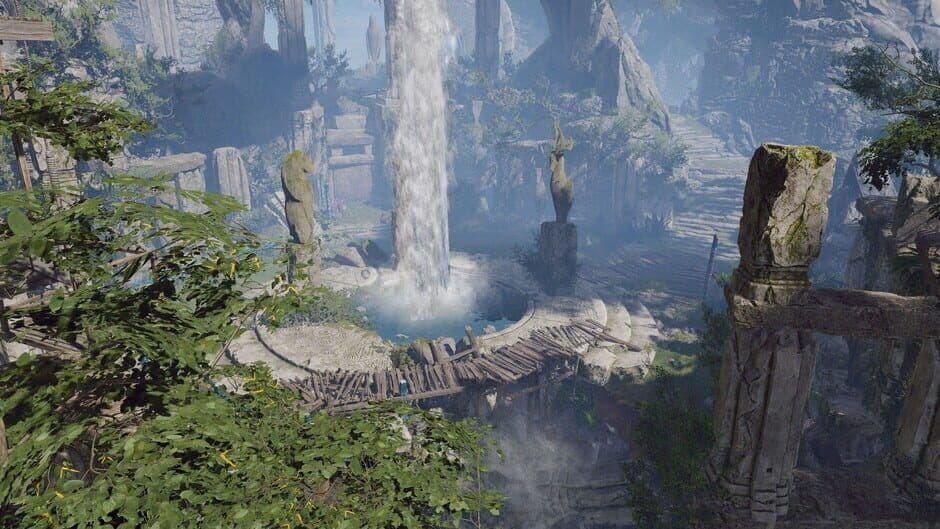
Visual fidelity is one of the game's strongest technical achievements.
When we call it a "new gold standard," it’s not hyperbole. Baldur's Gate III achieves what many thought impossible: it successfully marries the systemic, environmental chaos of Larian’s own Divinity: Original Sin 2 with the rich lore and mechanical depth of Dungeons & Dragons, then wraps it in a cinematic presentation and character writing that surpasses even BioWare’s hallowed Dragon Age: Origins. It doesn't just iterate on these foundations; it synthesizes them into something greater, a holistic role-playing experience where your choices in dialogue, exploration, and combat feel equally consequential and creatively rewarded.
This leads us to the final, critical synthesis. Baldur's Gate III is a landmark achievement with visible cracks in its foundation. Its pros are so monumental they reshape expectations for the entire genre. Its cons, while significant, often feel like the necessary trade-offs for such unprecedented ambition. You cannot have a world this reactive without the occasional bug breaking a quest trigger. You cannot have a narrative this branching and dense without the final act feeling slightly unwieldy as every thread converges. You cannot have an inventory this overflowing with unique, hand-placed loot without the management becoming a chore. These are not excuses, but contextual realities. The magic of Baldur's Gate III is that, for the overwhelming majority of its colossal runtime, the brilliance so thoroughly eclipses the blemishes that you willingly forgive them. You endure the Act III frame rate stutters because you must know how Shadowheart’s crisis of faith resolves. You tolerate the clunky camera in multi-story buildings because the combat encounter waiting inside is a masterclass in tactical design. The game earns your patience by consistently delivering moments of wonder, emotional payoff, and creative triumph that are simply unmatched in modern gaming.
Final Verdict
Baldur's Gate III is a generation-defining RPG and the new gold standard for the genre. It is a rare confluence of artistic vision, technical ambition, and deep respect for both its source material and its players. While its technical imperfections and steep initial learning curve are real, they are footnotes in an epic novel of unparalleled freedom, emotional depth, and tactical richness. This is not just a game you play; it’s a world you live in, a story you author, and an experience that will linger long after the final dice roll.
Pros:
- Unmatched Player Freedom: The game’s systemic design genuinely emulates a live Dungeon Master, allowing for wildly creative solutions (like winning a boss fight through a drinking contest) and ensuring failure is often just a new narrative branch.
- World-Class Writing & Characters: Companion arcs, particularly Shadowheart’s and Karlach’s, are some of the most nuanced and emotionally resonant in gaming, brought to life by exceptional voice acting and performance capture.
- Deep, Tactical Combat: Turn-based battles are a rewarding puzzle of positioning, environmental manipulation, and character synergy, especially on higher difficulties.
- Astounding Content Value: Over 100 hours of densely packed, handcrafted quests and stories with virtually no filler, offering immense replayability through different origins, classes, and moral choices.
Cons:
- Significant Technical Issues in Later Acts: Act 3 suffers from frame rate drops, occasional bugs, and quest-breaking triggers, with split-screen co-op performance being particularly impacted.
- Obtuse Tutorials & Steep Learning Curve: The game does a poor job explaining core D&D 5E mechanics, creating a formidable barrier for newcomers that demands external research or trial-by-fire.
- Cumbersome Inventory Management: The sheer volume of loot overwhelms a cluttered interface lacking basic quality-of-life features, making vendor runs a tedious chore.