Understanding Volumetric Smoke Mechanics in Counter-Strike 2
Forget the static clouds you knew from CS:GO—in Counter-Strike 2, smoke grenades are now living, breathing parts of the battlefield. They don't just sit there; they react to everything around them, turning a core utility into a dynamic tactical tool you can actually manipulate. This guide breaks down the new volumetric smoke mechanics so you can understand the rules of this new, reactive world.
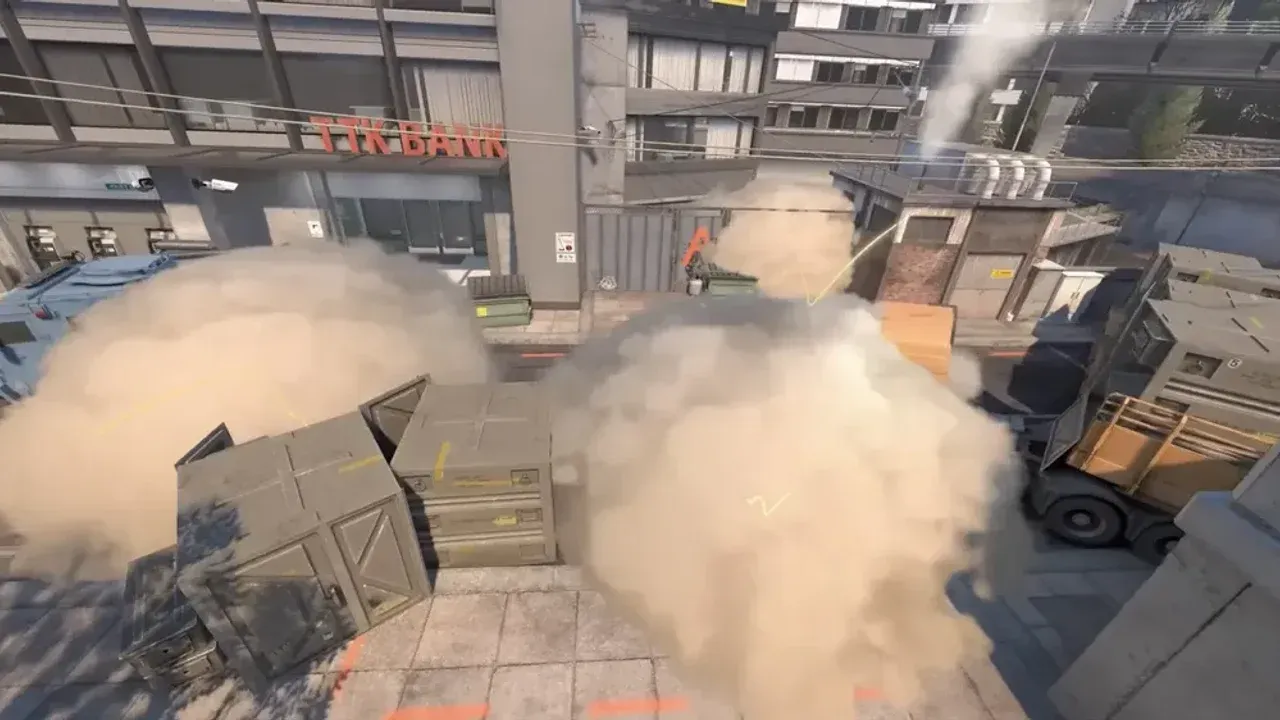
Key changes to smoke grenade behavior in Counter-Strike 2.
The biggest shift is that smokes are now sophisticated volumetric objects. They're not just 2D sprites but true 3D entities that interact with the world. This means they realistically fill the space they occupy, creating a tangible barrier that light and physics affect. This is the foundation for every new interaction you'll see.
Because they're true 3D objects, smokes exhibit environmental seeping. Throw one in a tight corridor, and it will expand to fill the hall. Place it near an open door or window, and you'll watch it naturally leak through the opening, creeping into adjacent rooms. This makes smokes feel organic and forces you to think more carefully about placement, as they'll conform to the architecture around them.
Use the seeping behavior to your advantage. A well-placed smoke can now cover a doorway and the room behind it, or billow down a staircase to block multiple angles at once.
Another critical upgrade is uniform vision. In CS:GO, what you saw wasn't always what your enemy saw due to perspective differences. In Counter-Strike 2, the server renders one definitive smoke shape that is identical for all ten players. This eliminates those frustrating moments where you think you're hidden but are perfectly visible to an opponent with a slightly different viewpoint. The playing field is now visually fair.
Finally, these volumetric clouds have full lighting integration. The smoke's color, density, and even the shadows it casts change dynamically based on the map's light sources. A smoke in a dark corner will look different from one thrown under a bright skybox. This isn't just cosmetic; it adds another layer of realism and can slightly affect how you perceive cover and visibility within the cloud itself.
Together, these mechanics transform smoke from a simple visual block into a complex, interactive element. It’s no longer just about throwing a smoke; it's about understanding how it will live, breathe, and react on the new battlefield. With this foundation, you're ready to start manipulating it to your advantage. Let's go.
How to Use Bullets to Create Vision in Counter-Strike 2
Ever wondered if you could shoot your way to a better view through a smoke grenade? In Counter-Strike 2, you can—but this powerful new mechanic comes with significant risks that can make or break a round.
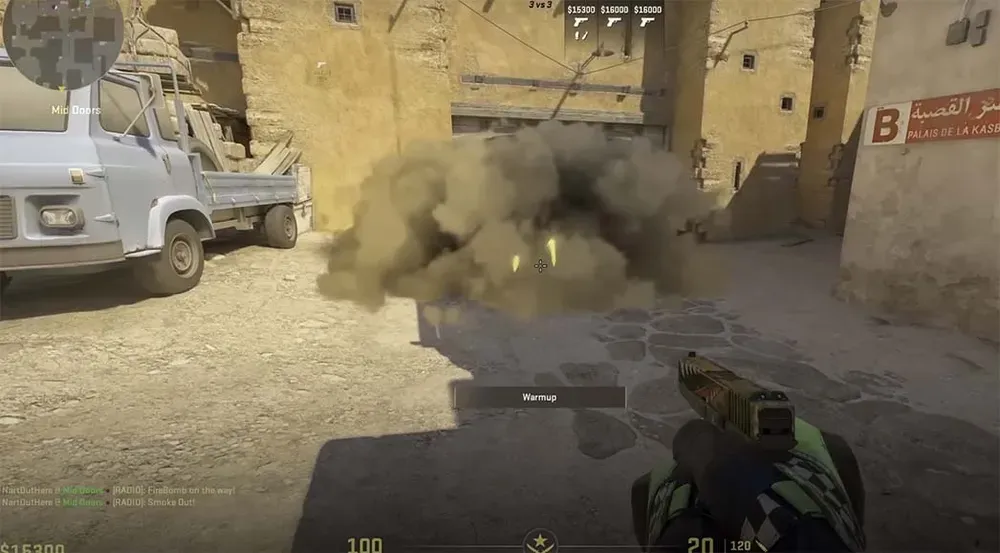
Strategic use of bullets can reveal enemy positions hidden behind smoke.
Welcome to Bullet Carving. Unlike the static smokes of CS:GO, Counter-Strike 2’s volumetric clouds are reactive. When you fire a weapon into a Smoke Cloud, each bullet that passes through the impact point will create a small, temporary hole. It’s a tempting trick, but here’s the catch: that tiny window of vision is fleeting, and the muzzle flash from your gun instantly broadcasts your exact location to anyone watching. Trust me, you’ll want to use this sparingly.
⚠️ Watch out: The hole created by a single bullet is small and closes quickly. Spraying wildly for vision is a great way to get headshot by an enemy who knows exactly where you are.
So, when should you use it? The key is in the strategy. For Spraying for Info, you can hold down [Mouse1] and spray through the center of a smoke to create a larger, more sustained visibility gap. This can be useful for denying a push or spotting an enemy trying to sneak through, but it’s incredibly loud and tells everyone you’re there. A more surgical approach is Calibrated Peeking. By tapping [Mouse1] to fire single, controlled shots at the edge of a smoke, you can create a small ‘one-way’ hole. This lets you scout an angle or check for a lurking AWPer without fully exposing yourself, though it still carries risk.
Your weapon choice also matters due to the Requirement: High-Caliber Weapons. The new physics model means that larger bullets from Snipers/Rifles create slightly more significant displacement in the smoke volume than those from SMGs or pistols. If you absolutely need to carve a quick sightline, an AWP or AK-47 will do a better job than an MP9.
If you’ve been punished for carelessly shooting a smoke before, you’re not alone—it’s a common new-player trap in Counter-Strike 2. The power isn't in creating vision for yourself, but in denying it to your enemy or gathering intel with extreme prejudice. Use bullet carving not as a flashlight, but as a scalpel. Master this, and you turn a defensive utility into an aggressive information tool.
How to Disperse Smoke with HE Grenades in Counter-Strike 2
Here’s your next piece of utility—the humble HE Grenade just became your best friend for cutting through the fog of war. In Counter-Strike 2, smokes aren't just static walls anymore; they're dynamic obstacles you can punch a hole through. Forget just using HE grenades for chip damage—their new superpower is giving you a two-second window of perfect clarity.
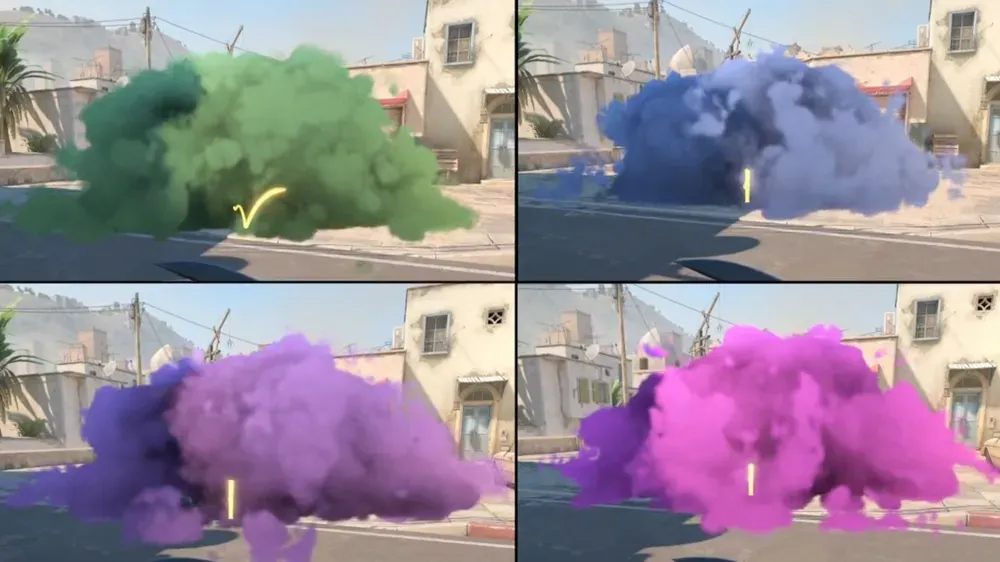
Smoke appearance and behavior vary by team and environment.
This is the core Mechanic: HE Dispersal. When an HE grenade detonates near a Smoke Cloud, its explosion radius doesn't just deal damage—it violently pushes the volumetric smoke particles aside. To execute it, select your HE with [4], then [Mouse1] throw it directly into or just behind the smoke screen. The effect is dramatic and temporary, clearing the smoke for ~2 seconds and giving you a clean line of sight to anyone hiding inside or on the other side.
The HE grenade’s maximum blast radius is 384 units, which is larger than a smoke’s 144-unit radius. You don't need a perfect lineup; throwing it near the smoke's center is often enough to clear most of it.
Now, let's weaponize that brief window. The Strategy: The 'Nade-Peek' turns a defensive smoke into a death trap for your opponents. Here’s how it works at a Smoke Cloud covering a choke point: you or a teammate throw the HE into the smoke, and as soon as it explodes, you press [W] move forward aggressively through the cleared gap. The goal is to kill enemies while smoke is cleared, catching them completely exposed and often off-guard as they expect to be hidden. This is especially brutal for retaking a site or breaking a stacked defensive setup.
On the flip side, the Strategy: Defensive Clearing is a lifesaver when you're holding a site. Imagine the bomb is planted at a Defuse Site, and the Terrorists have thrown a smoke on the smoked-off entry you need to watch. Instead of dry-peeking blindly, throw HE into smoke to check for rushing attackers. If you get a damage indicator or hear a cry of pain, you know exactly where to aim. Even if you don't, you've safely scouted the most common push path without risking your head.
The critical nuance is the Tip: Timing the Reset. That ~2-second window is not generous. The smoke begins to rush back in immediately after the 2-second window closes, filling the void from the edges inward. This means your peek or information gather has to be decisive. Hesitate, and you'll be caught in the middle of the smoke reforming, which can be just as disorienting for you as it is for the enemy.
Mastering this interaction transforms the HE grenade from a situational damage tool into essential, responsive utility. It forces enemies to respect smokes less, adds a layer of mind games, and gives you controlled moments of dominance in the middle of chaos. Throw with purpose, push with confidence, and control the smoke.
Best Strategies for Responsive Utility in Counter-Strike 2
Alright, you know the grenade mechanics—the volumetric smoke, the bullet carving, the HE dispersal. Now it's time to weaponize that knowledge. In Counter-Strike 2, the new meta isn’t just about throwing smokes; it’s about using them as a dynamic, responsive tool. This section is about turning your utility into a live, reactive system that punishes enemy habits and secures round wins.
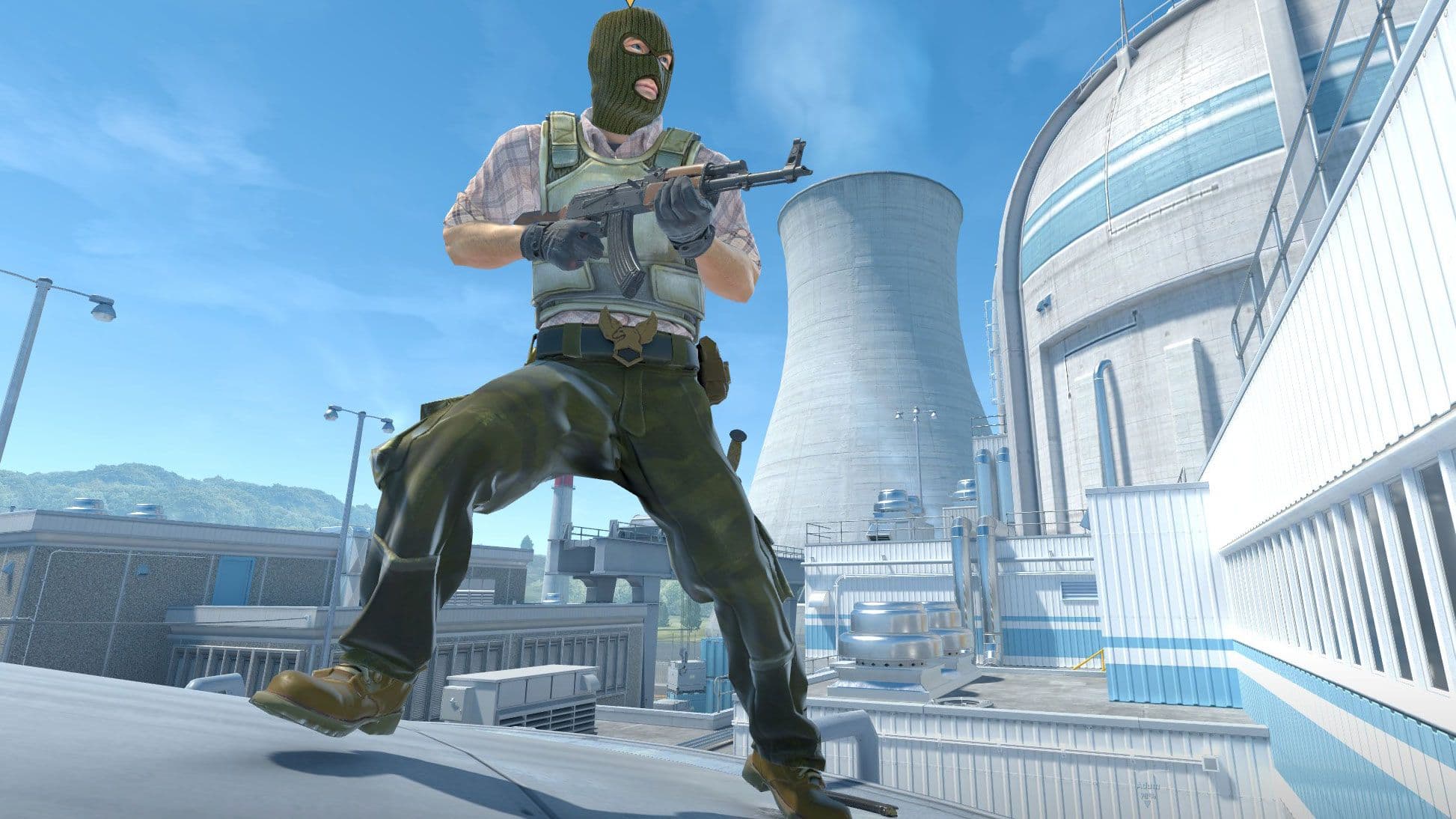
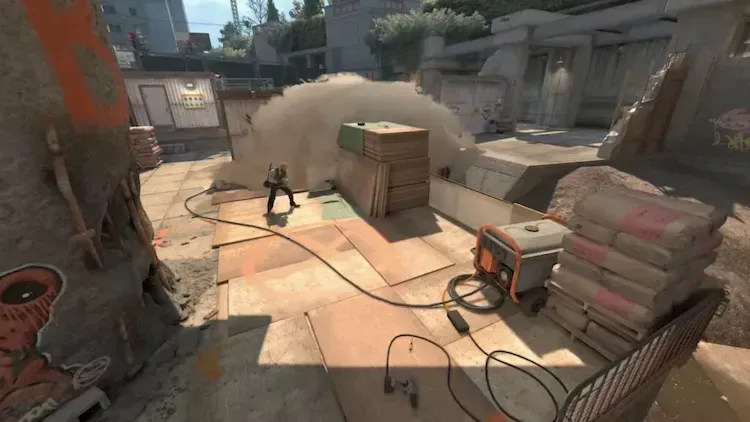
Counter-Strike 2's new engine changes how utility interacts with the world.
Best Strategies for Responsive Utility in Counter-Strike 2
Think of your smoke grenades as chess pieces, not just walls. The volumetric system opens up new tactical layers, and the pros are already exploiting them. Here’s how you can adapt.
Strategy: Vertical Smoke Stacking is a game-changer on maps with multi-level geometry. On stairs or ledges, smoke now naturally climbs the vertical surfaces. This means one well-placed smoke can cover both the upper and lower sections of a choke point, like the stairs on Mirage connecting to A Site. Instead of needing two smokes to block vision top and bottom, you can use one to create a taller, more obstructive cloud, saving precious utility for later in the round.
Strategy: Baiting the HE turns the enemy’s counter-play into your opportunity. When you throw a smoke at a choke point, don’t just back off. Instead, stand near the edge of your own cloud. When you hear or see the enemy’s HE Grenade thrown to disperse it, that’s your cue. They’ll often peek immediately to capitalize on the cleared vision. Punish them as they peek by being ready with a pre-fired angle or a quick counter-flash. You’re using their predictable utility timing to win the duel.
Listen for the distinct thump of an HE hitting the ground near your smoke. That audio cue is your signal to get aggressive.
Strategy: Smoke Extinguishing adds a crucial defensive option to your kit. If an enemy throws a Molotov/Incendiary to block your path or burn you out, you can counter it instantly. Select your Smoke Grenade with [4] and throw it with [Mouse1] directly onto the fire. The volumetric spread of the smoke cloud will instantly douse the flames, clearing the area. This is vital for retaking a smoked-off site or stopping a defensive Molotov during your execute.
Tip: Avoiding the 'Bullet Trace' is about discipline. When you’re inside a smoke cloud, resist the urge to spray aimlessly. While bullet carving can create vision, it also leaves evidence. Enemies can see your bullet holes appearing in the smoke and will accurately return fire through those exact spots. Instead, use short, controlled bursts only when you have a specific target, or better yet, reposition silently.
The key to all this is moving from a pre-set playlist of grenades to a live, adaptive utility game. Don’t just execute your A-site lineup and hope it works; watch how the enemy reacts to your first smoke, then use your second grenade to counter their counter. With these responsive strategies, you control the tempo, not just the sightlines.
Counter-Strike 2 Smoke Tactics Rewards and Meta Shifts
The meta has shifted. Counter-Strike 2 didn't just update smoke grenades—it rewrote the rulebook on how utility wins rounds. If you're still throwing smokes and HEs like it's CS:GO, you're playing a losing game. This final evolution demands a new mindset: one where every grenade slot is a calculated tool for information control.
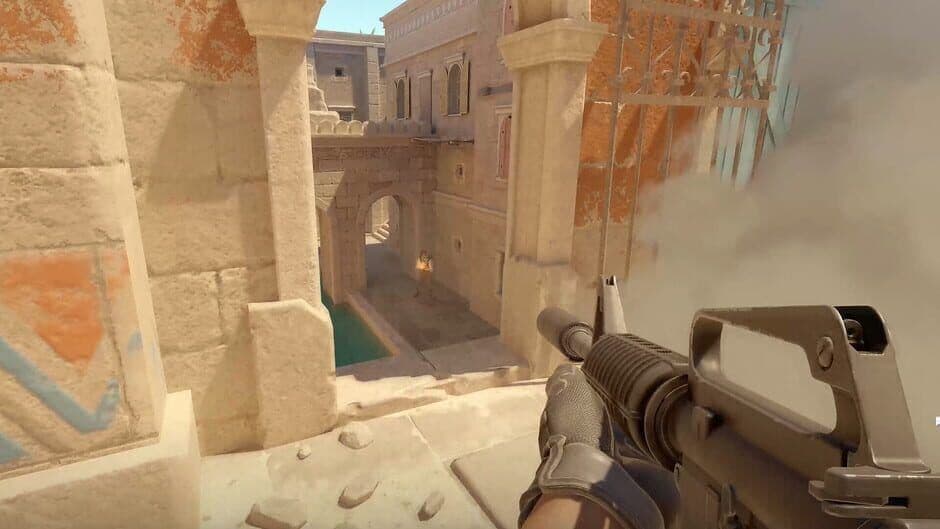
New engine features in CS2 impact how players perceive smoke and shadows.
The most fundamental change is in Utility Management. During the Loadout > buy phase, you must now treat HE grenades as essential for counter-utility rather than just damage. They are your primary tool for reclaiming space and vision. This often means sacrificing a flashbang or molotov to ensure you have that vital HE for dispersing enemy smokes. The old "nade for damage" play is secondary; the new play is "nade for sight."
This is largely due to the Mechanic: One-Way Removal. Map-wide > smoke edges, the volumetric nature of smokes has systematically removed the traditional 'one-way' smoke exploits that defined CS:GO's meta. You can no longer rely on pixel-perfect throws to see feet while being completely hidden. This levels the playing field and forces engagements into the open, post-dispersal windows you create, making proactive utility use more valuable than ever.
This proactive philosophy shines in Strategy: Post-Plant Utility. On the Bomb Site > smoke cover, after you plant, don't just hide and wait. Use your HE grenades to clear smoke and find the defuser quickly. A well-timed HE can blow away a defender's smoke screen, exposing them mid-defuse or forcing a costly reposition, securing the round win.
The key to all this is Communication. In Team Chat > [K] hold to talk, always call out when you are 'nading the smoke' so teammates are ready to peek the moment vision clears. A silent utility pop is a wasted opportunity.
So, what's the final takeaway? Counter-Strike 2 has transformed smokes from static walls into dynamic, interactive battlefields. Winning now means mastering not just where you throw your utility, but when and why. It rewards teams that communicate, adapt their buys, and use every tool—especially their bullets and HEs—to manipulate the fog of war. Embrace these shifts, and you're not just playing the game; you're playing the new meta.