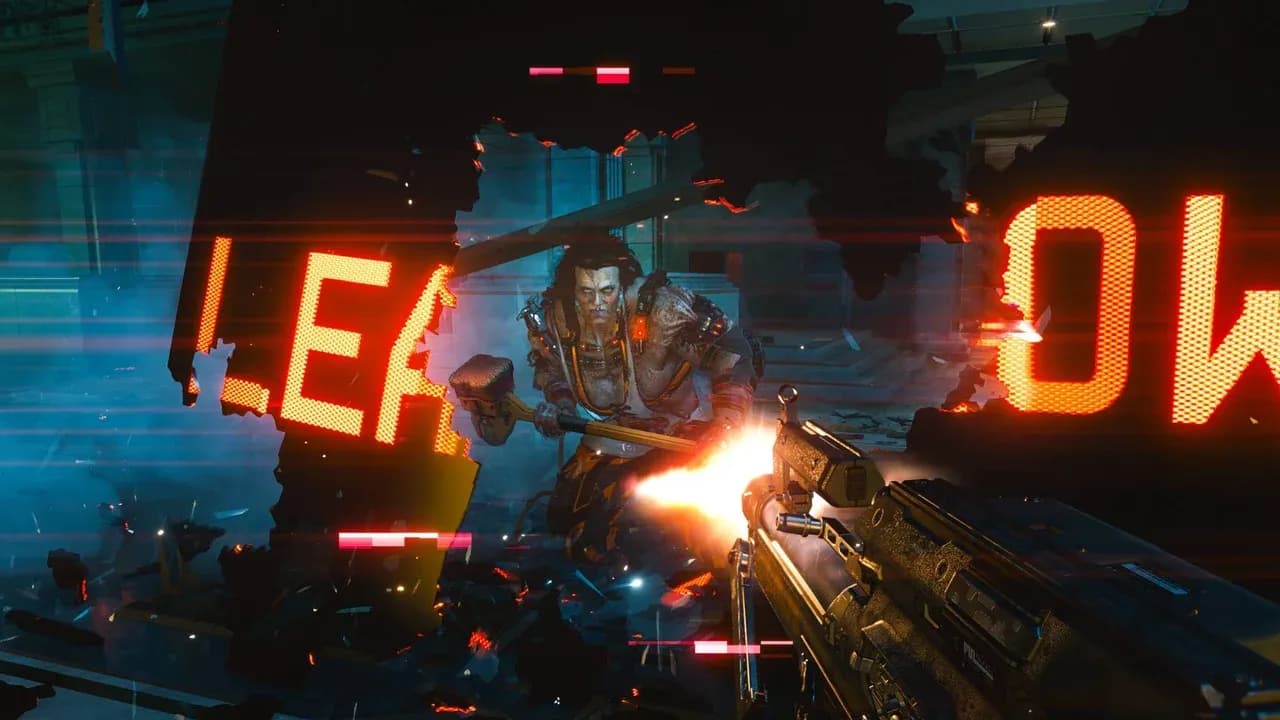
CD Projekt Red’s Update 2.0 overview describes the police response to cyberpsychos in blunt terms: flatline them, no questions asked. Regina Jones builds Psycho Killer around the questions. She sends V to 17 Cyberpsycho Sightings, asks for surviving targets, and collects the evidence left at every scene.
The contrast explains more than a set of quest objectives. Regina’s previous career at FTF Radio taught her to work through sources; becoming a fixer gave her the power to act on what they told her. Psycho Killer uses both halves of that background. V contains the immediate danger, while Regina refuses to let “cyberpsycho” become the last word on the person involved.
Reporting Taught Regina to Work Through Sources
Regina worked as an independent reporter for FTF Radio before News 54 acquired the station. The game’s database says she responded by mobilizing contacts that ranged from corpos and mercenaries to dealers, gang members, unhoused people, and addicts. Those relationships could carry information across parts of Night City that rarely speak to each other directly.
Fixer work changes what Regina can do with that network. A reporter can gather a source’s account; a fixer can send V to the location, pay for evidence, and decide what happens after the threat is stopped. The database’s description is not sentimental about the transition: Regina once bought gossip and sold news, and now she spins both. Her method still treats information as currency, but Psycho Killer spends it on cases the city’s normal response would close at the scene.
Psycho Killer Treats the Label as a Lead
Across the Cyberpsycho Sightings, the shared label makes the targets sound interchangeable. The jobs immediately break that category apart. Each encounter continues after combat: V searches the site, reads shards or archived conversations, and sends the findings to Regina. The health bar establishes that someone is dangerous; the report establishes that danger is not a complete explanation.
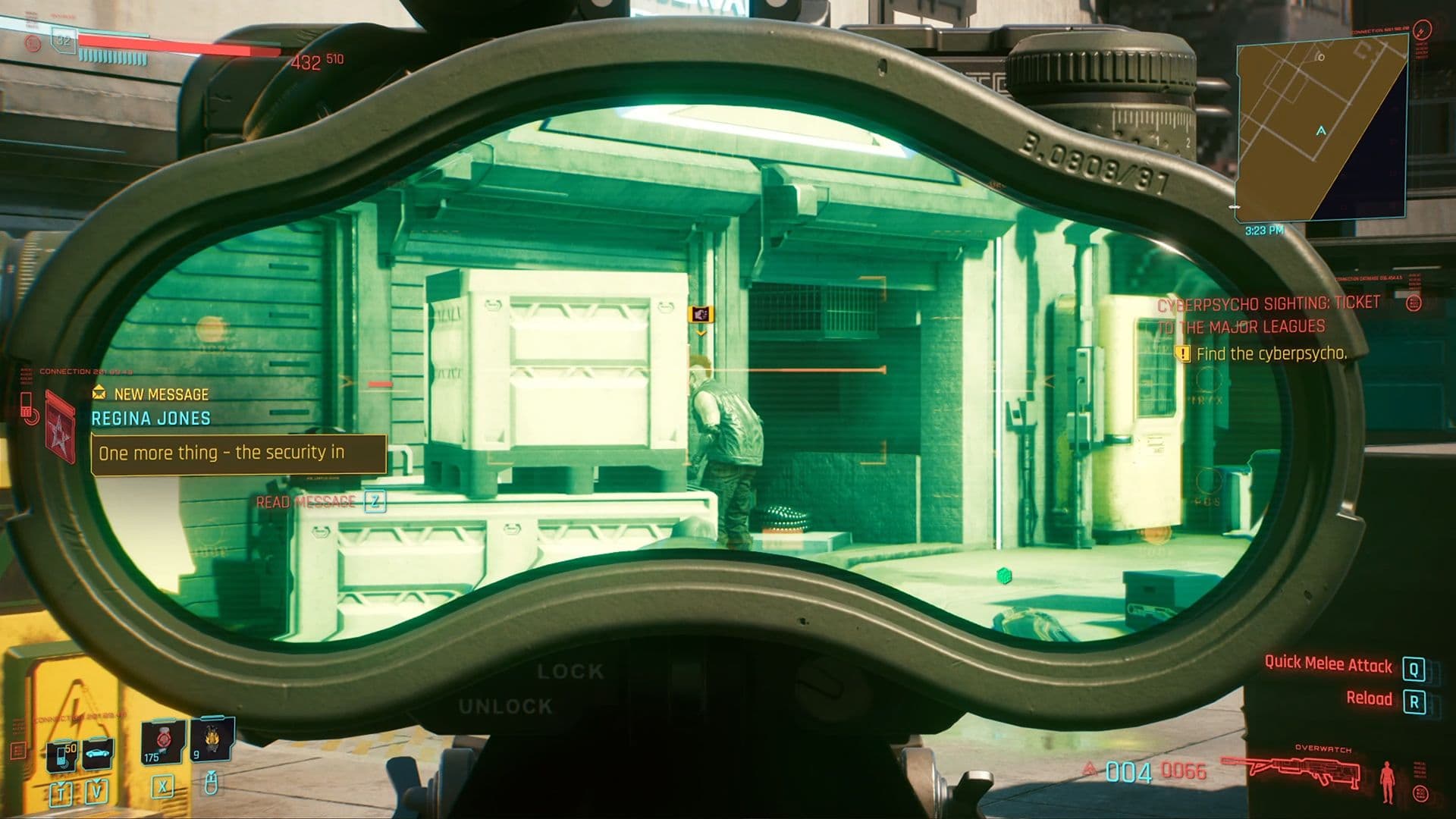
Regina's calls turn nearby Cyberpsycho Sightings into active cases.
That distinction makes V’s role unusual. Regina does not need a mercenary to prove that an armed attacker can hurt people. She needs someone capable of surviving the confrontation without destroying the subject or abandoning the records around them. V becomes the link between emergency force and an inquiry that the police response never begins.
Two Crime Scenes Refuse the Same Easy Answer
Where the Bodies Hit the Floor places Ellis Carter near the Totentanz, surrounded by more than the aftermath of a fight. One archived conversation connects Carter to Brick, while another exchange is found on a nearby corpse. Those records place his violence inside relationships involving Maelstrom instead of leaving “cyberpsycho” as a self-contained explanation.
Bloody Ritual reverses the usual order even more sharply. V examines corpses, cracks an encrypted shard, and scans the ritual site before Zaria Hughes emerges. The case exists before the boss fight does. Afterward, Zaria’s own shard becomes another part of the record sent to Regina.
Neither scene supplies a medical diagnosis, and Regina does not pretend that it does. Their value is narrower and more honest: the same public label can sit over two different histories. By preserving those histories, Regina prevents a threat classification from erasing every question about how each person reached the point of violence.
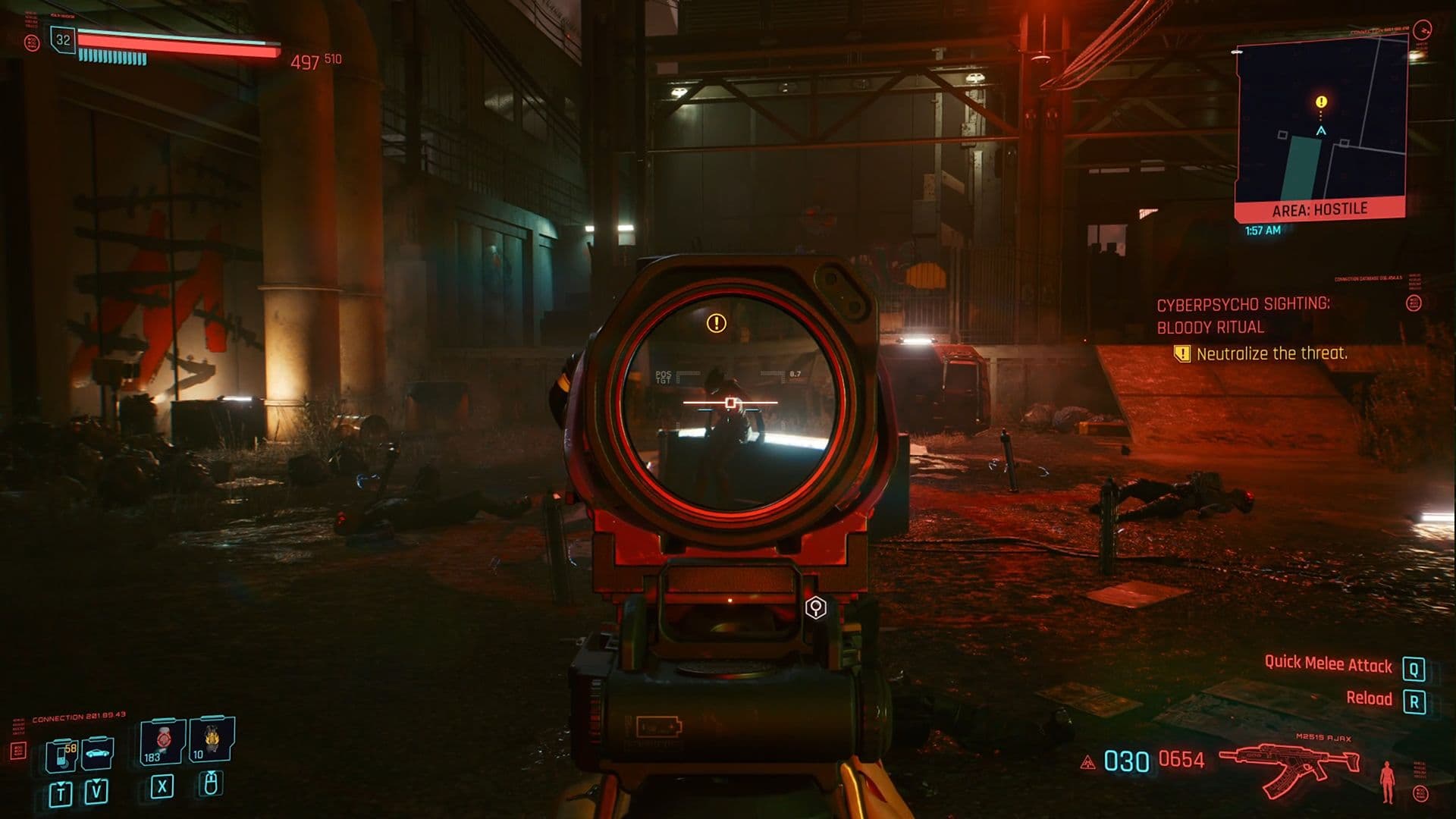
Bloody Ritual makes V reconstruct the scene before reporting to Regina.
A Survivor Keeps the Case Open
Psycho Killer can be completed even if some targets die, but Regina’s response changes according to how many V kept alive. If every target survives, she explains that they can receive therapy and give specialists a chance to understand their condition. The game therefore separates its completion condition from Regina’s measure of success.
Regina cannot diagnose the survivors, promise a cure, or undo the harm at the scenes. What she can do is keep Night City from ending its inquiry at a corpse. Her part is complete when the fixer gives the case away: the evidence goes to people who can study it, the survivors go to people who can treat them, and “cyberpsycho” remains the beginning of a question instead of the end of a life.