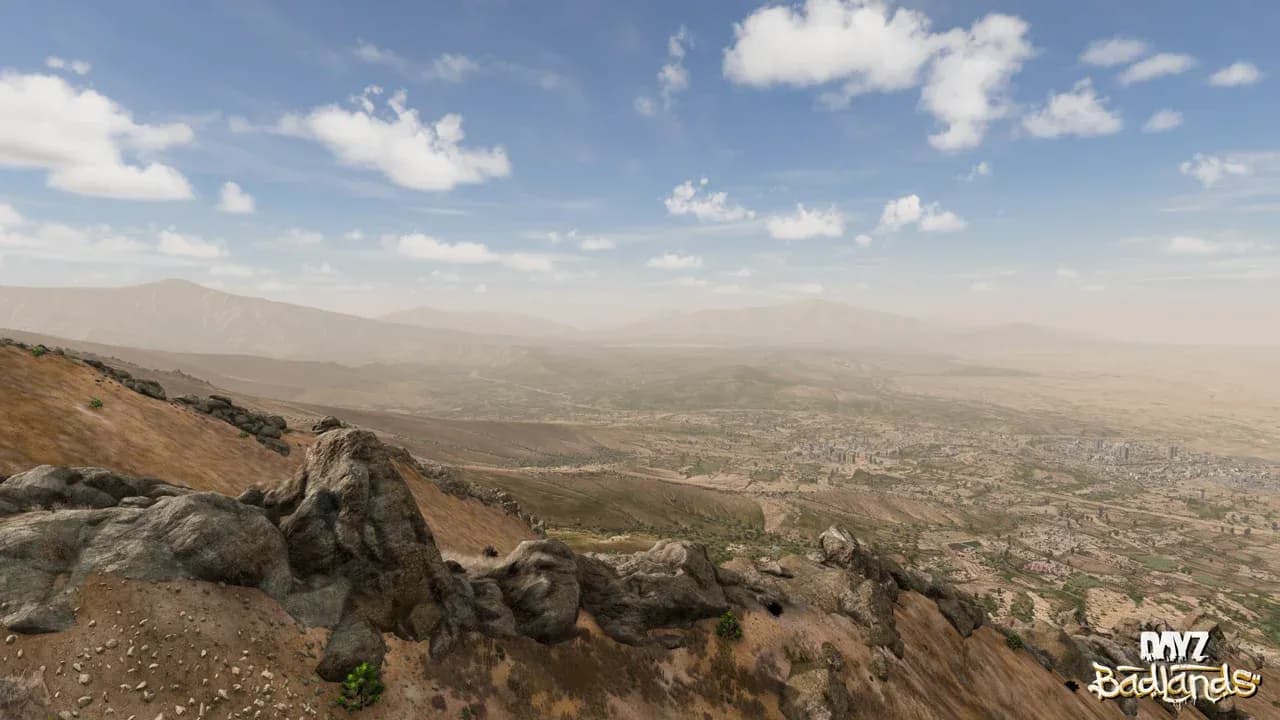
On Chernarus and Livonia, water is furniture. A pump sits near the main road in almost every village, and the DayZ Wiki's description of it is blunt: it is the only constant source of clean water on the map, it dispenses an infinite amount, and it never runs out. Sakhal already made survivors work harder than that. What no DayZ map has done is make water a thing that can stop existing.
Bohemia's Week 76 dev blog confirmed that the expansion's new rebuilding system does not stop at houses: "This also applies to wells! Some wells may be fully restored, while others need your labor and the labor of another friendly you met, to be able to get drinking water." Shacknews, reporting on the developer briefing Bohemia gave in Prague, described coming across broken wells that could be repaired with the right materials — and supplied the other half of it: a repaired structure "may be destroyed again, forcing another repair."
Read those two sentences together and the consequence is larger than a new crafting recipe. Drinking water on Nasdara is the first survival necessity in DayZ whose availability is not a property of the map at all. It is a property of the server: of who has passed through, what they bothered to fix, and what somebody else has since torn down. Two players can load the same 267 km² terrain in the same week and find completely different water.
Badlands is not out yet — Bohemia has confirmed an October release window and nothing more precise, and every dev blog carries the studio's own warning that the details are still moving. But enough is confirmed to work out what this does to the way you move, and the parts of it you can practise right now.
The Rivers on the Map Are Not Water
The first habit Nasdara breaks is a map-reading one. Chernarus pumps sit centrally within a settlement, beside a main road or in a cleared space, which collapses two jobs into one: read the terrain for your route and you have already read it for water, because every village on the line has a pump in it. Sakhal broke that pairing without replacing the certainty — the Frostline map has no pumps at all, its springs sit outside settlements and cluster on coastal ground, and the Burukan peninsula has no clean water anywhere on it, but the map still gave you a fixed answer, and the answer was the coast. Nasdara is land-locked, so that answer does not transfer either.
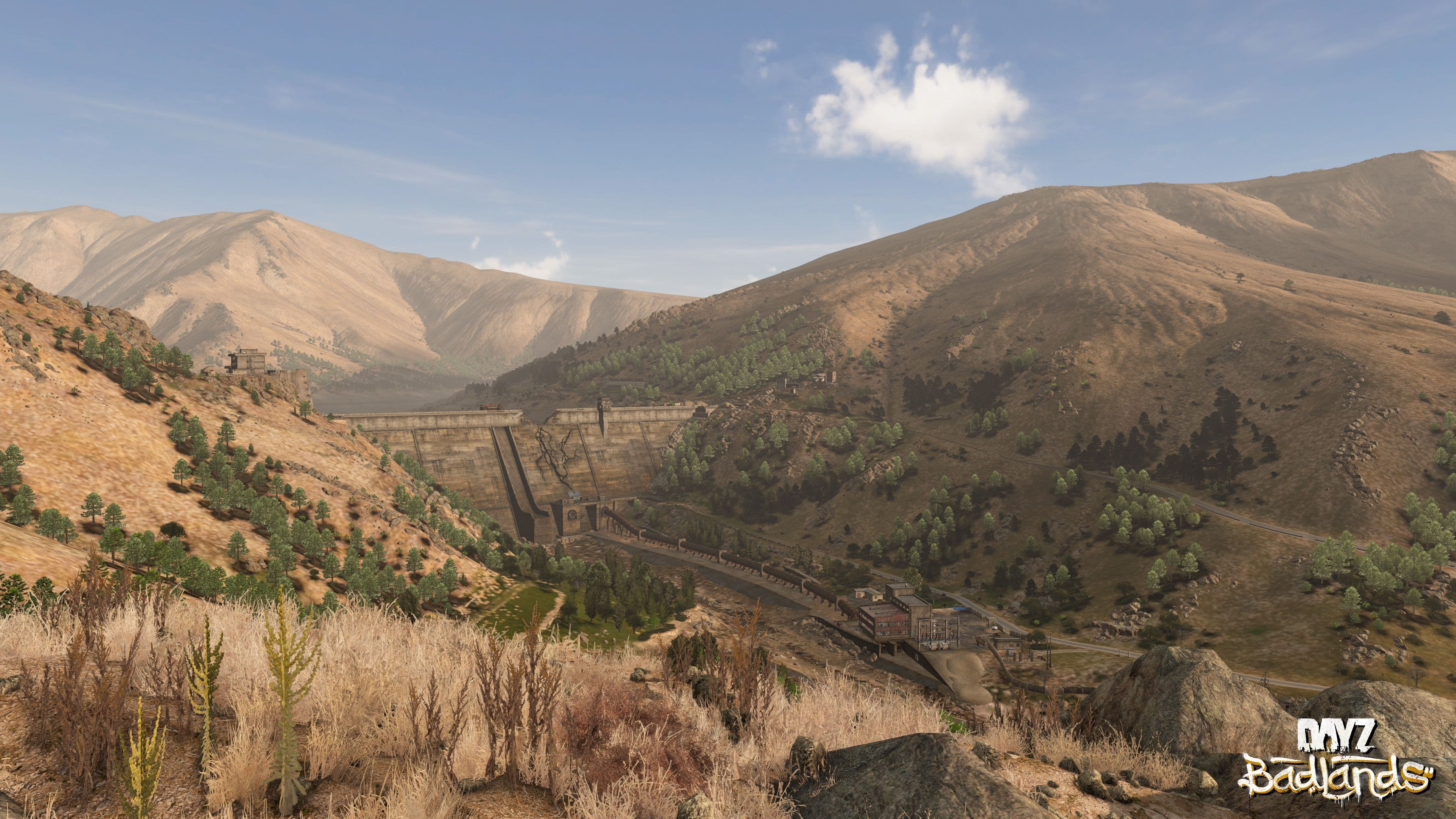
Bohemia blames Nasdara's water shortage on a strong drought, a damaged Sadd-e Marek reservoir and a general lack of maintenance.
What Nasdara offers instead is a trap dressed as a cue. Nasdara Province is Bohemia's largest terrain yet, spanning over 267 km², and the studio has been explicit that settlement density is similar to what you are used to in Chernarus — so the map does not read as emptier, just bigger. Across it run two named watercourses, the Sefid Darya and the Siyah Darya, and Week 63 places the province's greenery mostly around them: the classic water signature, green corridors following named rivers through arid ground. Week 73 then calls those same rivers by their condition. "The dried-up rivers of Sefid-Darya and Siyah-Darya also allow for a natural path of protection throughout the landscape." The strongest water cue on the map is the one place Bohemia has confirmed has no water in it. The greenery is what the watercourse left behind, not what it is currently doing, and the cause is stated plainly — a strong drought, a damaged Sadd-e Marek reservoir and a general lack of maintenance have produced what the blog calls a serious lack of water within the province. Week 67 puts a floor under it: Nasdara has very little standing water.
So the riverbeds are worth routing along, just not for the reason your instincts will give you. This is open ground with sparse vegetation, deep valleys and sizeable ridges, and Bohemia's own warning is that the landscape's general openness will challenge anyone who travels carelessly. A sunken channel with the province's surviving greenery along its banks is the closest thing to a covered lane across that openness — a natural path of protection, in the studio's words. Take it for the crossing. Then understand exactly what it is: a route that supplies nothing. You come out of the Sefid Darya at the far end with precisely the water you carried into it, having passed the most river-shaped thing on the map without a single opportunity to drink.
That is why Nasdara needs two passes over the same map rather than one. The first pass is terrain — ridges, valleys, riverbeds, bush and wall lines, where you can move without being read from a kilometre away. The second is a separate question with separate answers: where drinking water might be at all, which on this province means settlements and the wells in them, not the blue lines. The two passes will not line up the way they do on Chernarus, and treating them as one is how you end up with a beautifully covered route to nowhere and an empty canteen. Which is a manageable problem right up until you reach the well and discover it does not work.
A Well Is Now a Construction Project
A Chernarus pump has exactly one state, and nothing you could do would change it. A Nasdara well has more than one state, and Bohemia's Week 76 blog is explicit that which state you find it in is a matter of what has already been done to it: "Some wells may be fully restored, while others need your labor and the labor of another friendly you met, to be able to get drinking water." The word carrying the weight there is labour. Not a key item, not a one-button interaction — labour, with materials behind it, and in the studio's own phrasing, potentially a second pair of hands.
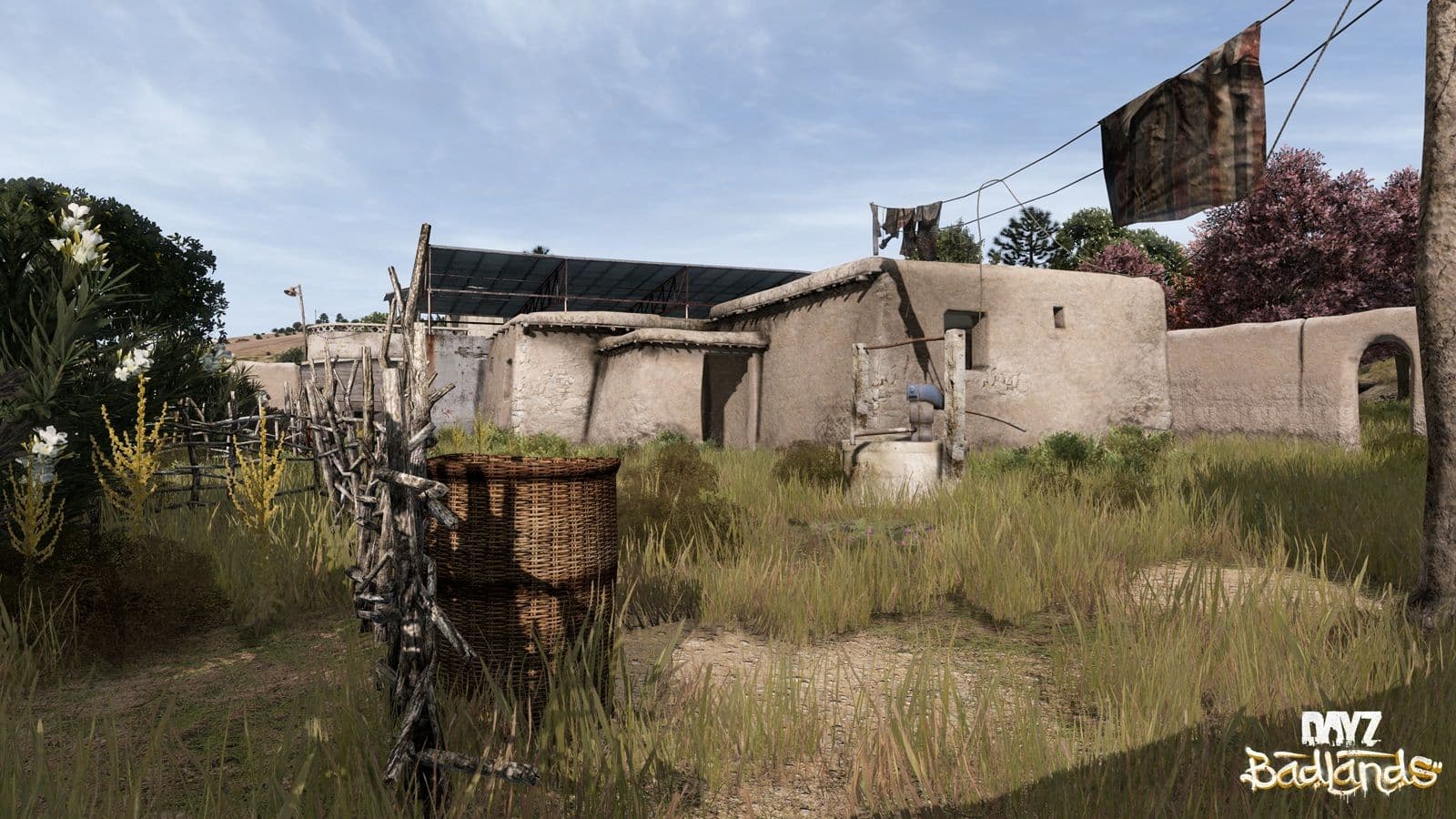
Bohemia's briefing used a broken well as its example of the rebuilding system: gather the right materials and it works again.
That sentence also tells you where wells live in the game's architecture, because it arrives as an afterthought to something bigger. Week 76 is the announcement of a new rebuilding system, and its subject is houses: instead of only placing modular fences with gates in open fields, you will be able to rebuild and barricade a selection of buildings. There are over 5,000 rebuildable houses placed around Nasdara, in approximately 20 variants of broken-down structure, and Bohemia is explicit that the mud-versus-stone split between them is purely cosmetic — how ruined a building looks tells you nothing about how tough it will be once rebuilt. Wells were appended to that system with "This also applies to wells!" So the rules that govern a well are not water rules. They are construction rules, and one of them decides everything about your trip: the amount of materials you need depends on how destroyed the structure is.
The materials are the ones the houses use — a new tool, the trowel, arrives alongside brick and mortar, and logs, planks and metal sheets still apply. Some of the bill can be recovered on site, since clearing the rubble out of torn-down structures yields building materials. None of it is free of the other cost, though, which is time spent stationary and in the open on a map whose defining feature is how far you can be seen.
What that means at the well itself splits cleanly into two arrivals. Arrive at a restored well and the transaction is the one you already know — you drink, and the only thing the well cost you was the walk to it. Arrive at a broken one and the well is not a water source at all yet; it is a job with a bill attached, payable in materials you either carried, scavenged nearby, or do not have. The second case is the one worth planning for, because the failure mode is specific and unpleasant: you can complete a long route, reach the exact point on the map you were aiming at, and still not be able to drink. Bohemia has not published well locations, well counts, repair costs or how much water a restored well gives back, and every dev blog repeats that the details are work in progress. What is confirmed is the shape of the cost, not its size.
The distribution of damage is confirmed too, and it does not favour you. Structures get more torn down the further you move from the cities into back-country settings, needing more materials to restore, and Bohemia states this is intentional — it keeps damaged buildings away from areas with potential foot traffic. Follow that logic outward and the broken wells that cost the most to bring back are the ones furthest from anywhere else — which is to say, exactly where an empty canteen leaves you with no second option.
Then there is the part that stops a repair from being a permanent solution. Shacknews, writing up the Prague briefing, put it directly: repairing a well restores it to working condition, with precious water as the reward, but a fixed structure may be destroyed again, forcing another repair. So a well you fixed on Tuesday is not a fact about the map. Standing there with an empty canteen, "there is a well here" and "there is water here" are separate claims, and only the second one matters.
The practical upshot is that repair capability stops being base-building kit and becomes travel kit. Nobody outside Bohemia can size that reserve yet, so this is not a packing list — it is a decision about whether you carry any construction material at all when your route depends on a well you have not seen working. Carry none and a broken well is a dead end. Carry some and it is a delay, paid for in the pack space and the weight that everything else on your back is also competing for.
What a Dry Detour Actually Costs
The water you carry is a poor hedge against that. A canteen holds one litre and takes a 2x2 slot, weighing 250 g empty and 1.25 kg full at 1 g per unit of water. Against a hydration maximum of 5,000, a full canteen is 1,000 — a fifth of a tank for four slots and a kilo of water, and the DayZ Wiki lists the canteen itself as Rare. The character the game hands you starts at 600, inside the yellow warning band of 300–800. You begin every life nearer the light than the ceiling.
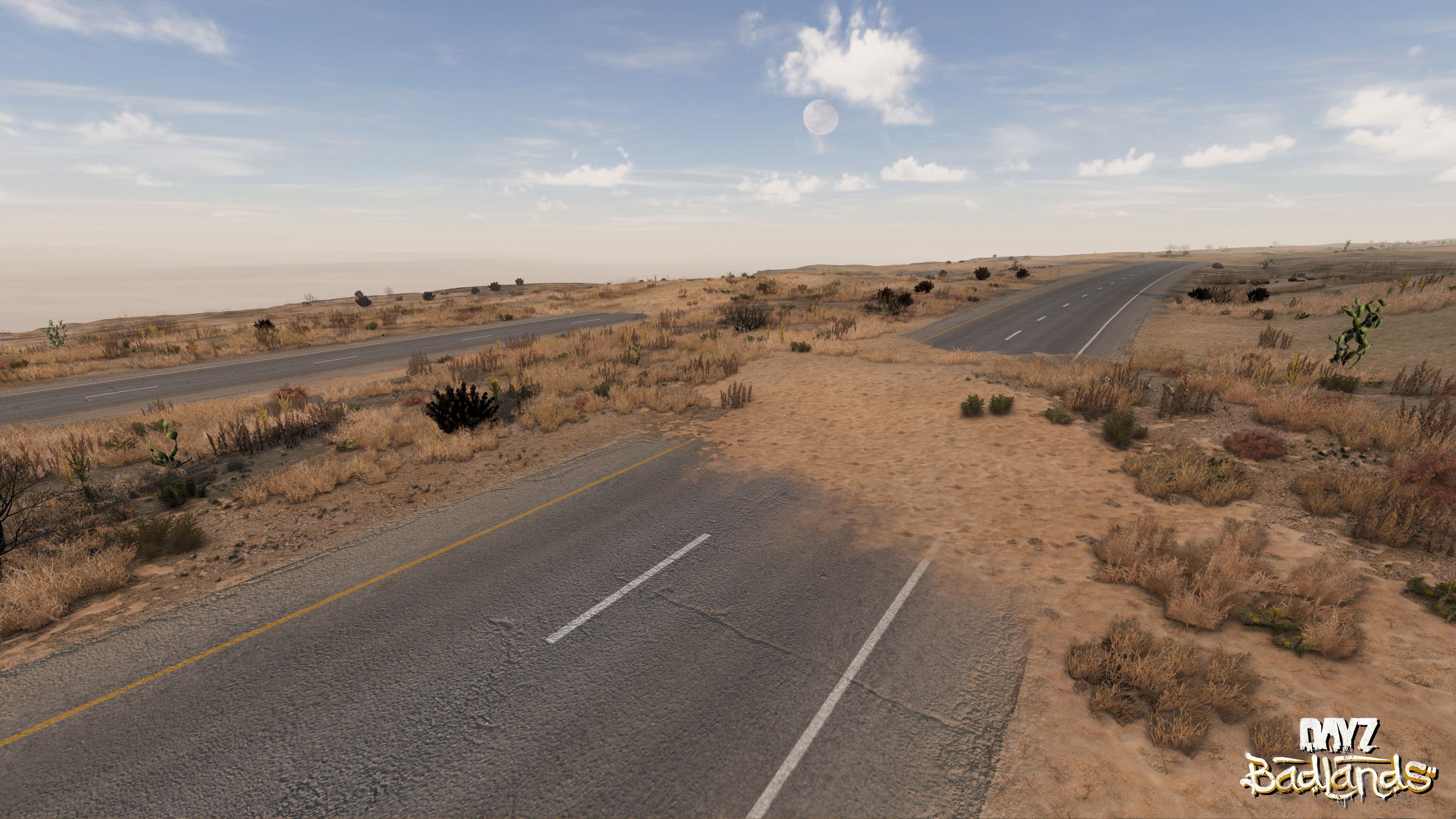
Nasdara's cross-map highway: fast ground with nothing on it.
DayZ's published water loss, per minute, runs like this:
- Idle: 0.60–1.20
- Walking: 6–12
- Jogging: 18–36
- Sprinting: 36–72
Those are not error bars. The wiki states that the rate is highest at 100% hydration and lowest near empty, so a bracket is a slope: you leave a well paying the 36-per-minute end of the jogging band and slide toward 18 as you dry out. The awkward consequence is that the canteen you drank to full before setting off is the water you burn fastest, and the reserve you are frightened of touching is the cheapest thing you own. It also means the sums below bound a trip rather than predict one, and that two paces travel different parts of that slope, so treat the totals as a range the crossing sits inside.
Price a detour with them. Twenty minutes of jogging is 20 × 18–36, or 360 to 720 water. Cover the same ground sprinting in twelve minutes and it is 12 × 36–72, or 432 to 864 — worse at both ends. On movement alone the jog wins, which is the answer most players already act on.
Heat reverses it, because heat is charged by the clock and not by the pace. The wiki puts Very Hot at 0.40 water per second on top of the background usage — 24 per minute, whether you are sprinting or standing still. Twenty minutes under it adds 480 and twelve minutes adds 288, so the jogged crossing totals 840 to 1,200 and the sprinted one totals 720 to 1,152. The sprint is now cheaper at both ends of the band. Under a Very Hot sun the fastest crossing is the cheapest crossing, and the pacing instinct you brought from Chernarus is exactly backwards.
Sit with that surcharge for a second, because it reframes the whole problem. Twenty-four per minute for merely existing, against 0.60–1.20 idle, means standing still in Very Hot costs about as much water as jogging in cool weather. Movement is close to free relative to being outdoors at all. That is why Week 67's advice reads the way it does: Bohemia says you will have to keep your body properly covered, or remain in the shade, rather than running out in direct sunlight. Shade is not a comfort measure on Nasdara. It is the only term in the equation you can turn off, and Hot rather than Very Hot is charged at 0–0.40 per second, so the same twenty-minute crossing under a kinder sun costs anywhere from nothing extra to the full 480.
For scale: a twenty-minute dry crossing under Very Hot costs more than the 600 water you spawn with in every version of the sum, and at the wrong end more than a full canteen. Refill properly when the chance comes — a pump gives 65 ml per drinking action, and filling a container and drinking from that is faster than sipping one action at a time.
What waits under 300 is why the bottom of the band deserves respect, and it is worse than the obvious part. The obvious part is health: it drains at 0.020–0.045 per second, 1.2 to 2.7 per minute, the spread existing because your health is being repaired at the same time as it is damaged. The less obvious part is what pays for that repair. Blood regeneration is gated on water and energy together, and below 300 water there is none at all — not slowed, none. The best rate, 0.300 per second or 18 per minute, needs 600 or more water alongside 600 or more energy; at 599 water it halves to 0.150. Dehydration therefore does not merely tick you down. It switches off the system that puts you back together, and then starts the damage, and you carry that deficit into whatever is waiting at the far end of the detour.
All of that is DayZ as it stands, on the maps that exist. Nasdara adds a term nobody outside Bohemia can price. Week 67 confirms direct sunlight will have an impact on character stats and that ignoring the water requirement produces consequences "starting with sweating and ending with death", along with severe temperature swings by time of day and genuinely cold desert nights. No per-minute figure has been published for any of it, and none for what a face wrap or a shaded route saves. The direction is confirmed and the direction is upward, so the arithmetic above is a floor. Nor are wells necessarily the whole answer: Week 67 says Nasdara has very little standing water, which is not none, and that the studio "managed to find new and more interactive ways" for players to meet the need — without yet saying what they are. Whether the damaged Sadd-e Marek reservoir still holds anything drinkable is among the things it has not said. Until it does, the number that decides your route is how far away the next working well is, in minutes at a pace you can sustain.
Read the Server, Not Just the Map
That number is not on the map, and no wiki page will ever hold it for you. Week 76 states the goal of the rebuilding system outright: "for every server to tell a different story over time. On one server, a town not far from the spawn point could be fully restored and fiercely defended. On another, the same town could still be rubble." The consequence Bohemia draws from it is the line worth pinning up — "no two servers will feel the same after a few days" — and since the wells clause attaches wells to that same system, your water supply is one of the things that differs.
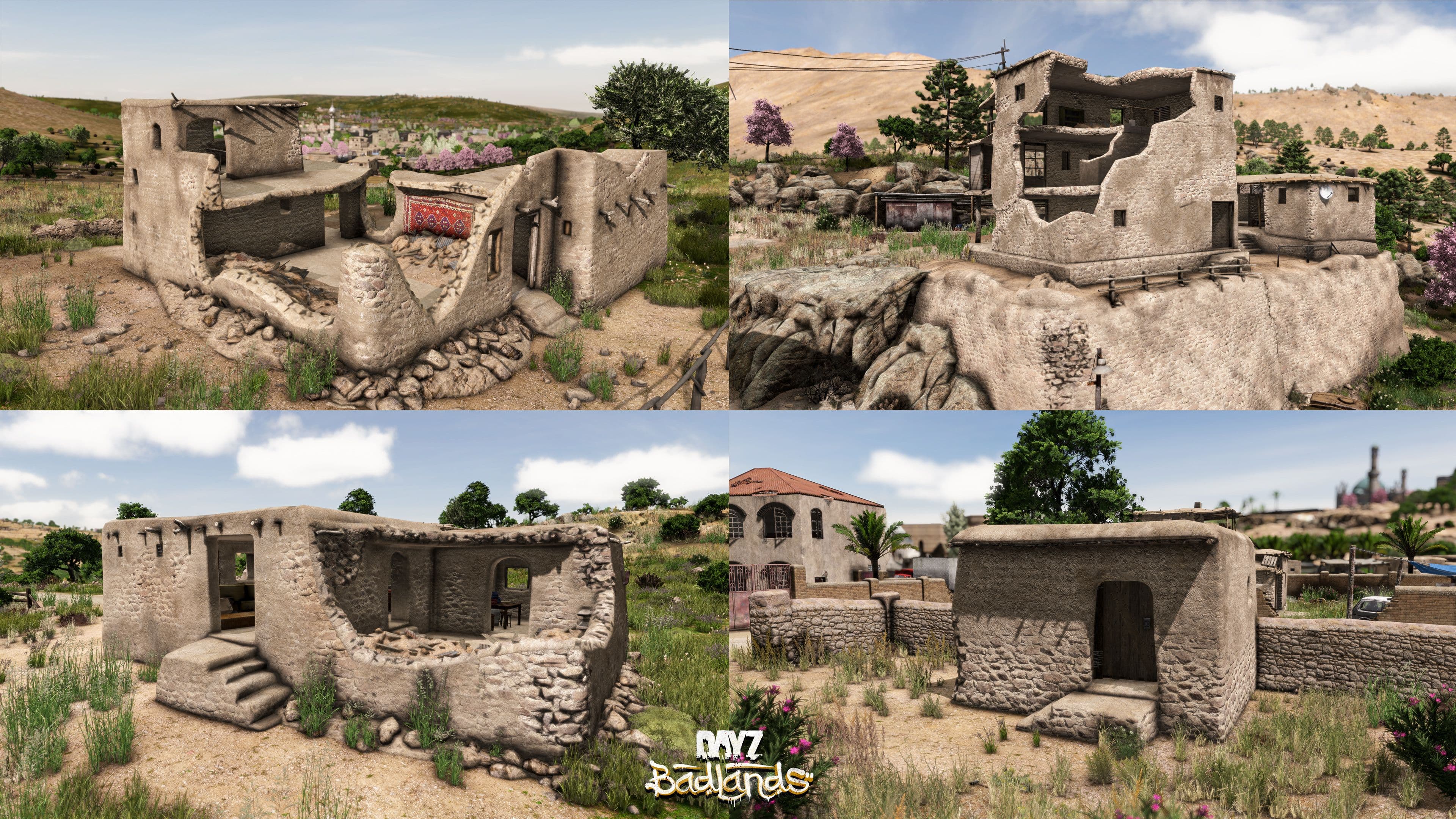
Over 5,000 rebuildable structures mean two servers can look completely different after a few days.
So the useful question is not where the wells are but which ones are working here, this week, and who made them work. Bohemia's own answer to the second half is a person: the giving player who restores wells for the convenience of everyone, offered with the parenthetical hope that you have met one. That is a real dependency dressed as a joke. Whether a stranger you will never speak to felt generous three days ago is now an input to your route planning, and you will read the answer in your hydration bar rather than off a signpost.
A confirmed well is therefore perishable intelligence, because anything repaired can be destroyed again. Scouting stops being a one-off survey and becomes maintenance: you re-confirm on the way past, top up whether or not you need to, and treat any well you have not personally seen working in the last few sessions as a maybe.
Doing that unseen is a separate skill, and Week 73 supplies the vocabulary for it. Between settlements you have bush coverage, trees, walls and fences across the fields, and the riverbeds as covered lanes. Inside them the density flips in your favour: you will get lost in the alleys of building blocks and the dense market areas, and so will anyone following you, since those same alleys provide an easy escape from pursuers. City blocks reach higher here than on other maps, and interconnecting rooftops give an overview of the streets and quick access to neighbouring buildings — which is how you watch a courtyard well for two minutes before deciding whether to walk into it.
Bohemia has not described anyone fighting over a well; that is not a published mechanic and nothing in the dev blogs claims it. But the confirmed rules put a specific shape on the map, and the shape is worth reasoning about yourself. A working well is immobile, its state is visible to anyone who walks up to it, everyone on the server needs it, and it can be destroyed. Those four properties belong to the rules as published, and they describe a fixed point that other people have reasons to visit and reasons to remove.
You can practise the underlying discipline before Badlands lands. The 1.29 Central Economy retune is live now on every platform, and Bohemia's stated intent is to slow the gameplay down and bring more focus on resource management and general character upkeep, with more importance placed on how you loot areas early after you spawn. That is Nasdara's habit in miniature: the first twenty minutes of a life decide what the next two hours cost you. On a fresh Nasdara server, spend those minutes assuming nothing is fixed, and pick up the rebuilding system's materials while you are still near the settlements where they are cheap to find.
All of which meets you at a working well you did not repair, holding a decision with three answers and no good one.
Drink and move on, and you have paid nothing and kept your mobility, but you have bought a single trip. You will be back here or somewhere like it on identical terms, and the well may not be working when you are.
Hold the ground, and you have the only reliable water you know about — while standing still, in the open, guarding something a stranger built, which anyone who would rather you were not there can simply destroy. Basing near it argues against itself too: the further from the cities you go, the more torn down the structures are and the more materials they demand, so the best base ground and the cheapest rebuilds are in different places.
Or say nothing about it to anyone. Silence keeps traffic away and costs you the second pair of hands that Bohemia says a repair can require, and the well can still be torn down on somebody else's schedule without you ever learning why.
Make that call before you finish drinking, not while someone is coming up the lane behind you.