
A stash does not become safe when the container disappears. It becomes safe when its location, access method, and contents give you fewer reasons to expose it. That is why a buried Sea Chest can be a worse cache than a Wooden Crate under a tree: twice the capacity also concentrates twice the loss, and every underground visit requires a tool, time, and a return to the same patch of ground.
Choose DayZ hidden stashes by the next visit, not by the fantasy that one spot will remain secret forever. The right method depends on how often you need the gear, how much you can lose together, and what your approach reveals.
Traffic Matters More Than Camouflage
“Deep in the woods” says nothing about player traffic. Survivors use forests as roads between water, hunting structures, military areas, vehicle routes, and high ground. A cache can be far from a settlement while sitting on the most efficient line between two useful places.
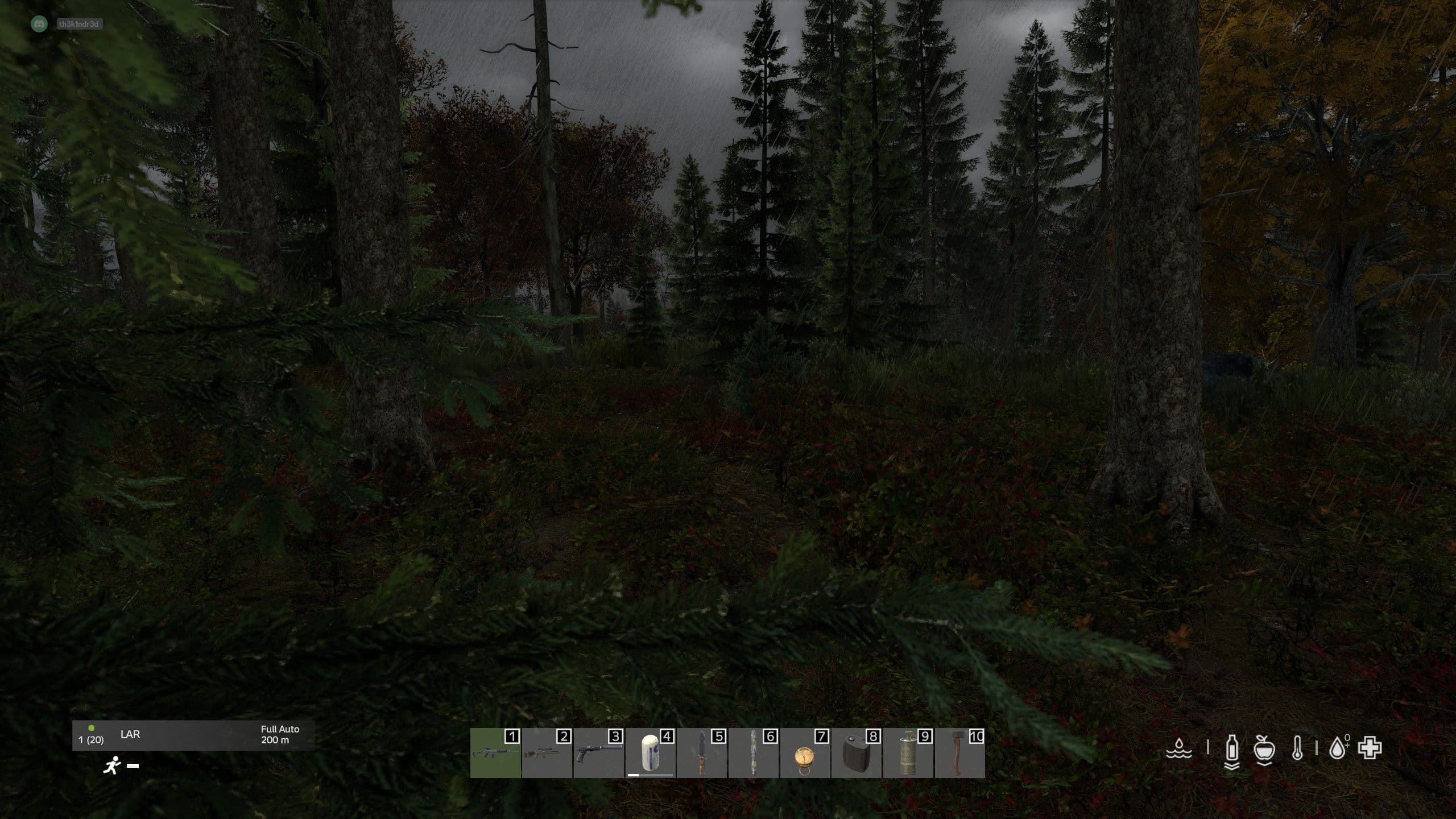
Low branches break the shelter's outline beyond close range.
Start by identifying why anyone else would cross the area. Avoid the obvious continuation of a road, stream, power line, ridgeline, or treeline. Then inspect the final position from several approaches. Branches that conceal a box from the south can frame it from the east, especially when the ground around it is otherwise clear.
Convenient landmarks create searchable locations. “The lone tree north of the pond” is easy for you to remember because it is easy for someone else to sweep. Use a private map marker plus a compass bearing or an approach screenshot instead of placing the cache beside a distinctive object. You want an ordinary piece of terrain that you can recover without turning it into a public riddle with one obvious answer.
Match the Container to Your Visit Pattern
Bohemia Interactive's DayZ 1.29 Central Economy files, checked on July 31, 2026, set a 14-day lifetime for an untouched Underground Stash. A Wooden Crate or Sea Chest left above ground has a 45-day lifetime, while an Improvised Shelter has seven days. “Untouched” is the important word: accessing and servicing persistent storage refreshes its cleanup timer. Community servers can override these values, so their rules take priority over the vanilla baseline below.
Surface crates trade tool-free access for a visible container model.
| Method | Capacity | Vanilla lifetime if untouched | Best fit |
|---|---|---|---|
| Buried Wooden Crate | 50 slots | 14 days | A craftable reserve you can leave alone between maintenance visits. |
| Buried Sea Chest | 100 slots | 14 days | A large, low-frequency reserve when concentrating the loss is acceptable. |
| Buried Drybag Backpack | 42 slots | 14 days | A compact recovery kit that becomes wearable after you retrieve it. |
| Surface Wooden Crate | 50 slots | 45 days | Supplies you access often enough that repeated digging would be a liability. |
| Improvised Shelter | 100 slots | 7 days | Frequently visited storage where conifer cover can break the shelter's outline. |
Burial changes the object into an Underground Stash, so it changes the timer too. A buried Sea Chest does not keep the chest's 45-day surface lifetime; its advantage underground is 100 slots, not extra time. A surface Wooden Crate lasts longer and opens immediately, but its model remains visible. The choice is capacity and access friction versus visual exposure, not simply large versus small.
Bury Gear You Can Leave Alone
A buried container becomes a small Mound. That removes the recognizable box from a distant sightline, but a suspicious player can still notice the disturbed patch or find its interaction prompt at close range.
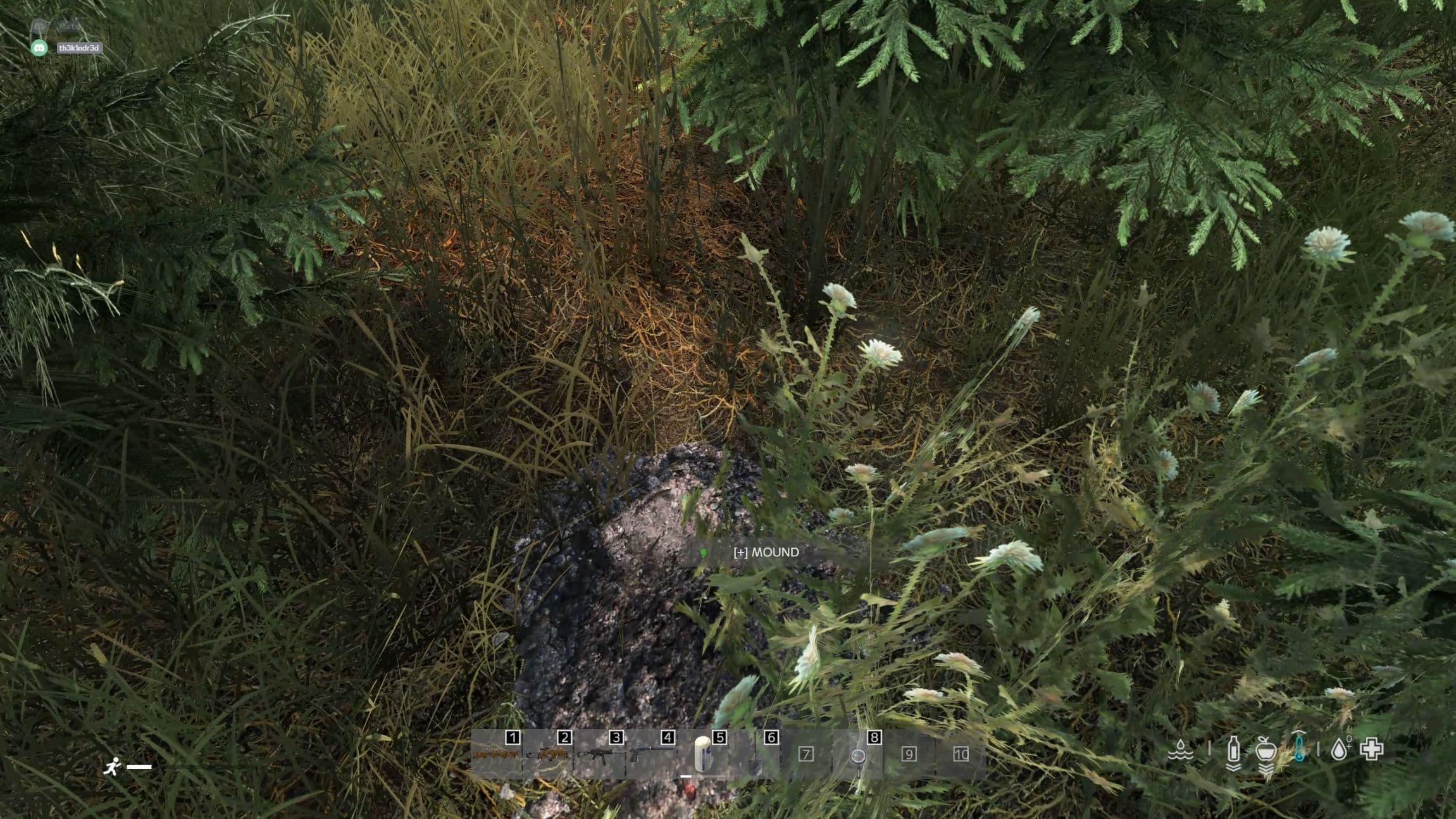
Burial removes the container model, but the Mound remains visible at close range.
Access is the larger constraint. A Shovel, Field Shovel, Farming Hoe, or Pickaxe is required to recover the container. You then spend time digging it up, moving items, and burying it again. A worn tool can become ruined during that work, leaving the container above ground until you find a replacement.
Use burial for gear whose value appears after a setback: a recovery weapon, compatible magazines, medical supplies, warm clothing, or a specialist tool for a later task. Put food, ammunition, and repair supplies you consume every session in concealed surface storage. Direct access makes those items useful without making a digging animation part of your routine.
Keep the digging tool in your active kit or in a separate surface cache. If the only suitable tool is underground, returning to the coordinates is not enough to recover the contents.
Split the Loss Before You Pick the Spots
One 100-slot Sea Chest is efficient until it is found. Splitting the same recovery plan across unrelated locations changes a single discovery from a total reset into a partial loss.
Start with two purposes. One cache restores mobility after death: basic clothing, medicine, food, and a modest weapon that let a fresh character leave the coast. The other holds gear you can afford to access less often. Do not place both in the same immediate search area or along the same approach; separate containers are still one stash if a finder can sweep them as a group.
Prepare each cache away from its final position. Craft the Wooden Crate, sort the inventory, and discard packaging or unwanted loot elsewhere, then carry the finished container in. This shortens the time you spend at the site and prevents routine inventory work from becoming the moment another player observes you.
Service only the cache you need. If one location contains vehicle parts and another contains recovery gear, a vehicle run should not expose the path to both. The network is useful because visits remain independent, not because more icons exist on your map.
Let the Next Visit Make the Decision
Use four questions before committing a container:
- When will you need the contents? Gear required every session belongs in accessible surface storage; a post-death reserve can justify burial.
- Will you have a digging tool then? If the answer depends on the buried contents, choose another method.
- Can one discovery erase the whole plan? Split recovery gear from rare reserves when the combined loss would force a full restart.
- Can you service it before cleanup or a scheduled wipe? Put a real maintenance date on the cache and check the server's own persistence rules.
If the site only works because you expect to visit constantly, it is a camp, not a hidden reserve. Use a method built for frequent access and save burial for the gear that can wait underground without pulling you back onto the same route.