Elden Ring Review: How FromSoftware Reimagined the Open World
Elden Ring is not merely another Souls game; it is the inevitable, monumental culmination of everything Hidetaka Miyazaki’s studio has built over the past decade. This is where the meticulous, punishing design of Demon's Souls and Dark Souls, the aggressive combat rhythm of Bloodborne, and the mobility of Sekiro: Shadows Die Twice collide with the boundless freedom of a true open world. The result is a synthesis so ambitious it feels like a genre-defining thesis statement, one that recontextualizes the studio’s entire philosophy by placing its greatest hits within a sprawling, living continent.
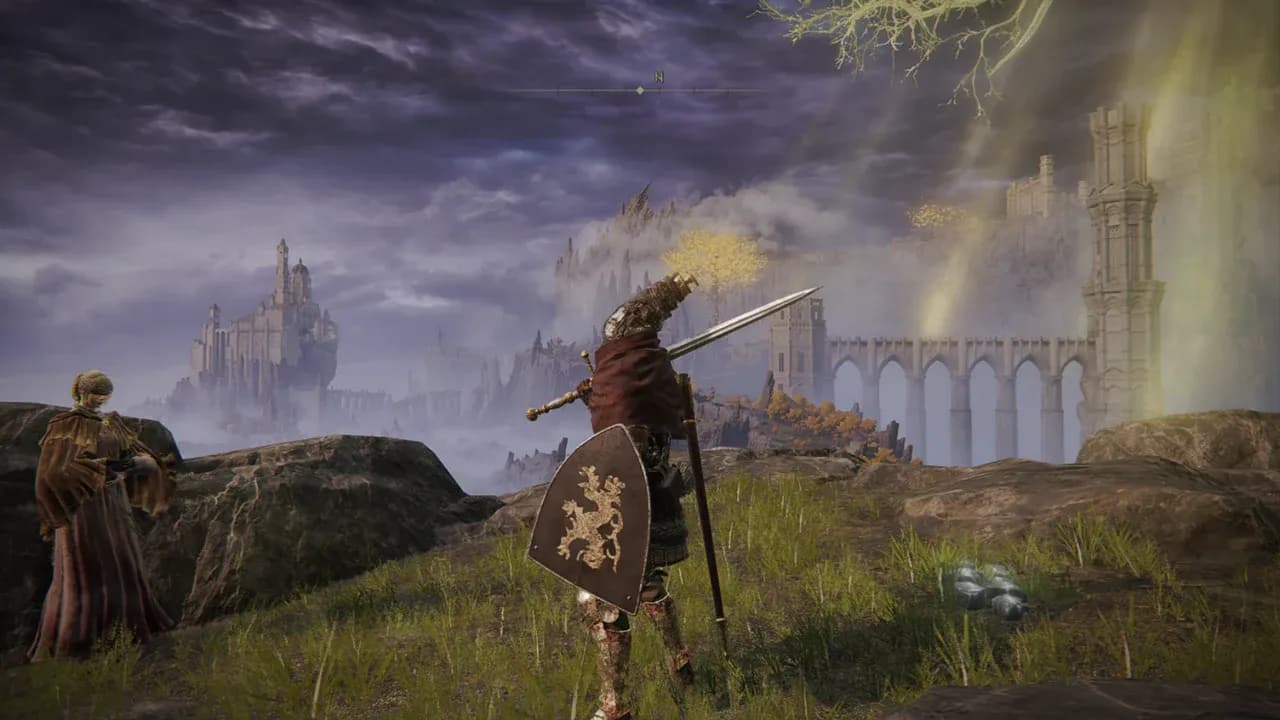
The core identity of Elden Ring is this synthesis in action. You feel it immediately in the opening moments: the familiar weight of a dodge roll, the clang of a sword against a shield, the cryptic dialogue from a forlorn NPC. Yet, the moment you step out of the tutorial cave and behold the Lands Between stretching to a shimmering horizon, the paradigm shifts. This world is a "supercut" of FromSoftware’s best environmental work, but rendered at a previously unimaginable scale. It’s not just a larger map; it’s a denser one. Every cliff face hides a cave entrance, every distant ruin promises a mini-dungeon, and every swampy mire likely conceals a grotesque secret. The density of detail is staggering, ensuring that a ten-minute horseback ride is never just traversal—it’s a series of deliberate discoveries.
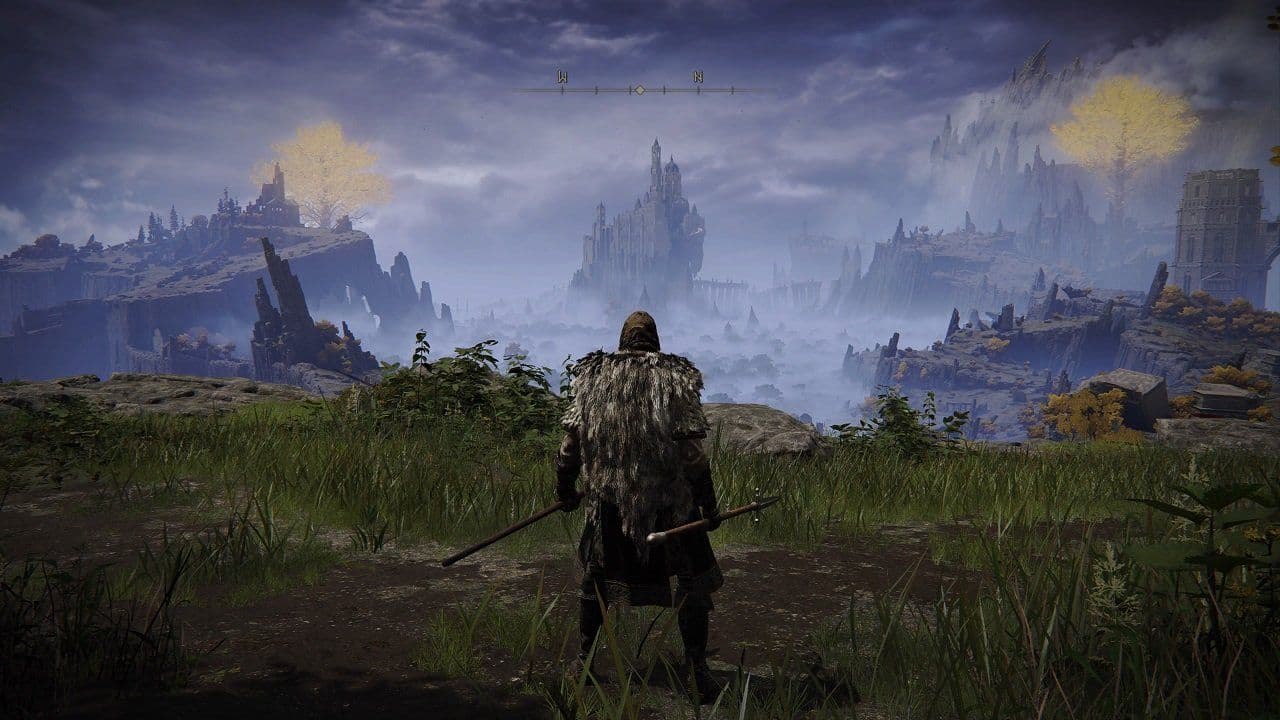
Elden Ring's world design encourages exploration through its jagged, atmospheric terrain.
This is the game’s masterstroke: it transplants the tense, claustrophobic exploration of a Souls dungeon into a breathtakingly vast landscape, making the world itself the ultimate legacy dungeon.
Narratively, the premise elegantly frames this exploration. You are Tarnished, an exile called back to a kingdom shattered by the destruction of the Elden Ring. The influence of George R.R. Martin is felt not in a straightforward plot, but in the foundational lore—a history of demigod siblings, betrayals, and a crumbling golden order that provides a tragic, grounded backbone to the world’s decay. You piece this history together not from cutscenes, but from the environment itself: a battlefield littered with identical spears tells a story of a desperate last stand; a lone, weeping statue in a ruined chapel hints at a forgotten martyr. This environmental storytelling ensures the lore feels earned, a reward for the observant player rather than a delivered exposition dump.
For context, engaging with this world demands a significant commitment. A focused playthrough of the main story will likely take 50-60 hours, but that figure is almost misleading. Elden Ring is designed for the wanderer, and for completionists aiming to uncover every hidden catacomb, defeat every optional boss, and follow every cryptic NPC questline, the journey balloons to well over 120 hours. This isn't bloat; it's a testament to the sheer volume of meaningful content packed into every region. The genius lies in how the open structure serves the classic Souls difficulty curve. Hitting a wall against a punishing boss like Margit the Fell Omen no longer means bashing your head against a gate. It means turning around, exploring a new peninsula, finding a weapon that better suits your style, and returning stronger—a design that transforms frustration into invitation.
This, ultimately, is the revolutionary core of Elden Ring's identity. It takes the uncompromising, bespoke craftsmanship of a Dark Souls and successfully grafts it onto the limitless framework of a Breath of the Wild. It proves that a world can be both overwhelmingly vast and meticulously handcrafted, that freedom and directed tension can coexist. The journey of the Tarnished is not just through the Lands Between, but through the very evolution of a genre, arriving at a destination that feels both like a homecoming and a radical new beginning.
Exploration in the Lands Between: A New Gold Standard for Discovery
This is where Elden Ring earns its “M-rated Breath of the Wild” comparison and establishes its new gold standard. The genius isn't that it ditches map markers entirely; it's that it replaces the oppressive, game-y checklist with an intuitive visual language that makes exploration feel like a dialogue with the world itself. Gold trails from Sites of Grace gently suggest a primary path, but the real guidance comes from your own curiosity—a suspicious-looking rock formation, a distant plume of smoke, a lonely statue with an outstretched arm pointing toward a cliffside. This system respects your intelligence, turning the act of marking your own map into a core, satisfying mechanic. You’re not following orders; you’re compiling evidence of a world begging to be understood.
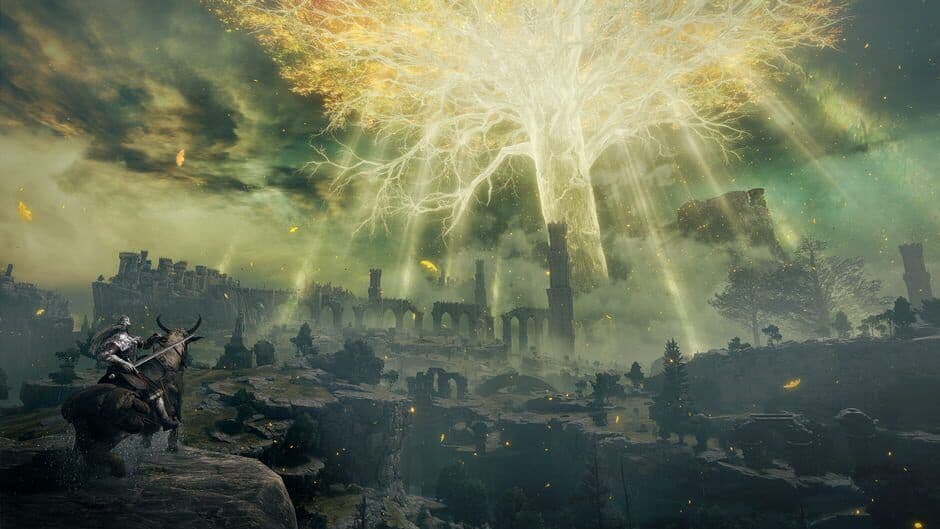
The open world offers a new standard for environmental storytelling.
This philosophy of organic discovery dismantles open-world bloat by making every point of interest feel bespoke. When you see a small, weathered church on the horizon, you’re not ticking off a "Shrine" icon. You’re racing there on Torrent because you know it might house a new Sacred Flask upgrade, a unique Incantation, or a weeping merchant with a tragic tale. The reward is never just currency or a generic piece of loot; it’s a tangible, permanent power spike or a narrative breadcrumb. Finding a Golden Seed to increase your healing charges or a Sacred Tear to boost their potency after a tense climb to an isolated tower is a visceral, meaningful reward that directly fuels your progression and confidence. This loop ensures that even a ten-minute diversion from the critical path feels purpose-driven and worthwhile.
Torrent, the spectral steed, is the perfect vehicle for this philosophy, fundamentally altering your relationship with the Lands Between. The double-jump isn't just a traversal tool; it's a key to the world's verticality, unlocking hidden plateaus, secret cave entrances atop waterfalls, and precarious shortcuts. The scale achieved is breathtaking—galloping across the vast, wind-swept plains of Limgrave feels epic, yet the ability to nimbly leap up a mountainside to a hidden catacomb maintains that intimate, discovery-focused Souls feel. This duality means the world feels impossibly large and intimately knowable at the same time. Horseback combat, while functional for hit-and-run tactics against overworld bosses like dragons, wisely takes a backseat; the primary joy of Torrent is in the freedom to go anywhere your eyes can see and your courage permits.
This is the core triumph of Elden Ring’s exploration: it makes you feel like a true archeologist of a ruined world, where every discovery is a personal revelation rather than a box checked on a developer’s spreadsheet.
However, the sheer scale of the enterprise does lead to the game’s most notable shortcoming in this area: asset reuse. By the time you’ve combed through your third or fourth mine or catacomb, you’ll recognize the same skeletal boss (the Burial Watchdog or the Erdtree Burial Watchdog variant) guarding the end. Minor dungeon templates and enemy placements repeat, and the visual shorthand of churches and ruins, while initially evocative, can start to feel familiar. This is the inevitable trade-off for a world this vast. For some, it will shatter immersion; for others, it becomes a comfortable rhythm within the chaos, a known quantity against which the truly unique, staggering set-pieces—like the descent into the eternal city of Nokron or the nightmare of Caelid—shine all the brighter.
Ultimately, Elden Ring’s exploration succeeds because it inverts the typical open-world power dynamic. The world isn’t a patient canvas waiting for you to paint your icon over it; it’s an active, mysterious entity that doles out its secrets sparingly, only to those willing to read its subtle signs and brave its hidden corners. It proves that a lack of explicit direction isn’t a lack of design—it’s a more demanding, and infinitely more rewarding, form of it.
Elden Ring Combat: Refined Mechanics and the Illusion of Accessibility
Combat in Elden Ring is a masterclass in refinement, taking the rock-solid foundation of Dark Souls III and sanding down its rough edges while adding potent new layers. The result is the most flexible and approachable combat system FromSoftware has ever built, yet one that maintains the punishing, precise DNA that defines the genre. This duality is the source of the game’s “illusion of accessibility”—it feels welcoming because it offers you a dozen different hammers for every nail, but the nails are still driven into titanium.
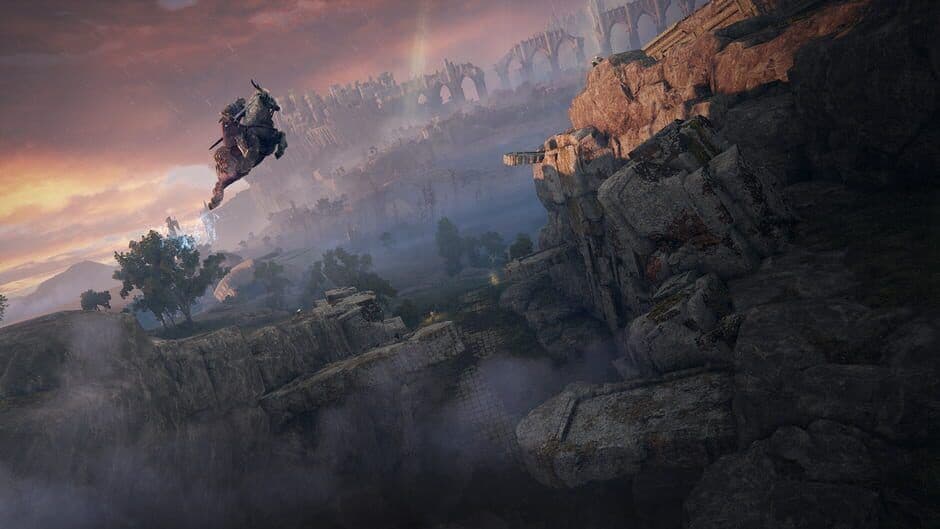
Refined action mechanics in the Lands Between.
The core additions are elegantly simple but transformative. The Guard Counter, a swift, heavy riposte after a successful block, turns a defensive action into an offensive opportunity, rewarding patience and stamina management in a way that feels distinctly more proactive than the traditional parry. Jump attacks, borrowed from Sekiro, aren’t just for spectacle; they are a crucial tool for staggering towering foes and breaking the posture of shielded enemies. These mechanics, alongside a vastly expanded magic arsenal, mean that brute-force melee is no longer the only—or even the optimal—path. You can build a spellsword who buffs a katana with frost, a faith knight who uses incantations to summon a spectral dragon head, or an alchemist who crafts perfumes that explode on contact. The new Ashes of War system is the engine of this creativity, allowing you to strip special skills from one weapon and imbue them onto another, fundamentally altering scaling and movesets. This isn't just customization; it's a toolkit for solving the game’s hardest challenges on your own terms.
This is the genius of Elden Ring’s difficulty curve: it doesn’t lower the ceiling, it builds more ladders. The challenge is as fierce as ever, but the ways to meet it have multiplied.
This philosophy of expanded options is most evident in the game’s controversial assist features: spirit summons. Calling a pack of spectral wolves or a lone, durable knight to draw aggro can turn an insurmountable duel into a manageable, chaotic brawl. For veterans, these summons can feel like a crutch that diminishes the purity of a one-on-one boss fight. For newcomers or anyone simply stuck, they are a revelation—a pressure valve that the game explicitly provides and encourages you to use. Combined with the open world’s core promise that you can always walk away, grind Runes, and return stronger, Elden Ring systematically dismantles the frustration gates that blocked players in earlier Souls titles. The notorious early boss, Margit the Fell Omen, is arguably harder than anything in Dark Souls III, but the game winks and points you toward the ruins where you can find the Spirit Jellyfish ashes, or the mine where you can upgrade your weapon several times before facing him again.
However, not all of its evolutionary steps land with grace. The stealth mechanics, another Sekiro import, are a welcome but shallow addition, perfect for thinning out an enemy camp but lacking the depth to support a full playstyle. More glaring is the horseback combat. While galloping past overworld threats on Torrent is a joy, actively fighting from horseback feels undercooked. Hit detection is unreliable, your moveset is severely limited, and the camera struggles in close quarters, making it a “total crapshoot” against all but the largest, most dragon-shaped foes. It’s a system included for spectacle rather than strategic depth, and it stands out as conspicuously unrefined next to the meticulously balanced on-foot combat.
Ultimately, Elden Ring’s combat succeeds because it respects player agency without sacrificing its core identity. It gives you the tools to create your own difficulty setting, whether that means challenging a demigod solo with a basic club or summoning allies and bombarding them with sorceries. The system’s flexibility ensures that the relentless punishment of a Souls game is now accompanied by a persistent, empowering invitation to try something different. It’s still brutally hard, but it’s hard in a way that feels increasingly fair, and more importantly, in a way that you chose.
Legacy Dungeons and Bosses: The Peak of FromSoftware Level Design
For all the freedom of its open world, Elden Ring stakes its legacy on the moments that funnel you into its most harrowing gauntlets. The legacy dungeons are where FromSoftware’s legendary level design graduates to a grander, more ambitious scale, and the boss encounters within are the most punishing, spectacular tests the studio has ever devised. This is the game’s beating heart, proving that meticulous, claustrophobic craftsmanship can not only survive within a boundless landscape but thrive as its crowning achievement.
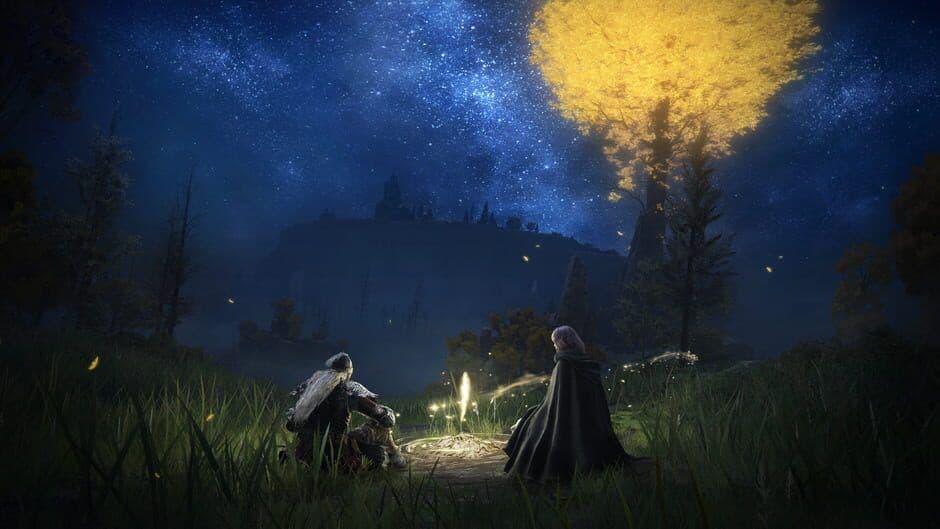
Atmospheric environmental storytelling within a major dungeon.
Stormveil Castle is the masterclass that sets the tone. Approaching its gothic spires after the open plains of Limgrave creates a palpable shift in tension; you trade the freedom of Torrent for the oppressive weight of history. Its design is a labyrinth of verticality and player choice. You can charge the main gate, braving arrow barrages and a giant’s pots, or discover a hidden side path along the cliffs, sneaking past enemies to unlock a shortcut. Every courtyard, every winding interior corridor, and every rooftop battlement is interconnected, creating a sense of place so dense it feels like a standalone Dark Souls game. The same meticulous philosophy extends to the Academy of Raya Lucaria, a magical fortress where teleportation puzzles and library shelves double as precarious walkways. These are not just levels; they are intricate ecosystems of danger and discovery, rewarding careful observation and aggressive exploration in equal measure.
This is the pinnacle of FromSoftware’s craft: spaces that feel like real, decaying locations first and video game levels second, where every unlocked door is a hard-won victory.
The bosses that crown these dungeons are the spectacle to match the stage. Encounters like Margit the Fell Omen and Godrick the Grafted are cinematic, multi-phase wars of attrition designed to break your rhythm and then your spirit. Margit’s delayed swings punish panic rolls, teaching you to unlearn muscle memory, while Godrick’s second-phase graft of a dragon’s head to his arm is a grotesque, breathtaking escalation. These fights are leagues more challenging than most open-world bosses, demanding near-perfect execution. The secret to overcoming them often lies in a subtle but brilliant behind-the-scenes mechanic: the stagger system. Landing charged heavy attacks, jump attacks, or certain spells builds up an invisible posture meter; break it, and the boss is left reeling, open to a devastating critical hit. This system rewards aggressive, calculated risks over safe, repetitive poking, transforming the combat from a war of attrition into a strategic dance.
However, this dance is sometimes sabotaged by a persistent partner: the camera. In tight dungeon corridors or against oversized enemies, the “rough camera” becomes a genuine adversary. Locking onto a giant enemy can cause the view to jerk violently, obscuring telegraphs for sweeping attacks, while fighting in cramped spaces often results in the camera clipping into geometry, rendering you blind. This isn’t a minor quirk; it’s a source of unavoidable, frustrating deaths that feel like a betrayal of the game’s otherwise impeccable mechanical fairness. It’s a glaring flaw in an otherwise polished combat puzzle, and it’s at its worst during the very encounters that demand the most precision.
For those who conquer the demigods and still crave a greater challenge, Elden Ring saves its most brutal tests for the optional depths. Hidden behind convoluted questlines or at the end of the most remote regions are bosses described by players as “astronomical” in their difficulty. These are the ultimate proficiency checks, encounters that demand mastery of every mechanic the game has taught you, often with vanishingly small margins for error. Their existence is a gift to the most dedicated veterans, a promise that no matter how powerful you become, there is always a peak left to scale. They transform Elden Ring from a journey with an end into a playground of perpetual challenge.
Ultimately, the legacy dungeons and their guardians are the core of the Elden Ring experience. They are the meticulously crafted, high-stakes counterpoint to the open world’s serene freedom, the moments where the game sheds its welcoming illusions and reminds you, with glorious, punishing clarity, of its uncompromising heritage. The fact that these self-contained masterpieces are woven seamlessly into a world you can freely walk away from is nothing short of a design miracle.
Technical Performance: A Visual Marvel with Rough Edges
Elden Ring’s visual identity is a masterwork of high fantasy art direction, a triumph that makes its technical shortcomings all the more frustrating. This is a game where you’ll pause your journey to simply watch the Erdtree’s glow bleed through a mist-shrouded lake, or feel genuine dread upon entering the scarlet-tinged nightmare of Caelid—a region so unsettling its very atmosphere feels oppressive. The world is a gallery of distinct, painterly biomes, from the wind-swept, golden meadows of Limgrave to the crystalline, magical waters of Liurnia. This staggering artistic achievement, however, is housed within a technical framework that can feel like a pane of cracked glass over a masterpiece, with performance issues that vary from minor irritations on current-gen consoles to significant obstacles on PC.
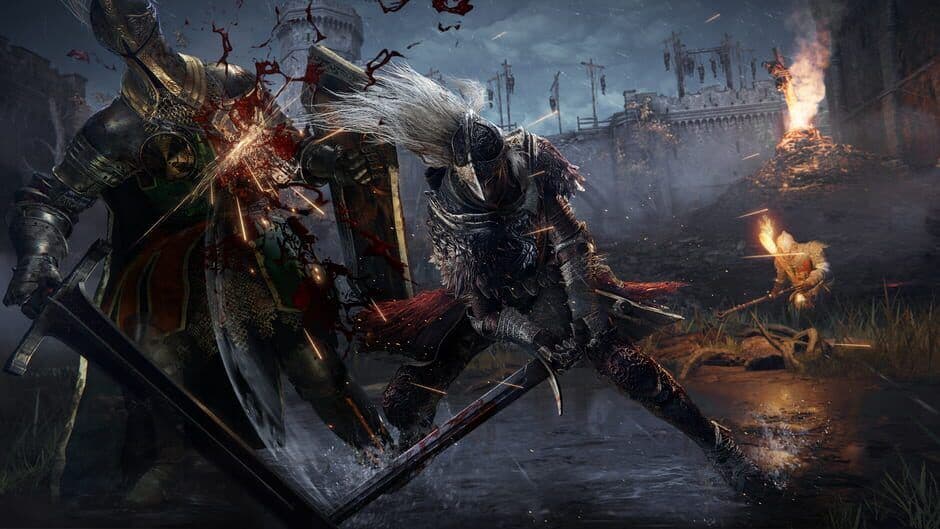
Impressive draw distances across the open world.
The art direction is Elden Ring’s most consistent and breathtaking success. Each region isn’t just a new set of textures; it’s a fully realized ecosystem with its own color palette, architectural language, and ambient mood. The descent into Siofra River, an eternal, star-lit cavern dotted with the ruins of a lost civilization, is a moment of pure awe that few games can match. The unsettling, bio-mechanical horror of Caelid, with its scarlet skies, mutated wildlife, and rotting earth, showcases FromSoftware’s unique talent for crafting beauty from decay. These aren’t just pretty backdrops; they are essential to the game’s sense of place and discovery, making every new horizon a compelling mystery. It’s a world that begs to be photographed, which makes the lack of a native photo mode at launch feel like a peculiar oversight.
This commitment to a cohesive, haunting aesthetic is why Elden Ring’s visuals will be remembered long after its framerate hitches are patched away.
Where the experience notably stumbles is in its PC performance. At launch, even players with high-end rigs—like the tested configuration featuring an NVIDIA 3080 Ti—reported persistent microstuttering and intermittent hitches, regardless of whether they were playing at 4K or 1440p resolution. The issue appears tied to the game’s aggressive asset streaming as it pre-loads the vast open world, a process that eliminates pop-in but can cause noticeable, jarring pauses during traversal or combat. The absence of support for modern upscaling technologies like DLSS or FidelityFX at launch exacerbated the problem, leaving PC players with fewer tools to smooth out the experience. These aren’t minor quibbles; a stutter during a precise dodge against a late-game boss can mean an unfair death, directly undermining the game’s meticulously balanced combat.
Beyond raw performance, Elden Ring is also plagued by a collection of smaller technical quirks that can break immersion. Projectiles occasionally clipping through solid geometry, or enemies landing attacks through visibly closed doors, are rare but memorable frustrations. More consistently problematic is the camera behavior, especially against large foes in tight spaces—an issue acknowledged in previous sections but worth reiterating here as a technical failing. The camera can violently jerk when locked on, or get stuck inside environmental objects, robbing you of visual feedback in moments that demand it. While these glitches don’t define the experience, they are conspicuous blemishes on an otherwise polished title.
For console players, the advice is more nuanced but follows a similar pattern of trade-offs. Performance on PlayStation 5 and Xbox Series X|S is generally stable, offering a far smoother experience than the PC version at launch, albeit with occasional framerate dips during intense effects-heavy battles. The real caution, as noted in the research, is for those on base PS4 and Xbox One hardware. The game’s ambitious scope and aggressive data streaming likely push these older systems to their limits, potentially resulting in longer load times and more frequent performance compromises. For a game built around tense, reactive combat and seamless exploration, such limitations can significantly impact the intended experience.
Ultimately, Elden Ring presents a paradox: it is one of the most visually arresting and artistically confident games of its generation, yet it launched in a state that often undermined its own grandeur with technical instability. The good news is that many of these issues, particularly on PC, have been improved through post-launch patches. However, that initial friction remains part of its story—a reminder that even a masterpiece can arrive with cracks in its foundation. Whether those cracks ruin the painting depends entirely on your tolerance for such imperfections and your platform of choice.
Final Verdict: Is Elden Ring the Best Action RPG Ever Made?
The question of whether Elden Ring is the best action RPG ever made is the wrong one to ask. The right question is whether it’s the most transformative—a game that reconfigures the genre’s landscape so thoroughly that its shadow will loom over every open-world fantasy for a decade. After over a hundred hours in the Lands Between, the answer is a resounding yes, but with the crucial caveat that its flaws are as inseparable from its identity as its triumphs. This isn't a polished, frictionless product; it’s a monumental, occasionally messy work of art that demands your patience as much as your awe.
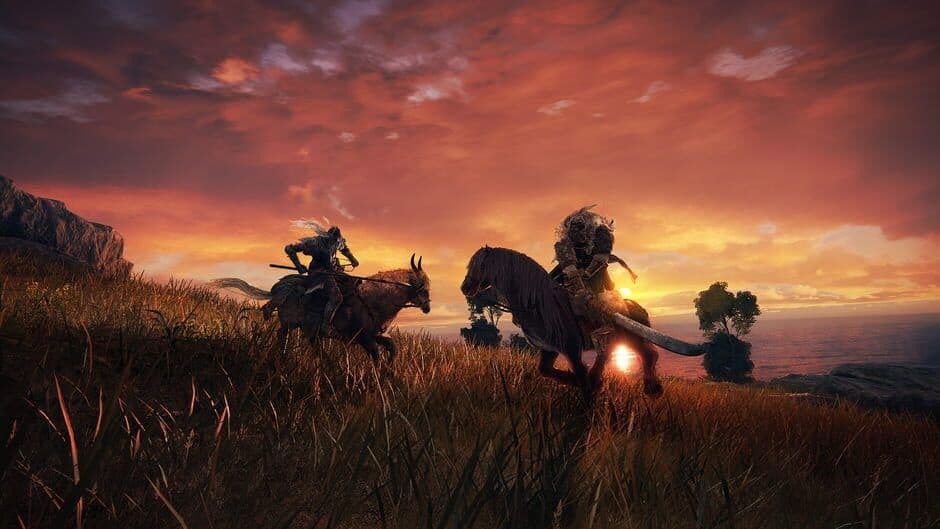
The transition to an open world was a major innovation for the series.
Elden Ring is a tour de force that raises the bar for the entire medium, not by perfecting a formula, but by fearlessly expanding it into uncharted territory.
The game’s value proposition is staggering. For the price of admission, you are buying not just a 50-60 hour main story, but a 100+ hour odyssey packed with a density of meaningful content that shames its contemporaries. This isn't achieved through repetitive busywork, but through a world so relentlessly inventive that even the third copy-pasted catacomb might hide a new weapon art or a harrowing boss variant. The sheer volume of handcrafted experiences—from the epic, multi-hour legacy dungeons to the minute-long discovery of a hidden painting—creates a sense of boundless possibility that justifies every moment of the investment. You aren't just completing a game; you are exhaustively documenting a world.
This masterpiece, however, arrives with its share of cracks in the foundation. The technical stuttering on PC, even on high-end rigs, can turn a majestic dragon fight into a slideshow at a critical moment, directly undermining the precise combat the game demands. The clunky horse combat remains a half-baked system, useful for fleeing or hitting giant ankles but too unreliable for serious engagement. Most persistently, the frustrating camera behavior in tight spaces or against oversized enemies remains the game’s most consistent foe, causing more cheap deaths than any demigod. These are not minor nitpicks; they are tangible friction points that can sour an otherwise sublime moment.
So, who is this for? For Souls veterans, Elden Ring is non-negotiable—the ultimate synthesis and evolution of everything FromSoftware has mastered. It is their most ambitious, generous, and mechanically rich world to date. For open-world enthusiasts who value mystery and agency over guided tours, this is a new gold standard, a Breath of the Wild for the grimdark crowd. The caveat is that tolerance for friction is required—not just the intended difficulty of its bosses, but the unintentional friction of its technical hiccups and archaic quirks. If you can meet it on those terms, the reward is one of the most profound, memorable, and discussion-defining gaming experiences of this generation. It is, flaws and all, an essential landmark.
Pros:
- An unparalleled sense of discovery that makes every inch of the world feel handcrafted and secret.
- A refined, deeply flexible combat system that offers more viable playstyles than any previous Souls title.
- Legacy Dungeons that represent the absolute peak of FromSoftware’s legendary level design.
Cons:
- Persistent technical performance issues, especially stuttering on PC, that can disrupt gameplay.
- Horseback combat feels underdeveloped and clunky compared to the superb on-foot mechanics.
- The camera remains a persistent adversary in cramped spaces or against large enemies.