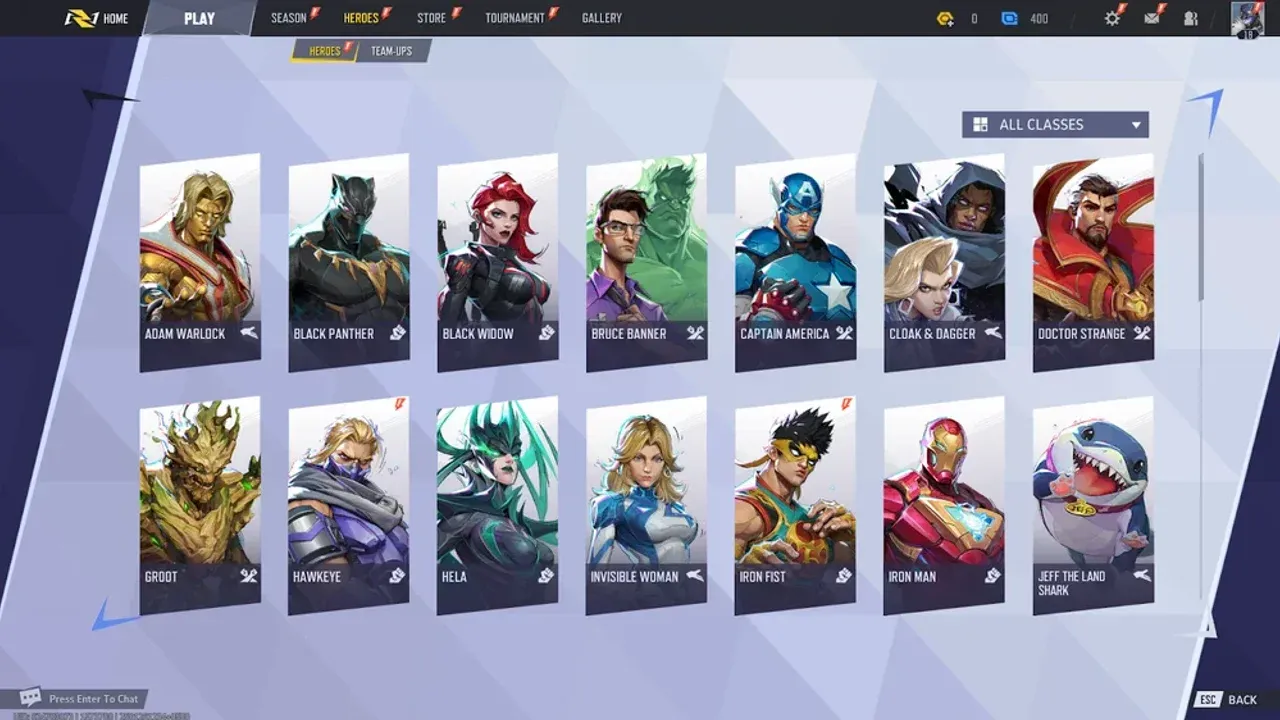
Marvel Rivals Gameplay Basics and Core Mechanics
Before you dive into assembling your ultimate squad of Marvel heroes, you need to master the fundamental systems that govern every match. Marvel Rivals is more than just a chaotic brawl of superpowers; it’s a strategic 6v6 objective-based shooter where movement, positioning, and team composition are just as important as landing your ultimate. This foundation is critical for understanding the deeper role-specific strategies covered later.
Essential Movement & Positioning: Your First Superpower
Success in Marvel Rivals hinges on mobility and positioning more than in many other hero shooters. Every character, from the flying Iron Man to the wall-crawling Spider-Man, has a unique movement kit, but the core principle remains: control space to control the fight. The basic movement controls are your primary tool for survival. Strafe, crouch, and use each hero’s mobility abilities (like dashes, leaps, or grapples) not just to attack, but to constantly reposition between pieces of cover.
Think of the map as a series of angles and sightlines. The timeless rule is to prioritize owning the next useful corner over standing in open areas. A corner provides a safe spot to peek, apply pressure, and retreat. Simply running down the middle lane is a recipe for a quick respawn. Effective positioning is an active skill that creates "frontline space" for your team to operate and ensures "backline safety" for your vulnerable supports. Before you worry about complex combos, master moving from one safe position to another.
The Three Core Objectives: More Than Just Kills
Victory is never achieved by kill count alone. Marvel Rivals features three main objective-based modes that dictate the flow of every match, and understanding them is non-negotiable:
- Convoy: One team escorts a vehicle (like a goat-drawn cart) along a track while the other defends. Progress requires at least one attacker near the payload, with more escorts increasing its speed. Defenders can push it backwards if no attackers are present. The key is sustained, tactical pressure around a moving point.
- Domination: Teams fight to capture and hold a static central zone. Control shifts as players enter and leave the area, filling a progress bar to 100%. This is a brutal war of attrition where controlling angles around the point is often more valuable than stacking directly on it.
- Convergence: A hybrid mode that combines both concepts. Teams first battle to capture an area, which then unlocks a vehicle for a shorter, intense escort phase.
The universal tip across all modes is to use kills to achieve objective control. Eliminating an enemy is your opportunity to push the payload, capture the point, or stop the enemy's advance. Ignoring the objective to chase frags is the fastest way to lose.
Hero Swapping: The Ultimate Counter-Play
A static team composition is a losing strategy. One of Marvel Rivals' most powerful mechanics is the ability to swap your hero at any spawn point or after being eliminated. This isn't just for fixing a bad initial pick; it's a core strategic layer. Getting countered by a pesky sniper? Swap to a flanker like Black Cat. Need more sustain to hold a point? Switch to a Strategist like Mantis. The only restriction is that you cannot select a hero already on your team.
This system rewards game sense and adaptability. A match can evolve through several phases, and your hero choice should evolve with it. The best players constantly ask: "What does my team need right now to win the next fight?" Don't fall into the trap of stubbornly playing one hero all match. Your flexibility is a weapon.
6v6 Team Composition & Foundational Tips
While the game famously imposes no role locks—allowing wild compositions like six Vanguards—winning consistently requires thoughtful team building. The roster is divided into three roles (explored in depth in subsequent sections): Vanguards (durable frontline tanks), Duelists (high-damage attackers), and Strategists (support and utility). A balanced team covering all bases is typically the most reliable.
For beginners, the best advice is to ensure your team has at least one Strategist. Many heroes lack self-healing, and the support they provide is often the difference between a stalled push and a successful one. Furthermore, communication is key. Use the ping system to mark threats, call out low-health targets, and coordinate on objectives. In the chaotic symphony of superpowers, a team that plays together wins together.
The Takeaway: Master your movement, play the objective, swap heroes to adapt, and build a balanced team. These core mechanics are the shared language of Marvel Rivals upon which all advanced hero mastery and synergy are built.
The Vanguard Role: Frontline Protectors
In the chaotic 6v6 battles of Marvel Rivals, victory isn't just about dealing the most damage—it's about controlling the space. That’s where the Vanguard comes in. This role is the team's anchor, the immovable object designed to absorb punishment, draw enemy fire, and create the safe zones from which Duelists and Strategists can operate. While the game offers complete freedom in team composition, understanding and mastering at least one Vanguard is non-negotiable for any player serious about winning. They are the difference between a team that gets steamrolled on the objective and one that holds the line.
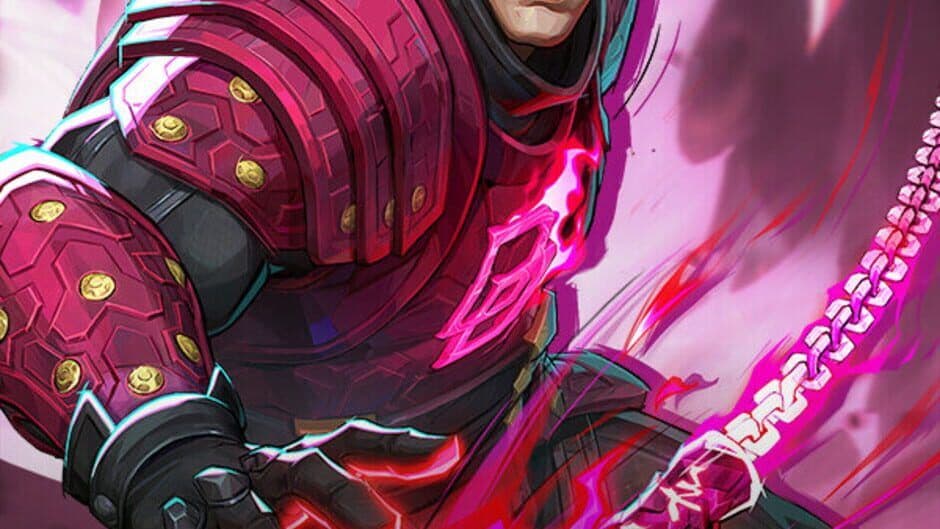
Official game artwork
The Vanguard Archetype: More Than Just a Meat Shield
Why it's here: The Vanguard is the foundational "tank" role, a concept familiar to hero-shooter veterans but with distinct Marvel Rivals flair. Their primary function is area denial and protection, achieved through two key attributes: massive durability and disruptive crowd control.
First, let's talk health pools. This is the most tangible difference between roles. Vanguards possess significantly larger health reserves compared to their Duelist and Strategist teammates. While exact numbers can vary with balance patches and the new Regenerative Shield system (more on that later), the principle remains: a Vanguard like Devil Dinosaur starts with a base health pool of 850, allowing him to weather a storm of gunfire that would instantly delete a 150-health Duelist like Magik. This isn't just about surviving longer; it's about demanding enemy attention and resources. Every second an opponent spends trying to burn down your Vanguard is a second they aren't shooting your fragile damage dealers.
However, raw health is only half the story. Every Vanguard possesses at least one ability specifically designed to block, mitigate, or reduce incoming damage. This is what separates a true tank from a mere damage sponge. Captain America raises his iconic shield, Groot can deploy a protective barrier, and Hulk simply gets angrier and tougher. This layered defense means a skilled Vanguard player isn't just watching their health bar deplete; they're actively managing cooldowns to negate burst damage at critical moments, making them the ultimate front-line protectors.
Spotlight Vanguard: The Immovable Hulk
Why he's here: When you think "Marvel tank," the Hulk is the archetype. He embodies the Vanguard fantasy: a relentless, close-quarters juggernaut who punishes those who dare focus him. Post-balance adjustments, Hulk’s kit perfectly illustrates the modern Vanguard's design philosophy, blending sustain with devastating offensive pressure.
His primary abilities are built for initiating fights and creating chaos:
- Heavy Blow & Thunder Clap: These are your bread and butter for dealing damage and controlling space. Heavy Blow is a powerful melee strike, while Thunder Clap is a short-range cone attack that damages and slows enemies, making it harder for them to escape your wrath.
- Gamma Charge: This is Hulk's engagement tool. A lunging tackle that damages and knocks back enemies, it’s essential for closing the gap on key targets or disrupting enemy formations. Use it to slam a pesky sniper off high ground or to interrupt a channeled ultimate ability.
The most significant changes to Hulk involve his survivability. His base health has been reduced but supplemented with a 300-point Regenerative Shield. This new global mechanic rewards smart, aggressive play. If you can avoid damage for 5 seconds, this shield automatically regenerates over the next 5 seconds. For Hulk, this means you can dive in, cause havoc, duck behind cover to let your shields recharge, and then re-engage—a dynamic that favors tactical brawling over passive soaking.
His ultimate, Hulk Smash!, remains a terrifying power spike. Upon activation, Hulk transforms into his "Monster" state, which temporarily restores his health and nearly doubles his maximum health pool, while also enhancing his other abilities. This turns him into an unstoppable raid boss for its duration, capable of single-handedly capturing a contested point. However, its energy cost has been increased, making it a more precious resource. The key is knowing when to pop it to secure a team fight win, not just to extend your own life.
Melee vs. Ranged: Adapting Your Frontline Approach
Why this is here: Not all Vanguards are created equal. While the role is defined by close-quarters dominance, several key heroes offer ranged options, requiring different playstyles and team strategies. Understanding this spectrum is crucial to mastering the frontline.
The Melee Brawler (Hulk, Thor, The Thing):
- Playstyle: All-in, aggressive space occupation. Your goal is to get in the enemy's face and stay there.
- Key Tip: Your biggest weakness is being "kited" (kept at a distance). Use your movement abilities (Gamma Charge, Storm Surge, Yancy Street Charge) not just for damage, but to close distance. Prioritize targets who lack mobility. Coordinate with your team—your disruption creates openings for your Duelists to secure kills. Remember, even the beefiest Vanguard can be focused down if stunned and isolated. Don't overextend without support.
The Hybrid/Ranged Vanguard (Doctor Strange, Peni Parker, Magneto):
- Playstyle: Zone control and protected damage. You hold angles and sightlines from behind your own shields or barriers.
- Key Tip: Your value comes from your utility and sustained pressure from a safer position. Doctor Strange can shield allies and himself while firing mystic bolts, and Peni Parker deals damage from within her SP//dr mech. Your job is to make key areas of the map unsafe for the enemy to traverse. Use your defensive cooldowns proactively to protect not just yourself, but your teammates holding the position with you. You are less about initiating the brawl and more about fortifying the win condition.
The Takeaway: Choosing your Vanguard dictates your team's frontline tempo. A melee-heavy comp will look to brawl and overwhelm on the objective, while a comp with ranged Vanguards will seek to control chokepoints and punish pushes. A balanced team often mixes both, using a brawler to draw attention while a ranged Vanguard provides supporting fire from a fortified position.
The Duelist Role: High-Octane Damage Dealers
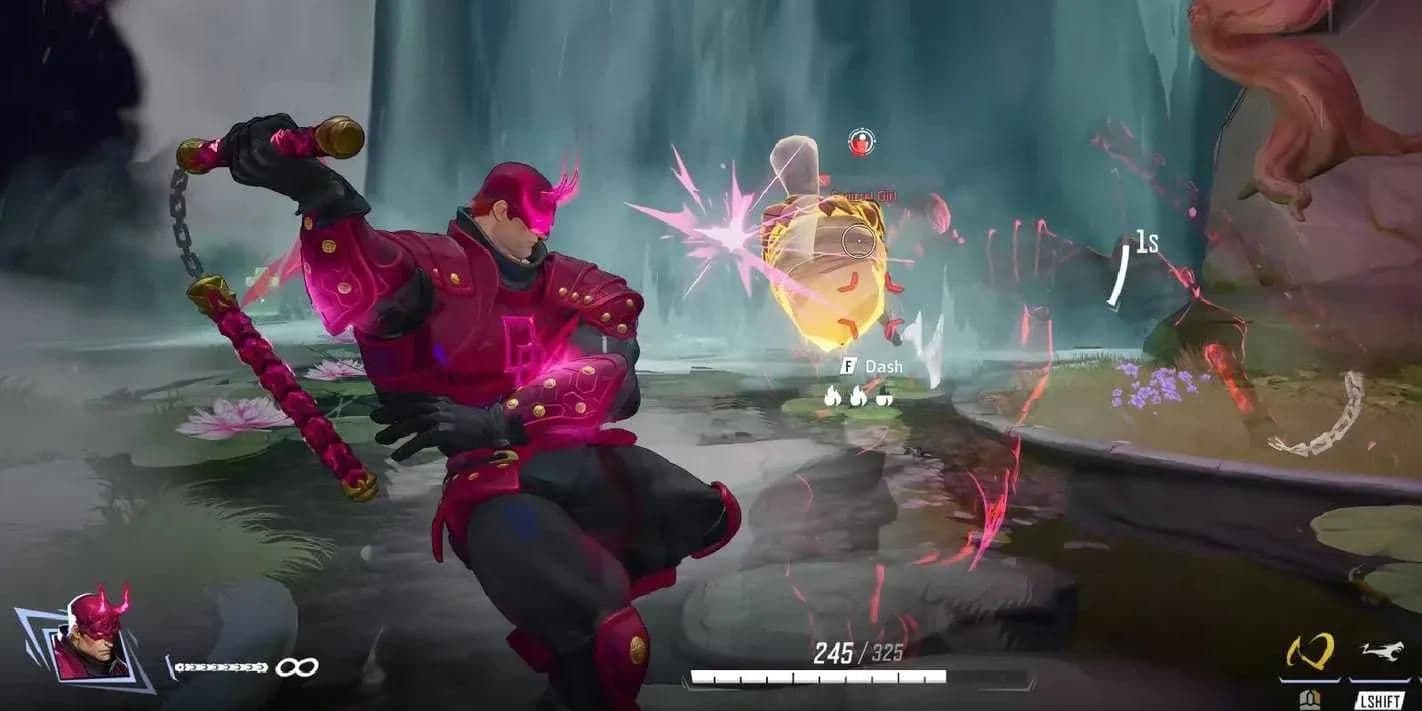
Tracking ability stacks is key to mastering high-damage Duelist playstyles.
The Duelist Role: High-Octane Damage Dealers
If the Vanguard is your team's shield, the Duelist is its sword. This is the primary damage-dealing role in Marvel Rivals, home to the largest and most diverse roster of heroes. With 27 unique Duelists, this category encompasses every flavor of combatant, from elusive flankers and precision snipers to explosive brawlers and relentless melee specialists. Their core mandate is simple: apply relentless pressure, secure key eliminations, and burn down enemy health bars. While Vanguards create space and Strategists enable from the back, Duelists are the ones who must capitalize on those opportunities to swing team fights decisively. Understanding this role is about mastering aggression, positioning, and target priority to become the engine of your team's offensive output.
Why it's here: The Duelist role defines the game's core combat loop. Success hinges on their ability to convert space and support into eliminations.
Duelist Skill Priorities: The Art of the Kill
Playing a Duelist effectively requires a shift in mindset from the other roles. Your success is measured in damage and eliminations, and your skill priorities reflect that. First and foremost, target selection is paramount. A good Duelist doesn't just shoot the nearest enemy; they focus fire on vulnerable targets like isolated enemy Duelists or low-health Strategists to create immediate numerical advantages. Positioning and survival are your next critical skills. Unlike Vanguards, you cannot absorb sustained fire. You must use cover, high ground, and your mobility tools to engage from advantageous angles and disengage when threatened. Finally, cooldown management for your offensive abilities is essential. Your damage often comes in bursts from abilities, and mistiming them can leave you vulnerable during crucial moments. Work with your Vanguards to exploit the openings they create, but remember: your ultimate goal is to secure kills, not just deal chip damage.
Iconic Duelist Playstyles in Action
The breadth of the Duelist roster means there's a perfect fit for every playstyle. Two of the most iconic—and fundamentally different—examples are Spider-Man and Iron Man. They perfectly illustrate the spectrum of the role, from chaotic close-quarters combat to disciplined long-range dominance.
Spider-Man: The Agile Brawler
Spider-Man embodies the high-mobility, close-range flanker archetype. His playstyle is built around unmatched vertical agility and disruptive melee combat. Using his web-swing and wall-crawl, Spider-Man excels at bypassing the frontline entirely to strike at the enemy's backline support and damage heroes. He doesn't win through sustained aim duels; he wins through unpredictability and burst damage. His abilities are designed to isolate and overwhelm single targets, using web-based crowd control to lock them down before finishing them off. Playing Spider-Man effectively requires mastering his movement to become a hard-to-hit nuisance, knowing when to dive in for a kill, and having an escape route planned. He is the quintessential "assassin" Duelist, best for players who thrive on chaos and precision strikes.
Key Takeaway: Choose Spider-Man if you want a high-skill, high-reward playstyle focused on agile flanks, target isolation, and turning the enemy backline into your personal playground.
Iron Man: The Aerial Artillery
In stark contrast, Iron Man is the definitive long-range artillery and area-denial specialist. He dominates from the skies and the backline, using his repulsor beams, micro-missiles, and Unibeam to lay down consistent, heavy damage from a safe distance. Iron Man's skill priority is all about positioning and sustained damage output. He uses his jetpack to maintain high ground, giving him sightlines over the battlefield to pressure enemy shields, punish grouped-up opponents, and secure eliminations on wounded foes trying to retreat. While he lacks the raw dueling power of some melee Duelists, his strength lies in his ability to safely contribute massive damage to every engagement. Playing Iron Man well means managing your hover fuel, communicating with your team to focus your fire, and using your mobility not to dive, but to constantly reposition to the most oppressive firing angle.
Key Takeaway: Choose Iron Man if you prefer a strategic, positioning-heavy playstyle where you control engagements from range, break enemy formations with area damage, and serve as your team's consistent source of pressure.
The Evolving Duelist Arsenal: Season 9 Team-Up Overhaul
The toolkit available to Duelists has been massively expanded with Marvel Rivals Season 9, which introduced a revolutionary overhaul to the Team-Up system. This change fundamentally affects how every Duelist plays. Now, each of the 27 Duelists has two permanent Team-Up abilities as part of their core kit, chosen before the match and swappable in the spawn room. This grants unprecedented tactical flexibility.
For example, Blade can opt for "Bleed For Battle," which stacks marks to increase his attack speed for sustained melee dps, or "Blade of Khonshu" for bouncing attacks that excel against grouped enemies. Phoenix can summon a damaging and self-healing sprite with "Telekinetic Beatdown," a potent tool for survivability and flank pressure. These aren't just minor bonuses; they are powerful abilities that define new playstyles. You now build your Duelist's loadout around the immediate need—whether it's the zone control of Magik's "Void Pentagram," the aggressive dive potential of Black Panther's "Dimensional Shortcut," or the self-sustain from Elsa Bloodstone's "Loudmouth Mercs." This system ensures Duelists are more versatile and adaptive than ever, cementing their role as the dynamic, high-impact core of any team's damage profile.
The Strategist Role: Tactical Support and Utility
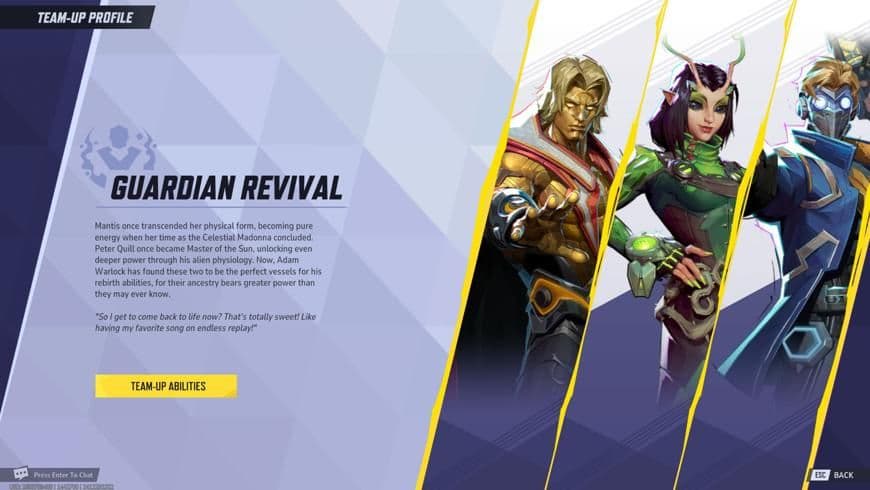
The Guardian Revival ability highlights the utility of the Strategist role.
The Strategist Role: Tactical Support and Utility
If the Vanguard is the team's shield and the Duelist is its sword, the Strategist is its brain and nervous system. This role is defined not by raw firepower or durability, but by the ability to control the flow of battle through healing, crowd control, damage amplification, and battlefield manipulation. While a Duelist wins a duel, a Strategist ensures the duel is never fair to begin with. They are the force multipliers, turning a 6v6 skirmish into a lopsided engagement with well-timed abilities. For beginners, they offer a high-impact entry point with a potentially lower mechanical skill floor, allowing players to focus on positioning, timing, and game sense to carry immense weight. In the hands of a master, a Strategist doesn't just support the team—they dictate the tempo of the entire match.
Why it's here: This section breaks down the core function of the Strategist and showcases two archetypal heroes who embody its principles in vastly different ways: Rocket Raccoon as the quintessential sustain engine, and Loki as the master of psychological warfare and deceptive utility.
Rocket Raccoon: The Arsenal of Sustain
Bold the item name/title at the start of each entry
Rocket Raccoon represents the most direct form of Strategist utility: reliable, targeted healing and area denial. He is the backbone of any team looking to sustain a prolonged fight on an objective. His kit is built around his Repair Mode, which fires a beam that heals allies, and his Bombard Mode, which switches to a grenade launcher for punishing grouped enemies or controlling choke points. Recent balance patches have only solidified this role, increasing his Repair Mode charges from 8 to 10 and boosting his Bombard Mode projectile damage. His ultimate, C.Y.A., is a classic "oh no" button, deploying a massive barrier that blocks all enemy fire, creating a safe zone for repositioning, reviving, or securing a final objective push. Rocket’s strength lies in his clarity and consistency; he provides what the team needs most in the thick of a fight: health and cover. Compared to a more niche Strategist, Rocket is almost always a safe and impactful pick because his value is never situational.
Loki: The God of Misdirection and Opportunistic Healing
Bold the item name/title at the start of each entry
Loki operates on the opposite end of the Strategist spectrum, trading straightforward healing for mind games and opportunistic support. He is the epitome of tactical utility. His power comes from his illusions—stationary clones that mimic his primary fire. The genius of Loki’s design is how his support function is woven into his damage tool. His Mystical Missile is a projectile that damages enemies and heals allies on impact, and critically, any nearby illusions will also fire at his target, multiplying the effect. A recent rework intentionally shifted him further into support, increasing the healing ratio of this ability to 100% while slightly reducing its damage ratio. This means a well-placed Loki, surrounded by illusions, can burst-heal a critical ally from range while simultaneously applying pressure. His ultimate, God of Mischief, allows him to shapeshift into an enemy hero, creating chaos and gathering intelligence. Loki turns the Strategist role from pure backline babysitting into an active, deceptive playstyle that wins fights by confusing the enemy and capitalizing on their mistakes.
The Healing Mechanic Spectrum: From Burst to Aura
Bold the item name/title at the start of each entry
Healing is the most recognizable Strategist function, but it is not a monolithic mechanic. Understanding the different types is key to counter-play and team composition. Rocket Raccoon exemplifies single-target, beam-based healing, requiring aim and line-of-sight but offering high, consistent output. Loki represents burst and area-of-effect healing tied to his offensive cooldowns. Other Strategists expand this spectrum further: Mantis provides a persistent healing link and speed boost (after her rework), while White Fox offers aura-based healing in her fox form. Luna Snow combines healing with slowing fields. The choice of healer dictates your team's formation; a Rocket Raccoon team needs to stay within his line of sight, while a Loki team can fight more spread out, capitalizing on his illusion-powered healing bursts. This variety ensures the Strategist role never feels one-dimensional and allows players to find a support style that matches their preferred engagement rhythm.
The Evolution of Utility: Team-Up Synergies
Bold the item name/title at the start of each entry
While detailed in the next section, it’s impossible to discuss modern Strategist impact without acknowledging the revolutionary Team-Up system introduced in Season 9. This system grants each hero two permanent synergy abilities, fundamentally blurring the lines between roles and giving Strategists unprecedented agency. For example, Rocket Raccoon’s Planet X Pals synergy with Groot transforms his primary fire into explosive rounds that damage enemies and heal allies simultaneously, making him a true hybrid. Loki’s Villain’s Illusion with Hela allows him to temporarily become any hero he defeats, adding an unbelievable layer of disruption. These tools transform Strategists from passive enablers into proactive playmakers. A modern Strategist isn’t just waiting to heal damage; they are creating opportunities, altering their own kit dynamically, and directly contesting the enemy’s game plan in ways previously reserved for Duelists.
Advanced Combat Systems and Team Synergies
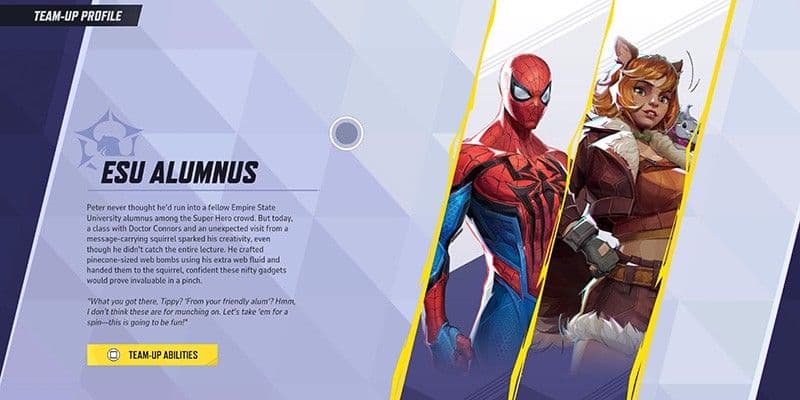
An overview of the unique Team-Up abilities available in Marvel Rivals.
Advanced Combat Systems and Team Synergies
While mastering individual hero kits is the first step, true dominance in Marvel Rivals is unlocked by understanding and leveraging its advanced combat systems. The game transcends simple hero-shooter mechanics by introducing the unique Team-Up Synergy system and emphasizing the game-changing impact of Ultimate Abilities. This section breaks down how to move from playing a hero to playing a team, utilizing crowd control, and strategically deploying your most powerful tools to secure victory.
The Team-Up Synergy: Marvel Rivals' Signature Mechanic
Unlike the emergent synergies found in games like Overwatch, Marvel Rivals features a built-in Team-Up Synergy system. This mechanic activates specific passive buffs, shared abilities, or ultimate modifiers when designated heroes are on the same lineup. It’s a core strategic layer that rewards thoughtful team composition and knowledge of the roster's lore-based partnerships.
- How It Works: Each synergy has an "Anchor" hero whose presence is required. When the anchor and their designated partner(s) are on the same team, a special bonus becomes active. For example, with Groot (Anchor) and Rocket Raccoon together, Rocket can ride on Groot's shoulders, gaining 35% damage reduction via the Planet X Pals synergy.
- Strategic Impact: Team-Ups are not just flavor; they provide tangible, often meta-defining advantages. Data from thousands of matches shows that high-synergy pairs consistently win more games. The Gambit and Rogue duo (Strategist + Vanguard) boasts a 54.2% win rate over ~16,400 matches, while the Spider-Man and Peni Parker "Web-Warriors" pair (Duelist + Vanguard) wins 55.4% of the time. Choosing heroes that activate a strong Team-Up is one of the most reliable ways to increase your team's chance of success.
- Beyond the Obvious: It’s crucial to distinguish between a pair's raw win rate and their true "kit synergy." Some duos win because both heroes are individually strong in the current meta. The most potent synergies, however, are those where the pairing itself provides a "lift" beyond their solo power, like Hela and Namor (both Duelists) whose combined zone control creates deadly choke points.
Ultimate Abilities: The Tide-Turning Plays
Ultimates are your team's most powerful resource, capable of wiping the enemy squad, saving your own from annihilation, or single-handedly securing an objective. Their impact is magnified when used in concert with Team-Up synergies or as part of a coordinated team strategy.
- Game-Winning Potential: A well-timed ultimate can erase a team's positional or numerical advantage. Invisible Woman's Invisible Boundary can nullify an entire enemy push, while Moon Knight's Midnight Sun can devastate a clustered team. The key is patience and communication—using an ultimate to secure a single kill is often a waste compared to using it to win a critical team fight for an objective.
- Synergy with Team-Ups: Many Team-Ups directly enhance ultimate abilities or are tied to them. The Ragnarok Rebirth synergy (Hela, Thor, Loki) revolves around Hela's kills granting instant revives to her allies, effectively creating a persistent threat. The spectacular "Jeff-Nado" is literally the combination of Storm's Omega Hurricane and Jeff the Land Shark's "It's Jeff!" ultimates, merging into a massive, enemy-swallowing vortex.
- Counterplay and Economy: Ultimates define a "fight economy." Tracking enemy ultimate status is as important as managing your own. Forcing an enemy to use a defensive ultimate like Loki's Illusory Decoy inefficiently creates a window where your team can engage with advantage. Similarly, compositions like the "Triple Strategist" comp are built around cycling powerful defensive ultimates to create near-perpetual sustain.
Crowd Control: The Art of Controlling the Battlefield
Crowd Control (CC) abilities are essential for enabling kills, disrupting enemy ultimates, and controlling space. They are the glue that holds advanced team plays together.
- Enabling Synergies: CC sets up devastating combos. Squirrel Girl's Webbed Acorn (from the ESU Alumnus Team-Up with Spider-Man) ensnares enemies for 1 second, making them easy targets for follow-up damage. Peni Parker's trap-heavy kit naturally synergizes with any hero who can force enemies into her mines, like a Groot using Ironwood Wall.
- Shutting Down Threats: Specific CC abilities are tailored to counter popular strategies. Namor's Frozen Spawn turrets (from the Chilling Charisma synergy with Luna Snow) slow enemies by 25%, making it harder for dive heroes like Black Panther or Wolverine to escape. The Thing's Seismic Slam and Haymaker are premier tools for grounding and punishing flying heroes like Iron Man or Ultron.
- Layer for Victory: Winning teams layer their CC. A sequence might involve Magneto's Magnetic Shockwave pulling enemies together, followed by Storm's Howling Gust keeping them in place, culminating in a Phoenix's Dark Fire cleaving through the entire group. Understanding which CC effects stack (slows, stuns, knockbacks) is key to executing flawless wombo-combos.
Building for Success: Synergy-First Team Composition
Throwing together six strong heroes is a recipe for failure. Successful teams build from a core synergistic pair and fill roles to cover weaknesses.
- Start with an Anchor Pair: Begin your draft by locking in a powerful Team-Up duo. If you pick Hela, a teammate should strongly consider Thor or Loki to activate Ragnarok Rebirth. This gives your team a built-in advantage.
- Fill Role Gaps: After your anchor pair, ensure you have a balanced composition. A team with Hela (Duelist) and Loki (Strategist) still needs a frontline Vanguard to create space and additional damage or support. Look for heroes that complement your core's playstyle. A dive core like Venom and Black Panther would benefit from a Mantis for damage amplification and a Rocket Raccoon for burst healing.
- Adapt to Map and Enemy: The best synergy is map-dependent. Hela and Namor excel on maps with tight chokepoints but struggle on open maps where Namor's turrets are easily destroyed. Be prepared to switch your strategy if the enemy hard-counters your synergy. If they run an Anti-Flier comp, your Iron Man/Ultron flying duo will have a tough time.
Recommended Beginner Heroes for Advanced Systems
Jumping into advanced systems can be daunting. These heroes offer straightforward kits that still contribute meaningfully to Team-Ups and ultimate economy, making them excellent for learning high-level play.
- For Team-Up Practice: Groot (Vanguard) is a fantastic starting anchor. His Planet X Pals synergy with Rocket Raccoon is passive and easy to understand—you just need to be near your smaller ally. This teaches you to be aware of your partner's position and to use your body to protect them.
- For Ultimate Impact: Luna Snow (Strategist) has a powerful, straightforward ultimate in Let It Go that provides area healing and damage. She also participates in easy-to-use synergies like Chilling Charisma with Namor. Playing her teaches you to position for maximum ultimate value and to watch for synergy opportunities.
- For Crowd Control Fundamentals: Peni Parker (Vanguard) is the queen of area denial. Her kit is all about placing Bionic Spider-Nests and Arachno-Mines to control lanes. This naturally teaches you about zoning, predicting enemy movement, and how CC shapes the battlefield, all while being relatively safe behind her traps.
The Takeaway: Marvel Rivals transforms from a hero shooter into a strategic team-builder once you master its advanced systems. Don't just pick heroes; pick synergies. Don't just use ultimates; invest them in fight-winning moments. Use crowd control to dictate the terms of engagement. By building your team around a core Team-Up and coordinating your ultimate abilities, you'll unlock a level of coordinated power that no collection of solo players can match.