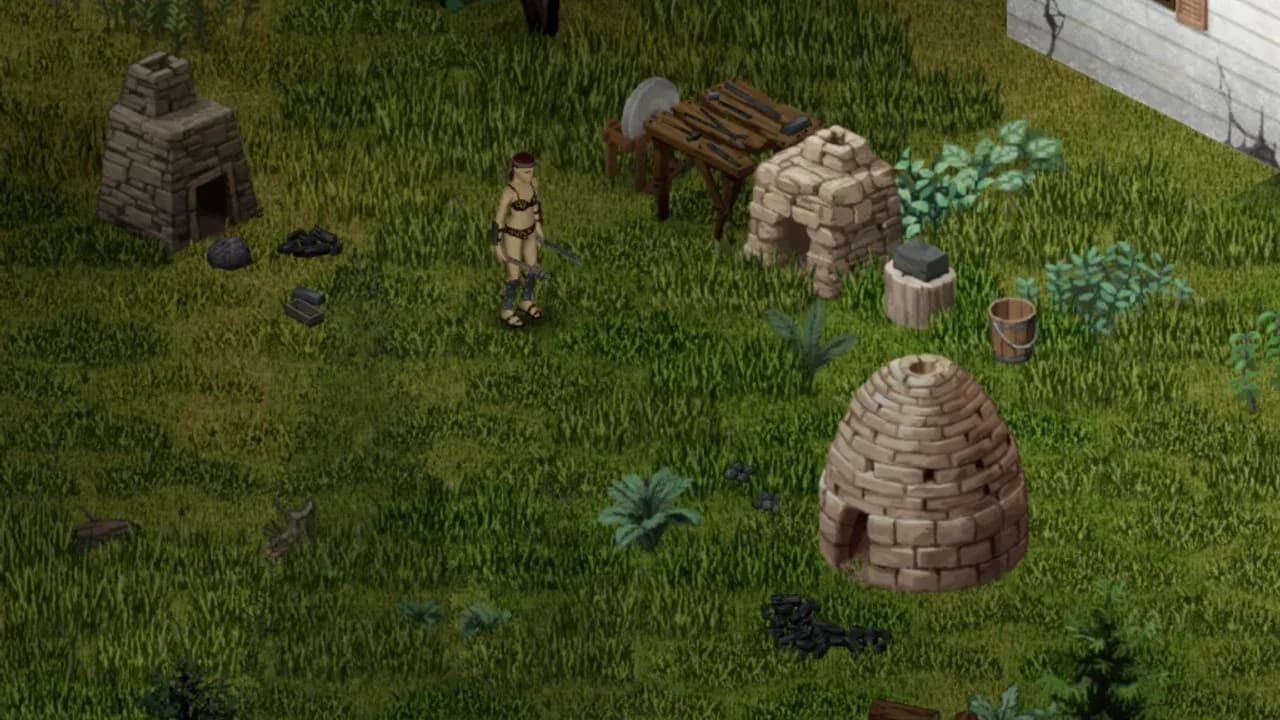
Build 42 blacksmithing becomes useful when it solves a shortage your base already has. The winning order is not “find a forge, then make a sword”; it is “secure fuel, unlock recipes, build the next station, and turn each early tool into access to the next tier.” That makes forging a late-game independence project without pretending you can skip the dangerous scavenging that gets it started.
Follow the Station Chain, Not the Weapon Fantasy
As of the stable Build 42.20 branch, the metal system is split into two skills. Welding handles propane-torch construction, barricades, vehicle work, and repairs. Blacksmithing handles charcoal-fired furnaces and forges, anvils, blooms, bars, tools, weapon parts, cookware, and armor. Guides that call the whole system “Metalworking” can point you to the wrong skill panel and books.
Use this dependency map:
| Stage | Stations and inputs | What it unlocks |
|---|---|---|
| Primitive iron | Charcoal pit or charcoal-burning station, Primitive Furnace, Primitive Forge, Stone Anvil, stone hammer, crude wooden tongs | Iron blooms, workable iron, tongs, hammers, nails, punches, and basic masonry tools |
| Working iron | Simple Furnace, Simple Forge, hand-operated press, wooden bucket, tongs, hammer, saw, masonry tools | Better iron implements, hardening and quenching work, and the tools for later stations |
| Steel and advanced work | Dome Kiln for charcoal and coke, Smelting Furnace, Blast Furnace, Blacksmith Anvil, Advanced Forge, and later a Metalworking Bench | Steel production and higher-quality tools, blades, and equipment |
The first row is the survival route: Build 42’s official development notes describe iron ore becoming an iron bloom in a primitive furnace, then being beaten into workable iron with a stone hammer and crude wooden tongs. The middle row is where the workshop stops being a one-off experiment. A current Build 42 station guide places the Simple Furnace before the Simple Forge because the furnace produces the Blacksmith Anvil required by the forge. Do not build the forge tier first and discover that its anvil is still locked behind the furnace.
The Blacksmith occupation is the cleanest start for this project. Its Build 42 entry grants +4 Blacksmithing, +1 Maintenance, and Blacksmith Knowledge. A different occupation works, but you will need the relevant construction skills and more time to assemble the same chain.
Read These Magazines Before You Hoard Materials
The skill level alone does not open the blacksmithing tree. Recipe magazines are the gates, so read them before hauling stone, clay, and metal back to a base.
Prioritize these names:
- Iron Age Blacksmithing: Primitive Furnace, Primitive Forge, and charcoal-pit recipes.
- Modern Blacksmithing at Home: Simple Forge and Advanced Forge construction.
- Everyday Smithing – June 1993: Tongs, heading tool, nails, punch, and related everyday tools.
- Medieval Blacksmithing: Smelting Furnace and Blast Furnace recipes.
- American Bladecraft: Hunting-knife and related blade recipes.
- Medieval Armory – June 1993: Sword, shortsword, and spear forge recipes.
Blacksmithing I–V skill books multiply the experience you gain from the matching skill. Read the book for your current level band before you grind, then use the magazine that unlocks the recipe you intend to repeat. That two-part check prevents the most expensive early mistake: collecting every ingredient for a locked recipe and discovering the missing magazine after the trip home.
Forge Unlocks Before Weapons
Your first bars should remove bottlenecks. Start with the items that let the workshop continue operating:
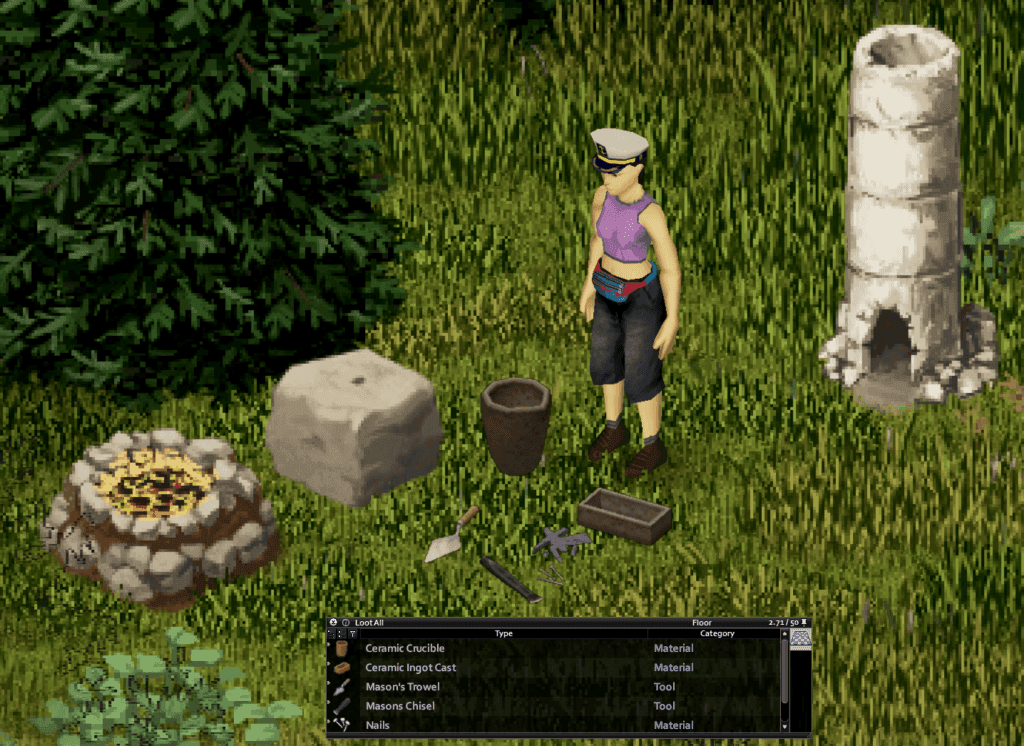
Early forged tools are valuable because they unlock the next station.
- Crude or metal tongs, so you can handle hot material without burning through disposable tools.
- A smithing hammer, punch, and heading tool, because later recipes use them as tool requirements.
- Nails and masonry tools, which turn the forge into a construction resource and support the furnace chain.
- Axe, pickaxe, and other tool heads, when their magazine and station gates are open.
- Blades, maces, swords, and armor, after fuel, feedstock, and replacement tools are stable.
The early forge is designed to make its own support kit. Official development notes call out simple iron implements such as nails and tongs as the output that helps a survivor reach the next tier. Follow that logic. A sword is a satisfying project, but a missing anvil, hammer, or bag of charcoal is the problem that actually stops production.
Build the Workshop Around Charcoal and Salvage
Charcoal is the workshop’s recurring expense. Build a charcoal-burning barrel or pile near the forge, then maintain a dedicated wood supply instead of burning every log in construction or cooking. The Build 42 development plan also describes a dome kiln as the more efficient route for charcoal and coke when you move toward steel.
Feedstock comes from two directions:
- Wilderness: iron ore outcroppings, stone, clay, wood, and animal materials for higher-tier components.
- The old world: dismantled metal, warehouses, tool stores, books, magazines, and pre-existing industrial stations.
A rural base is strong when fuel and construction materials are your constraint. A town or industrial base is strong when you still need recipe literature, specialist tools, or salvage. Keep separate stockpiles for charcoal, iron and steel, station components, and hand tools; a mixed pile makes it easy to consume the one item that was reserved for the next upgrade.
Do not move the whole operation to the forge immediately. Keep a scavenging route active while you build. A found hammer or box of nails can save charcoal and skill time, and a pre-existing station can let you skip a construction tier. The forge earns its space when it replaces a dangerous trip or produces the exact part blocking your next upgrade—not when it merely exists in the yard.
Switch From Looting When Three Checks Pass
Make forging your main production path when all three conditions are true:
- you have read the magazines for the station and output you want;
- you can produce charcoal faster than the workshop consumes it;
- the forged item solves a current shortage or unlocks a station you will use.
Until then, loot common tools and reserve the forge for progress. Once those checks pass, push Blacksmithing with the matching skill books, turn salvage into the tool heads and hardware your base needs, and leave weapon collecting as a bonus rather than the workshop’s purpose.