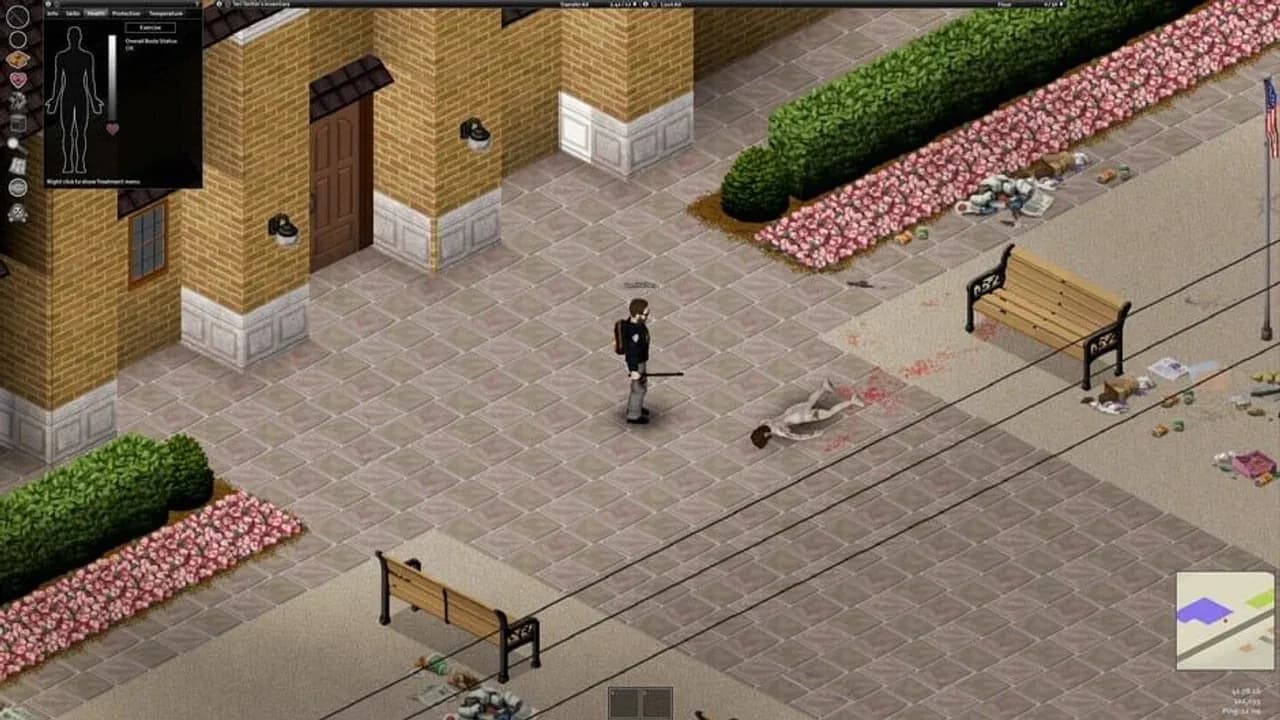
Project Zomboid Build 42 Welding vs Blacksmithing: What to Build First?
Build 42 gives metalwork two different jobs. Welding turns torch fuel and scrap into defenses, storage, and vehicle repairs. Blacksmithing turns charcoal, ore, and stock into forged tools and weapon parts. The first investment should match the problem in front of your survivor: protect the base with Welding, or build a workshop that can eventually replace looted metal with Blacksmithing.
That choice changes what belongs in your bags. A Welding Torch, Welder Mask, Welding Rods, and propane are immediate metal infrastructure. Clay, stone, charcoal, tongs, molds, and recipe knowledge belong to a longer Blacksmithing chain.
Welding Comes First for Bases and Vehicles
Welding is the right first stop when you need defenses, storage, or vehicle work. The skill menu calls it Welding, even though older Build 41 guides still call the whole system Metalworking. You need a Welding Torch, a Welder Mask for many crafts, Welding Rods, and the sheets, bars, or pipes named by each recipe. A portable Propane Tank refills the torch; it does not replace the torch or the mask.
The Welding path covers metal wall frames, walls, fences, stairs, counters, lockers, crates, and sheet-metal or bar barricades. It also handles vehicle body repairs once you meet the Mechanics requirement. Metal crates are an especially useful early target because they turn Welding into storage rather than another defensive project. If you already have a vehicle, the skill also converts sheet metal and torch charges into repairs instead of forcing you to search for a replacement car.
A full Welding Torch carries 10 uses. Treat propane as a work-session resource: refill at home, then batch barricades, crates, or repairs while the mask, rods, and stock are already in reach. That makes a welding trip pay for a project instead of one test craft.
For experience and salvage, dismantle metal objects the craft menu accepts, then use burnt or smashed car wrecks when you have the mask and a full torch. Wrecks convert a fuel run into scrap and Welding experience. Do not treat every intact vehicle as a free metal source; the wreck interaction and the craft tooltip tell you what the current build accepts.
Blacksmithing Starts With a Furnace, Not an Anvil
Blacksmithing is a workshop chain, not an anvil you place and immediately use. The Stone Anvil and later Blacksmith Anvil are components for building forges and furnaces; neither is a standalone smithing station.
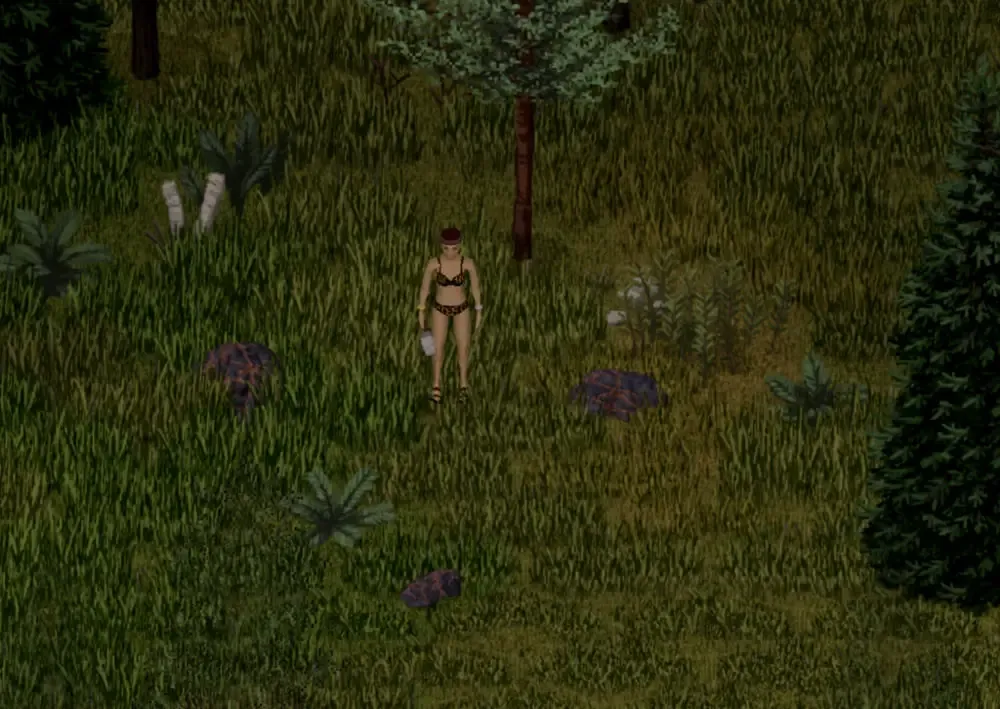
An early Build 42 workshop begins with raw material gathering before the furnace and forge.
The Build 42.19 station tables used for this guide put the Primitive Furnace at the start of the smelting path. It uses clay, stone, and a concrete-tagged bucket. The Primitive Forge uses a concrete-tagged item, stone, and a Stone Anvil. That Stone Anvil requires Masonry 2, a Large Stone, and a hammer. You also need a charcoal source, such as a Charcoal Burning Pile or Charcoal Burner, before the furnace can support a forging loop.
Build the supporting chain in this order:
- Gather clay, stone, a large stone, logs, and either iron ore or scrap.
- Read Iron Age Blacksmithing, or take an occupation that grants the early station recipes.
- Produce charcoal and build the Primitive Furnace.
- Make the Stone Anvil, Primitive Forge, and crude tools that let you handle hot stock.
- Replace temporary wooden tongs with metal tongs, then use the forge for small tools before ambitious weapons.
Later, a cast Blacksmith Anvil leads into the Simple Forge and Advanced Forge, while larger furnace tiers widen what you can smelt and cast. The upgrade only makes sense when the base can store stone, fuel, molds, bellows, and metal stock without displacing food or emergency supplies.
Find the Magazine That Unlocks Your Next Station
Books and magazines are separate gates. Welding I–V train Welding across levels 1–10; Blacksmithing I–V train Blacksmithing across the same range. Read the matching Blacksmithing skill books before a long forge session and the matching Welding volume before grinding torch work. A book for one track does not improve the other.
Use the magazine names as a route map:
- Welding: The four Welder Monthly issues cover the construction families. June handles walls, frames, windows, doors, stairs, and floors; May handles counters, crates, lockers, and shelves; April handles fences and gates; March teaches metal sheets and small sheets.
- Blacksmithing stations: Iron Age Blacksmithing teaches the charcoal work and primitive furnace/forge; Medieval Blacksmithing leads to the smelting and blast furnaces; Modern Blacksmithing at Home teaches the Simple and Advanced Forges.
- Blacksmithing tools and goods: The Everyday Smithing issues cover early tools and hardware; Blunt Forge, American Bladecraft, and the Medieval Armory issues lead toward hammer heads, knives, axes, swords, spears, and related weapon parts; Small-Scale Smithing fills in smaller hardware and fittings.
Occupations change how urgently you need those magazines. Welder grants Welding +4 and a broad set of forge and furnace recipes. Blacksmith grants Blacksmithing +4, Maintenance +1, and a Blacksmith Knowledge trait. Either start can save an early search for a station recipe, but the matching skill books still matter for experience gain and the other track keeps its own requirements.
Look for the related VHS tapes too. Home Welding Guide trains Welding, From Ore to Store trains Blacksmithing, and Adefope Fencing Special adds Welding experience plus fence recipes. They are separate from Life and Living.
Use Wrecks to Pay for the Forge
The best route for most established runs is hybrid: let Welding finance the workshop, then let Blacksmithing turn the stock into tools you would otherwise have to loot.
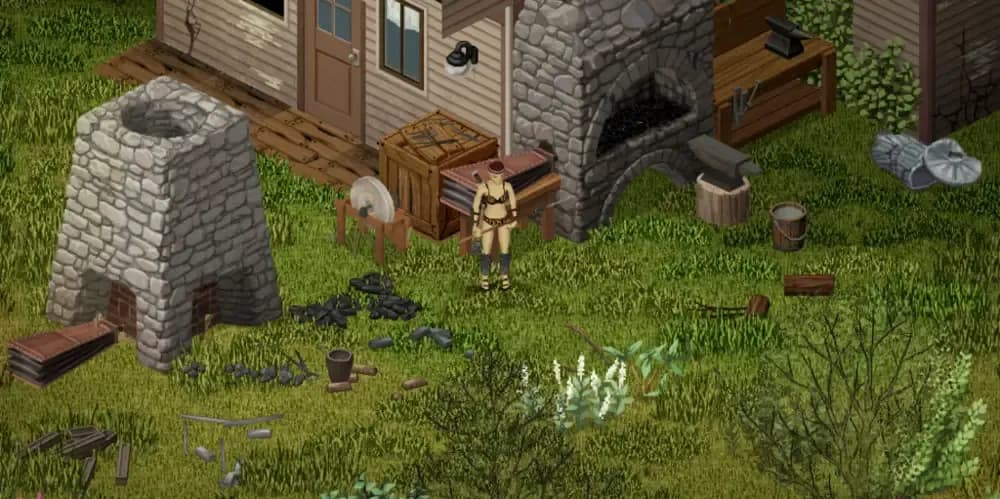
An expanded forge yard turns salvage and charcoal into a repeatable metalworking chain.
Make the first Welding trip a fuel-and-salvage run. Bring a full Welding Torch, the mask, room for propane tanks, and a vehicle when you can haul. Search garages, warehouses, auto shops, workshop containers, and outdoor propane BBQs for the torch supplies. Approved wrecks and metal furniture provide scrap, but rods and sheets are separate inputs, so do not spend them on barricades before checking the next repair or forge recipe.
Sort the return trip by what can be used immediately:
- torch fuel and welding supplies;
- sheets, bars, and other construction stock;
- charcoal, ore, scrap, and material tagged for furnace work.
That split matters because Welding uses fuel and stock to make the base functional, while Blacksmithing uses charcoal, furnaces, forges, tongs, hammers, molds, and stock to produce something new. A workshop that has consumed all its charcoal to make one decorative project has not reached self-sufficiency.
Start the forge with a problem the base actually has. Nails, tongs, punches, masonry tools, and tool heads improve the workshop itself. Blades and armor-related pieces belong after the station chain and fuel supply are stable. A Grindstone supports the finishing side of blade work; it does not replace the furnace, forge, or recipe knowledge.
Answer: Weld First Unless the Workshop Is Ready
Choose Welding first when you need stronger doors, metal storage, vehicle repairs, or a route through nearby wrecks. It produces visible base utility as soon as you have the torch kit and the relevant Welder Monthly issue. If your survivor is still moving between houses, carry the gear and postpone permanent stations.
Choose Blacksmithing first only when you already have a long-term base, room for a hot work area, and a supply of clay, masonry materials, charcoal, and books. It is the better late-game project, but it is not the efficient answer to an immediate zombie problem. A Welder or Blacksmith occupation can shift the first missing recipe, not the amount of space and fuel the workshop needs.
For the normal run, secure the shelter, collect Welding gear, salvage what you can safely move, and build the Primitive Furnace and Primitive Forge after the base can support them. Welding Torch fuel keeps repairs and construction moving; Primitive Furnace materials and Blacksmithing skill books keep the forge moving. Start the station chain when you can feed it, not merely when you can place it.