A roof covered in rain collectors is not a water system until one faucet draws from it. In Build 42, the dependable approach is to solve the smallest possible collector-to-sink loop first: one outdoor source, one indoor fixture below it, and one observed drop in the reservoir after you fill a bottle. Prove that roof-fed sink while municipal water is still a convenience. The cutoff follows its own schedule, and the Automated Emergency Broadcast System (AEBS) does not announce it.
Start With One Vertical Loop
Choose the indoor sink first and mark its exact floor tile. Go up one level, find the square directly above that mark, and place your first collector there. The collector’s tile must be genuinely outdoors under open sky; a roofed or enclosed square will not catch rain.
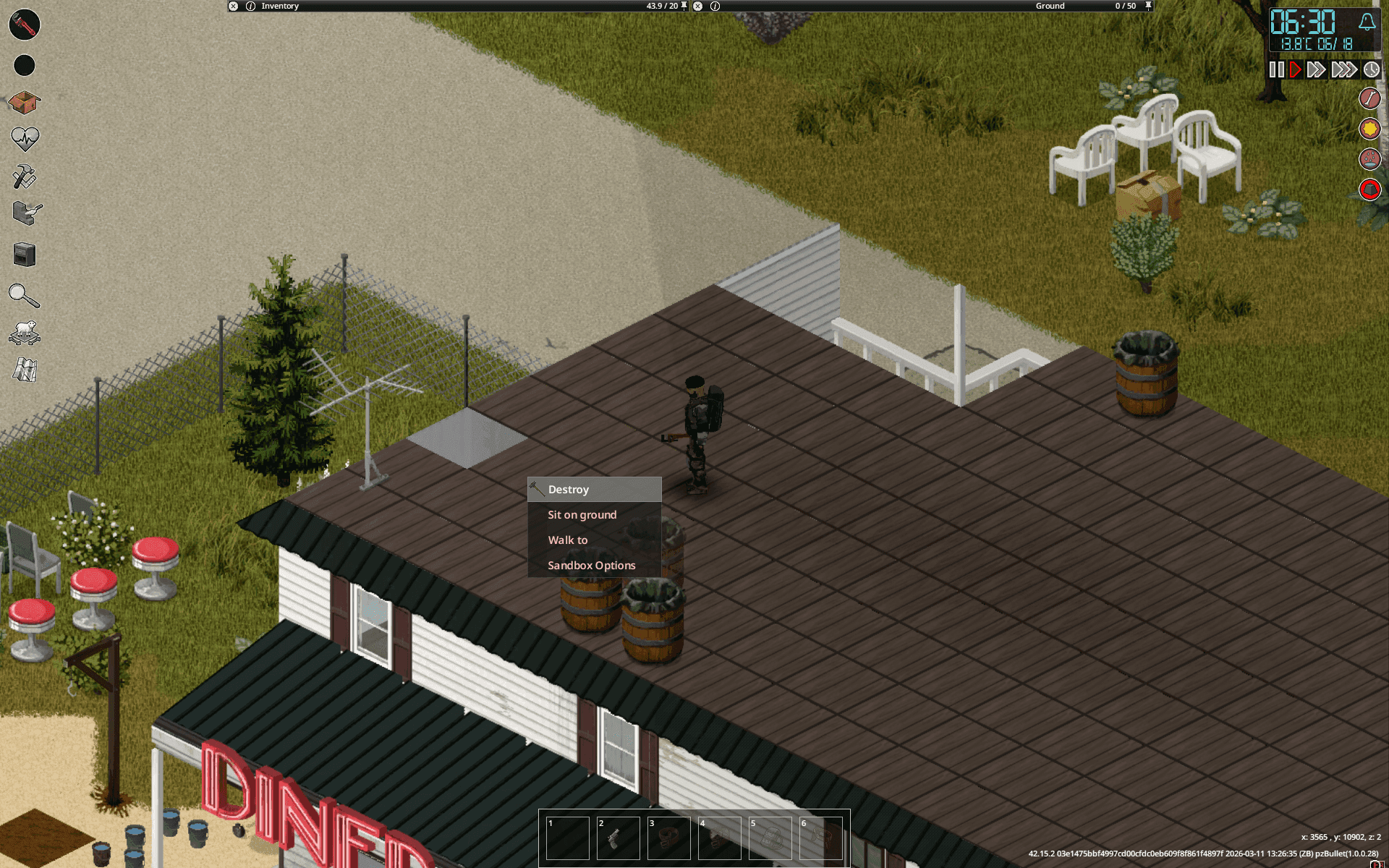
Start with one collector directly above the sink; expand only after the first draw.
That straight stack is the conservative starting geometry. The valid collection area can extend to nearby upper-floor squares, but placing the first source on the same tile above removes horizontal reach from the equation. Start with that vertical rain plumbing layout, then widen it only after the faucet draws from the barrel.
Make the Room Count as Indoors
If the straight stack does not show Plumb, diagnose the sink before rebuilding the roof:

Room recognition, not just visual enclosure, controls whether Plumb appears.
- Walk across the room's threshold and watch the temperature display. A change between outside and inside is the practical sign that the game recognizes the enclosure.
- If it does not change, inspect the roof, walls, door, corners, and the space around stairs. Mixed player-built and existing structures can look closed while one tile still breaks room detection.
- Put the pipe wrench in your main inventory, then right-click the fixture—not the collector.
- Confirm the source is exactly one level higher. If it sits elsewhere in the upper 3×3, move it temporarily to the same tile above the sink to remove reach from the diagnosis.
Once connected, leave the fixture in place. Moving the sink breaks the plumbing connection.
Test the Faucet Before Water Fails
Treat Plumb as the start of the test, not proof that the route works. Put a bottle or pot in your inventory, draw water from the sink, then check the collector above. Its stored amount must fall after the draw. If it does not, the collector-to-sink loop has not passed, even if the fill action appears.
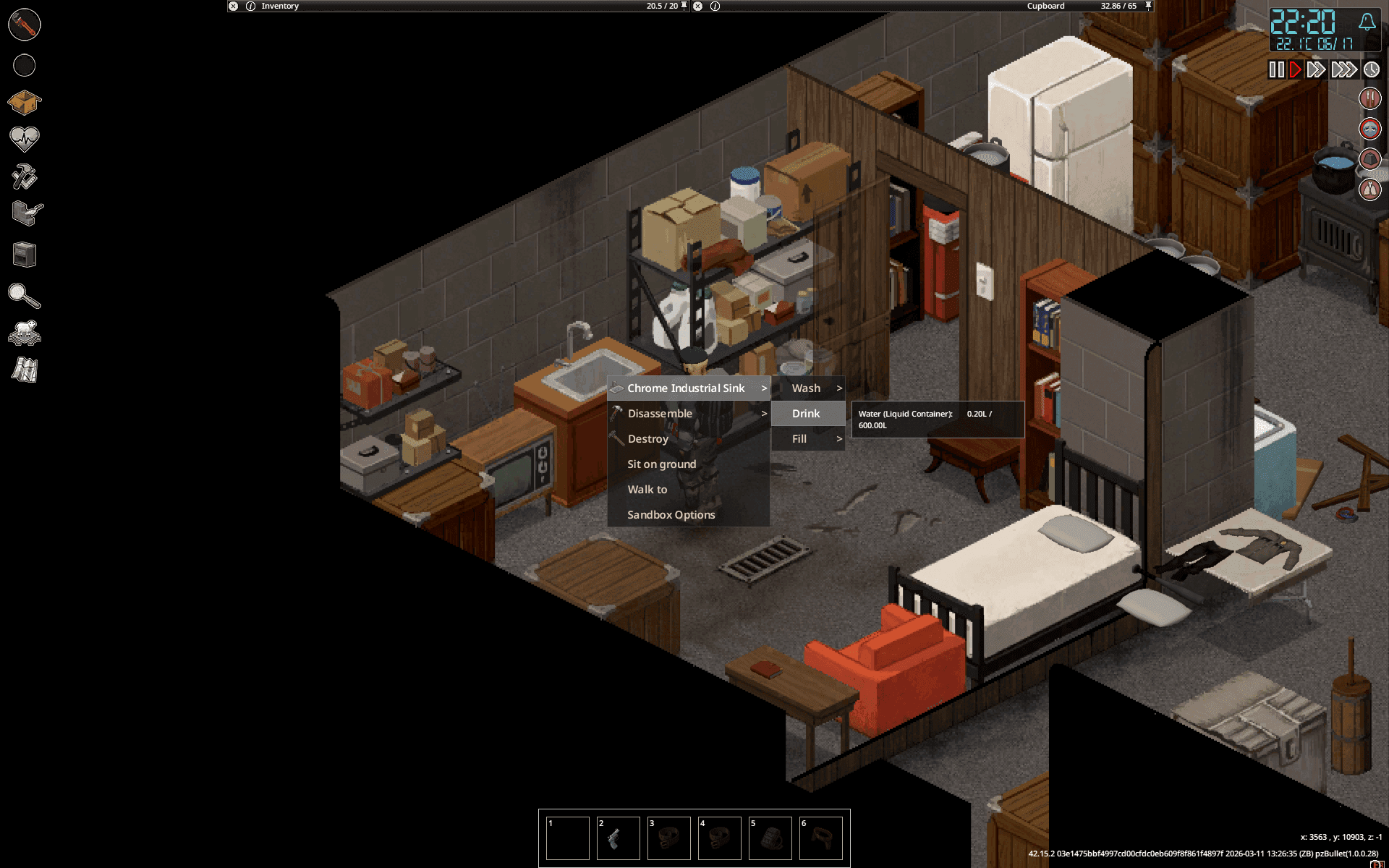
Watch the active reservoir fall when the sink fills a container.
Run this test while municipal water still works; the shutoff is not required before plumbing can draw from a collector. Watching the reservoir fall is what separates a working roof-fed loop from water that may still be sitting in the building’s supply.
Test drinkability separately. Current Build 42 sources disagree on whether a plumbed sink cleans tainted rainwater or passes the source quality through. Open the filled bottle's tooltip or fluid panel and look for the tainted-water warning. If the warning appears—or the interface does not make the status clear—do not drink it; purify that batch first. Repeat this check after changing which collectors feed the sink.
Expand Storage Only After the First Draw
Expand within the upper-floor 3×3 footprint centered over the sink, one reservoir at a time. To prove a new position, let the new collector hold water and temporarily empty the other collectors in the footprint. Draw from the faucet and verify that the new collector's level falls. A successful draw with the original barrel still full proves only that the original still works.
Do not expect the sink to display every collector as one combined store. The fixture exposes one active reservoir’s capacity; when that source empties, another collector in the footprint can begin supplying it. That sequential draw can make a working array look smaller than it is if you judge it only by the visible capacity.
You can add or remove reservoirs inside the footprint without plumbing the sink again, provided the fixture stays where it is. If the isolated test fails, return that collector to the same-tile-above position; if it works there, the rejected square—not the sink connection—is the problem.
Prepare for Water to Fail Before Power
Do not schedule this job around the power grid. On Apocalypse, municipal water can fail on day one, while electricity cannot fail before day 14; the two shutoffs are independent. AEBS will not announce the water cutoff, so the useful deadline is the moment you leave the base without everything needed to finish or repair the loop.
The minimum working system is short: keep roof access usable, leave one exposed collector installed, confirm that drawing from the sink lowers that reservoir, and verify the drawn water before drinking it. Protect a potable reserve and keep a heat-safe vessel or another purification route beside the sink, so a tainted result does not become an emergency.
Redundancy is a separate layer, not a requirement for the plumbing to work. Store the pipe wrench and a hammer at the base; stage planks, nails, and either garbage bags or a tarp if you want to replace or add a collector. Leave water in unused sinks, toilets, and bathtubs, because that residual supply remains available after the municipal system fails.
Before the next supply run, make one go/no-go decision: if you have not watched the roof-fed sink lower its collector and confirmed a safe drink or a purification path, the base is not water-ready.