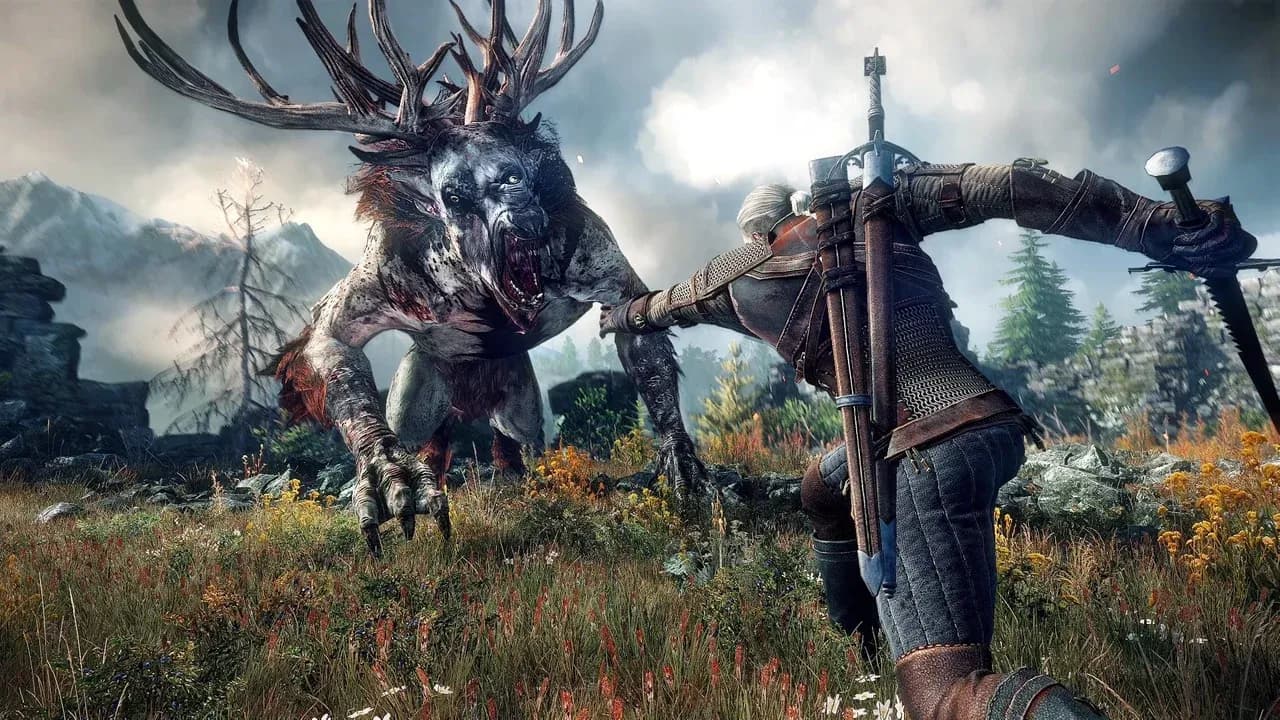
The Witcher 3: Wild Hunt: A Landmark Achievement in Open-World RPGs
The Witcher 3: Wild Hunt begins not with a bang, but with a quiet, deliberate step into a world on fire. This is not a game that announces its ambition with spectacle; it earns it through sheer, unwavering conviction in its own identity. More than a sequel, it is a full-scale translation of Andrzej Sapkowski’s dark fantasy ethos into an open-world format, proving that a rich, novelistic narrative and a sprawling, reactive continent are not mutually exclusive. In The Witcher 3: Wild Hunt, CD Projekt RED didn't just scale up their previous formula—they redefined what a story-driven RPG could be when given room to breathe.
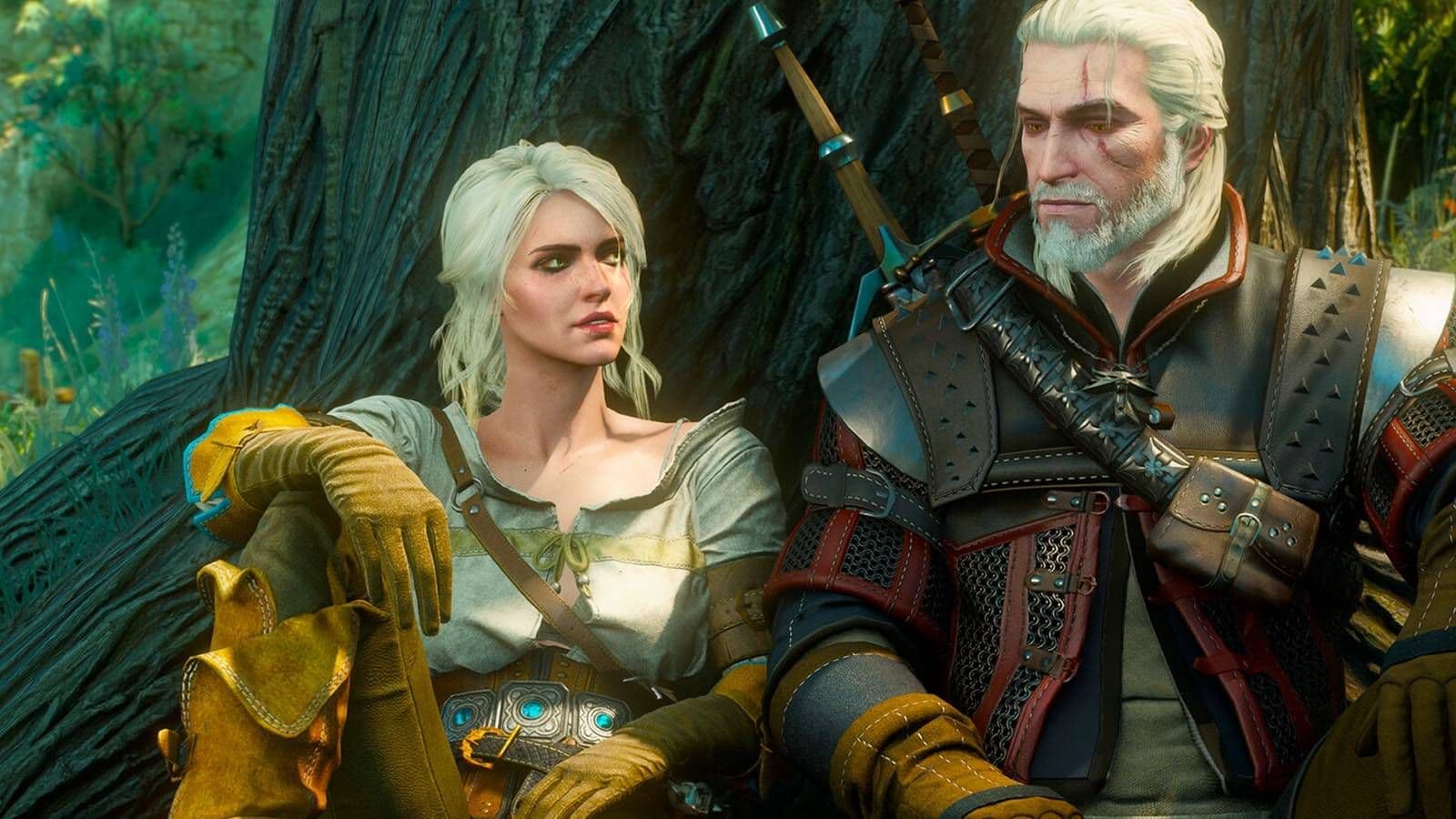
The relationship between Geralt and Ciri is the emotional core of the game's journey.
At its core, the game’s identity is a masterful synthesis of influences, yet it feels wholly original. It blends the horseback exploration and lived-in melancholy of Red Dead Redemption with the deep character writing and branching choices of Dragon Age, all wrapped in a combat system that demands the timing and preparation of a Souls-like. The genius lies in how these elements serve the central, deeply personal premise: Geralt of Rivia’s search for his adopted daughter, Ciri, who is being hunted by the spectral, apocalyptic force known as the Wild Hunt. This isn’t a quest to save the world first; it’s a father looking for his child, and the fate of the Northern Realms becomes the harrowing backdrop to that intimate struggle. This focus on familial bonds over grand political chess—though that is still present—immediately grounds the epic scale in something relatable.
The transition from the more linear corridors of The Witcher 2 to this massive open world is CD Projekt RED’s greatest triumph, a confident leap that few studios have managed without losing their narrative soul.
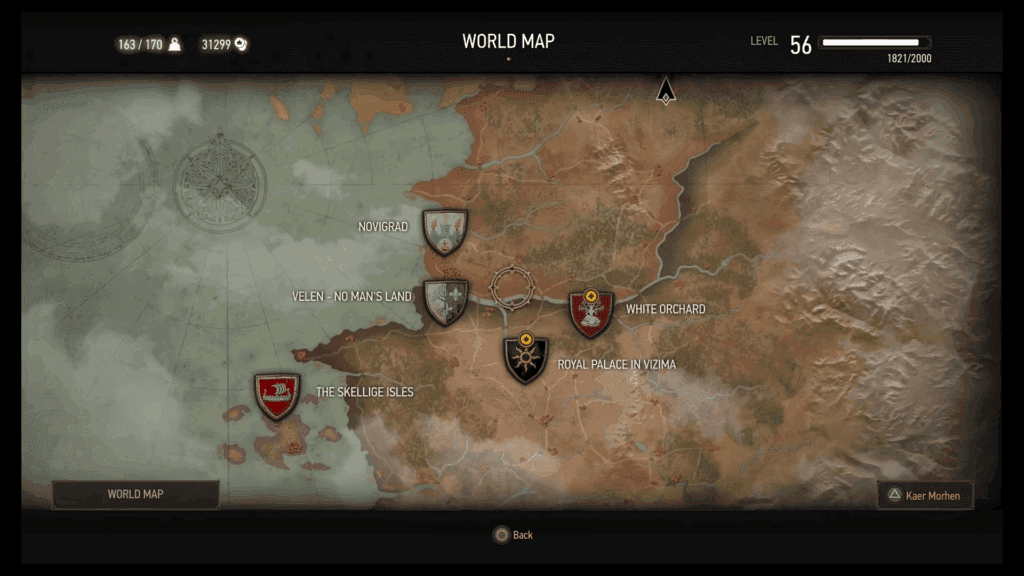
Where previous games felt like guided tours through political intrigue, The Witcher 3 sets you loose in a cohesive, grimly authentic landscape. The world of Velen, a war-ravaged No Man’s Land, isn’t just big; it’s dense with a palpable sense of history and despair. This atmosphere is steeped in a distinct Slavic folklore that permeates everything—from the design of the Noonwraiths haunting country wells to the haunting, Eastern European-inspired melodies on the soundtrack. You don’t just traverse a generic fantasy realm; you navigate a place where the architecture feels historically plausible, where villages decay organically from slums to opulent districts, and where the mud seems to cling to your boots. This commitment to a cohesive, melancholic tone makes every discovery, no matter how small, feel like unearthing a piece of a real, broken world.
The scope is staggering, easily offering 80 to 100 hours for the main journey, but its success isn’t in raw square mileage. It’s in how that space is used to reinforce the fiction. Geralt isn’t a hero welcomed in every town; he’s a mutant outcast, often reviled by the very peasants who hire him. This creates a lonesome, immersive tension as you ride through sun-dappled forests and storm-lashed swamps, making the world feel less like a playground and more like a genuinely hostile, indifferent place. The Witcher 3: Wild Hunt understands that a world is defined by its people and their problems, not just its points of interest. From the opening hours in White Orchard, you’re not just killing monsters—you’re stepping into cycles of violence, local superstitions, and the “humdrum, circumstantial horrors” of people trying to survive. This establishes a critical contract with the player: curiosity and empathy will be rewarded with stories far more compelling than any loot drop.
The Witcher 3 Gameplay: Fluid Combat and Deep Preparation
In The Witcher 3: Wild Hunt, you don’t just fight monsters; you outsmart them. This is the core tenet of its combat, a system that masterfully blends fluid, kinetic action with the deliberate, cerebral satisfaction of preparation. It’s a dance of steel, magic, and alchemy where success is measured not by your level, but by your knowledge of the beast you’re facing. The game makes you feel like a true witcher—a professional, not a brawler—and this identity is its greatest triumph, even when the controls occasionally fight against that fantasy.
Combat in The Witcher 3 balances deliberate swordplay with chaotic monster encounters.
The foundation is a responsive, brutal real-time action system that feels leagues ahead of its predecessors. Geralt’s movements are fluid and graceful; a whirlwind of pirouettes and gory flourishes that make every encounter with a pack of drowners or a towering fiend feel tangibly dangerous and spectacular. The dual-sword system is elegantly simple: steel for humans and animals, silver for monsters, with the game automatically selecting the correct blade. This removes a layer of clunky inventory management mid-fight, allowing you to focus on the rhythm of light and heavy attacks, parries, and the crucial dodge and roll. The combat is easy to grasp but difficult to master, punishing button-mashing by leaving you vulnerable during lengthy attack animations. It’s a system that rewards patience and positioning, forcing you to read enemy tells and strike during openings, much like the Souls games it’s often compared to.
Where The Witcher 3 truly distinguishes itself from pure action games is in its deep preparation systems. The five Witcher Signs—Igni (fire), Aard (telekinetic blast), Quen (shield), Yrden (magic trap), and Axii (mind control)—are more than simple spells. They are tactical tools with alternate casting modes unlocked through upgrades. An upgraded Igni can become a continuous flamethrower, while a masterful Axii can halt a charging griffin mid-air. This flexibility allows for meaningful build diversity, letting you specialize in a sign-focused mage or a swordmaster who uses magic sparingly. The alchemy system, while streamlined from The Witcher 2, remains essential. Brewing a single Specter Oil or Thunderbolt potion makes it permanently available, refilling automatically when you meditate. This elegant change encourages experimentation without the tedium of constant crafting, but the strategic imperative remains: applying the right oil to your blade before a fight can be the difference between a five-minute struggle and a thirty-second execution.
Character progression reinforces this philosophy of specialization. With around 70 distinct abilities across Combat, Signs, Alchemy, and General skills, the system offers immense flexibility. However, the genius limitation is that only a handful of these abilities can be “activated” at any one time, further amplified by equipping color-coded mutagens. This forces you to make meaningful choices about your build from the early hours, committing to a role-playing identity. You can’t be a master swordsman, a pyromancer, and an alchemical savant simultaneously. This scarcity of ability points compared to available skills means every investment feels significant, creating a true sense of growth and specialization that most open-world RPGs dilute.
However, this meticulously crafted fantasy of the graceful monster hunter can be undercut by the game’s most persistent flaw: Geralt’s movement. Outside of combat, his animations can feel “syrupy” and over-animated. In tight indoor spaces or during timed traversal sequences, the camera becomes a nemesis, clipping into walls and obscuring your view. Geralt’s momentum often carries him too far, leading to frustrating moments where he fails to climb a ledge or gets stuck on minor environmental geometry. This “stupid-feet” problem, reminiscent of older Assassin’s Creed titles, is at odds with the precision demanded by the combat and investigation sequences, creating a jarring disconnect between the masterful warrior in battle and the occasionally clumsy oaf navigating a peasant’s hut.
For all its minor frustrations, the combat and progression loop in The Witcher 3: Wild Hunt is relentlessly rewarding because it makes you earn every victory. It’s a system that respects your intelligence, asking you to study the beastiary, brew the right potions, and apply the correct strategy. The moment you track a monster to its lair, having prepared with oils and bombs, and execute a flawless fight using every tool at your disposal, is the moment the game fulfills its core promise. You aren’t just playing a witcher; you are thinking like one.
A Living World: Exploration and the Quality of Side Content
In The Witcher 3: Wild Hunt, the cardinal rule is simple: ignore the main quest. This isn't a condemnation of the central narrative but a testament to the staggering achievement of its open world and side content. Geralt’s search for Ciri often feels like a protracted wild goose chase, a series of errands where you’re constantly chasing the next person who might have seen her. Yet, the moment you step off that prescribed path, the game transforms into one of the richest, most morally complex RPGs ever crafted. The genius of its design is that the world doesn't exist to serve the story; the story exists to guide you through the world.
The Toussaint region exemplifies the high-quality environmental design of the game's world.
The open world of The Witcher 3 is a masterclass in density and purpose. Regions like the war-ravaged swamps of Velen, the opulent yet corrupt city of Novigrad, and the windswept, clan-based islands of Skellige aren't just vast—they are coherent ecosystems with their own history, architecture, and societal decay. You don't stumble upon generic bandit camp #47; you find a deserter’s hideout with letters detailing their desertion, or a monster nest built into the ruins of a sacked village. This sense of a "lived-in" world, where every creek and crumbling tower feels deliberately placed, makes exploration a reward in itself. The game’s day/night cycle and dynamic weather aren't just visual flair; they actively shape the atmosphere, making a foggy evening in Velen feel legitimately oppressive.
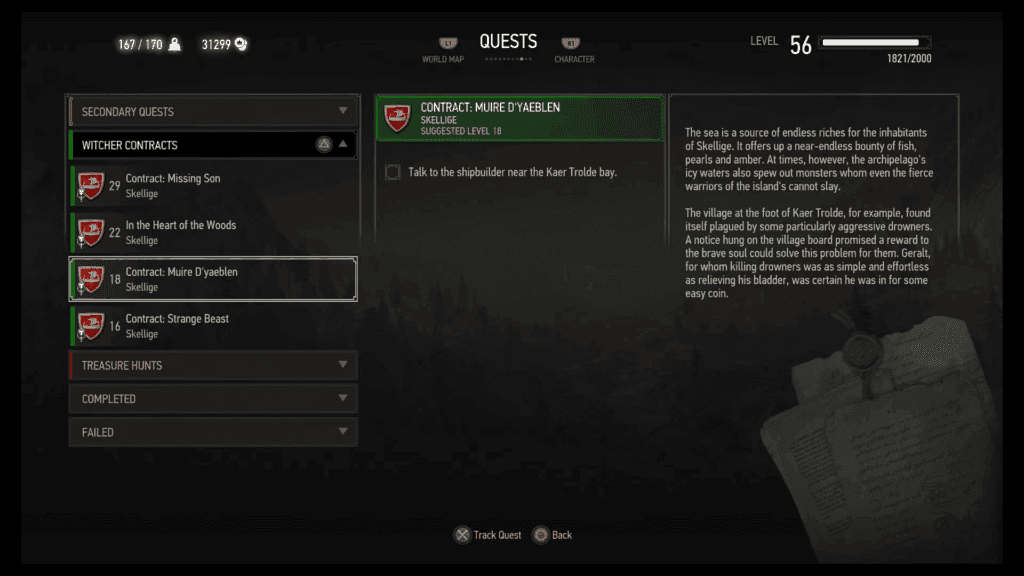
It’s in the side quests and Witcher Contracts where the game’s writing and world-building truly sing, often surpassing the main narrative in emotional weight and complexity.
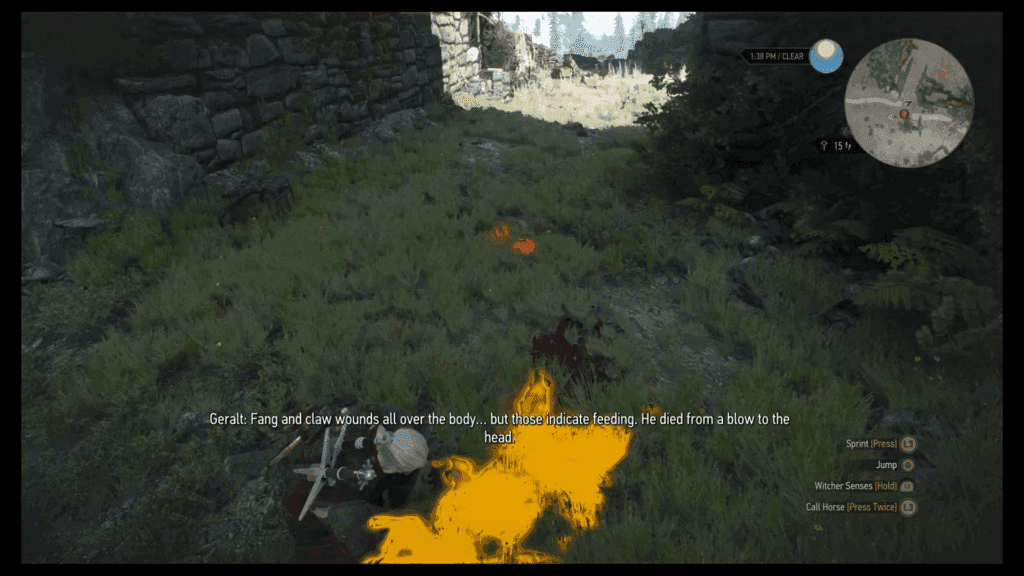
These aren't filler tasks. A contract to hunt a monster begins not with combat, but with detective work. Using Geralt’s Witcher Senses, you examine footprints, blood stains, and witness accounts, piecing together the creature’s nature and weaknesses before you ever draw a sword. A simple ghost story at a village well unfolds into a tragedy of a wronged woman, forcing you to choose between laying her spirit to rest or destroying her in anger. These narratives are self-contained short stories, echoing the series' literary origins, and they consistently treat the player’s intelligence with respect. There’s no simplistic good-versus-evil; you’re navigating a grayscale world where a "monster" is often a victim, and the true evil is human cruelty, ignorance, or greed.
This leads to the game’s most powerful system: choice and consequence without a morality meter. The Witcher 3 excises the binary karma systems of its peers. Decisions are rarely about being "good" or "evil," but about navigating impossible situations with imperfect information. Helping a desperate hunter might doom an entire village; sparing a dangerous creature could lead to unforeseen tragedies later. The impact is tangible and often delayed—a character you aided in a seemingly minor side quest might reappear dozens of hours later to return the favor, or to seek vengeance for a choice you’ve long forgotten. This creates a pervasive sense of responsibility, making the Northern Realms feel genuinely reactive to your presence as Geralt.
However, the very scope that empowers this brilliant side content also exposes the main story’s structural weaknesses. The hunt for Ciri is frequently interrupted by lengthy, mundane errands that pad the runtime. You’ll find yourself escorting a stubborn goat, fetching a missing pan, or running countless diplomatic favors for lords who might have a clue. Even Geralt voices frustration at these tasks, breaking the fourth wall to acknowledge the grind. This "Elder Scrolls Syndrome"—where the central, world-ending threat feels less urgent than the myriad distractions—is particularly acute here. For newcomers, Ciri can feel like a narrative abstraction until very late in the game, diminishing the emotional stakes of the core chase.
The act of navigating this magnificent world can also be a chore. The in-game route-finding system is notoriously unreliable, often leading you onto roads only to veer haphazardly across open fields or get confused by simple river crossings. While the minimap is essential, it contributes to a cluttered HUD that can have you staring at a corner of the screen instead of the breathtaking scenery. Furthermore, the restrictive fast-travel system—limited to signposts you must first discover on foot or horseback—can make backtracking across the massive map feel like a punitive time sink rather than an adventure.
Yet, these frustrations are ultimately minor taxes paid for a world of unparalleled depth. The Witcher 3: Wild Hunt understands that a great RPG isn’t about how quickly you can reach the ending, but how willingly you get lost on the way there. Its side content isn't optional; it's the heart of the experience, offering a more nuanced and compelling look at its war-torn world than the main quest often manages. The game earns its legendary status not through the climax of Geralt’s journey, but through the hundred smaller, sadder, and more human stories he encounters along the path.
Narrative Depth: Characters, Mature Themes, and Social Commentary
The true magic of The Witcher 3: Wild Hunt isn’t found in its spells or swordplay, but in its people. This is a game that understands fantasy is at its most compelling when it’s human—flawed, ugly, and heartbreakingly real. While the main quest’s chase for Ciri can feel like a narrative engine, the characters who populate its world are the fuel, transforming a sprawling epic into a collection of intimate, unforgettable tragedies and triumphs. The Witcher 3 builds its legacy not on saving the world, but on saving—or failing—the individuals caught in its gears.
Exploration reveals the deep lore and social structures of the Continent.
At the center of it all is Geralt of Rivia, a masterclass in writing a predefined protagonist who still feels like your own. Voiced with world-weary gravitas by Doug Cockle, Geralt is the perfect lens for this grim world: a mutated outsider whose professional detachment constantly wars with a deeply buried, stubborn sense of honor. The writing avoids the trap of the blank slate, giving him a sharp, sardonic wit and established relationships, yet his moral compass is yours to steer. You decide if he’s the gruff pragmatist who takes the coin and walks away, or the reluctant hero who intervenes even when it’s foolish. This balance is The Witcher 3’s narrative genius—you role-play through Geralt, not as him, inheriting his history while shaping his present. His search for Ciri isn’t just a plot; it’s the emotional anchor that grounds every monster contract and barroom brawl in a father’s desperate love.
The supporting cast is where the game’s writing ascends from great to legendary. These characters are never defined by a single trait; they are gloriously messy bundles of contradiction.
Yennefer is arrogant and manipulative, yet fiercely loyal and vulnerable when it comes to Ciri. Ciri herself is a powerful, independent force of nature grappling with the weight of prophecy and her own trauma. Even minor characters are granted stunning depth. The Bloody Baron’s questline remains a benchmark for the medium, presenting a man who is simultaneously a violent drunk, a grieving father, and a broken soul seeking redemption. You’re not asked to forgive him, but to understand the cycle of abuse and regret that defines him. This commitment to moral ambiguity extends to every corner. The herbalist who knows the victims of a Noonwraith, the sorceress Keira Metz navigating courtly politics for survival—each feels like they have a life that continues when you ride away.
This maturity extends to the game’s unflinching exploration of its darkest themes. The Witcher 3 is steeped in the “circumstantial horrors of the helpless,” a phrase that perfectly captures its ethos. You don’t just fight a monster; you uncover the human misery that created it—a spirit born from a wrongful drowning, a beast plaguing a village starving under wartime occupation. The game tackles domestic violence, sexual exploitation, and the brutal realities of poverty without flinching, forcing you to sit with the consequences of a war-torn world where evil is often banal and systemic. However, this strength is also the source of its most significant criticism.
The game’s handling of its female characters and overall diversity is its most glaring blind spot. While it creates complex figures like Yennefer and Ciri, its world is also oppressively misogynistic in a way that often feels exploitative rather than purely observational. Violence against women is frequently used as a shorthand for villainy or a cheap motivator for Geralt’s anger. A major antagonist is introduced surrounded by the mutilated bodies of sex workers; another quest involves a man who beat his wife into a miscarriage, with dialogue options that can bizarrely frame him sympathetically. Furthermore, the world’s population is overwhelmingly white, with a noticeable absence of non-white humanoids across its vast continents. For a game so dedicated to painting a nuanced portrait of prejudice against non-humans like elves and dwarves, this lack of racial diversity feels like a missed opportunity to deepen its social commentary, ultimately making its dark fantasy world feel less authentically lived-in than it could have.
For newcomers, this dense tapestry of relationships and history can be daunting. While The Witcher 3 does an admirable job onboarding players with its in-game glossary, the emotional weight of finding Ciri hinges on understanding her deep, familial bond with Geralt and Yennefer—a bond cultivated across novels and previous games. Without that context, Ciri can feel like a narrative MacGuffin for the first dozen hours, a symbol you’re told to care about rather than a person you know. The political machinations involving names like Emhyr, Radovid, and Dijkstra also assume a baseline familiarity that the game only partially provides, potentially leaving new players adrift in a sea of proper nouns.
Yet, these narrative hurdles are worth the climb. The Witcher 3: Wild Hunt earns its status not through clean heroics, but through its steadfast commitment to gray morality and human frailty. It understands that the most powerful fantasy holds a mirror to our own world’s complexities, asking difficult questions without offering easy answers. You may forget the specifics of a boss fight, but you will remember the Baron’s broken sobs, the resigned horror in a peasant’s plea, and the quiet cost of every “lesser evil” you were forced to choose. That lingering emotional residue is the game’s greatest triumph.
Technical Performance: From 2015 Origins to the Next-Gen Update
The technical legacy of The Witcher 3: Wild Hunt is a story of two distinct eras: its ambitious, occasionally creaky 2015 launch, and its polished, modernized second life. This is a game that demanded more from hardware than many of its contemporaries, and for years, playing it was a negotiation between its breathtaking artistic vision and the raw computational power required to sustain it. The journey from those origins to the free Next-Gen Update is a masterclass in post-launch support, transforming a technical compromise into a showcase title, though not all platforms benefited equally.
Next-gen hardware revitalized the game's vast open-world environments like the Skellige Isles.
At launch, The Witcher 3 was a notorious benchmark for PC hardware and a genuine stress test for the PlayStation 4 and Xbox One. On console, the target was a locked 30 frames per second, a goal it frequently missed during dense forest traversal or large-scale combat, with dips into the mid-20s that could disrupt the flow of its precise swordplay. Load times after death on these machines were a genuine penalty, stretching to 45 seconds or more—a brutal wait that could sour the learning process on a tough boss. The PC version was clearly the intended experience, but it came with a high barrier to entry. Achieving a stable 60 FPS on High to Ultra settings in 2015 required a card like the GTX 980, while the minimum-spec GTX 660 was a passport to the world at greatly reduced fidelity and performance. This disparity meant that for many, the game’s visual splendor—its god rays through trees, its dynamic storms over Skellige—came at the cost of a buttery-smooth frame rate.
The Nintendo Switch port, released in 2019, remains one of the platform’s most audacious “impossible ports,” a testament to clever optimization that asks players to make significant visual trade-offs for the privilege of portability.
Targeting 540p in handheld mode and 720p when docked, the Switch version is a study in intelligent compromise. Texture detail and draw distance are heavily pared back, and the lush foliage that defined the original’s landscapes becomes a flat, simplified layer. Yet, the core art direction and atmospheric lighting survive the transition, making exploration on the small screen surprisingly immersive. The 30 FPS target is generally maintained in gameplay, though busy cutscenes can suffer dramatic dips. It’s a version for the dedicated traveler, proving the strength of the underlying design can shine through even when the technical polish is visibly thinner.
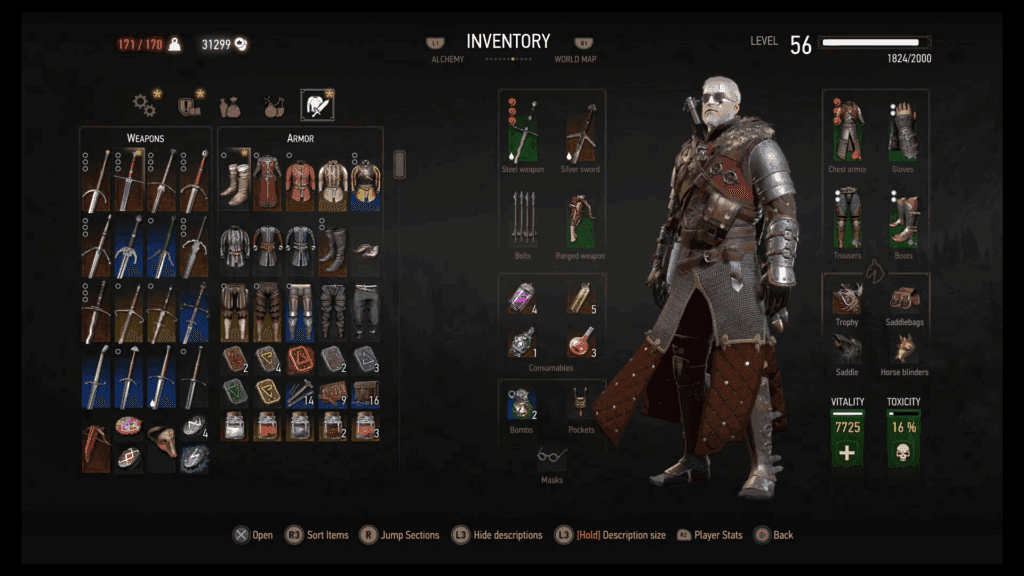
The game’s most persistent technical flaw, however, was never about frame rates or resolution, but about its interface. The inventory and menu systems, particularly on consoles, were a clunky, lag-ridden obstacle course. Scrolling through a grid of hundreds of unsorted items—where books were inexplicably grouped with potions—to find a specific oil or piece of food was a chore that broke immersion constantly. Menus grew slower as your inventory expanded, and the lack of basic sorting options like alphabetical or by type felt like a glaring oversight in a game so meticulous about its world-building. This was the ugly, functional underside of the beautiful fantasy, a reminder that the player’s logistical experience was often an afterthought.
The December 2022 Next-Gen Update fundamentally rewrote this technical narrative for PC, PlayStation 5, and Xbox Series X/S. This wasn’t a simple resolution bump; it was a comprehensive overhaul. Console players finally received a flawless Performance Mode, delivering a locked 60 FPS that transformed the feel of combat, making parries and dodges more responsive and the world smoother to navigate. A new Quality Mode introduced ray-traced global illumination and ambient occlusion on supported hardware, casting Velen’s murky swamps and Novigrad’s torch-lit alleys in stunningly realistic light. On PC, these ray tracing features are even more demanding, requiring current-gen GPUs to run comfortably, but they represent the definitive visual version of an already gorgeous game. The update also integrated dozens of community-inspired quality-of-life fixes, from a photo mode to a map filter for custom markers, directly addressing years of player feedback.
Throughout every iteration and upgrade, one technical aspect has remained consistently superlative: the audio design. The Slavic-inspired soundtrack is iconic, shifting seamlessly from haunting, folk-inspired exploration melodies to thunderous choral arrangements during boss fights. The sound design gives tangible weight to every swing of a silver sword, the whoosh of an Igni sign, and the guttural roar of a Griffin. This auditory layer is the constant that has never needed a patch, perfectly selling the brutal yet beautiful reality of the Continent from the lowest-spec PC to the most powerful console. It’s the unshakeable foundation upon which all the visual upgrades are built.
Final Verdict: Is The Witcher 3: Wild Hunt Still Worth Playing?
The final verdict on The Witcher 3: Wild Hunt isn’t a simple binary, but a calculation of scale versus friction, of unforgettable stories told within a framework that sometimes fights against them. This is a game that asks for your patience and rewards it with one of the most profound, human RPG experiences ever crafted. The question of whether it’s still worth playing nearly a decade later is answered not by its technical age, but by the timeless quality of its writing and world. For the right player, its flaws become minor taxes paid for a masterpiece.
High-quality visuals are maintained across all platforms.
That player is someone who values narrative depth over mechanical perfection, who seeks a world to inhabit rather than just a playground to conquer. The Witcher 3: Wild Hunt is built for those who want their choices to echo with consequence, who relish piecing together a monster’s weakness from environmental clues, and who find beauty in melancholy sunsets over war-torn swamps. If your ideal RPG is defined by tight, responsive controls and a snappy UI, you will clash with its clunkier systems. But if you’re willing to overlook Geralt’s occasionally drunken navigation and the inventory management slog, you’re signing up for 50 to 100 hours of base game content where even a simple contract to kill a monster can unfold into a poignant short story about love, loss, and vengeance. The expansions, Hearts of Stone and Blood and Wine, add another 30-40 hours of what is arguably the game’s finest writing and most vibrant new region.
The game’s legacy is cemented not by how it plays in any given moment, but by how it makes you feel for weeks after you’ve put the controller down. You’ll forget the awkward horse controls long before you forget the Bloody Baron’s questline.
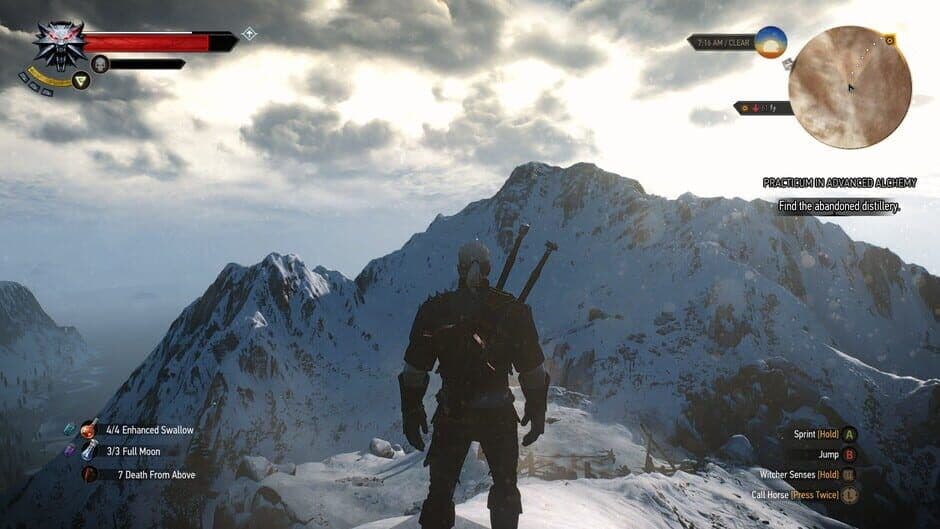
Its strengths are monumental. The side quest writing remains the genre’s high-water mark, treating every peasant’s plea with the narrative weight of a main quest. The art direction, from the grimy poverty of Velen to the fairy-tale opulence of Toussaint, creates a cohesive and hauntingly beautiful world that the Next-Gen Update only further enriches. The RPG systems of alchemy, mutagen-enhanced ability builds, and preparation-based combat create a tangible sense of becoming a master witcher. Your decisions, free from a binary morality meter, ripple out in ways that feel authentically messy and consequential.
Yet, the friction is real. Geralt’s movement and camera work in tight spaces can feel like wrestling with a tank, a stark contrast to the grace of his combat animations. The inventory system, even post-update, is a laggy, poorly sorted chore. The final act’s pivot to a linear series of underwhelming boss fights feels like a narrative and gameplay stumble after dozens of hours of open-ended brilliance. These are the seams showing on an otherwise magnificent tapestry.
So, is The Witcher 3: Wild Hunt still worth playing? Unreservedly, yes—with caveats. It is a landmark achievement, a benchmark for storytelling and world-building in open-world RPGs that has influenced a generation of games. It demands your time and tolerance, and in return, it offers a continent teeming with life, tragedy, and hard-won beauty. You don’t just complete it; you live it, and the memories of its people and places linger long after the final credits roll.
Pros:
- Unmatched side-quest writing that treats every story with novelistic depth.
- A morally gray world where player choices have weighty, nuanced consequences.
- Stunning, cohesive art direction and a hauntingly beautiful soundtrack.
- Deep, rewarding RPG systems that make preparation and specialization meaningful.
- An enormous amount of high-quality content, further expanded by two exceptional DLCs.
Cons:
- Clunky character movement and a frustrating camera, especially in confined spaces.
- Tedious, poorly organized inventory and menu management.
- A main quest that often devolves into repetitive fetch-quest padding.
- Some late-game boss fights feel repetitive and underwhelming.
- A world depiction that can feel exploitatively misogynistic and lacks racial diversity.