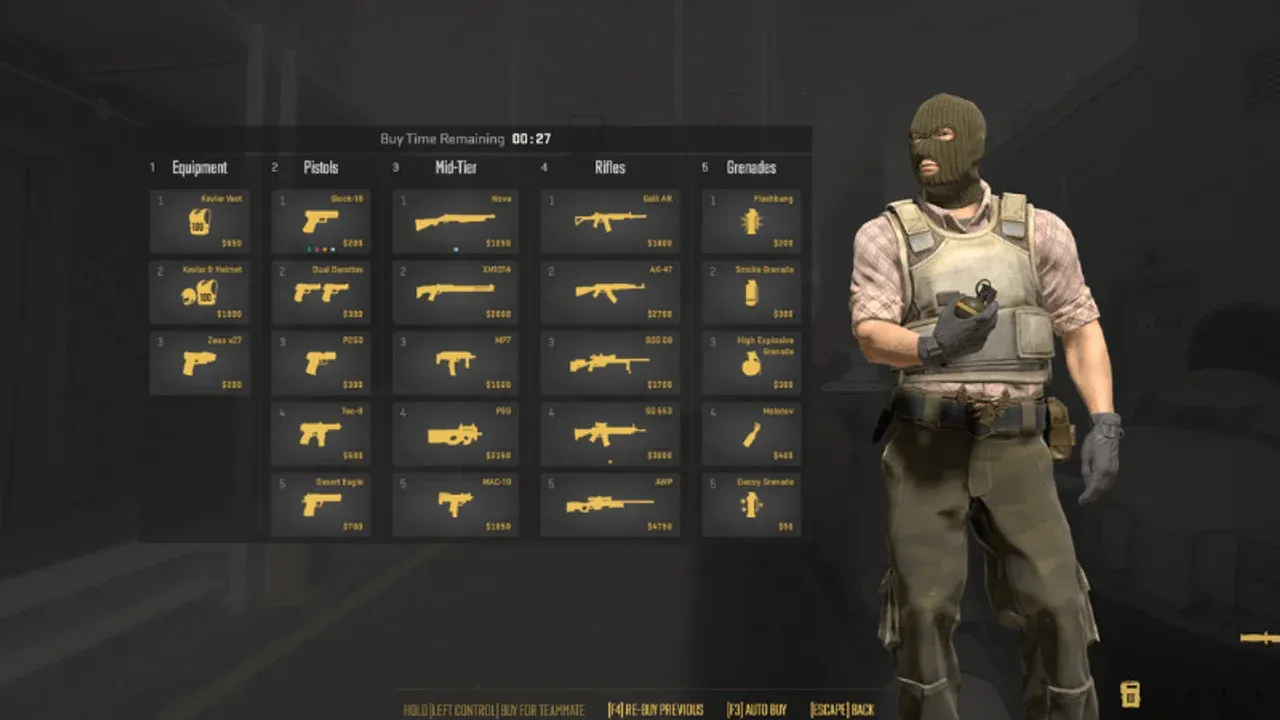
Understanding the CS2 Economy Basics and Currency System
In Counter-Strike 2, raw aim and flashy plays can win you duels, but the invisible battle happening between rounds—the economy—will win you the game. Understanding this hidden system is the first step to dominating the match. It’s not just about how much money you have; it’s about knowing when to spend it, when to save it, and how to coordinate with your team to create unstoppable momentum.
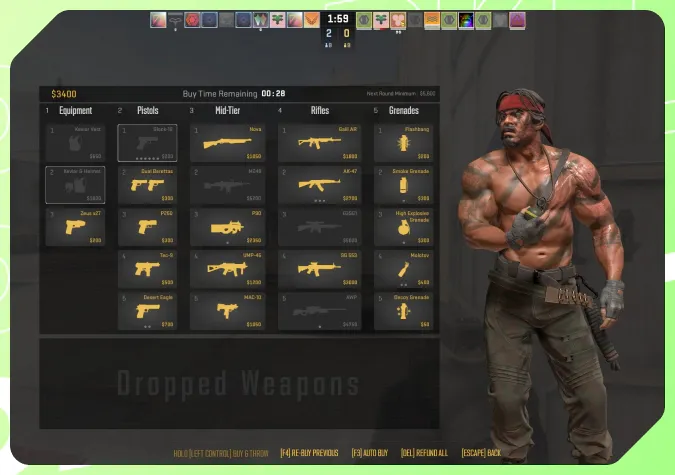
Managing starting funds during the early rounds of a match.
Your financial journey in CS2 begins with a starting money of $800 for every player at the beginning of each half. This is your pistol round budget, and it’s crucial to spend it wisely on armor or upgraded pistols to secure that critical first-round win. But the economy doesn’t just start and stop; it’s governed by strict rules.
First, there’s a maximum money cap of $16,000 per player. Once you hit this limit, any additional income you earn is wasted. This means if you’re sitting on a huge bank, you need to spend your excess cash on utility or even dropping weapons for teammates before the round starts—otherwise, you’re literally throwing money away.
If you’re near the $16,000 cap, buy extra grenades you might not even use this round, or grab a spare rifle to drop to a teammate. It’s better to convert that excess cash into team assets than to let it vanish.
The entire economic dance happens within the MR12 format, where each half lasts only 12 rounds. This compressed schedule makes every single dollar and every buy decision more critical than ever. There’s less time to recover from a bad economic call, so mistakes are punished harder and advantages are amplified faster.
Finally, no matter how dire your finances become in the first half, you get a clean slate at the break. The half-time reset brings the economy back to $800 for both teams at the start of the second half. This is the most important economic reset in the match, wiping away all previous advantages and debts and setting the stage for a brand new 12-round battle.
If you’ve ever felt like you’re constantly outgunned or your team’s buys are never synchronized, mastering these four fundamental rules is your foundation. With this knowledge, you’re ready to dive into the details of round bonuses and build a strategy that outplays your opponents before the first bullet is even fired.
How to Calculate Round Win and Loss Bonuses in Counter-Strike 2
Alright, the first round is over. In Counter-Strike 2, the real game begins here—your team’s economy is either building momentum or teetering on the edge. Understanding the win and loss bonuses is the difference between a smooth, coordinated buy and a desperate scramble for pistols. Let’s break down the exact numbers that drive every round in the game.
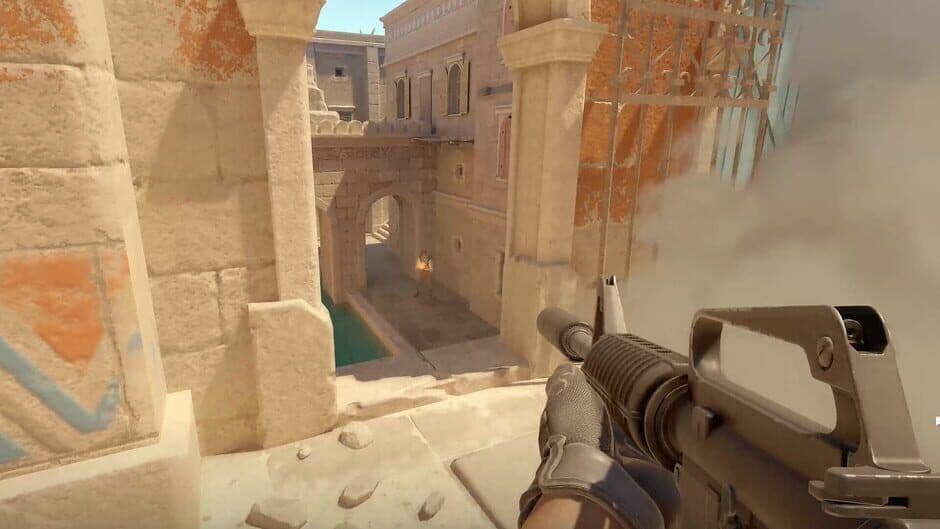
Standard CS2 gameplay interface.
The Core Round Bonuses: Win vs. Lose
Your team’s primary income comes from the round result. It’s not just about winning or losing; how you win and how many times you’ve lost in a row dramatically changes your payout.
Winning a round is your main cash injection. A standard elimination win or a win by time expiry grants each player $3,250. However, if the round ends with a bomb explosion (T-side) or a successful defusal (CT-side), the reward is even higher at $3,500 per player. This objective bonus makes planting and defending the bomb crucial—it’s not just about the round win, it’s about securing an extra $250 per teammate for the next fight.
Losing a round isn’t a total loss for your wallet. The game’s built-in catch-up mechanic, the Loss Bonus, ensures you get a progressively larger payout for each consecutive defeat, preventing a single pistol round loss from snowballing into an unwinnable half.
Here’s exactly how it scales:
- Loss Bonus Tier 1: Your first loss pays $1,400.
- Loss Bonus Tier 2: A second consecutive loss pays $1,900.
- Loss Bonus Tier 3: A third consecutive loss pays $2,400.
- Loss Bonus Tier 4: A fourth consecutive loss pays $2,900.
- Loss Bonus Tier 5: From the fifth consecutive loss onward, the bonus is capped at $3,400.
This system means that after three straight losses, your team is already close to affording a full buy. There’s one key exception: losing the very first round of the half, the pistol round, pays $1,900 instead of the usual $1,400. This higher initial payout is why the second round after a pistol loss is so strategically critical.
The loss bonus is your team’s lifeline. This is why coordinated saves are so powerful—losing together keeps your bonus streak intact, guaranteeing a big payout for your next full buy round.
How the Bonus System Resets
This progressive system has one simple, brutal rule: winning resets everything. The moment your team wins a round, the Loss Bonus resets immediately back to $1,400 for the next loss. This is the core of economic warfare. Your goal isn’t just to win rounds, but to break the enemy’s economy by winning at the right time—right before they hit that lucrative $3,400 cap—forcing them back to a weak $1,400 payout and extending your financial advantage.
Think of it as a tug-of-war. Every win you secure pulls the enemy’s bonus back to the start, while every loss you take inches your own bonus closer to that $3,400 safety net. Managing this push-and-pull is the essence of Counter-Strike 2’s economy.
With this foundation, you can now predict your team’s financial future. You know exactly how much cash a win or a loss brings in, which is the first step toward making intelligent, game-winning buy calls. Next, we’ll see how individual actions like kills and bomb plants add to this base income.
Kill Rewards and Objective Bonuses for Individual Income
In Counter-Strike 2, aim and tactics are vital, but your bank account is the engine that powers them. While round outcomes provide the bulk of your cash, the individual actions you take—getting a kill, planting the bomb—are your personal paycheck. Understanding these kill rewards and objective bonuses is the difference between scraping by and building a financial fortress.
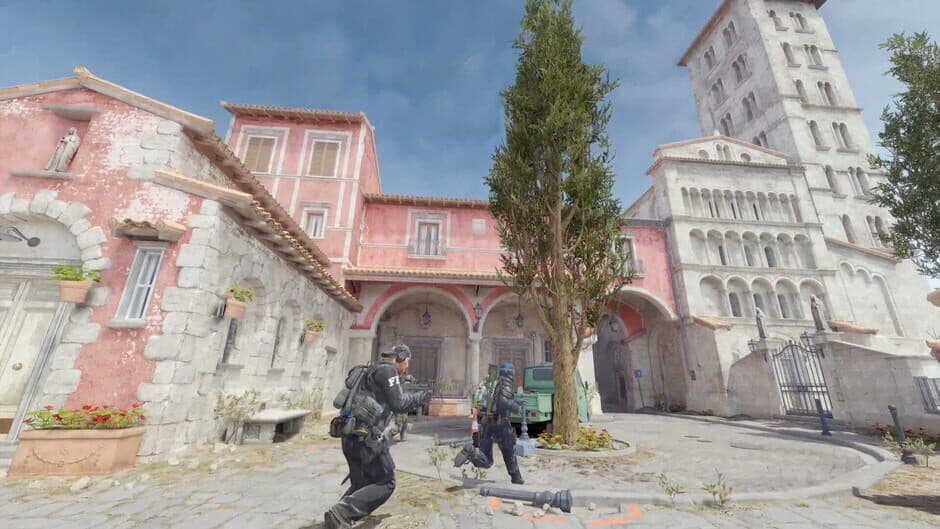
Gameplay showing the HUD where money is tracked.
Your weapon choice directly impacts your wallet. The game incentivizes using different tools for different situations through its kill reward system:
- Rifle Kill Reward: Landing a kill with workhorse rifles like the AK-47, M4A4, M4A1-S, Galil, or FAMAS awards a solid $300.
- SMG Kill Reward: To encourage their use in anti-eco and close-quarters scenarios, SMGs like the MP9, MAC-10, MP7, and UMP-45 grant a generous $600 per kill. (Note: The P90 is a notable exception, paying only $300).
- Shotgun Kill Reward: For high-risk, close-range plays, shotguns like the Nova, XM1014, MAG-7, and Sawed-Off offer the highest weapon-based payout at $900.
- AWP Kill Reward: To balance its immense power, the AWP grants a mere $100 per kill, making it a poor choice for farming economy.
- Knife Kill Reward: The ultimate high-risk, high-reward play. A successful knife kill nets you a whopping $1,500.
- Grenade Kill Reward: Getting a kill with an HE grenade, Molotov, or Incendiary grants $300.
- Zeus x27 Kill Reward: A kill with the Zeus x27 taser awards $0, making it a pure utility/BM tool.
After winning the pistol round, buying an SMG on the second round isn't just about firepower—it's an investment. Those $600 kill rewards can turbo-charge your team's economy, setting you up for multiple full buys.
Beyond frags, playing the objective is your most reliable side hustle. On the Terrorist side, planting the bomb is a dual-benefit action. The player who plants earns an immediate +$300 bonus. More importantly, if your team loses the round after the bomb has been planted, every surviving player receives a +$800 team-wide bonus. This "plant bonus" is a critical economic lifeline that can turn a devastating loss into a manageable one, allowing for a faster comeback. For the Counter-Terrorists, the defuser is rewarded with a +$300 bonus for successfully stopping the explosion.
Mastering this system means thinking beyond the round win. Choosing a shotgun to hold a tight angle, or committing to a risky plant in a losing round, aren't just tactical decisions—they're financial ones. In Counter-Strike 2, every dollar you earn personally builds towards your team's next dominant buy.
How to Execute a Full Buy Strategy in CS2
The moment your team’s money syncs up and you can all afford a proper loadout is one of the most satisfying feelings in Counter-Strike 2. This is the Full Buy—the round where you’re not just hoping for a lucky pick, but are fully equipped to execute a plan, control space with utility, and win a straight-up fight. It’s the standard for high-level play, and knowing how to execute it perfectly is what separates consistent teams from chaotic ones.

A true Full Buy isn't just about having a rifle. It's a complete fighting package that costs roughly $4,800 to $5,500 per player and includes three critical components: a primary weapon (like an AK-47 or M4A4), Kevlar + Helmet ($1,000), and a full set of utility. That Kevlar + Helmet is non-negotiable—it prevents aim punch and stops a single headshot from a rifle or SMG from killing you instantly. For CTs, the Defuse Kit (>$400) is just as critical, turning a tight post-plant situation into a winnable one with a faster defuse.
The final, and often most mismanaged, piece is your Utility Budget. On a full buy, you should be spending $1,100-$1,300 per player on grenades. This isn’t optional fluff; smokes block lines of sight, flashes enable entries and retakes, and molotovs clear corners and deny plants. A team with five rifles but no utility is at a massive disadvantage against a team with four rifles and full nades.
If your team’s funds are tight, the Support Role should always prioritize utility over a fancy rifle. Buying 2x Flashes, 1x Smoke, and 1x Molotov is more valuable for the team’s execute than you having a slightly better gun. Let your fraggers carry the expensive firepower while you enable them to use it.
With everyone armored, kitted with utility, and communicating a clear plan, a Full Buy round is your team's strongest form. It’s the foundation you build your entire half around—win these, and you control the game’s economy and momentum.
Managing Eco Rounds and Save Rounds for Economic Recovery
Here’s the trick most guides miss: in Counter-Strike 2, winning isn't just about the rounds where you have rifles—it's about how well you manage the rounds where you don't. This is where mastering your Eco Rounds and Save Rounds becomes your secret weapon for economic recovery.

When to Go Full Eco
A Full Eco (sometimes called a Hard Save) is your team's commitment to spend as little as possible—typically just $0-$400 per player on a pistol or light armor. The goal isn't to win this round; it's to maximize your savings so your team can afford a dominant Full Buy next round. You'll call for this when a round looks almost unwinnable (an 80%+ chance of loss) and your team is $8,000-$12,000 short of a proper buy. This disciplined sacrifice sets you up for a "stacked buy" where you have rifles and full utility, which is crucial for breaking the enemy's momentum.
A classic time to full eco is right after losing the pistol round, especially if you're on the Terrorist side and managed to plant the bomb. That extra $800 loss bonus will fund your round three rifle buy, turning a loss into a setup for a powerful comeback.
Playing an Active Save
Sometimes, a pure save feels too passive. That's where an Active Save comes in. Here, your eco team doesn't just hide—you might stack a bombsite or set a trap, specifically aiming to swarm an isolated enemy and steal a rifle. It's a calculated risk: if you succeed, you upgrade your team's firepower mid-round and deal a huge psychological blow. If you fail, you risk giving up easy kills and map control. Use this strategy when you suspect the enemy is playing overly aggressive on their anti-eco or if your team has strong, coordinated close-angle holds.
The Art of Save Discipline
This next part can feel overwhelming—don't panic. Save Discipline is the non-negotiable skill that separates good teams from great ones. It means recognizing when a round is truly lost. If you're outnumbered in a 1v4 or 2v5 scenario and the enemy still has weapons, your job is no longer to be a hero. It's to retreat to a defensible map corner, preserve your expensive rifle or AWP, and live to fight the next round with it. Giving away a $2,700 AK-47 for free is a gift your opponents don't deserve.
Every map has standard save spots your team should know. On Dust2, rotate to the T-spawn cubby or the CT-spawn tunnel-back. On Mirage, fall back to the T-main back cubby or hold the Connector corner. On Inferno, the top of Banana or the Library corner are your safest havens. Knowing these lets your team save efficiently without having to guess or communicate under pressure.
⚠️ Watch out: The biggest save round mistake is ego-peeking for one more frag as the clock ticks down. You might get the kill, but you'll almost certainly die and donate your gun. The economic damage from that often costs you the next two rounds.
With these strategies, you transform your team's weakest moments into calculated setups for your strongest buys. In Counter-Strike 2, the team that best manages its lows will always control the highs.
Force Buy and Half-Buy Strategies to Disrupt Momentum
You’ve mastered the discipline of eco rounds, but sometimes, saving isn't enough. In Counter-Strike 2, there are moments where the smartest play isn't to save for the future—it’s to risk everything now to break your opponent's momentum and steal control of the half.
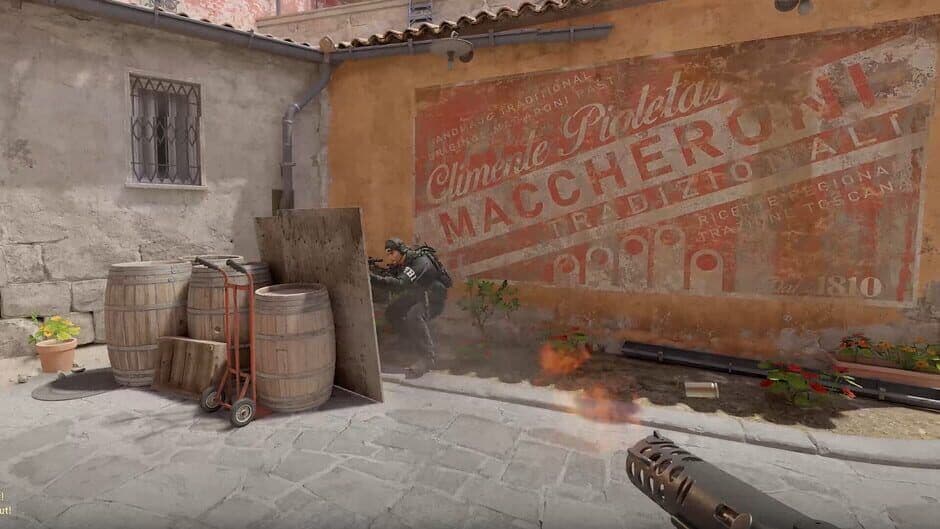
Map layout and tactical positioning.
Force Buy and Half-Buy Strategies to Disrupt Momentum
This is where your economy management becomes a weapon. When you’re down a few rounds and the enemy’s confidence is building, a well-timed Force Buy can be the ultimate momentum swing. This strategy involves spending all your available $2,000-$3,500 on upgraded pistols, SMGs like the Mac-10 or UMP, and Armor. You’re not buying to win a fair fight; you’re buying to create chaos and punish an opponent who might be expecting a weak eco round. Force buys are justified when you’re deep in a loss streak (four or more rounds) and hitting the maximum loss bonus—even if you lose, you’ll get another $3,400 next round. They’re also critical on the last round of a half, where saving is pointless.
The most successful force buys have a single, aggressive plan. Stack a site, rush a choke point with coordinated utility, and play for trades. Uncoordinated, individual peeks will just donate your expensive pistols to the enemy.
A Half-Buy is a more measured gamble. Here, you spend enough to be dangerous—think SMGs, light armor, maybe a flashbang—while carefully ensuring a Full Buy is still possible next round even if you lose. This is your bridge round, designed to avoid the dreaded "double eco" and keep your team’s economic health stable. The goal isn’t necessarily to win, but to apply pressure, maybe steal a rifle, and protect your future purchasing power.
When you suspect or know the enemy is on an eco, your buy strategy shifts again. An Anti-Eco Buy means capitalizing on their weakness without over-investing. Instead of full AK-47s and M4s, you might opt for cheaper rifles like the Galil or FAMAS, or even SMGs, and spend the money you save on extra utility like HE grenades and molotovs to flush out pistol stacks. This disciplined spending builds your team’s bank over time, often saving you ~$1,500 across the team compared to a full buy.
Don’t forget the power of the Bonus Round. After winning a round, especially the pistol round, you might choose to keep your SMGs or Pistols instead of immediately upgrading to rifles. This builds crucial 'buffer money' for future rounds, turning an early lead into a lasting economic engine. The mindset is to play carefully, use utility, and upgrade naturally by stealing the enemy’s rifles rather than gifting yours.
⚠️ Watch out: The biggest mistake in any of these rounds is a lack of team sync. If three players force buy while two eco, you create a "half-buy" nightmare next round where no one has proper gear. Always press [Tab] to check teammate money and agree on a unified strategy.
With these tools, you’re no longer just reacting to the economy—you’re using it to dictate the pace of the game. Knowing when to gamble with a force, when to bridge with a half-buy, and when to press an advantage with an anti-eco setup turns economic knowledge into tangible round wins.
Advanced Team Coordination and Reading the Enemy Economy
This is the final frontier of Counter-Strike 2's economy—the high-level coordination that separates organized teams from chaotic solo queues. The previous sections covered the mechanics; now, we're putting them into practice as a unit. Here's where you learn to predict your opponent's moves and synchronize your team's spending to create unstoppable momentum.
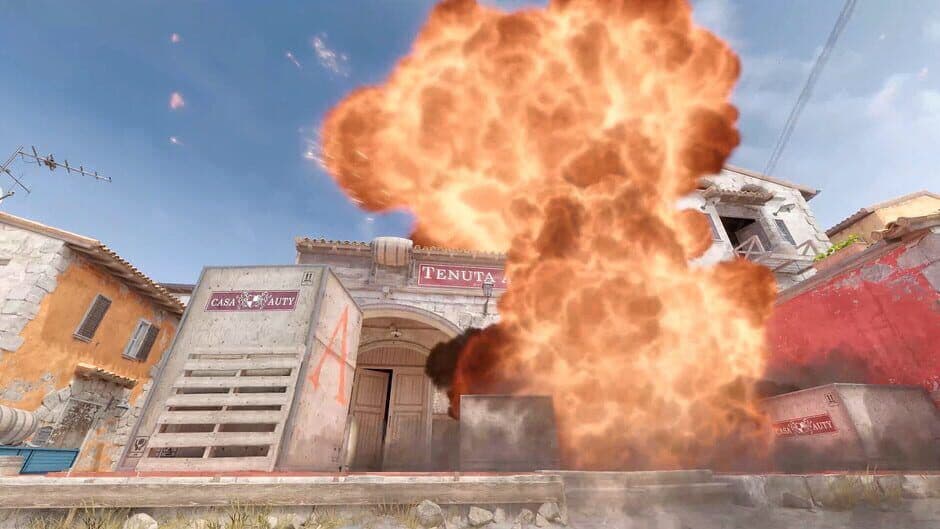
Coordinating utility to counter enemy eco rounds.
The In-Game Leader's Toolkit
Your role as the IGL or the designated caller isn't just about picking a site. It's about managing the team's collective wallet and anticipating the enemy's bank. This starts with communication, specifically the 10-Second Buy Call Protocol. Before the buy time ends, you ask: "Can we full buy next round if we lose this one?" Your team answers with a simple "Yes," "No," or "Close." Based on that consensus, you make the call: "Full," "Half," "Force," or "Save." Then, you add a simple plan like "stack A" or "default." This ritual eliminates mixed buys and ensures everyone is on the same financial page.
Before you even make that call, you need the data. Press [Tab] to view teammate money before every purchase. This isn't just a habit; it's a requirement. Seeing that one player has $1,200 while the rest have $4,000 tells you instantly that a full buy is impossible unless you use Weapon Dropping. If you're the rich player, buying a rifle for your broke teammate is often smarter than forcing the team into a weak half-buy. Equalizing your team's equipment is the fastest way to turn a shaky economy into a strong, synchronized round.
Reading the Enemy's Playbook
Predicting the enemy's buy is the ultimate economic skill. Reading Enemy Bank means tracking their previous round's outcome, surviving players, and kill count. Let's break it down: if they lost a round with no survivors, they got the base loss bonus. If they got two kills, that's an extra $600 split among them. Add that to their previous leftover cash, and you can estimate their per-player total. If it's around $2,000-$3,000, they're likely on a force or half-buy. If it's under $2,000, expect an eco. This math lets you call anti-strategies: if they're broke, play a disciplined anti-eco; if they can force, prepare for a scrappy fight.
Keep a mental tally of the enemy's loss bonus streak. If they've lost three in a row, their next loss bonus is $2,400—they're one round away from a strong full buy. Punish them now with aggressive pressure.
Finally, discipline extends to the round's very end. Exit Kill Denial is critical. When the round is clearly won—the bomb is defused, or the last enemy is cornered—avoid hunting for meaningless frags. Giving the enemy an extra $300 kill reward or letting them pick up your expensive rifle can single-handedly upgrade their next buy from an eco to a force. Winning cleanly protects your future rounds.
Mastering these advanced strategies turns your team's economy into a weapon. You'll no longer just react to your own bank; you'll manipulate the enemy's, forcing them into weak buys while you stack strong ones. In Counter-Strike 2, that's how you control the tempo of an entire half.