
A base in DayZ does not make your loot safe. It changes the loot from something you can lose by dying into something other players can locate, revisit, and plan around. Use three tests before you build: does this supply need to persist, does the structure need to be visible, and can someone maintain it? If the answer is no at any stage, reduce the storage and stay mobile.
Start With Storage, Not Walls
Storage and fortification solve different problems. A wooden crate, barrel, sea chest, tent, or buried stash can keep useful equipment in the world between sessions without announcing a large construction project. On vanilla-style persistence, the DayZ Wiki lists 45-day cleanup windows for common persistent storage categories such as oil barrels, sea chests, wooden crates, and tents; community servers can change those values. A restart alone is not a reason to scatter your inventory again, but a wipe or a different server configuration is a separate risk.
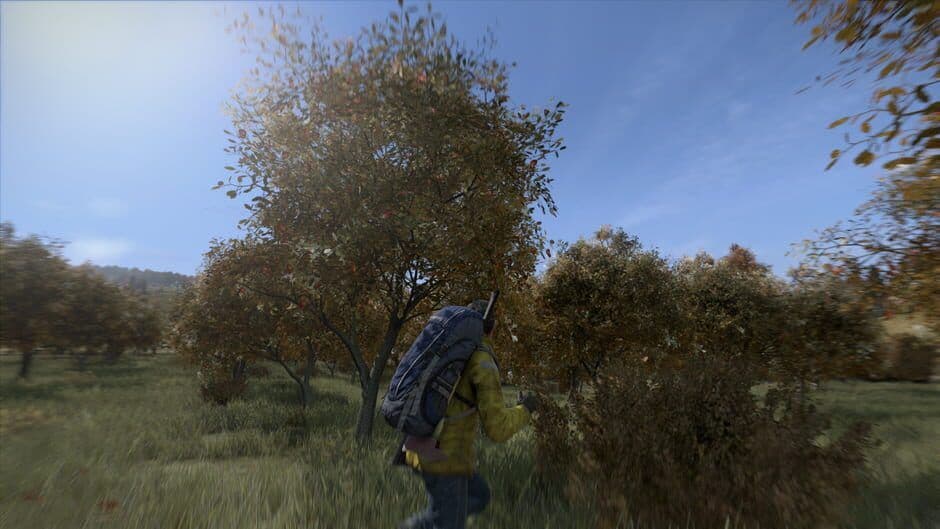
Low-profile storage keeps persistence from becoming a landmark.
Use one working container for the supplies you use every session, then put the items needed to restart after a death in a separate buried stash. For a group, split those restart supplies between two locations instead of stacking every spare weapon, medical item, and tool in the same crate. A buried stash keeps the silhouette low, though disturbed ground can still expose it. A tent or barrel gives faster access but creates a recognizable object. Build walls only when storage has become a regular route rather than an impulse to own a compound.
Make the Site Boring to Search
A useful site gives you a reason to visit without giving strangers a reason to stop. A tent beside a common road, a clean hilltop with a flag, and a building that has been locked for no practical reason all create a repeatable search pattern. A raider who sees the same object during a route has a reason to return; a low-profile container near ordinary cover gives them less to remember.
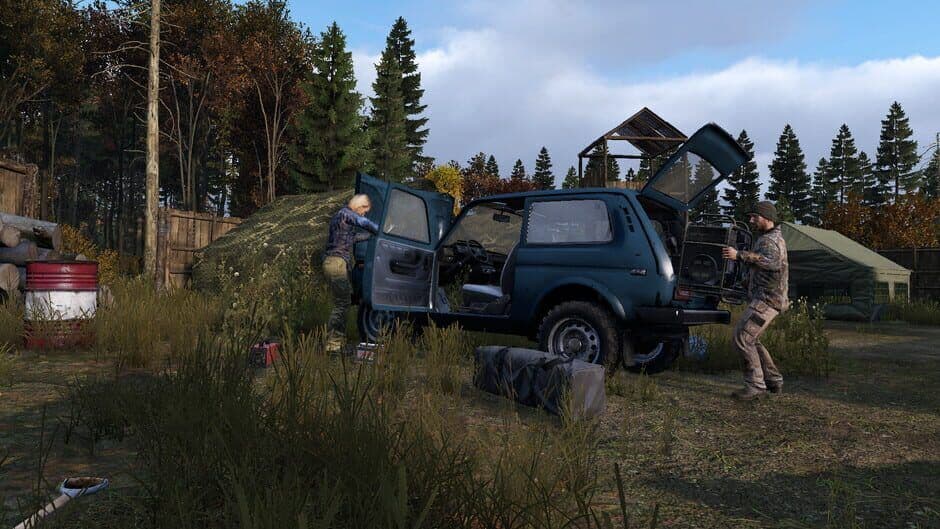
A recognizable stop can become a repeatable search pattern.
Choose a location with a covered second approach, a practical destination nearby, and enough room to leave without crossing the front door. Keep the workshop and everyday food close to the entrance, but move the supplies that would end the group’s next life away from the first room an intruder reaches. If a vehicle is part of the plan, make sure it can leave by a route that does not expose the entire yard.
The site should also survive a bad visit. Know where you will break contact, which container you can abandon, and which direction leads to the fallback stash. That is a DayZ base plan; a pile of walls without an exit is only a more expensive ambush.
Use Gates to Delay, Not to Store Everything
Gates are delay tools. A fence can become a gate with Metal Wire and Pliers, and gates accept three- or four-digit combination locks. A combination lock adds a predictable entry point, but it does not make the contents behind the barrier untouchable. The gate buys time and creates noise and decision points.
Put the replaceable material closest to the breach and move irreplaceable medical supplies, ammunition, and tools farther inside or outside the main compound in a low-profile stash. If one room contains every crate, one successful entry converts a difficult raid into a complete reset. Treat combination locks as part of the delay, not as a reason to keep every valuable item behind the same door.
Server settings matter. DayZ can disable damage to base parts or storage containers, while many PvP communities leave those protections off. Read the rules for the server you play on before you invest in a design meant for a different damage model. A strong layout buys time under the rules you actually have; it cannot compensate for rules you assumed existed.
Earn the Flag Pole With a Maintenance Schedule
A raised flag pole can refresh the lifetime of qualifying storage within a 60-meter radius. DayZ Wiki documents a five-day refresh cadence for the flag system, while community configurations can change persistence behavior. The flag gradually lowers and needs to be raised again, so the pole turns persistence into a schedule: if nobody can return to maintain it, the base is already on a timer.
Use a flag pole when the group can visit consistently and when the extra persistence is worth making the center of the settlement easier to identify. Keep its radius focused on the storage that genuinely needs it instead of using the flag pole as permission to fill every corner with containers. The flag pole should support a base you already operate, not justify building one you cannot maintain.
Keep One Raid From Ending the Run
A permanent base should hold the tools that make the next life easier, not the only copy of everything that makes the group functional. Keep the visible base stocked with daily-use gear and replaceable materials. Keep a fallback stash with only the items needed to restart: a medical baseline, a repair tool, and enough equipment to reach the next supply run. Put rare or irreplaceable items somewhere that is not revealed by the main gate, tent, or vehicle.
Do not leave the only vehicle, the only spare weapon, and the full food reserve in the same visible yard. A group that loses that yard should still have a route, a kit, and a reason to keep playing. When you can answer who will maintain the structure, how you will leave when it is watched, and what survives if it is found, build the compound. Until then, use a buried stash, a small storage footprint, and mobility.