How to Understand Political Alignments in Disco Elysium
Political choices in Disco Elysium can quietly shape the detective you become. A seemingly casual answer about workers, nationalism, compromise, or money may push you toward one of four political alignments: Communism, Fascism, Moralism, or Ultraliberalism.
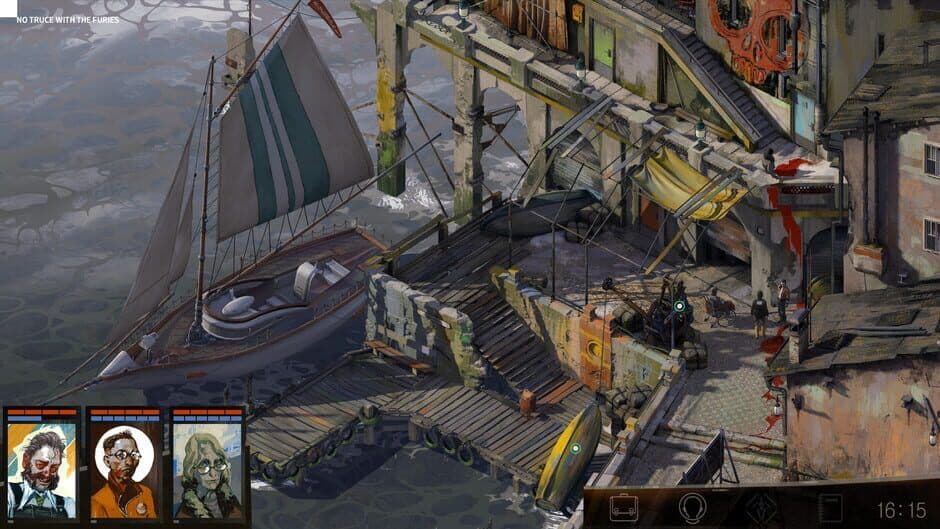
Political alignments are tracked through specific dialogue choices during investigations.
How Political Alignment Tracking Works
Throughout Disco Elysium, repeated dialogue choices tagged Communism, Fascism, Moralism, or Ultraliberalism gradually track your ideological direction. Choosing one type of response once does not permanently define you, but consistently selecting the same worldview can unlock related thoughts and quests. You can review previous choices through the Thought Cabinet, which helps you understand which ideas your detective has been entertaining.
Political alignment is separate from your detective’s skills and personal identity. A high Intellect does not automatically make you a communist, while strong Authority does not force you into fascism. Skills influence which arguments and checks you can handle; your political alignment comes from the beliefs and responses you repeatedly choose.
Read the full response before committing. A dialogue option can advance more than one political idea—or conflict with the detective’s current role—so the tone and wording matter as much as the headline of the choice.
What Political Choices Change
Dialogue and thought choices affect the responses available to you, the skill checks you encounter, the effects of political thoughts, NPC reactions, and the role-playing flavor of your investigation. A detective who embraces one ideology may receive very different lines from a detective who stays moderate or experiments with several viewpoints.
These choices shape how you play the role, but they do not lock the main story to one ending. The murder investigation remains the central thread of Disco Elysium, while political alignment adds optional dialogue, character development, and ideological quests around it. You can pursue a committed worldview, remain uncertain, or make contradictory choices that reveal the tension between the detective’s job and personal beliefs.
The rest of this guide breaks down how to recognize each alignment, where its starting conversations appear, and what happens when you commit to a political route. Once you understand that Disco Elysium treats ideology as a tracked role-playing layer—not a replacement for your skills or identity—you can make political choices deliberately and shape the detective you want to play.
Best Build and Preparation for Political Alignments in Disco Elysium
Your detective doesn’t need to commit to an ideology on day one. In Disco Elysium, the best political build stays flexible: develop several skill groups, test dialogue options carefully, and keep a save before choices that could shape your political route.
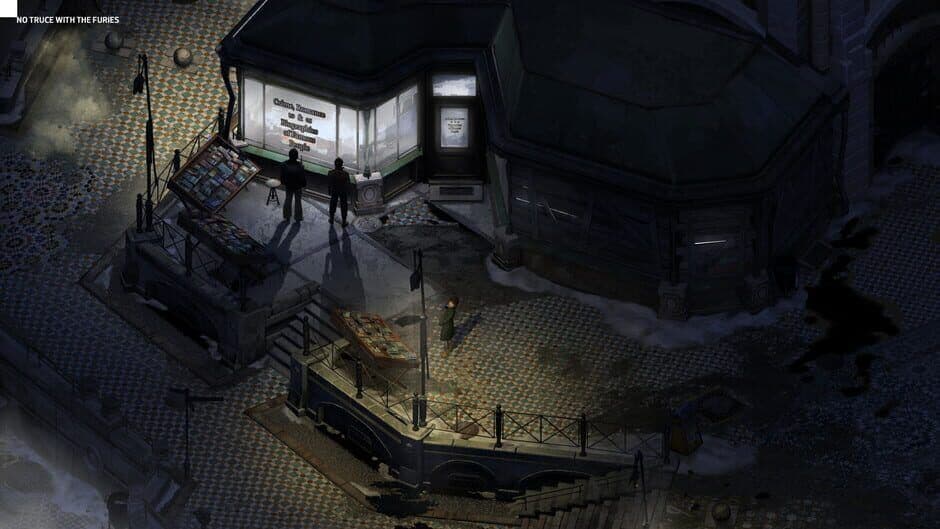
The Thought Cabinet allows players to internalize different ideologies.
Build for Flexible Political Dialogue
At character creation and during level-ups, keep multiple skills viable rather than funneling every point into one ability group. Intellect skills favor political analysis, but Psyche, Physique, and Motorics can open alternative ideological responses and checks. This gives you more ways to approach political conversations, even when your preferred response isn’t supported by your strongest reasoning skills.
A balanced detective may not dominate every political check, but they’ll see more possible approaches. That matters in Disco Elysium because a failed check can close off a specific line of conversation, while another skill may offer a different route into the same discussion. Don’t panic if your Intellect isn’t exceptional—Psyche, Physique, and Motorics can still keep your ideological options open.
Manage the Thought Cabinet Carefully
The Thought Cabinet sits in the character screen and stores researched thoughts. Each thought can provide bonuses and penalties, so treat it as a build-management tool rather than a collection you should fill immediately. You can internalize or forget thoughts with skill points and money, which lets you adjust your detective when a particular ideological effect stops helping.
Before committing to a political thought, check whether its penalties interfere with the skills you rely on most. In this RPG, an ideological bonus may unlock useful dialogue while making another part of your investigation less reliable. Leave room to adapt instead of spending every available resource the moment a new thought appears.
Make a manual save before committing to political dialogue or internalizing a thought. That single habit preserves your flexibility and lets you test a route without permanently reshaping the detective.
Preserve Your Options Early
During early investigations, choose noncommittal responses when you’re still testing an alignment. You can explore how different political conversations feel before repeatedly selecting one ideological direction, and a cautious response keeps more possibilities available while you build your character.
This approach is especially useful if you’re unsure whether you want a revolutionary, authoritarian, institutional, or market-focused playthrough. Read the full response before selecting it, then save whenever a conversation appears likely to push your detective toward a firm position. Disco Elysium rewards commitment later, but there’s no need to rush it before you understand the consequences.
Prepare for Political Vision Quest Access
Political vision quest access begins midgame after repeated ideological dialogue. At that point, select or accept the relevant political thought and continue the associated political conversation to pursue the route. You must reach this trigger before completing the game, so don’t rush through the main investigation without checking whether your repeated choices have opened the opportunity.
Keep developing your skills and reviewing your Thought Cabinet as the investigation advances. A flexible build gives you more chances to pass the checks that lead into this content, while careful saves protect you from committing to a route accidentally. With several skill groups viable and your political choices under control, you’re ready to pursue any alignment Disco Elysium offers.
How to Find Political Alignment Starting Points in Disco Elysium
The first political threads in Disco Elysium are woven through Martinaise, long before the game asks you to commit to a specific vision quest. Start at the Whirling-in-Rags in Martinaise, then follow the investigation toward the Harbour and boardwalk to meet the people who provide your earliest ideological choices.

The streets of Revachol are filled with political history.
Start at the Whirling-in-Rags
The Whirling-in-Rags in Martinaise is a hotel cafeteria and your central hub for political conversations, skill checks, and Thought Cabinet progression. Speak with people here regularly and pay attention to dialogue options that reveal political positions—you’ll often find that a seemingly casual answer becomes an early starting point for a larger ideological path in Disco Elysium.
The hotel is also a useful place to review how your detective is role-playing before you continue. If a political conversation presents a commitment you’re not ready to make, save first; this lets you explore the response without accidentally steering your Disco Elysium playthrough too far in one direction.
Visit Evrart Claire at the Harbour
At the Harbour union office in Martinaise, meet Evrart Claire, the Union leader, who promotes worker-oriented and communist rhetoric while offering the Union quest line. His conversations are one of the clearest early entry points into labor politics and class-focused arguments, so listen closely even if you’re still deciding how your detective feels.
Evrart’s office is also tied to the wider investigation, meaning you don’t need to treat this political encounter as a separate activity. Follow the Union quest line as it develops, but keep your dialogue choices deliberate if you want to preserve flexibility in Disco Elysium.
Speak with Joyce Messier on the Boardwalk
At the boardwalk container in Martinaise, meet Joyce Messier, the Wild Pines representative, who explains the Coalition, Moralintern, and economic power while offering political context. Her position gives you a different perspective from the Harbour’s worker-centered conversations, making her one of the most important early stops for understanding the political landscape.
Use Joyce’s conversation to gather context rather than rushing to agree with every claim. The economic and institutional ideas she discusses can help you recognize which responses fit your detective’s developing worldview in Disco Elysium.
Confront Measurehead at the Harbour Gate
At the Harbour gate in Martinaise, meet Measurehead, the Union enforcer, who presents fascist and racial-nationalist arguments. You can bypass Measurehead through dialogue or a physical confrontation, so this encounter doesn’t have to stop your progress if you aren’t prepared to engage with his position.
Visit the Whirling-in-Rags first, then speak with Evrart Claire, Joyce Messier, and Measurehead as you reach their areas. This order gives you several political starting points before you make major ideological commitments.
These four locations and NPCs form the core political trail through early Disco Elysium: the Whirling-in-Rags for recurring conversations and progression, Evrart Claire for Union politics, Joyce Messier for Coalition and economic context, and Measurehead for fascist and racial-nationalist arguments. With those starting points found, you’re ready to shape the detective’s political direction on your own terms.
How to Adopt Communism in Disco Elysium
The streets of Martinaise are full of political bait, but choosing one revolutionary line won’t make you a communist overnight. In Disco Elysium, you need to recognize pro-worker, anti-capitalist, and Mazovian responses, then commit to them consistently enough to unlock the communist route.
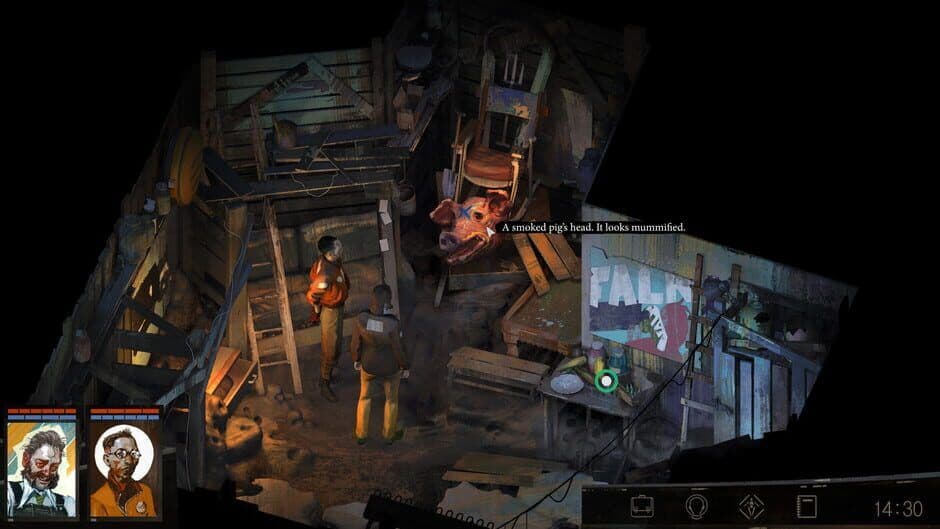
Dialogue is key to pursuing the Mazovian Socio-Economics thought.
Choose Communist Dialogue Consistently
During political conversations, select dialogue choices that support workers, criticize capitalists and the bourgeoisie, defend the Union, or reference Kras Mazov and revolutionary theory. These choices are the game’s main way of tracking your ideological direction, so prioritize consistency if your goal is to unlock communist content rather than mixing every political response you see.
You need to choose 4 or more dialogue options promoting socialism, supporting the Union, overthrowing the bourgeoisie, or similar ideas. Equipping the Revolutionary's Hat also counts toward this total. Once you have enough qualifying responses, Rhetoric contacts you about Mazovian Socio-Economics.
Unlock Mazovian Socio-Economics
Mazovian Socio-Economics is the communist thought in the Thought Cabinet. After enough communist dialogue choices, opt into it and research the thought to gain communist-themed bonuses and penalties. While internalized, left-wing dialogue options give +4XP, but the thought also applies –1 Visual Calculus and –1 Authority.
Research takes 3h 10m, so make sure you have enough time before advancing the day. You can forget Mazovian Socio-Economics later if its trade-off harms your build, but doing so means giving up its communist dialogue experience bonus. Trust me, it’s worth keeping during a communist-focused playthrough if you want to maximize political dialogue rewards.
Don’t rush to forget Mazovian Socio-Economics just because of its penalties. The +4XP from left-wing dialogue can add up quickly, especially across a long investigation.
Begin the Communist Political Route
To trigger the communist political vision quest, have Mazovian Socio-Economics in your Thought Cabinet before the third night, then go to bed on Day 3. During the dream sequence between Day 3 and Day 4, choose the option:
“I’m building communism for all. This time we won’t fail ... [Pursue thought.]”
When you wake up, accept the task Get yourself organised when Rhetoric offers it. This begins the communist political route and sends you toward a clandestine communist reading club.
Find Cindy the SKULL
At the apartment building roof in Martinaise, speak with Cindy the SKULL, a graffiti artist and communist sympathizer, who provides additional communist conversation and political context. Her dialogue helps you continue the search for communist contacts and points you toward the reading-club trail.
Follow the task objective after speaking with Cindy, then ask Call me Mañana about an “ideologo.” He provides the password: “Remember Dobreva and Abadanaiz.” You’ll need it to enter the communist meeting later.
The reading club is behind a locked metal gate at Capeside Apartments, accessible between 22:00 and 2:00. After entering, pass the white Composure check or take the alternative red Physical Instrument route if the check becomes available. The students will then give you A Brief Look at Infra-materialism; read it and speak with Steban, the Student Communist, to continue the quest.
Don’t leave this political vision quest until the last moment. The communist students eventually disappear after a later point in the main investigation, making Get yourself organised impossible to complete. Continue the objective before the final day, and you’ll have time to handle its conversations, checks, and optional matchbox-tower sequence.
Once you consistently choose communist responses, research Mazovian Socio-Economics, and accept the dream prompt, the route is active. From there, Cindy the SKULL and the reading club give you a clear path forward—keep following the quest before the investigation moves too far, and your Disco Elysium communist playthrough is underway.
How Communism Affects Dialogue in Disco Elysium
Communist dialogue in Disco Elysium turns political conversations into opportunities to argue about class, labor, and economic power. The route can strengthen your connection with workers, but it also creates friction with corporate figures—so choose your tone carefully when a conversation affects the investigation.

The game's art style reflects the internal struggle of political identity.
Communist Dialogue Bonuses and Rhetoric
Mazovian Socio-Economics is the key thought behind the communist dialogue route. Once internalized, communist dialogue can provide experience, while the thought imposes an Intellect-related penalty. Check the current thought text before finalizing your build, since that trade-off can affect how reliably you pass reasoning-based conversations.
Communist rhetoric becomes especially useful during worker, Union, and economic discussions. It unlocks anti-capitalist, class-conscious, and revolutionary responses, giving you more ways to frame the case around exploitation and class struggle. Use Rhetoric and Encyclopedia checks to support these arguments: Rhetoric helps you shape the debate, while Encyclopedia gives you historical and ideological context.
Don’t pick every revolutionary line automatically. Read the full response first—some choices may help your communist role-play but push a conversation away from the practical information you need.
How Workers and Political Opponents React
During Martinaise Harbour and Union conversations, communist rhetoric can make the detective seem sympathetic to workers. That stance may improve the atmosphere with Union-aligned characters, but it can antagonize corporate representatives who view the Union’s politics as a threat to their interests.
This contrast is most noticeable in conversations involving Evrart Claire, the Union leader at the Harbour union office, and Joyce Messier, the Wild Pines representative at the boardwalk container. Evrart is a natural opening for worker-focused arguments, while Joyce gives you a direct chance to challenge corporate power. Adapt your tone when questioning witnesses: you can remain committed to communist ideas without turning every exchange into an argument.
The Best Communist Conversation Route
Use the Evrart and Joyce encounters to build the route deliberately. Challenge corporate power, ask about workers and Mazovian history, then return to the political prompt when it appears. This keeps your responses consistent while still letting you gather context from both the Union and its corporate opposition.
If an accidental contradictory choice prevents progression, reload an earlier save and try the conversation again. Disco Elysium often makes ideological responses sound similar at a glance, so take a moment to check what each answer actually supports before selecting it.
With Mazovian Socio-Economics, strong Rhetoric and Encyclopedia checks, and a careful approach to the Harbour’s political conversations, you can pursue the communist route without needlessly damaging the rest of your investigation.
How to Adopt Fascism in Disco Elysium
Disco Elysium makes the fascist route tempting through sharp, provocative conversations rather than a single obvious switch. If you want to begin this political path, you’ll need to repeatedly choose nationalist, traditionalist, anti-communist, and authoritarian responses while keeping your detective’s role-play consistent.

Revachol's history influences the protagonist's political options.
Choosing Fascist Dialogue
During political conversations, select responses that praise national identity, hierarchy, tradition, and strong authority. These choices gradually build your fascist dialogue progression, but don’t confuse ordinary law-enforcement role-play with fascist options: acting like a strict detective or supporting police procedure alone isn’t enough. Read each response carefully and commit to the ideological choice when the game clearly offers one.
After enough nationalist or fascist dialogue choices, the Thought Cabinet unlocks Revacholian Nationhood. Internalize Revacholian Nationhood to pursue the fascist route, but check its description first and accept its skill trade-offs before committing. As with other political thoughts in Disco Elysium, this is a role-playing decision as much as a mechanical one.
⚠️ Watch out: Fascist dialogue can damage your rapport with characters who reject nationalist or authoritarian ideas. If you’re unsure whether you want this route, make a manual save before internalizing Revacholian Nationhood.
Measurehead’s Fascist Arguments
At the Harbour gate in Martinaise, speak with Measurehead, the source of fascist arguments in this encounter, to hear his racial-nationalist claims and decide how your detective responds. You can engage with his arguments to reinforce the fascist direction, or reject them if you’re testing the route without fully committing. His conversation is a useful opportunity to identify the game’s fascist rhetoric, but his pseudo-scientific hierarchy is not objective game advice—treat it as character ideology, not factual guidance.
Starting the Fascist Political Route
Once your fascist dialogue progression is sufficient, accept the relevant political thought or prompt when it appears. Follow the resulting political vision quest and track its objectives alongside the main investigation; choosing the prompt is the step that turns scattered fascist responses into an active route.
Make a save before accepting that commitment. Disco Elysium lets you experiment with political dialogue, but preserving a save gives you room to reconsider if the route’s consequences or skill trade-offs don’t suit your detective. With consistent nationalist choices, Revacholian Nationhood internalized, and the political vision quest accepted, you’re ready to continue the fascist playthrough.
How Fascism Affects Dialogue in Disco Elysium
In Disco Elysium, fascist role-playing turns ordinary questions about identity and history into confrontational political exchanges. The route can make the detective sound forceful and certain, but it also creates social friction quickly—especially when your rhetoric targets people who already live on the margins.

Characters in the game hold strong, often conflicting, political views.
How Fascist Dialogue Changes Your Options
Fascist and nationalist rhetoric appears in conversations about Revachol, race, history, and authority. Choosing these responses unlocks authoritarian and nationalist dialogue, giving you a more aggressive way to frame law, order, tradition, and national identity. When available, Encyclopedia, Logic, and Physical Instrument can support these arguments, although the game expects social penalties in return.
That trade-off is the heart of this Disco Elysium route. Your detective may gain access to blunt, domineering responses, but those choices can make witnesses less cooperative and cause other characters to dismiss or distrust you. Read the complete response before selecting it: a line that sounds like ordinary authority or police role-play may carry a distinctly fascist implication.
⚠️ Watch out: Fascist dialogue is not simply “being strict.” If a response is racist, xenophobic, or built around hierarchy, expect it to affect how people treat you afterward.
Revacholian Nationhood’s Trade-Offs
With Revacholian Nationhood internalized, the thought provides bonuses associated with fascist role-play while reducing selected social or reasoning effectiveness. Check the in-game description for exact values before committing to the thought, since those penalties can change how reliably you handle later conversations and skill checks.
This makes Revacholian Nationhood more than a source of extra flavor. It changes the feel of the detective’s build: you gain support for nationalist expression, but your overall effectiveness may suffer in the very social or reasoning situations needed to investigate the case. If you are only experimenting with fascist dialogue, save first so you can compare the consequences safely.
Reactions from Immigrant and Marginalized Characters
Across the Martinaise streets, Harbour, and fishing village, fascist or xenophobic dialogue can close rapport and produce hostile or dismissive reactions from immigrant and marginalized characters. You may lose access to a more open conversation, receive less useful cooperation, or turn a questioning scene into an argument.
Use neutral questioning when preserving cooperation matters. You do not have to abandon the fascist route entirely, but separating ideological experimentation from essential investigation conversations can prevent avoidable problems. In Disco Elysium, the strongest political line is not always the best investigative line.
Avoiding Accidental Fascist Progression
If you are pursuing another ideology, reject racist prompts explicitly when pursuing another ideology. Do not select a nationalist response just because it seems like the fastest way to end an uncomfortable exchange—repeated choices can push the detective toward the wrong thought route.
Before confirming a political response, inspect the dialogue tag and reload a manual save if the wrong thought route is triggered. This is especially useful when you are testing multiple political positions early in a playthrough. With careful saves and neutral questioning where it counts, you can explore Disco Elysium’s fascist dialogue without letting one bad choice derail your intended role-play.
How to Adopt Moralism in Disco Elysium
In Disco Elysium, the moralist route is the quiet middle path—but “quiet” doesn’t mean consequence-free. You’ll build it by consistently favoring compromise, procedure, and institutional stability over revolutionary change.

Revachol's complex social structure.
Choosing Moralist Dialogue
During political discussions, select moderate, centrist, procedural, and compromise-focused responses repeatedly. When the game offers a choice between radical action and preserving order, favor stability and institutional order over revolutionary change. These choices gradually establish your detective as someone who trusts negotiation and systems more than ideological upheaval.
Head to Martinaise’s boardwalk container to speak with Joyce Messier, the Wild Pines representative, and ask about the Coalition and Moralintern. Her explanation gives you the institutional basis of moralism, helping you understand the Coalition-aligned position before you commit to it through later dialogue.
Read the entire response before selecting it. Some options sound neutral but lean toward another ideology, while a procedural answer can quietly reinforce the moralist route.
Unlocking Kingdom of Conscience
After enough moralist dialogue choices, Kingdom of Conscience becomes available in the Thought Cabinet. Internalize Kingdom of Conscience to pursue the moralist route and receive its associated skill effects. As with the other political thoughts, check whether those effects fit your current build before committing.
To begin the moralist political route, accept Kingdom of Conscience or the related political prompt after your moralist dialogue progression. Then complete the resulting vision-quest objective before the finale; accepting the route is only the starting point, not the finish line.
Keep advancing the murder investigation while you work through the moralist content. With consistent moderate responses, Kingdom of Conscience secured, and the vision-quest objective completed in time, you’ll have fully established your Coalition-aligned identity in Disco Elysium.
How Moralism Affects Dialogue in Disco Elysium
Moralism in Disco Elysium turns political conversations into a test of restraint. Instead of pushing revolution, nationalism, or profit, you argue for procedure, compromise, and institutional stability—an approach that can keep doors open while making more radical characters question your courage.

NPCs provide feedback on the player's moderate or radical statements.
Moralist Rhetoric and Dialogue Choices
During conversations about government, law, compromise, and political violence, Moralist rhetoric unlocks measured institutional responses. These options let you defend a procedural position rather than escalating the argument or siding with an extreme faction.
Your best tools are Authority, Rhetoric, and Logic. Authority helps you present order as necessary, Rhetoric lets you frame compromise persuasively, and Logic supports arguments built around rules and practical consequences. Read each response carefully: a calm answer may advance the moralist route, while an apparently neutral statement can still lean toward another political idea.
When several political tags appear, choose the response that emphasizes compromise or lawful process. This keeps your detective’s role-play consistent without forcing you into an aggressive ideological persona.
Kingdom of Conscience Effects
If Kingdom of Conscience is internalized, it changes selected skill performance and enables moralist flavor dialogue. Those effects can make certain institutional arguments more accessible, but they also represent a stronger commitment to the moralist worldview.
Before keeping the thought, weigh its passive benefits against that ideological commitment. If you are trying to remain flexible, continue acknowledging competing viewpoints before internalizing it; if you want a clearly moralist detective, the additional flavor dialogue helps reinforce that identity throughout Disco Elysium.
NPC Reactions to Moralism
At Joyce's container in Martinaise, speak with Joyce, the Wild Pines representative, during her explanation of the Coalition and Moralintern. Calm institutional language generally receives a more favorable response from Coalition and institutional representatives, especially in later political conversations. You come across as someone willing to work within existing structures rather than immediately demanding upheaval.
That same approach can frustrate revolutionary characters. They may view your moderation as complacency or an unwillingness to confront injustice, so do not expect every conversation to become friendlier just because you avoided an extreme position. Moralism often preserves cooperation with institutions while creating emotional distance from characters who want decisive political change.
Staying Neutral While Pursuing Moralism
To maintain a neutral detective while pursuing moralism, acknowledge competing viewpoints during your investigations. Avoid extreme communist or fascist commitments, and choose the moderate response when the game presents multiple political tags. You can recognize the problems raised by radical characters without adopting their solutions.
This approach works especially well if you want Disco Elysium’s detective role-play to remain focused on the case. You can pursue moralist dialogue and Kingdom of Conscience without treating every witness as an ideological opponent. Keep your answers measured, defend procedure with Authority, Rhetoric, and Logic, and let the investigation—not political grandstanding—drive your decisions.
Moralism will not make every NPC like you, but it gives your detective a steady institutional voice. With calm choices and a willingness to compromise, you can pursue the route while keeping the case—and your relationships—under control.
How to Adopt Ultraliberalism in Disco Elysium
In Disco Elysium, the ultraliberal route begins with a tempting question: what if every problem can be solved with better deals, bigger profits, and fewer taxes? If you want to play the detective as a market-minded opportunist, your dialogue choices matter more than your character build.

Politics are woven into every aspect of the narrative.
Choosing Ultraliberal Dialogue
During economic and political conversations, select pro-market, entrepreneurial, profit-focused, and anti-tax responses repeatedly. Look for answers that emphasize personal advancement, business opportunities, capital, and financial rewards. These choices build your ultraliberal dialogue progression over time.
Keep the distinction clear: ultraliberalism is your detective’s developing worldview, while Joyce Messier represents a specific corporate perspective. You can agree with her arguments for role-playing purposes without treating every Wild Pines position as your own.
Read the entire response before choosing it. Some options sound practical or law-enforcement focused but do not necessarily advance the ultraliberal route.
Speaking with Joyce Messier
At the boardwalk container in Martinaise, speak with Joyce Messier, a Wild Pines representative, to discuss markets, capital, and the mercenary situation. Her conversation gives you a clear opportunity to examine corporate power from the inside. You can echo her position by choosing responses that support markets and private wealth, or challenge her while still pursuing a profit-focused identity elsewhere.
That flexibility helps you role-play without accidentally abandoning the route. The key is consistency across your broader political conversations: repeatedly favor economic self-interest, entrepreneurship, and opposition to taxation rather than mixing those choices with a sustained anti-capitalist position.
Unlocking the Ultraliberal Route
After ultraliberal dialogue progression, accept Indirect Modes of Taxation or its associated prompt. Indirect Modes of Taxation, found through the Thought Cabinet, unlocks after enough ultraliberal dialogue choices. Internalize it to pursue the ultraliberal route and receive its money-related effects.
Once you accept the thought, follow the political vision quest before the ending sequence. Do not treat the thought as the finish line—the quest is the payoff for committing to the route and must be completed alongside the main investigation.
With the right economic choices, Indirect Modes of Taxation, and the associated vision quest underway, your Disco Elysium detective is firmly on the ultraliberal path. Keep leaning into profit, markets, and anti-tax rhetoric, and you’ll see the route through.
How Ultraliberalism Affects Dialogue in Disco Elysium
In Disco Elysium, ultraliberal dialogue turns every conversation into a potential transaction. Money, business, taxes, and personal advancement become opportunities to sound ambitious—but the wrong promise can cost you cooperation when you need it most.

Ultraliberalism is one of several ideologies players can adopt.
Profit-Driven Dialogue and Skill Checks
When discussions about money, business, taxes, and personal advancement appear, choose entrepreneurial and profit-oriented responses to unlock more ultraliberal rhetoric. These options let you frame decisions around investment, individual success, and financial gain rather than ideology or solidarity.
Use Drama, Rhetoric, and Logic to sell the argument. Drama can help you perform confidence, Rhetoric can make the pitch persuasive, and Logic can support the practical side of your reasoning. You don’t need every check to follow this route, but keeping those skills viable gives you more ways to push a profit-focused response.
How Indirect Modes of Taxation Changes Your Money
If you internalize Indirect Modes of Taxation, ultraliberal dialogue can reward you with money. That extra cash makes profit-oriented choices feel immediately useful, especially when you’re trying to fund the detective’s other needs. The thought also imposes a corresponding skill penalty, so the financial benefit comes with a real trade-off.
Confirm the current in-game description for Indirect Modes of Taxation before optimizing your build. Its money reward may look tempting, but the accompanying skill penalty can affect the checks you rely on most.
NPC Reactions in Martinaise
In Martinaise, Joyce Messier at the boardwalk container, the Wild Pines representative, may respond well when you echo a corporate and profit-focused perspective. Evrart Claire at the Harbour union office, the Union leader, represents a different audience: aggressive financial opportunism can make worker-centered conversations harder to manage. Dockworkers and local residents may see these responses as alienating or opportunistic rather than clever.
That contrast is the heart of the ultraliberal route in Disco Elysium. Business representatives may be impressed by your confidence, while working-class characters may question whether you’re helping them or simply looking for your next payout. Read the full response before committing—some options earn money but weaken your ability to build trust.
Keep the Investigation on Track
Use ultraliberal rewards without losing objectives by collecting available money or profit opportunities during political conversations, then finishing required investigations first. Cash is helpful, but it should support the case rather than replace it. Avoid promising financial outcomes that prevent cooperation, particularly when a witness or local resident is still needed for the investigation.
The best approach is flexible: take the money when it’s available, but switch to a more cooperative tone when the case demands it. With Drama, Rhetoric, and Logic supporting your pitches—and careful attention to the cost of Indirect Modes of Taxation—you can enjoy the financial upside of ultraliberal dialogue without letting a quick profit derail your Disco Elysium playthrough.
How Political Alignments Change NPC Reactions in Disco Elysium
The political choices in Disco Elysium don’t just change your detective’s internal monologue—they alter the temperature of conversations across Martinaise. A revolutionary line can build trust with one witness and destroy it with another, while a careful, neutral approach may reveal more than ideological consistency.
How Key NPCs React to Your Alignment
Kim Kitsuragi at Whirling-in-Rags in Martinaise and other investigation locations is your Lieutenant and partner. Kim reacts to extreme political role-play with skepticism, but he generally prioritizes solving the case over judging every belief your detective expresses. You can push an ideology around him, but don’t assume that political approval—or disapproval—replaces the partnership’s practical demands.
The Deserter at the island fortification in the Fishing Village is a former communist soldier and key murder suspect. He provides communist historical context and reacts strongly to political and ideological questioning, making your wording especially important during this late investigation conversation. Aligning yourself with communist ideas may create more conversational openings, but aggressive or poorly chosen questions can still affect how much useful information you obtain.
Gary, the Cryptofascist at the Whirling-in-Rags basement area in Martinaise is a cryptofascist dockworker and witness who can provide information during the investigation. Respond carefully to fascist-coded conversation: matching his worldview may keep him engaged, but ideological role-play can also steer the exchange in unhelpful directions. Treat Gary as a witness first and an opportunity for alignment dialogue second.
Relationship Versus Alignment
Your alignment changes the tone and available lines in NPC conversations, but it does not replace core skill checks or every quest requirement. A communist, fascist, moralist, or ultraliberal response may open a different angle on a witness, yet you still need the relevant skills and investigation progress to move the case forward.
That distinction matters most when a witness holds information you need. If ideological consistency starts damaging rapport, switch to neutral questioning rather than forcing another political statement. In Disco Elysium, preserving cooperation can be more valuable than advancing your preferred alignment by one more conversation choice.
Before committing to an extreme response, ask yourself whether you’re talking to a political ally or an important witness. With Gary, The Deserter, and other investigation contacts, information is often the better reward.
Kim’s skepticism, The Deserter’s intensity, and Gary’s fascist-coded conversation show the central trade-off clearly: political role-play shapes relationships, but it should support your investigation rather than bury it. Read the room, protect useful rapport, and you’ll get more from Martinaise’s most revealing conversations.
How to Complete Political Vision Quests in Disco Elysium
The political vision quests are where Disco Elysium turns your earlier ideological choices into a focused role-playing challenge. Once an ideology is sufficiently developed, you can commit to its quest—but choose carefully, because only one ideological route can be pursued in a playthrough.
Accepting a Political Vision Quest
After the relevant ideology is sufficiently developed, choose the offered political prompt to accept its political vision quest. Read the objective immediately; it tells you which location and conversations matter next. The four ideology-specific quests follow the same basic structure, even though their dialogue and role-playing themes differ.
Accepting the quest locks your playthrough into that route for political-quest purposes. You can still complete the main murder investigation and make other choices, but you cannot pursue multiple ideological vision quests in the same playthrough.
Managing the Political Vision-Quest Time Limit
After accepting the political quest, complete its location and conversation objectives before the final investigation sequence. The game does not give you unlimited time to put the quest aside and return whenever you like, so check the quest log after each objective and follow its next step.
This timing rule does not mean you should abandon the murder investigation. Treat the political quest as a parallel objective: advance the case, visit the required location when the quest directs you there, and finish the relevant conversations before entering the final investigation sequence.
Keep a manual save before accepting the political quest. It gives you room to test the route without risking an entire playthrough if the objectives or dialogue checks go badly.
Recovering From Failed Checks
A failed political check does not automatically end the route. Use clothing, drugs, thoughts, or level-up points to improve the required skill, then retry when the game allows rather than abandoning the route. This is especially useful when a conversation contains a check that blocks the next vision-quest objective.
Before retrying, review what you can change without committing to an unwanted thought or sacrificing a useful build option. In Disco Elysium, preparation can turn a failed check into a manageable obstacle, so do not assume the first failure is permanent.
Fixing an Unwanted Alignment
If you realize you are heading toward the wrong alignment before internalizing the political thought, reload the manual save and choose a different response. This is the cleanest way to redirect your character before the commitment becomes part of the playthrough.
After commitment, you can continue the route or accept that political choices are role-playing consequences rather than a hard game-over. The game does not require you to play perfectly; an uncomfortable alignment can create different dialogue and character moments while the main investigation continues.
With the quest log guiding your objectives, a manual save protecting your choices, and a plan for failed checks, you can complete any of the four political vision quests without derailing your Disco Elysium investigation. Choose your route deliberately, but do not panic when the detective makes a bad call—that is part of the experience.
Political Alignment Rewards and Equipment in Disco Elysium
In Disco Elysium, political role-play pays off through dialogue, thoughts, and temporary advantages—not a shiny sword or a traditional armor set. The real reward is having more ways to express your detective’s ideology, but every bonus comes with trade-offs you’ll want to manage carefully.
Manage Your Thought Cabinet Slots
A Thought Cabinet slot is one of the most important resources for political builds. On the character screen, the Thought Cabinet stores your researched ideological thoughts, and each internalized political thought occupies a slot. If a thought no longer fits your build, you can forget it for skill points, so manage slots before adopting a new ideology.
That flexibility matters when you’re experimenting with political alignments in Disco Elysium. Don’t internalize a thought simply because it matches your role-play; check its effects first and decide whether the bonuses justify the penalties. Freeing a slot later can help you adapt, but it may also undo a useful effect you were relying on for dialogue checks.
Keep a manual save before internalizing a major political thought. It gives you room to test the effect without permanently reshaping your build.
Use Political Skill Clothing
Political skill clothing can make or break an ideological dialogue check. In Martinaise, check shops, containers, and NPC rewards for clothing that raises or lowers the skills tied to political conversations. Before retrying a conversation, equip the relevant bonus so your detective enters the check with the strongest possible setup.
Clothing is especially useful when you want to preserve flexibility instead of spending skill points immediately. A single wardrobe change can support the reasoning, authority, rhetoric, or other skill requirement behind a political response. In Disco Elysium, the right outfit often matters more than forcing an awkward level-up.
Prepare Skill-Boosting Drugs
Skill-boosting drugs offer another way to handle difficult political checks. In Martinaise, look for them in pharmacies, shops, and exploration finds. These temporary substances can alter Physique or Psyche checks used in political conversations, letting you reach a response or retry an opportunity that would otherwise be out of reach.
Their supply is limited, and side effects can create problems elsewhere, so don’t spend them casually. Check which attribute the conversation uses, account for the side effects, and take the substance only when the result is worth the cost. This approach keeps your Disco Elysium political build prepared without wasting consumables on checks that do not affect your route.
What Political Progress Actually Rewards
Political dialogue and thought bonuses are the main rewards for alignment progression. As your chosen ideology develops, you unlock ideology-specific lines, thought effects, and a political vision quest rather than a conventional weapon or armor reward. Record the trade-off before committing, because a useful dialogue bonus may come with a skill penalty or limit how you want to role-play later.
That makes political rewards in Disco Elysium more about access than raw power. Clothing and drugs help you pass individual checks, while thoughts and dialogue progression shape the kinds of answers available throughout the investigation. With your Thought Cabinet slots planned, the right political skill clothing equipped, and skill-boosting drugs saved for crucial moments, you’re ready to get the most from your chosen alignment.
How to Finish a Political Alignment Playthrough in Disco Elysium
The political vision quest is only one thread in Disco Elysium—the murder investigation remains your main route to the ending. Finish your ideological objectives without letting political role-play pull you away from the case.
Keep the Murder Investigation Moving
Continue the investigation through Martinaise, including the Whirling-in-Rags, Harbour, church, Fishing Village, and island. Progress the case alongside your political objectives, and never replace mandatory investigation steps with political role-play. If a conversation gives you an ideological option, take it when it fits your route, but return to your case objectives afterward.
The Church of the Dancers is an abandoned church on the coast and a major investigation location with political and conceptual dialogue. Complete its relevant tasks before the final sequence; leaving them unfinished can cost you useful investigation progress and optional conversations.
Next, reach the Fishing Village, a settlement on the southeast coast beyond the church. It contains the washerwoman, a village resident you may need to speak with for late-game investigation objectives, and provides access toward the island. Use the Fishing Village to advance your late-game investigation objectives before moving on.
⚠️ Watch out: Political vision quests are time-sensitive in practice because the final investigation sequence can cut off unfinished content. Don’t treat the vision quest as a substitute for investigating the murder.
Final Pre-Endgame Checklist
Before traveling to the final investigation area, make one last pass through your journal and Thought Cabinet:
- Confirm that you accepted only the political vision quest you intend to finish.
- Check the quest log for any remaining political vision-quest location or conversation objectives.
- Complete the chosen political vision quest before the final investigation sequence.
- Finish optional NPC conversations while those characters and locations are still accessible.
- Confirm that your murder investigation has progressed through the required areas, including the Church of the Dancers and Fishing Village.
- Check the quest log before the point of no return. In the late game, review the journal and thought/quest screens, finish the chosen political vision quest and optional NPC conversations before traveling to the final investigation area.
If you fail a political check, use the preparation tools covered earlier—clothing, drugs, thoughts, or level-up points—when the game allows a retry. Disco Elysium rewards thorough detectives, so don’t rush past a blocked objective simply because your alignment route is nearly complete.
With the murder case advanced, the Church of the Dancers and Fishing Village checked, and your political vision quest finished, you can enter the final stretch of Disco Elysium without leaving major alignment content behind. Take that last save, review the log, and move forward with confidence.
How Political Alignments Work in Disco Elysium: Final Comparison
Disco Elysium does not have a universally best political alignment. Each route changes your dialogue options, character reactions, thought effects, and vision-quest content, so the right choice depends on the kind of detective you want to role-play—not on a hidden “optimal” ending.
Communism: Revolutionary Role-Play
Choose Communism for a full playthrough if you want to prioritize worker solidarity, anti-capitalist analysis, and communist dialogue. This route suits a detective who frames the case through class, exploitation, and revolutionary history.
You’ll need to accept skill trade-offs for revolutionary role-play and communist vision-quest content. The payoff is a strongly themed set of conversations and a consistent ideological identity, but that commitment can make some interactions with corporate or establishment characters more difficult.
Fascism: Nationalism and Authority
Choose Fascism for a full playthrough if you want to prioritize nationalism, hierarchy, and authoritarian responses. This approach turns your detective toward traditionalism, order, and anti-communist rhetoric.
You’ll need to accept hostile reactions and thought penalties for fascist role-play and its vision-quest content. Fascism can create memorable, confrontational conversations, but it is the least forgiving route socially: marginalized characters and politically opposed NPCs may react poorly to your choices.
Moralism: Stability and Compromise
Choose Moralism for a full playthrough if you want to prioritize compromise, institutional stability, and Coalition-oriented responses. This route favors measured answers, procedural thinking, and maintaining order instead of pushing for revolutionary change.
You’ll need to accept perceived passivity in exchange for moderate dialogue and moralist vision-quest content. Moralism is a good fit if you want a detective who values practical compromise, though revolutionary characters may interpret that restraint as complacency.
Ultraliberalism: Profit and Opportunity
Choose Ultraliberalism for a full playthrough if you want to prioritize markets, profit, and entrepreneurial responses. Your detective approaches conversations through personal advancement, business, and economic opportunity.
You’ll use money-related thought effects while accepting opportunistic NPC reactions and ultraliberal vision-quest content. This route can make your detective sound confident and commercially minded, but profit-focused responses may impress business representatives while alienating workers or making you seem opportunistic.
Pick the alignment that matches the detective you want to play, then stay consistent. Chasing every available response can dilute the role-play and make the route’s dialogue feel less coherent.
| Alignment | Best for | Main trade-off |
|---|---|---|
| Communism | Worker solidarity and revolutionary role-play | Skill trade-offs and tension with corporate characters |
| Fascism | Nationalism, hierarchy, and authoritarian role-play | Hostile reactions and thought penalties |
| Moralism | Compromise and institutional stability | Perceived passivity |
| Ultraliberalism | Markets, profit, and entrepreneurial role-play | Opportunistic NPC reactions |
The key difference in Disco Elysium is not which alignment gives you the strongest detective. It’s how each ideology changes the way your detective interprets Revachol, handles conversations, and responds to the people around him. Choose one route, accept its drawbacks, and let the consequences shape your investigation.
With that mindset, you’re ready to finish your Disco Elysium playthrough on your own terms—whether you become a revolutionary, authoritarian, moderate, or entrepreneurial detective.