
Introduction: Ranking the Best Thoughts in Disco Elysium
The Thought Cabinet is where Disco Elysium turns Harry Du Bois’s identity crisis into a character-building system. Across the game’s 53 Thoughts, almost any conversation, political impulse, personal failure, or bizarre act of self-sabotage can become a permanent idea in Harry’s head. Internalizing one may improve a skill, raise a learning cap, generate XP or money, unlock new dialogue, or reshape how Harry understands himself—and it may also impose a penalty that lasts long after the research period ends.
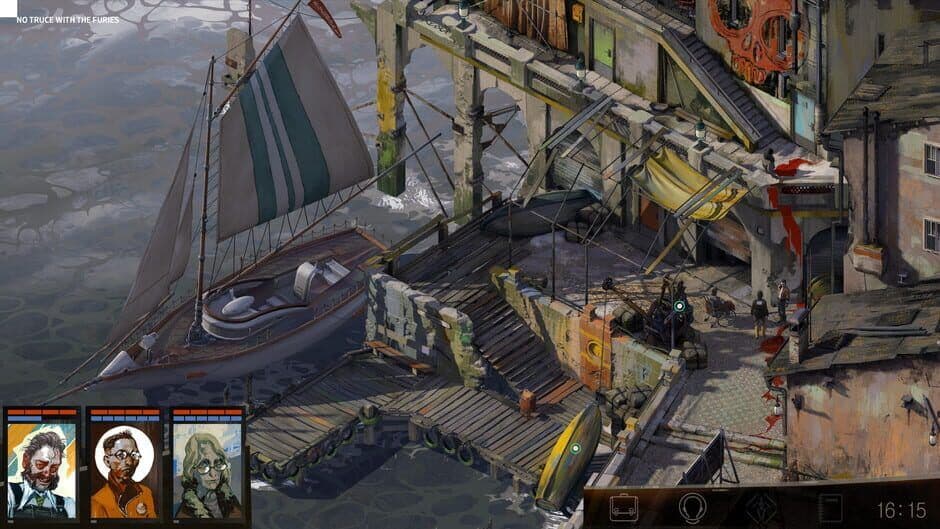
The Thought Cabinet is central to character progression and skill management.
This ranking judges Thoughts by more than the size of their bonuses. The most important criteria are:
- Practical gameplay value: How consistently the Thought helps across investigations, conversations, exploration, and skill checks.
- Character progression: Whether it produces XP, raises learning caps, improves leveling efficiency, or supports long-term skill growth.
- Skill-check impact: How broadly useful its bonuses are, rather than whether they apply only to one rare encounter.
- Narrative and dialogue utility: Whether the Thought creates meaningful interactions or reinforces Disco Elysium’s central themes of identity, ideology, memory, and self-deception.
- Resource generation: How effectively it helps Harry build up reál, maintain morale, or otherwise stretch limited resources.
- Accessibility and timing: How early the Thought can be discovered, how difficult its unlock conditions are, and whether its benefits arrive before they matter.
- Opportunity cost: The Thought Cabinet has limited space, internalization takes in-game time, and negative effects can interfere with a carefully planned build.
That last point matters because there is no single “correct” Thought Cabinet. A Thought that is excellent for an Encyclopedia-heavy intellectual may be awkward for a physical, drug-fueled detective; a relationship-focused player may value a Kim-specific bonus more than a source of passive income. Some Thoughts are also tied to particular copotypes, ideologies, or roleplaying choices, so pursuing the strongest mechanical option can mean abandoning another path entirely.
The rankings therefore favor broadly useful Thoughts that provide value throughout a playthrough, especially those that improve progression or reward normal exploration. Build-specific alternatives still receive recognition where their specialized benefits are powerful enough to justify a slot. Expect light spoilers for unlock routes, character interactions, and the kinds of choices that reveal certain Thoughts—but not a full plot summary.
With only three Thought Cabinet slots at the beginning and skill points required to expand the cabinet or forget a mistake, every idea Harry adopts should earn its place. These are the Thoughts most likely to make him a sharper detective, a richer disaster, or—ideally—both.
8. The Jamrock Shuffle
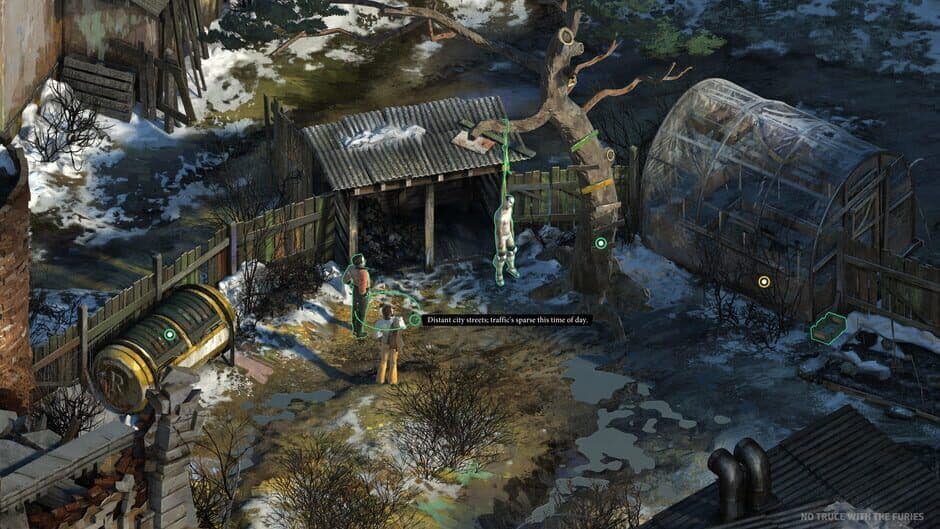
The Jamrock Shuffle helps players find extra items in cluttered areas.
8. The Jamrock Shuffle
Why it’s here: The Jamrock Shuffle is one of the best Thoughts for detectives who treat Martinaise like an open-air treasure chest. After researching it, Harry finds better loot in locked containers—effectively improving the money and items gained from exploration—and the Thought can pay for itself over a long scavenging-heavy playthrough. However, it ranks below Thoughts that provide reliable XP, direct skill increases, or bonuses to story-critical checks. Its value depends on how much optional exploration and lockpicking you do, rather than activating every time Harry makes a passive check or clicks an orb.
- Permanent effect: Locked containers provide better loot, making break-ins and hidden caches more rewarding. This is especially useful for finding extra reál and supplies while thoroughly exploring Martinaise.
- Temporary effect: Researching the Thought imposes -1 Esprit de Corps until internalization is complete. The penalty is manageable, but it can make certain police- and Kim-related checks slightly less comfortable during the research period.
- Internalization time: 1 hour and 5 minutes, a relatively short investment compared with Thoughts such as The Bow Collector or The Fifteenth Indotribe.
- Unlock requirements: Open three locked doors or residences, generally with at least 2 Savoir Faire to make this route practical. The Thought reflects Harry’s old habit of breaking into places—not exactly respectable detective work, but very on-brand.
The main strength of The Jamrock Shuffle is that it rewards behavior you may already be performing. Locked apartments, containers, and back rooms often contain money, useful items, or small pieces of world-building, so the Thought turns curiosity and criminal trespass into a more profitable routine. It is particularly effective for low-income runs, completionists, and players who want to search every corner rather than rush from objective to objective.
Its weakness is opportunity cost. Unlike Jamais Vu, it does not generate XP from every orb; unlike Wompty-Dompty Dom Centre, it does not pay out from repeated Encyclopedia passives; and unlike The Fifteenth Indotribe, it does not offer a dependable income stream from green orbs. If Harry is not investing in exploration, or if most of the remaining locked containers have already been opened, the Thought may occupy a valuable Cabinet slot without producing much in return.
Best use case: Internalize The Jamrock Shuffle early for an exploration-heavy, cash-strapped detective who plans to break into every accessible room and inspect every container. It is less essential for skill-check-focused builds, but an excellent practical choice when your version of detective work includes plenty of “investigating” locked doors.
7. Fairweather T-500
Exploring the gritty streets of Disco Elysium.
7. Fairweather T-500
Why it’s here: Fairweather T-500 is one of Disco Elysium’s most specialized combat Thoughts. Its permanent effect grants +2 Hand/Eye Coordination against enemies wearing Fairweather T-500 armor, making it exceptionally valuable during the Mercenary Tribunal—but almost irrelevant everywhere else. It takes 3 hours and 30 minutes to internalize, with a temporary -1 Savoir-Faire penalty while Harry researches it. That narrow payoff places it below broadly useful Thoughts such as Jamrock Shuffle, but the Tribunal is dangerous enough that preparation can still make this a smart defensive pick.
How to unlock it: Harry must find and equip a piece of Fairweather T-500 armor. Possible routes include recovering the greaves from the Hanged Man, obtaining the cuirass from Gary, or investigating the armor connected to the sand-castle sequence. Once Harry has examined and worn one of the pieces, the Thought becomes available in the Thought Cabinet.
Strengths: The +2 Hand/Eye Coordination bonus applies specifically against the heavily armored mercenaries at the Tribunal, improving Harry’s chances in the encounter’s decisive firearm and combat-related checks. Unlike a general skill increase, this bonus arrives exactly where failure can have severe consequences for Harry, Kim, and the investigation. It is therefore particularly useful for low-Motorics detectives, characters who neglected Hand/Eye Coordination, or players attempting the Tribunal without relying heavily on drugs, equipment, or save-scumming.
Drawbacks: Fairweather T-500 is effectively dead weight outside that confrontation. It does not improve ordinary Hand/Eye Coordination checks, dialogue, exploration, or investigation, and its -1 Savoir-Faire research penalty can temporarily hurt mobility and Motorics-related checks. Spending a Thought slot and a skill point on a bonus that affects only one encounter also carries a substantial opportunity cost—especially when the same slot could generate recurring XP, money, healing, or skill-cap benefits. Internalizing it too early can be awkward, while researching it immediately before the Tribunal requires careful time management.
Best use case: Treat Fairweather T-500 as a pre-Tribunal safety net rather than a core build Thought. It is best for fragile or poorly prepared detectives who need to shore up Hand/Eye Coordination before the game’s most dangerous confrontation. Stronger Motorics builds may prefer a more versatile Thought, but if the Tribunal is approaching and Harry’s gunplay is questionable, this specialized defensive boost can be the difference between a controlled showdown and a catastrophe.
6. Ace’s High or Ace’s Low
Why they’re here: Ace’s High and Ace’s Low are less about raw power than almost any other top-ranked Thought. Their real reward is a stronger partnership with Kim Kitsuragi, unlocking warmer partner dialogue and making Harry’s most important professional relationship feel more genuine. Both are excellent for role-play, but Ace’s Low ranks higher because it offers the stronger Empathy bonus when the required Interfacing check is available.
The importance of Kim's approval in role-play scenarios.
Ace’s High
Bonuses: +1 Empathy toward Kim Kitsuragi and +1 Esprit de Corps after internalization
Unlock condition: Shoot down the Hanged Man, then give Kim a high-five
Research time: 2 hours 45 minutes
Best for: New players, balanced detectives, and role-players building a respectful partnership with Kim
Ace’s High is the reliable version of the Thought. After the tense Hanged Man sequence, Harry can celebrate with Kim by offering a high-five, creating one of the game’s rare moments of uncomplicated camaraderie. The resulting permanent bonuses—+1 Empathy toward Kim and +1 Esprit de Corps—support both sides of the relationship: Harry reads his partner better, while Esprit de Corps strengthens his connection to the RCM and its institutional perspective.
Its greatest advantage is accessibility. There is no demanding skill threshold beyond successfully handling the Hanged Man sequence, and the Thought does not force a particular political, intellectual, or chemical build. A detective focused on Logic, Physical Instrument, or even chaotic Inland Empire can still benefit from it. The temporary research effect also improves Harry’s Empathy toward Kim while the Thought is being internalized, rather than imposing a damaging stat penalty elsewhere.
The drawback is simply that Ace’s High leaves value on the table. Its Empathy increase is helpful, but Ace’s Low can provide twice as much in that category. It also occupies a Thought Cabinet slot that could be used for a broad economic or experience-generating Thought, so its appeal depends on whether relationship-building matters more to the player than optimization.
Takeaway: Choose Ace’s High when you want the dependable, low-investment route to a better partnership with Kim—and when your build cannot comfortably spare points for Interfacing.
Ace’s Low
Bonuses: +2 Empathy toward Kim Kitsuragi and +1 Esprit de Corps
Unlock condition: Give Kim the high-five after shooting down the Hanged Man, then successfully follow up with the “down low” using Interfacing 5 or higher
Research time: 2 hours 45 minutes
Best for: Motorics-focused detectives, relationship-first role-players, and players willing to invest in Interfacing
Ace’s Low follows the same celebratory scene but adds a second layer of trust. Harry must not only high-five Kim, but correctly read the moment and complete the “up high, down low” exchange. That extra beat requires Interfacing 5 or higher, making the Thought more demanding than Ace’s High but also more rewarding.
The permanent +2 Empathy toward Kim is the key advantage. Empathy is especially valuable in conversations with Kim, where understanding his restraint, skepticism, and occasional flashes of humor can produce better partner dialogue. Ace’s Low also retains the +1 Esprit de Corps benefit associated with the Ace thoughts, so it improves Harry’s personal rapport without losing the broader RCM connection. Mechanically, it is a modest bonus; narratively, it reinforces the idea that Harry is learning how to meet Kim on his wavelength rather than merely asking him to tolerate another disaster.
The cost is mostly opportunity cost. Reaching Interfacing 5 may require several skill points or a Motorics-oriented build, and those points could instead improve Hand/Eye Coordination, Savoir Faire, or Reaction Speed. Players who are not investing in Interfacing may never get the chance to attempt the down-low, while players pursuing a deliberately formal, distant, or antagonistic Harry may find the Thought’s role-playing payoff less appealing. Like Ace’s High, it has no significant permanent downside, but its benefit is narrow: it improves one relationship rather than the detective’s overall economy, experience gain, or check coverage.
Takeaway: Choose Ace’s Low whenever you can meet the Interfacing requirement. It is the superior Kim-focused option, offering the stronger Empathy bonus while preserving the same Esprit de Corps reward.
Which Ace Thought Should You Choose?
The two variants are mutually exclusive in practice: the same celebration determines whether Harry stops at the high-five or has enough Interfacing to complete the down-low. Their research time is identical, and neither imposes the kind of damaging permanent penalty found on many specialized Thoughts. The decision therefore comes down to access and role-play:
- Pick Ace’s High if you want a straightforward reward, are not building Interfacing, or prefer Harry’s relationship with Kim to develop through simple professional warmth.
- Pick Ace’s Low if you have Interfacing 5 or higher and want the maximum relationship bonus. It is particularly fitting for a Motorics-heavy, socially perceptive, or partnership-focused detective.
- Skip both only if your Thought Cabinet is under severe pressure and you are pursuing a highly optimized experience, money, or skill-cap build. Their bonuses are narrow, but the dialogue and Tribunal-adjacent relationship value make them more meaningful than their numbers suggest.
Final verdict: Ace’s High is the safer and more accessible choice, but Ace’s Low is better whenever the Interfacing check is available. It turns the same small gesture into a stronger bond with Kim—exactly the kind of personal, character-driven advantage that makes the Thought Cabinet more than a conventional perk system.
5. The Bow Collector
Why it’s here: The Bow Collector is one of Disco Elysium’s best plot-oriented Thoughts because it directly strengthens Shivers, the skill that lets Harry hear Revachol’s hidden voices and uncover details other detectives might miss. Its +3 Shivers bonus is unusually large, and it can make a difficult later Shivers check in the investigation far more manageable. Unlike money- or XP-focused Thoughts, its value is tied to atmosphere, discovery, and story progression—making it especially rewarding for players who want to lean into the city’s supernatural personality.
Navigating the complex urban landscape of Martinaise.
The payoff: +3 Shivers
Once fully internalized, The Bow Collector grants +3 Shivers. That is a substantial boost to a skill that can otherwise be difficult to raise reliably, particularly for detectives who did not invest heavily in Physique. Shivers checks are not merely optional flavor: they can reveal hidden information, provide unusual investigative leads, and contribute to one of the game’s more important late-investigation moments.
That makes The Bow Collector more plot-relevant than a conventional stat Thought. A bonus to Hand/Eye Coordination might help with a particular physical action, but +3 Shivers can change how Harry experiences Martinaise itself. For a Shivers-heavy detective, this Thought is less about becoming stronger on paper and more about ensuring that the city keeps talking.
The cost: a long research period and awkward penalties
The drawback is that The Bow Collector takes 6 hours and 10 minutes to internalize, placing it among the more time-consuming Thoughts in the game. During research, Harry suffers -1 Authority and -1 Hand/Eye Coordination. Those penalties can matter if you are trying to pass checks in the same stretch of the investigation, especially if your build already relies on either skill.
The important distinction is that these are research penalties, not the Thought’s lasting reward. After internalization, the permanent gameplay effect is the +3 Shivers bonus. In other words, the Thought temporarily makes Harry less commanding and less coordinated before permanently making him more attuned to Revachol. That trade-off is much easier to accept when you can schedule the research around conversations and exploration rather than attempting it immediately before a crucial check.
A demanding unlock route
The Bow Collector is not an early-game handout. To discover it, Harry must:
- Examine the Damaged Ledger and read the note hidden in its compartment.
- Retain the relevant note rather than discarding it.
- Meet the required Conceptualization threshold of at least 6.
- Choose the Bow Collector-related dialogue when speaking with the Ancient Reptilian Brain.
This makes it substantially more demanding to obtain than Thoughts such as Jamais Vu or Actual Art Degree. It asks for both careful exploration and a specialized build investment, and missing the ledger detail can prevent the opportunity entirely. Players focused on a straightforward physical or political run may never encounter it naturally.
Who should internalize it?
The Bow Collector is best for story-focused detectives, Shivers specialists, and players who want to explore every strange corner of Harry’s inner world. It is particularly valuable if Shivers is already one of Harry’s stronger skills, since the bonus can push difficult checks into a much safer range and unlock more of the city’s atmospheric commentary.
It is less essential for detectives who are spending every skill point on Logic, Encyclopedia, or Motorics and have no interest in Shivers-driven discoveries. The long research time and temporary penalties also make it a poor emergency pick. Internalize it when you have room to wait—not when a major confrontation or time-sensitive sequence is about to begin.
Takeaway: The Bow Collector is a specialist Thought with a demanding unlock and a six-hour-plus research cost, but +3 Shivers is powerful enough to justify the investment for detectives who treat Revachol itself as part of the investigation. If your build wants the city to speak more clearly—and wants a better chance at a later story-critical Shivers check—this is one of the strongest choices in the Cabinet.
4. The Fifteenth Indotribe

Official artwork representing the atmosphere of Disco Elysium.
4. The Fifteenth Indotribe
Why it’s here: The Fifteenth Indotribe is one of the most dependable economy Thoughts in Disco Elysium. After discussing Wild Pines with Joyce Messier, choose the conversation option about the company controlling “8 percent of all cargo in the world.” Once internalized, every green thought orb Harry clicks awards +10 cents, while the Thought also raises the Savoir Faire learning cap to 6.
Its 5 hours and 55 minutes of research is the main drawback. That is a substantial wait compared with Wompty-Dompty Dom Centre’s 42 minutes, and the money does not arrive automatically: players must actively explore Martinaise, notice green orbs, and spend time clicking them. However, unlike many powerful Thoughts, The Fifteenth Indotribe has no significant temporary research penalty, so Harry is not forced to endure a painful skill reduction while it processes.
The income is modest per orb, but remarkably reliable. Green orbs appear throughout normal exploration, meaning the Thought quietly turns curiosity into spending money for food, medicine, clothing, and other purchases. It is especially valuable during a cash-strapped early or mid-game run, when every few cents can matter and the player is not yet comfortable relying on containers, bribes, or high Encyclopedia passives. The Savoir Faire cap increase is an added bonus for motorics-focused detectives, improving access to evasive movement, exploration, and white-check investment.
The comparison with The Jamrock Shuffle is telling: Jamrock Shuffle can produce better loot from locked containers, but it requires a break-in-heavy playstyle and depends on finding those containers. The Fifteenth Indotribe asks less of the build and pays out during ordinary exploration. It is also more broadly accessible than Wompty-Dompty Dom Centre, which requires a strong Encyclopedia engine and arrives later, though Wompty ultimately offers greater returns per successful passive check.
Its opportunity cost is the long research period and a Thought slot that could instead provide immediate skill power or XP. Players rushing toward a specific difficult check may prefer a combat- or dialogue-oriented Thought, while detectives who rarely inspect orbs will see little return. For everyone else—particularly explorers with limited cash and a habit of clicking every strange idea floating around Harry’s head—this is a low-risk investment that keeps paying back.
Takeaway: Choose The Fifteenth Indotribe for a dependable exploration-based income stream and the Savoir Faire cap increase. It is not the fastest-paying Thought, but for cash-strapped detectives who thoroughly search Martinaise, it turns the game’s plentiful green orbs into a steady financial safety net.
3. Wompty-Dompty Dom Centre

Visualizing the detective's psyche.
3. Wompty-Dompty Dom Centre
Why it’s here: Wompty-Dompty Dom Centre is one of the best Thoughts for an Encyclopedia-focused detective because it turns passive knowledge checks into a reliable stream of both experience and money. After internalization, every passive Encyclopedia check grants +10 XP and +2 reál, allowing an intelligent Harry to level up quickly while quietly building a healthier bankroll. Compared with The Fifteenth Indotribe, which rewards exploration through green orbs, Wompty-Dompty Dom Centre is more dependable for high-Intelligence builds that naturally trigger Encyclopedia checks throughout conversations and investigations.
Its biggest advantage is how quickly it comes online. The Thought takes only 42 minutes to internalize—one of the shortest research times in the game—so the temporary research penalty has very little opportunity to disrupt a developing build. During research, Harry suffers a -1 Suggestion penalty; once completed, the Thought carries a more significant -2 Suggestion drawback. That trade-off can make delicate social checks harder, particularly for detectives who rely on Psyche skills or persuasive dialogue, but the XP and reál returns can easily outweigh the loss if Encyclopedia is already generating frequent passives.
Wompty-Dompty Dom Centre is not available immediately. On Day 3, after reaching the boardwalk and the Feld building area, speak with Trant Heidelstam about the mural and continue the conversation until the topic of tape computers reveals the Thought. This route is considerably more demanding than Thoughts discovered through ordinary early-game dialogue, but its timing is appropriate: by Day 3, Harry has opened more of Martinaise, encountered more Encyclopedia checks, and can better exploit the Thought’s economic engine.
The main limitation is build dependency. A low-Intelligence or non-Encyclopedia detective may see far fewer passive checks, turning the Thought into little more than a costly -2 Suggestion slot. It also competes for limited Thought Cabinet space with broader choices such as Jamais Vu, which benefits every exploration-heavy build rather than one specific skill. For an Encyclopedia specialist, however, Wompty-Dompty Dom Centre offers more immediate economic value than most skill-focused alternatives and researches faster than nearly all of them.
Best for: Day 3 onward, especially high-Intelligence and Encyclopedia builds that want steady XP and reál from dialogue rather than relying on luck, loot, or ideology-specific choices. Recommendation: internalize it as soon as you can if Encyclopedia passives are frequent; otherwise, keep the slot for a more universally useful Thought.
2. Actual Art Degree
Why it’s here: Actual Art Degree is one of the best early-game Thoughts for turning Harry’s Conceptualization into a reliable engine for both experience and survival. Once internalized, every passive Conceptualization check grants +10 XP and restores +1 Morale, allowing an intelligence-focused detective to level quickly while recovering from the inevitable conversational disasters. It takes only 1 hour and 30 minutes to research, making it far more practical early on than slower Thoughts such as The Bow Collector or The Fifteenth Indotribe.

The setting provides numerous opportunities for art critique.
What it does
The Thought has a clear short-term cost and an unusually valuable long-term payoff:
- Research effect: -1 Perception while internalizing it
- Permanent drawback: -1 Hand/Eye Coordination
- Permanent benefits: Conceptualization passive checks grant +10 XP and +1 Morale
- Research time: 1 hour 30 minutes
The XP bonus is the main attraction. Conceptualization passives appear frequently enough—especially for detectives who invest in Intelligence—that the extra experience can produce several additional skill points over the course of a playthrough. The Morale healing is equally important: failed dialogue checks, embarrassing copotype choices, and general Harry-related catastrophes become less punishing when a successful passive check can refill a point of Morale.
How to unlock it
Actual Art Degree requires Harry to commit to the Art Cop identity. Choose several art-related dialogue options throughout the early game, embrace Harry’s increasingly grandiose interpretations of art, and eventually agree to become an Art Cop when the thought is offered. A reasonable Conceptualization investment—commonly cited as around 4–5 points, depending on the exact dialogue path—makes the unlock easier.
This requirement is more roleplay-dependent than the straightforward break-ins needed for The Jamrock Shuffle. You cannot simply find Actual Art Degree lying around; Harry has to repeatedly insist that his artistic instincts are meaningful. That makes it an excellent fit for players already pursuing a high-Conceptualization or eccentric, introspective detective rather than a purely physical or pragmatic build.
Why it beats other leveling Thoughts
Compared with Jamais Vu, Actual Art Degree is less universally useful: Jamais Vu rewards every clicked thought orb and raises all Intelligence learning caps, regardless of which Intelligence skill Harry favors. However, Actual Art Degree can generate more value when Conceptualization is already active, because its reward is attached to recurring passive checks rather than exploration alone.
It also compares favorably with Wompty-Dompty Dom Centre. Wompty offers +10 XP and +2 reál from Encyclopedia passives, but it arrives later and demands an Encyclopedia-oriented build. Actual Art Degree can begin paying off much earlier and adds Morale recovery instead of merely increasing income. In other words, Wompty is the better specialist Thought for an Encyclopedia detective, while Actual Art Degree is the stronger early investment for a broad Intelligence build that expects Conceptualization to keep chiming in.
The drawbacks
The penalties are real. Losing 1 Perception during research can make the early investigation temporarily less reliable, while the permanent -1 Hand/Eye Coordination hurts certain Motorics checks and can complicate gunplay-related moments. That drawback is particularly awkward before the Mercenary Tribunal, where Hand/Eye Coordination matters more than usual.
For that reason, many players benefit from researching Actual Art Degree early—when the XP snowball is at its most valuable—and later removing it with a skill point if the Hand/Eye Coordination penalty becomes a liability. This is an opportunity cost: the Thought slot and the skill point used to forget it could instead support a permanent combat, money, or skill-cap bonus. Still, the XP and Morale gained during the opening days can more than justify that temporary commitment.
Best use
Actual Art Degree is best for:
- Early-game leveling, especially before Harry has accumulated many skill points
- High-Conceptualization detectives who trigger frequent passive checks
- Art Cop roleplay and dialogue-heavy builds
- Players who want passive Morale sustain without relying as heavily on healing items
- Characters who can tolerate, or later remove, the Hand/Eye Coordination penalty
It is less attractive for low-Intelligence builds, Motorics-focused detectives, or players who avoid art-related dialogue entirely. But for the right Harry, few Thoughts convert a personality choice into such a consistent gameplay reward. Internalize it early if Conceptualization is central to the build, harvest the XP and Morale, and consider forgetting it before the Tribunal if the Coordination penalty starts costing more than the Thought provides.
1. Jamais Vu (Derealization)
Why it’s here: Jamais Vu is the best broadly useful Thought in Disco Elysium because it rewards the game’s most natural behavior: looking around, clicking strange orbs, and asking questions about Revachol. Unlike Thoughts that only shine in a specific build or late-game encounter, Jamais Vu starts paying off almost immediately and continues generating value throughout the investigation.
- Permanent effects: Harry gains +1 XP for every thought orb clicked and raises the learning caps of all Intelligence skills by 1. The XP bonus may look small on paper, but it compounds across an exploration-heavy playthrough. Every discovered orb becomes a tiny reward, encouraging you to investigate corners, inspect objects, and exhaust dialogue rather than rushing from objective to objective.
- Internalization time: 3 hours and 25 minutes.
- Research drawbacks: Jamais Vu has no major permanent or temporary stat penalty, making it significantly easier to slot than Thoughts that weaken a skill during research or impose a lasting drawback afterward.
- Unlock route: Speak with Lena at the Whirling-in-Rags about reality and where Harry is, then continue the subject with Joyce Messier, asking her where you are. The conversation opens the path to Jamais Vu and also leads into some of the game’s most important explanations of the Pale, the isolas, and the strange world Harry has forgotten.
The Intelligence-cap increase is especially valuable early. It gives skills such as Encyclopedia, Logic, and Conceptualization more room to grow, while the extra XP helps produce additional skill points to spend on checks, Thought Cabinet slots, or other learning caps. In other words, Jamais Vu does not merely improve one investigation—it accelerates Harry’s overall development.

Internal thoughts like Jamais Vu shape your detective's journey.
Its value with Joyce is more than mechanical. The Thought makes Harry’s amnesia and unfamiliarity with the world feel purposeful, turning basic questions into a genuine investigation of reality itself. For a first-time player, this is ideal: the game’s lore-heavy conversations become part of the reward loop instead of an obstacle to solving the case. Clicking an orb, examining an odd object, or asking an apparently obvious question can provide both context and experience.
Pros: Jamais Vu is available very early, has virtually no meaningful downside, benefits every build with Intelligence investment, and scales with curiosity rather than a particular stat check. It is also one of the rare Thoughts that improves both the mechanical and narrative sides of the game: you level faster while learning why Revachol is such an impossible place.
Cons: The bonus depends on player behavior. A detective who ignores thought orbs and skips optional conversations will gain far less XP than an explorer who investigates everything. The Intelligence-cap increase is also less exciting for heavily Physical or Motorics-focused builds, particularly once their key skills are already comfortably capped. Finally, its internalization time is longer than the remarkably efficient Wompty-Dompty Dom Centre, so players planning around a tight in-game schedule should account for the three-hour-plus research period.
Best for: First-time players, lore hunters, completionists, and exploration-heavy detectives who want a reliable early-game foundation. If you intend to click every orb, inspect every suspicious object, and let Harry interrogate the nature of reality at length, Jamais Vu is the Thought that turns curiosity into progression. It is the safest all-purpose choice in the Cabinet—and the strongest reason it earns the number-one spot.
Honorable Mentions and Build-Specific Alternatives
The main ranking favors Thoughts that help almost every detective: reliable XP, money, exploration value, or broadly useful skill support. These alternatives can be better within a focused build, but their narrower conditions, longer research times, or more noticeable trade-offs keep them outside the universal top eight.

Promotional art showcasing the game's unique visual identity.
1. Bringing of the Law (Law-Jaw)
Why it deserves consideration: Law-Jaw is arguably the best Thought for a Motorics or Hand/Eye Coordination specialist. It raises the Hand/Eye Coordination learning cap to 6 and makes passive Hand/Eye Coordination checks automatically succeed, turning a normally unreliable skill into a dependable source of information. It takes roughly 2 hours and 55 minutes to internalize and permanently costs -1 Rhetoric, so it is far more focused than Actual Art Degree or Jamais Vu.
Unlocking it requires repeatedly presenting Harry as “the Law” and eventually calling himself the Lawbringer to Lilienne. That role-playing commitment can be awkward for detectives pursuing a more empathetic, intellectual, or chaotic identity. It also provides little direct help with XP, money, or general exploration. Choose Law-Jaw when your build depends on passive Motorics checks; otherwise, its single-skill focus makes a broader Thought a better use of a slot.
2. Kingdom of Conscience
Why it deserves consideration: For balanced or Moralist detectives, Kingdom of Conscience offers excellent long-term stability. It raises the learning caps of Logic and Volition to 5, two skills that support investigation, evidence analysis, dialogue, and morale management. Moralist dialogue options also restore +1 Morale, making the Thought especially attractive in a disciplined, moderate playthrough. It takes only 1 hour and 25 minutes to internalize, although its research penalty is -2 Half Light.
The Thought is unlocked through consistently neutral or moderate dialogue choices, so it fits a restrained detective naturally but is less accessible to players embracing communism, fascism, ultra-liberalism, or a deliberately incoherent role-play identity. Compared with Jamais Vu’s universal XP engine, Kingdom of Conscience pays off through skill ceilings and survivability rather than rapid progression. Pick it for Logic- and Volition-heavy investigators who want a calm, sustainable build—not as a replacement for the more universally profitable top-ranked Thoughts.
3. Hobocop
Why it deserves consideration: Hobocop is the strongest money-making alternative for scavenger and exploration-focused detectives. It improves the income from selling tare, reveals collectible bottles on the map, adds special bottles to discover, and raises the Shivers learning cap to 6. It takes about 4 hours and 20 minutes to internalize and carries a temporary -1 Composure penalty while being researched.
Its unlock route requires Harry to embrace the hobocop persona—such as declaring himself a homeless cop—or to pursue personal details during the station call from Kim’s car. The Thought also asks the player to spend time collecting bottles and carrying a yellow plastic bag, making its benefits dependent on an intentionally scrappy playstyle. Unlike The Fifteenth Indotribe or Wompty-Dompty Dom Centre, it does not reward ordinary dialogue and passive checks; its income requires active scavenging. Use Hobocop when every reál matters and you enjoy turning Martinaise’s trash into detective funding; skip it if your build already has enough cash or values dignity over bottle logistics.
4. Rigorous Self-Critique
Why it deserves consideration: Rigorous Self-Critique is a safety net for detectives who expect to fail—and in Disco Elysium, that can be a very productive strategy. After apologizing frequently and accepting the resulting Thought, failed red checks can restore +1 Morale on Intellect and Psyche failures and +1 Health on Physique and Motorics failures. It also raises the Pain Threshold learning cap to 6, helping a physically fragile detective absorb more punishment. The Thought takes a substantial 6 hours to internalize and imposes -1 Authority during research.
Its strength depends on failure frequency. A player with high skills, many bonuses, or a habit of reloading failed checks will get less value than someone who lets the story unfold through mistakes. It also offers no direct XP, cash, or broad learning-cap boost, so it competes poorly with Actual Art Degree or Jamais Vu in an optimization-focused build. Take Rigorous Self-Critique for an experimental, low-stat detective who wants failure to become recovery; it is a resilience Thought, not a universal progression engine.
5. Detective Costeau
Why it deserves consideration: Detective Costeau is a compact early-game option for players leaning into Savoir Faire and police teamwork. It grants +1 Savoir Faire and +1 Esprit de Corps after roughly 2 hours and 30 minutes of internalization, improving both physical opportunism and police-related dialogue. It is unlocked by insisting that Harry’s name is Raphaël Ambrosius Costeau after failing the initial Conceptualization exchange with Kim.
The acquisition route is easy to miss and requires deliberately committing to one of Harry’s most ridiculous aliases. Its bonuses are useful but modest, especially beside Thoughts that generate XP or money throughout the entire game. The Thought also has limited value once a detective’s Esprit de Corps and Savoir Faire checks are already covered by clothing, drugs, or skill points. Choose Detective Costeau for a playful, early Savoir Faire build or a Kim-focused role-play run; otherwise, save the slot for a Thought with stronger economy-wide returns.
6. Cleaning Out the Rooms
Why it deserves consideration: Cleaning Out the Rooms is a strong alternative for dialogue-heavy Psyche and Intellect builds. It grants +1 Suggestion, +1 Inland Empire, and +1 Rhetoric, giving Harry more conversational reach and a better connection to his stranger internal voices. Unlocking it requires investigating the church’s sound anomaly, speaking with Soona, and passing a difficult Logic check; internalization takes approximately 5 hours and 35 minutes.
The difficulty and timing explain why it does not make the main list. By the time it becomes available, players may already have invested heavily in their preferred dialogue skills, while its bonuses do not directly improve XP, money, or a pivotal late-game check. The Thought is also less attractive to detectives who rely on Authority, physical skills, or technical Motorics checks. Take Cleaning Out the Rooms when your build is built around persuasion, rhetoric, and Inland Empire; for general progression, the main-ranked Thoughts provide more measurable value per slot.
7. Boiadeiro
Why it deserves consideration: Boiadeiro is a compelling specialist choice for low-Intellect detectives who use cigarettes as part of their routine. It increases the cigarette bonus to +2 INT and improves the broader blue-skill package, allowing a physically or psychologically oriented Harry to temporarily access stronger Logic, Encyclopedia, and Visual Calculus checks. The Thought takes around 6 hours and 30 minutes to internalize and costs -1 Esprit de Corps after research.
Its opportunity cost is substantial: the bonus requires regular cigarette use, and the Thought is much weaker for players who avoid substances or already have a high-Intellect build. It also encourages a consumable-dependent strategy rather than providing a passive benefit every time Harry explores or talks. Choose Boiadeiro for a chain-smoking, low-INT detective who wants to fake his way into intellectual checks; otherwise, Jamais Vu offers a cleaner and more reliable route to intellectual progression.
Choosing Among the Alternatives
These Thoughts are not inferior in every situation; they are narrower. Law-Jaw can outperform the top-ranked options when passive Hand/Eye Coordination checks define a build, Hobocop can beat The Fifteenth Indotribe for a dedicated bottle collector, and Rigorous Self-Critique can be more valuable than an XP Thought when a detective is constantly failing dangerous red checks. The deciding question is not simply which Thought has the largest bonus, but whether that bonus will activate often enough to justify its slot, research time, unlock conditions, and permanent drawback.
Conclusion: Choosing the Right Thought Cabinet Build
There is no single perfect Thought Cabinet for every detective. Jamais Vu (Derealization) is the closest thing to a universal pick because its +1 XP per orb and +1 to all Intelligence learning caps reward almost every playstyle, while Actual Art Degree and Wompty-Dompty Dom Centre can snowball an early-game Intelligence or Conceptualization build. Meanwhile, The Fifteenth Indotribe and The Jamrock Shuffle are better for detectives who explore every corner of Martinaise and want more money, and The Bow Collector is the stronger choice for a Shivers-heavy, story-focused Harry.

Reflecting on which thoughts to keep or forget is key to late-game success.
The key is not simply choosing the Thoughts with the biggest numbers. You begin with only three Thought Cabinet slots, and expanding the Cabinet to its maximum of 12 slots requires skill-point investment. Those points could instead raise a skill, unlock a white check, or improve a critical build stat. Every Thought also takes in-game time to research—sometimes minutes, sometimes more than six hours—and research can temporarily reduce skills that you need immediately. A powerful Thought researched at the wrong moment may be less useful than a modest one that does not sabotage your next dialogue or investigation.
Build your Cabinet around your playstyle
- For first-time players and explorers: Start with Jamais Vu, then consider The Fifteenth Indotribe or The Jamrock Shuffle. These Thoughts reward the natural habits of a new player: clicking orbs, searching containers, and investigating every strange detail. They are more forgiving than highly specialized combat or ideology choices.
- For Intelligence and experience farming: Actual Art Degree and Wompty-Dompty Dom Centre form the strongest economic engine. Conceptualization passives can provide +10 XP and +1 Morale, while Encyclopedia passives can produce +10 XP and +2 reál. Their drawbacks—especially reduced Perception, Hand/Eye Coordination, or Suggestion—matter less once the build has enough points to absorb them.
- For money-conscious detectives: The Fifteenth Indotribe gives 10 cents per green orb, while The Jamrock Shuffle improves loot from locked containers. The former is more reliable during exploration; the latter pays off for players willing to break into every apartment and storage space.
- For Kim-focused roleplayers: Choose Ace’s High for its balanced Empathy and Esprit de Corps benefits, or Ace’s Low if you meet the Interfacing requirement and want the stronger +2 Empathy toward Kim bonus. These Thoughts do not reshape the entire build, but they provide one of the most personal and useful relationship upgrades in the game.
- For Shivers and narrative immersion: The Bow Collector’s +3 Shivers can open the city up in a way few other Thoughts can match. It is expensive in both time and prerequisites, so it is less efficient than Jamais Vu for general optimization, but ideal for detectives who want Revachol itself to feel like a character.
- For the Tribunal: Fairweather T-500 is the clearest example of a highly specialized Thought. Its +2 Hand/Eye Coordination against T-500 armor can be enormously valuable in that confrontation, but it offers little outside it. Internalize it when preparing for the Tribunal rather than treating it as a permanent cornerstone of every build.
Honorable mentions and build-specific alternatives
Several Thoughts narrowly miss the main ranking because their value depends heavily on the detective you are building:
- Kingdom of Conscience takes only 1 hour 25 minutes to internalize, raises the learning caps for Logic and Volition to 5, and restores Morale through Moralist dialogue. It is an excellent defensive option for balanced or Willpower-focused detectives, though it offers less immediate XP or money than the top-ranked economic Thoughts.
- Bringing of the Law (Law-Jaw) is a standout for a Motorics or “Lawbringer” roleplay. It raises the Hand/Eye Coordination cap to 6 and makes passive Coordination checks automatically succeed, but it requires sustained law-themed dialogue and imposes a Rhetoric cost. It is stronger than Fairweather T-500 for a broad Coordination build, but far less useful if Harry is not investing in that identity.
- Hobocop is a practical alternative to The Jamrock Shuffle for scavenger detectives. It reveals collectible containers, improves the value of tare, raises the Shivers cap, and can even support an alternate ending. Its four-hour-plus research time and -1 Composure cost make it less universally efficient, but it is the best choice for a bottle-collecting, cash-strapped run.
- Boiadeiro suits low-Intelligence or substance-using builds. Cigarettes provide +2 Intelligence, and the Thought improves the Intelligence skill family, but the -1 Esprit de Corps drawback and reliance on cigarettes make it less attractive for a clean, relationship-focused detective. It can outperform Actual Art Degree when the build already plans to smoke constantly.
- Cleaning Out the Rooms provides +1 Suggestion, +1 Inland Empire, and +1 Rhetoric, making it a strong Psyche-and-dialogue alternative. Its roughly five-and-a-half-hour research time and church-related unlock route are more demanding than Wompty-Dompty Dom Centre’s quick 42-minute internalization, but it carries less appeal for a pure Encyclopedia farmer.
- Col Do Ma Ma Daqua is a worthwhile Perception option, granting +3 Perception at the cost of -1 Encyclopedia. It can be excellent for clue hunters who do not care about an Encyclopedia engine, but its difficult Suggestion and Inland Empire requirements make it less accessible than Jamais Vu.
- Regular Law Official raises all skill caps by 3, an unusually broad effect for a mere 1 hour 20 minutes of research. However, the accompanying Shivers and Inland Empire losses—and its deliberately dull roleplay requirements—make it a trade-off rather than a straight upgrade. It is best for players who want a reliable, conventional detective, not for those chasing Harry’s stranger possibilities.
Finally, remember that the Thought Cabinet is deliberately restrictive. Some Thoughts are mutually exclusive, so no single playthrough can collect everything. If a Thought stops serving the build, you can forget it by spending another skill point, freeing the slot but permanently losing that investment. That makes early choices consequential: research the Thoughts that support the next stage of the investigation, keep temporary penalties in mind, and do not spend a valuable slot on a bonus you will only use once.
The best Cabinet is therefore not the one with the largest theoretical bonus. It is the one that turns your detective’s habits into advantages. Pick Jamais Vu for dependable growth, Actual Art Degree or Wompty-Dompty Dom Centre for an analytical snowball, The Fifteenth Indotribe or The Jamrock Shuffle for an obsessive scavenger, and the specialized Thoughts only when their bonuses match the case—and the Harry—you want to play.