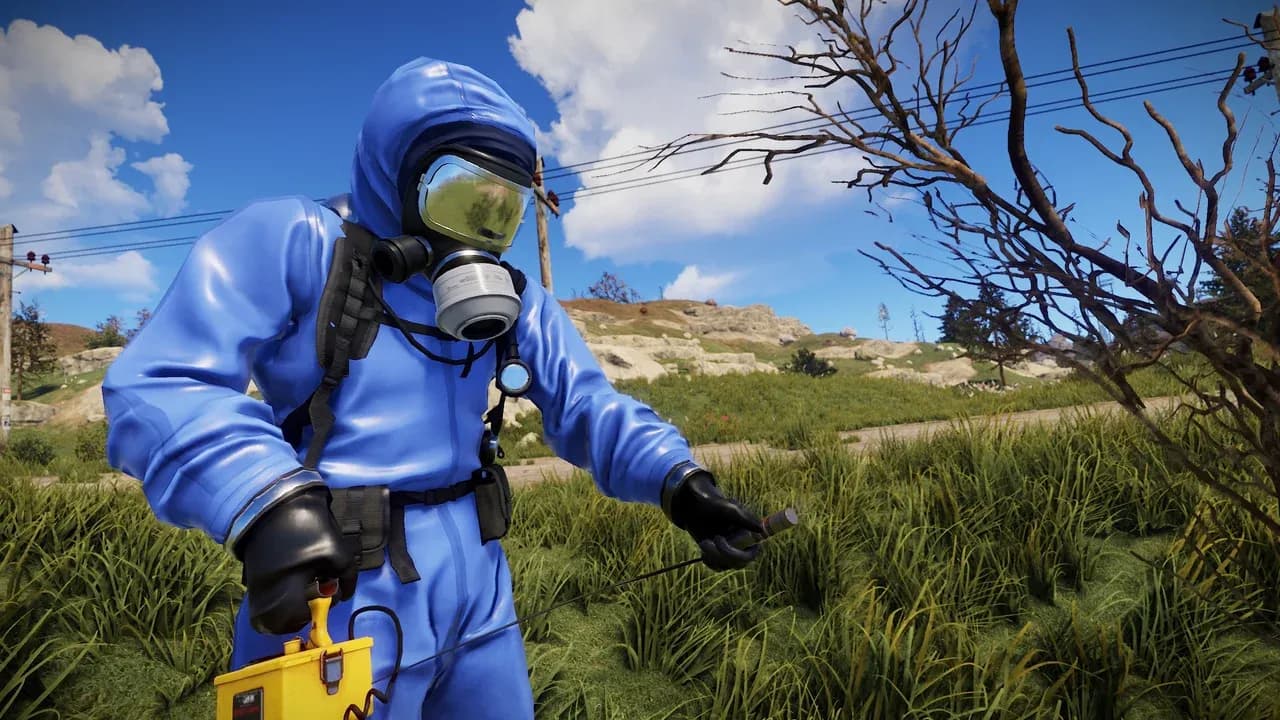
Rust’s Scientists can look like one organized force because the same label follows you from a roadside junkpile to a locked monument room, a moving ship, or the Nuclear Missile Silo. Facepunch’s own update history points to a more precise answer: “Scientist” is a reusable gameplay and AI category whose job changes with its setting.
That distinction matters if you are trying to read Rust’s environmental story. The sources confirm junkpile research, Military Tunnel patrols, Compound peacekeeping, puzzle defense, event guarding, Bradley reinforcements, Silo experiment protection, and naval patrols. They do not confirm one named faction, a shared biography, a Cobalt chain of command, or responsibility for the island’s collapse. The useful way to read the record is to follow what each encounter is documented to do, then stop where the evidence stops.
Scientists began as Facepunch’s humanoid combat-AI project
The earliest documented origin of Rust’s Scientists is technical rather than biographical. In Devblog 164, Facepunch presented early Scientist NPC concept art and described rudimentary humanoid bots built to test weapon balance against human-like targets. The studio also viewed that work as reusable technology for adding humanoid NPCs to Rust after further testing.
That makes the original Scientist concept different from a named story character. A character normally begins with an identity, history, and narrative role; Facepunch’s Scientists began as a way to create more realistic combat-AI targets and a reusable NPC foundation. The source supplies no names, organization, employer, personal history, or fictional origin for them.
When reading later update notes, treat “Scientist” first as a documented AI and encounter category. Any specific profession or purpose needs separate evidence from the setting where that Scientist appears. Once Facepunch had built the reusable humanoid system, the next question was what its first live roles actually were.
Military Tunnels and junkpiles gave Scientists their first two jobs
Facepunch’s first official-facing Scientist rollout put them in Military Tunnels. They initially ran on staging servers before being eased onto official servers in Devblog 194, and the following tunnel update treated their presence as a reason to redesign the monument around more deliberate PvE encounters.
These Scientists were organized patrols rather than static targets. They moved between patrol points, used cover, opened doors, broke through barricades, switched weapons, reloaded, spread out, and avoided shooting one another. Their alertness was also tied to player behavior such as movement and noise. Facepunch adjusted their accuracy with aimcone so they would not produce near-instant long-range headshots, showing that early Scientist identity was being shaped through encounter balance as much as through appearance.
The same early development produced a contrasting roadside role. In Devblog 198, Facepunch explicitly described Scientists at vehicle junkpiles as researchers using Geiger Counters during the day. They were less aggressive than the Military Tunnel patrols and carried flashlights at night, making the encounter visible and giving it a research-flavored presentation rather than the immediate combat pressure of the tunnels. Junkpile Scientists were tied to the junkpile itself; the Vehicle Update noted that they would disappear when their junkpile timed out and sank, and later made these encounters default content.
The difference is easiest to see from the player’s perspective. Approaching a junkpile, you might find a lower-aggression Scientist examining debris with a Geiger Counter or revealing the position with a flashlight after dark. Entering Military Tunnels instead means reading patrol positions, doors, barricades, cover, and sound while deciding how to handle an organized combat obstacle. Facepunch even used a junkpile Scientist carrying a Blue Access Card as part of its proposed monument-progression loop, connecting the roadside encounter to access for more dangerous locations.
That split is the important historical point: “Scientist” already covered different gameplay functions from the beginning. Treat the location as the first clue to a Scientist’s role. The evidence supports calling junkpile encounters research-oriented and Military Tunnel encounters patrol-oriented; it does not support generalizing the Geiger Counter researcher role to every Scientist. The next expansion of the category asked whether these AI units could also enforce rules in a neutral social space.
The Compound made Scientists peacekeepers, not just guards
The roadside and tunnel split showed that Scientists could research or patrol. The Compound added a third role: conditional security. Facepunch described it in the Vehicle Update as a Scientist-controlled safe zone where Scientists could regroup, keep peace and order, and defend the area from the wasteland; vending machines would sell items to players. The Compound Update turned that design into rules players could understand: no weapons, looting, killing, or sleeping inside the Compound.
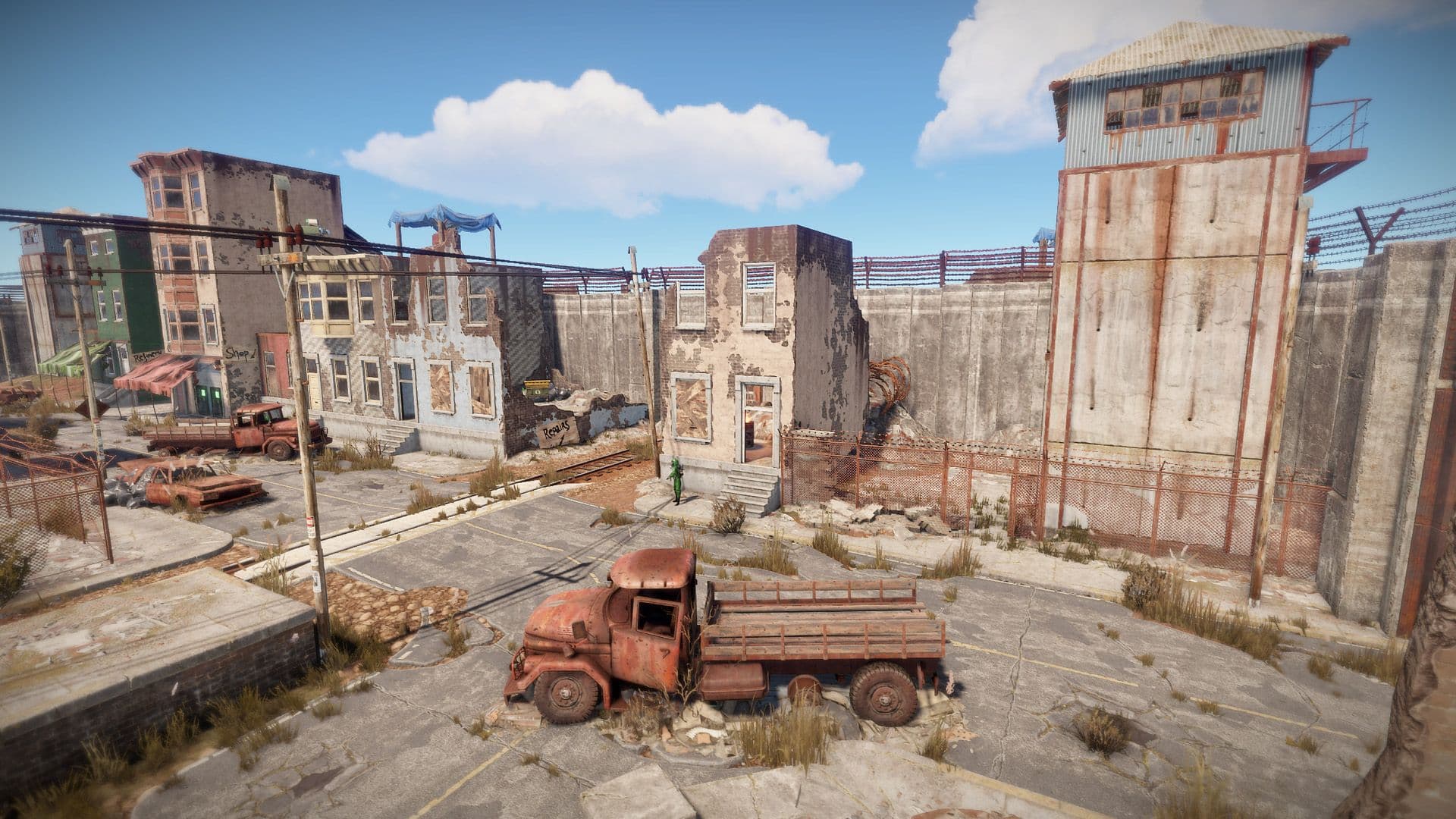
The Compound’s Scientist-controlled security role
That creates a clear compliant-versus-hostile scenario. If you follow the rules, you can use the Compound peacefully and interact with its NPC vendors. If you break them, the game marks you hostile; Scientists and turrets then use lethal force. The hostility persists through death, so dying does not immediately erase the consequence or let you reset the encounter. A player entering the Compound is therefore not simply choosing whether to fight a guard. They are choosing whether to remain a permitted visitor or trigger the entire security system.
The Scientists’ behavior supported that role beyond the safe-zone rules. Compound units followed strict patrol paths and could pause to monitor an area. Some remained stationary until a hostile intrusion occurred, while others pursued players who disturbed the peace and searched for targets they had lost. Those behaviors make “peacekeeper” a useful description of the Compound encounter: violence is an enforcement response to player conduct, not the universal opening state of every Scientist.
The limit is just as important. “Scientist-controlled” describes the Compound’s local security arrangement; it does not prove that Scientists govern the island, belong to one named organization, or share the same rules everywhere. For practical play, identify the location before assuming hostility. The Compound rewards compliance until your actions change the encounter, and that dependence on monitoring, memory, and searching leads directly to how Facepunch adapted Scientist detection for puzzle and access-control areas.
Puzzle monuments made detection and access control part of the encounter
The Compound showed that Scientists could monitor behavior rather than attack immediately. The Puzzle Update extended that idea into a sensory system built around noise, memory, field of view, movement, posture, distance, light, and imperfect information. Detection was not a simple switch between unaware and fully alerted: weapon noise affected how far a Scientist could hear, while silencers reduced that distance.
The clearest example is what happens after you break line of sight. A Scientist does not automatically know your exact position. It remembers your last-known position, considers likely hiding spots, and searches from there. If you move quickly, expose your silhouette, stand in the light, or make noise while repositioning, you can give the search better information. If you manage posture, cover, distance, and timing, losing sight can create a genuine opportunity to change the encounter.
That made detection part of the route through a puzzle monument. You were not only deciding how to fight; you were deciding when to move, how much sound to create, and whether reaching the next access point was worth the attention it might draw. The AI’s sensory rules shaped the access-control problem without implying that Scientists had a personal history, superior awareness, or a lore-defined training program.
Facepunch then applied the first pass of Scientist AI around puzzle areas at Trainyard and Airfield in the Wounding Update & Voice Props DLC. The wording matters: this was an initial rollout around those puzzle areas, with broader expansion planned later. It is historical evidence that Facepunch was adding Scientists to puzzle progression, not a complete statement that every current puzzle area uses identical placement or behavior.
For practical play, treat sound, posture, light, movement, cover, and line of sight as encounter variables. A Scientist searching your last-known position is dangerous, but it is responding to incomplete information; the puzzle route gives you decisions to manage rather than a guaranteed detection state. That is encounter design and access pressure, not evidence of a Scientist biography.
Cargo Ship and Oil Rig turned the category into event-specific defenders
That access pressure also changed when the monument itself became a live event. The Cargo Ship Update required Facepunch to adapt Scientist AI to a structure that moved around the map. Land-based navigation data could not simply travel with the ship, so the developers extended their custom A* pathfinding and waypoint system to let Scientists navigate, use cover, and fight while the decks were in motion.
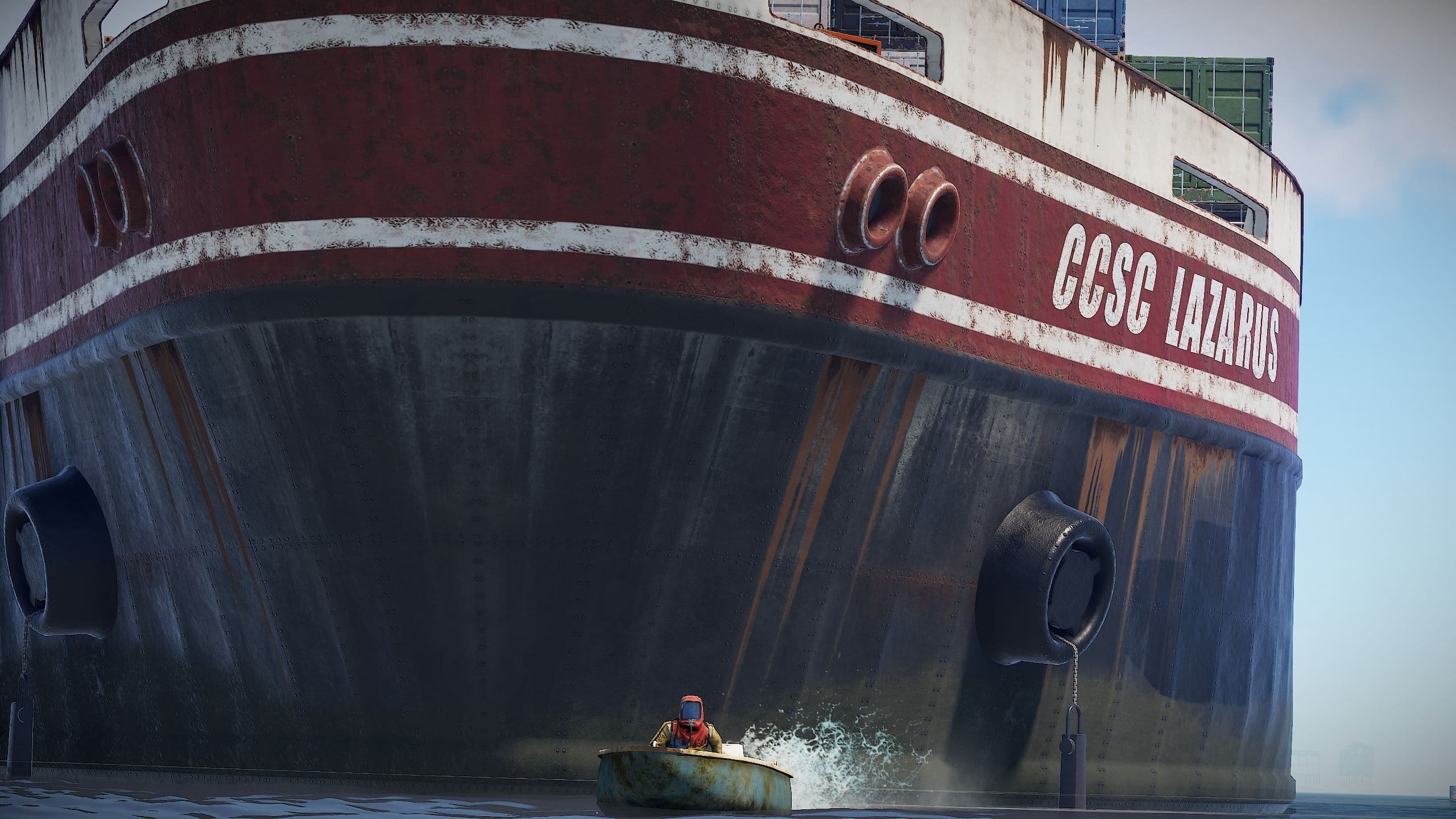
Cargo Ship’s moving Scientist-defender encounter
Cargo Ship therefore split its defenders into two practical roles. Mobile Scientists could move through the ship and contest players clearing rooms, while another variant never moved and functioned like a turret. These fixed sentries were positioned to fire at boats approaching the event, making the water around the ship part of its defensive perimeter. A player boarding Cargo Ship was not facing a standard monument patrol copied onto a new map; the encounter was built around movement, approach angles, and a changing combat space.
Oil Rig used a different solution to the same design problem. Facepunch rewrote its Humanoid AI for the offshore monument because the previous system could not support the intended responsiveness and behavior. Opening the locked crate at the top of the rig triggered an event involving Heavy Scientists, turning the reward itself into an escalation point. On Large Oil Rig, a CH47 landing event could also drop Heavy Scientists to prevent players from reaching the crate without facing the added threat.
The comparison is useful: Cargo Ship made Scientists defenders of a moving platform, including mobile patrols and boat-facing sentries; Oil Rig made Heavy Scientists an event escalation and loot gate around a high-value objective. Their equipment and loot reinforced that role mechanically. The MGL was associated with Heavy Scientist drops, while later updates gave Heavy Scientists access to weapons such as miniguns and military flamethrowers. “Heavy” describes the threat and reward structure of the encounter here, not a confirmed fictional caste.
For practical play, prepare for the event’s platform and escalation state rather than assuming one universal Scientist tier. On Cargo Ship, account for navigation across a moving deck and fixed fire covering the approach. On Oil Rig, treat the locked crate as the point where the encounter becomes more dangerous and coordinate around the Heavy Scientist reinforcement. Together, these events show Facepunch tailoring the Scientist category to the space and objective being defended. The later mainland additions broadened that toolkit with still more specialized behaviors.
Later mainland additions added self-healing, Launch Site patrols, and Bradley reinforcements
The event-specific model did not stay offshore. Facepunch later expanded Scientists across mainland encounters, giving them a research-base behavior, a direct Launch Site patrol role, and a vehicle-linked reinforcement function.
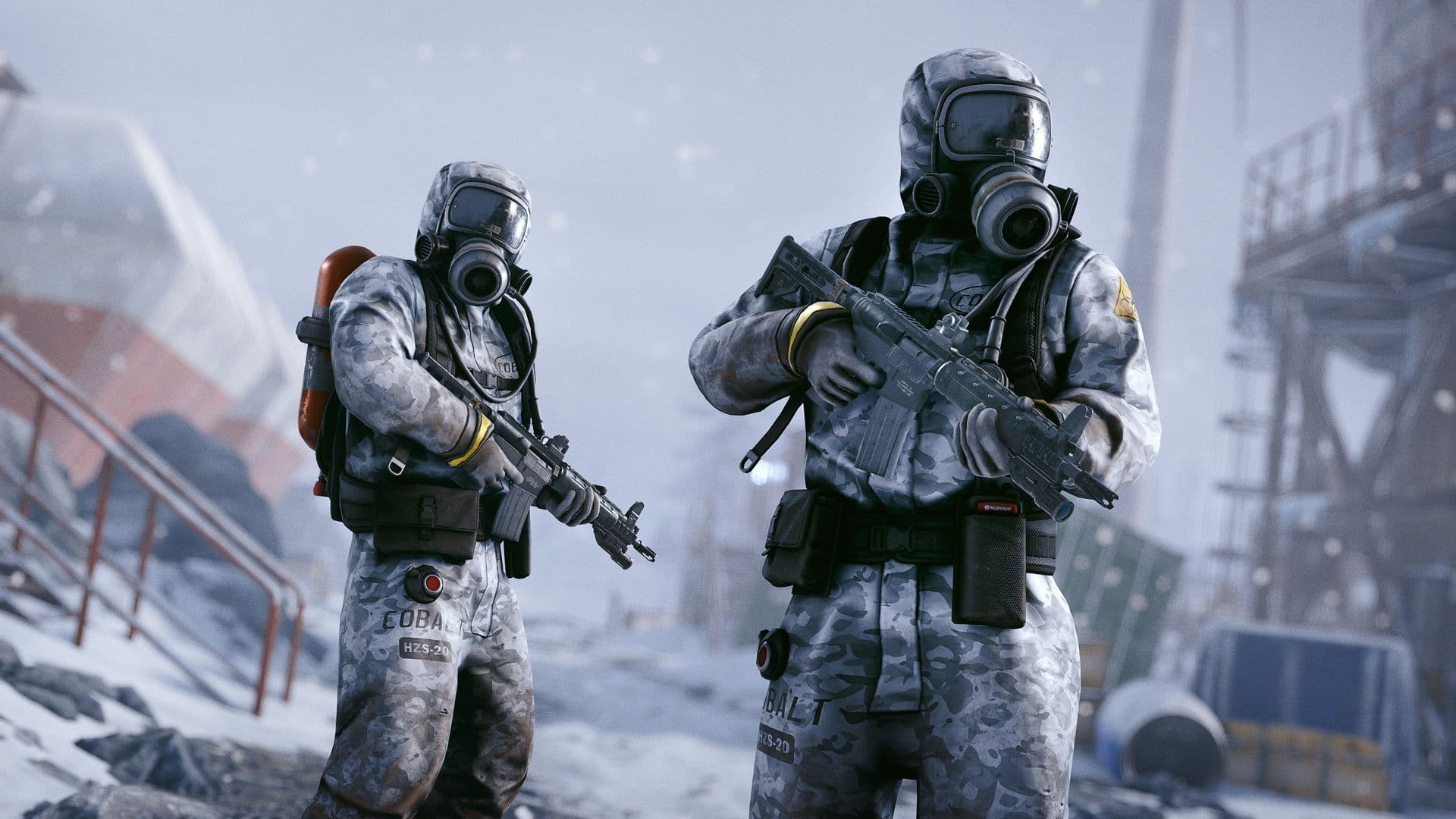
Scientists at the Arctic Research Base
At the Arctic Research Base, Scientists were documented as shooting players on sight. The Arctic Update also introduced a chance for them to use medical items to heal themselves. That self-healing is a behavior attached to this Scientist implementation, not evidence that every Scientist shares the same medical training or equipment. It changes the encounter practically: after dealing damage, you may still need to maintain pressure rather than assuming a wounded Scientist is permanently weakened.
The Combat Update then added Scientists to Launch Site, establishing them as patrol defenders of one of Rust’s most dangerous mainland monuments. This is a different role from the Arctic Research Base’s distinctive self-healing behavior: the important change at Launch Site was the extension of Scientist patrol coverage into a major high-threat monument, not the announcement of a new fictional unit or hierarchy.
The Waves Of Change update added a third context by allowing Scientists to deploy from Bradley for additional firepower. This applied to the Bradley at Launch Site and to the Bradleys that appear on roads during the late-wipe event. Here, Scientists are reinforcements attached to a vehicle encounter: their role is defined by when and where Bradley brings them into the fight, rather than by a separate biography.
The comparison is the useful part. An Arctic Research Base Scientist can shoot on sight and may heal with a medical item; a Launch Site Scientist serves as a later-added monument patrol; Scientists deploying from Bradley function as tactical reinforcements during vehicle encounters. Treat those as three context-specific implementations. When you enter one of these areas, expect the monument or event to determine the Scientist’s behavior and threat pattern; do not assume Launch Site or Bradley units follow the Compound’s rules or reproduce Oil Rig’s exact AI.
The Silo’s NVG Scientists add experiment context without a confirmed biography
The Nuclear Missile Silo pushes the location-specific Scientist role into its most explicitly experiment-framed setting. In R.U.S.T, Facepunch introduced a dangerous Scientist variant that attacks players interfering with the Silo’s experiments. That describes what the encounter is protecting, but it does not explain who is conducting the work or what the experiments are meant to achieve.
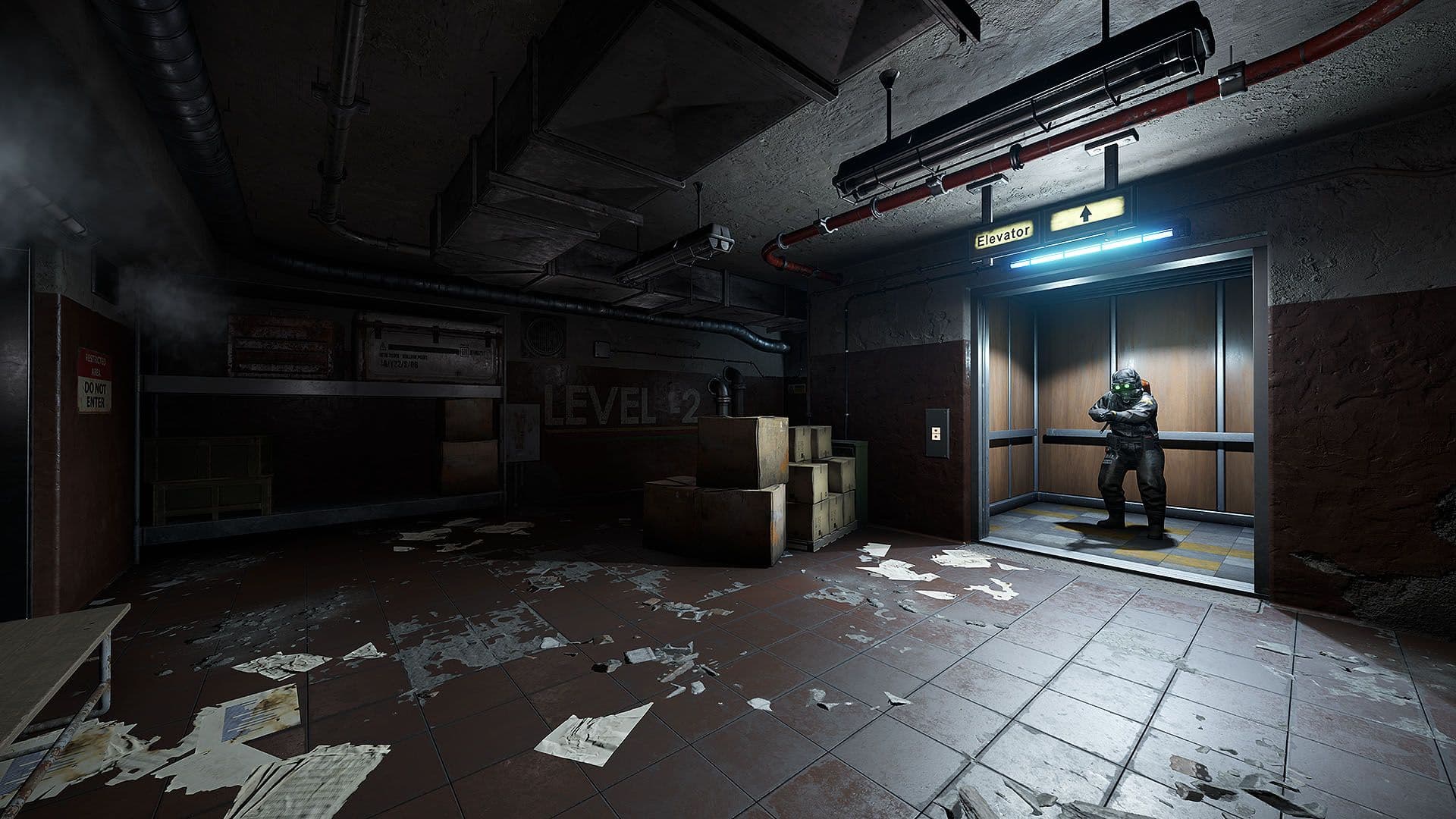
The Silo’s NVG Scientist encounter
The variant is presented as a Night Vision Goggle Scientist, and the same update gives players a specific counterplay detail: flashbangs affect Scientists, with the effect described as somewhat more effective against the new NVG variant. In practice, a flashbang is part of the Silo approach rather than merely another combat item. The mechanic establishes a distinct interaction with this dangerous encounter, but it does not establish why the goggles exist, what the Scientist can see outside gameplay terms, or whether the variant represents a formal rank.
The Silo’s later progression framing adds another tempting clue. Meta Shift repeats the phrase “Rust = Repopulation Unit Survival Test,” which names a test or cycle concept associated with the game’s broader reset structure. It does not identify the Scientists as the test’s administrators, creators, or subjects. It also does not explain the experiments’ purpose or prove that the Scientists understand, control, or caused the surrounding events.
For players, the safe reading is narrower: the Silo contains a dangerous NVG Scientist encounter, its defenses are described as protecting experiments, and flashbangs interact with that variant in a specifically noted way. Use those details to understand the encounter and its counterplay, while leaving the test’s meaning and the Scientists’ biography unresolved. The Silo supplies stronger experiment context, not a confirmed identity.
Standard, Heavy, NVG, and naval variants are gameplay distinctions, not a proven hierarchy
The Silo’s NVG label points to a broader pattern in the current game data. The official Rust Wiki’s Standard Scientist entry identifies Scientist with the shortname scientistnpc_full_any and a dedicated Scientist loot container. The separate Heavy Scientist entry uses scientistnpc_heavy and lists its own equipment and larger loot container. The Roaming Scientist (NVG) entry likewise uses scientistnpc_roam_nvg_variant and has a dedicated loot container.
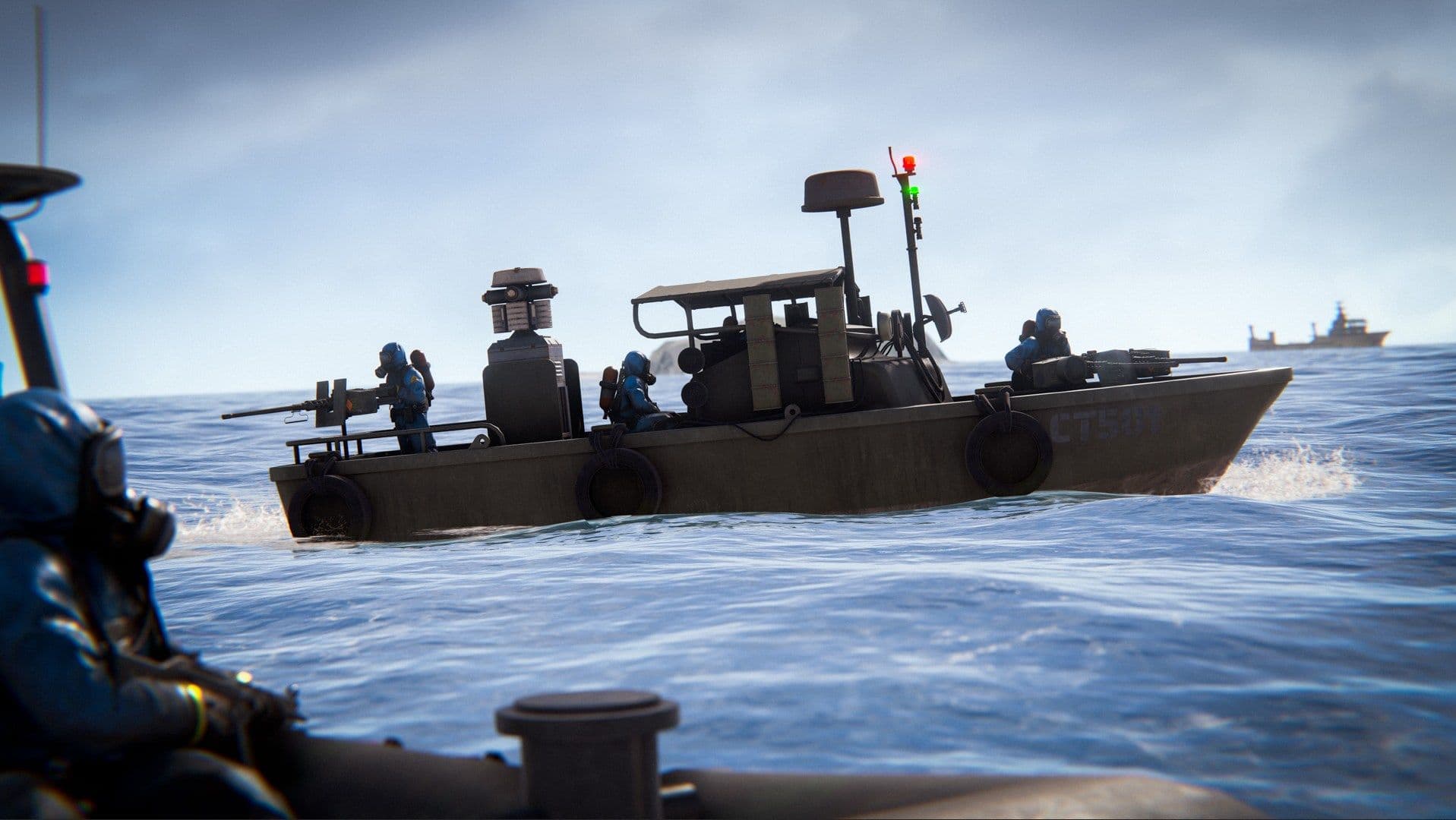
Naval Scientists aboard a Scientist Boat
Those separate entries confirm that Standard, Heavy, and NVG Scientists are recognized gameplay variants. They help explain differences in equipment, loot, threat level, and presentation, but the data labels do not describe a fictional rank structure. “Heavy” is useful when discussing an elite event defender, and “NVG” identifies the Silo’s night-vision presentation and variant-specific counterplay; neither label by itself proves a formal promotion, species, or chain of command.
Naval Scientists add another location-specific implementation. The Naval Update describes Scientists protecting Ghost Ships, including ships with locked crates that players must contest alongside nearby Scientist patrols. Other Scientists crew Scientist Boats, roaming the Deep Sea in coordinated groups to search for players. If you clear the crew, you can take the boat, making the AI part of a mobile encounter rather than a fixed monument defense.
Their behavior is also built around the naval environment. Naval Scientists rely on noise and recent sightings instead of seeing through walls. They can be baited by peeking or making sound, move together, flank, throw smoke grenades, and use ambushes. They are more cautious around snipers, diving into cover after hearing or taking fire. In Shipshape, Facepunch further noted that naval Scientists could not see through smoke, gained flashlights and laser sights, reacted more readily to long-range shots, and repositioned after hearing fire from unexpected angles.
Consider the difference between a naval Scientist and a mainland Scientist behind a monument wall. On a Scientist Boat or Ghost Ship, making noise can draw a coordinated search, while smoke can break sight and create room for a flank; firing from long range may cause the group to reposition rather than simply expose a fixed patrol. You should not automatically expect every mainland Scientist to make the same decision. Facepunch was still monitoring the naval system in March 2026 and had not yet ported that AI to all mainland Scientists.
For practical descriptions, identify a Scientist by its location, equipment, data entry, event role, and documented AI behavior. Treat Standard, Heavy, NVG, and naval as gameplay distinctions that help explain how an encounter works, not as evidence of a proven fictional hierarchy. The broader lore conclusion requires a separate question: what, if anything, has Facepunch actually confirmed about the Scientists as a group?
What Facepunch confirms—and what it leaves unresolved
Facepunch’s evidence is strongest when it names a location and a function. The studio directly described junkpile Scientists as researching junkpiles with Geiger Counters, Military Tunnel Scientists as patrols, Compound Scientists as security and peacekeeping NPCs, Heavy Scientists as event defenders, Bradley deployments as reinforcements, and naval Scientists as coordinated mobile patrols. These are confirmed gameplay roles tied to specific encounters.
The wording test is therefore important: “Junkpile Scientists research junkpiles” is supported by Devblog 198. “All Scientists are researchers” is not. Other update notes describe Scientists performing security, patrol, combat, reinforcement, and naval duties, while the Arctic Research Base’s name and the Silo’s experiment framing do not establish a universal profession.
Some broader conclusions are reasonable interpretation rather than direct canon. A Compound Scientist can be interpreted as a local peacekeeper, and a Silo Scientist as personnel protecting an experiment, because those readings match the encounter’s rules and presentation. They do not prove a shared employer, island-wide authority, or common chain of command. The official Standard, Heavy, and NVG data entries likewise establish gameplay variants, not fictional ranks.
The unresolved claims go further than the sources allow. Facepunch has not confirmed a unified Scientist faction, personal biographies, a common origin, Cobalt membership, or a role in causing, surviving, or administering the island’s collapse. Community material’s playful Cobalt references remain unresolved rather than becoming a Scientist statement, and “Repopulation Unit Survival Test” names a test or cycle concept without identifying the Scientists’ relationship to it.
When discussing Rust lore, label direct developer statements as confirmed, location-based readings as interpretation, and theories about Cobalt, cloning, immortality, command structures, or the collapse as unconfirmed. Anchor the claim to the encounter—“junkpile Scientists research junkpiles”—and treat any universal identity claim as unconfirmed until Facepunch states it directly.