
How to Choose the Best Starting Warlord in Total War: Three Kingdoms
Your adventure in War of the Three Kingdoms begins with a pivotal choice: which legendary warlord will you lead to glory? This opening section will help you pick the perfect starting leader to match your preferred playstyle and campaign difficulty, setting the stage for a successful conquest of ancient China.
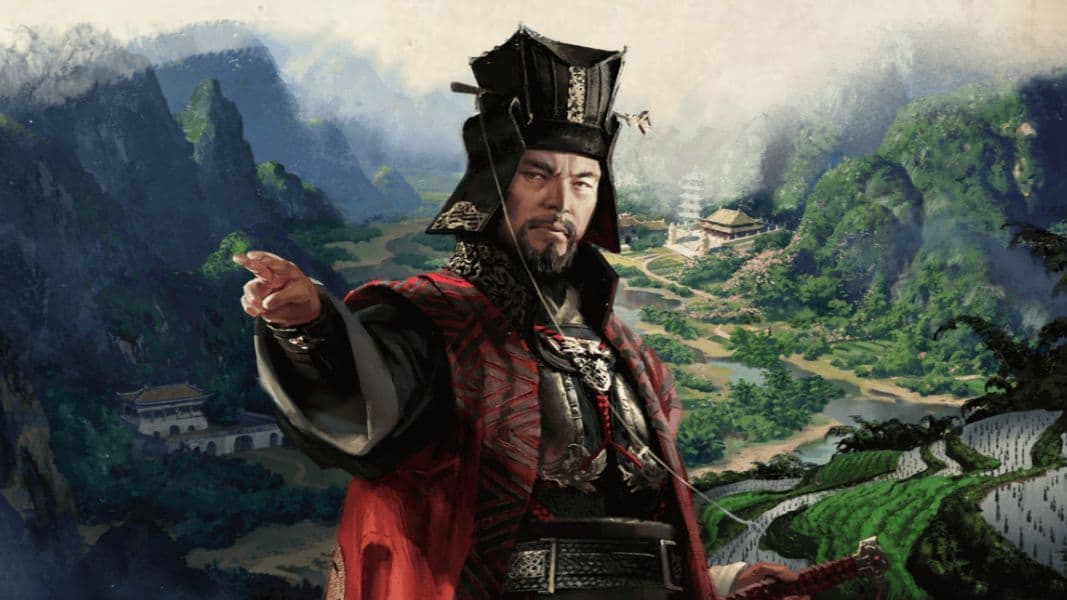
Cao Cao is an ideal starting choice for players who prefer strategic manipulation and cavalry.
Warlords for Every Playstyle
Think of your warlord as the soul of your campaign—their unique mechanics, starting position, and personality will shape your entire experience. Here’s a breakdown of the key leaders, from the most welcoming to the most punishing.
For Beginners: The Balanced Strategists
If you're new to the game or turn-based grand strategy, two warlords offer a forgiving and powerful start.
- Cao Cao, the Strategic Mastermind, is a Commander class hero recommended for beginners. He starts in a strong position with three controlled regions, giving you immediate stability. His faction perks, including -10% unit upkeep and +15 military supplies, ease early economic and logistical pressures. Cao Cao’s true power lies in diplomacy; his unique Credibility mechanic lets him manipulate the political landscape, even starting proxy wars between rivals. He’s perfect if you enjoy outthinking your enemies without always leading the charge.
- Liu Bei, the Virtuous Idealist, is another Commander class and beginner-friendly choice. He starts with no territory in the Northeast, but commands the most powerful starting army. His campaign revolves around generating Unity, a resource that grows as you keep your generals happy. Use Unity to peacefully annex territories from the crumbling Han Empire, allowing you to expand without constant war. His unique ranged units also give you an early combat advantage.
For Aggressive Conquerors
Ready to paint the map with your colors from day one? These warlords reward bold, expansionist play.
- Sun Jian, the Tiger of Jiangdong, is a Sentinel class hero built for relentless aggression. He starts in Jianling, surrounded by enemies, forcing you to fight your way south. His unique resource, Heroism, is earned by winning battles while taking fewer losses than your foe. This fuels a powerful cycle: Heroism reduces your unit upkeep and boosts recruitment, letting you field larger, more effective armies to fuel further conquests. He’s ideal for experienced players who love constant military action.
- Gongsun Zan, the Ironfist General, offers a more defensive brand of military focus. As a Vanguard class hero, he excels at breaking enemy lines. He starts in the relatively safe Youbeiping Commandery, but expansion is challenging. His key defensive perk is a massive 50% reinforcement range, allowing his armies to support each other quickly. If you prefer building a military powerhouse and letting enemies break against your defenses, Gongsun Zan is your general.
For your first campaign, lean towards Cao Cao or Liu Bei. Their strong starts and flexible mechanics let you learn the game's complex diplomacy, economy, and warfare systems without being immediately overwhelmed.
For the Ultimate Challenge
Some leaders offer a brutally difficult campaign designed for veterans seeking the ultimate test.
- Zheng Jiang, the Bandit Queen, has the hardest campaign in War of the Three Kingdoms and is not recommended for beginners. A Champion class hero, she starts in the Black Mountains, at war with both Dong Zhuo and the Han Empire. Her survival depends on generating Infamy by winning battles and sacking settlements. While Infamy grants powerful bonuses, it also makes every other faction despise you, turning diplomacy into a constant knife-fight. Her campaign is a thrilling, high-risk struggle for legitimacy against all of China.
With your warlord chosen, you’re ready to forge your legacy. Remember, the right leader doesn’t just give you a good start—they make the entire journey through the Three Kingdoms era uniquely yours.
Understanding Faction Mechanics and Unique Resources in War of the Three Kingdoms
Now that you've chosen your warlord in War of the Three Kingdoms, it's time to understand what truly makes them tick. Beyond the color of their banners lies a unique strategic engine—a special resource or mechanic that defines their entire campaign. Mastering this is the difference between struggling with a faction and bending the game to your will.

Managing military supplies and regional resources is vital for faction stability.
The Unique Resource Economy
While all factions manage gold and supplies, your chosen leader adds a critical third currency to your strategic ledger. This isn't just a number on a screen; it's a tool that unlocks powerful, faction-defining actions and dictates your optimal path to power.
Cao Cao operates on Credibility. Think of this as your political capital. It passively accrues over time, granting diplomatic bonuses, but its real power is active. With enough stockpiled, you can [Left Click] to trigger proxy wars, forcing two other factions to fight each other. This lets you weaken rivals without committing a single soldier, perfectly embodying Cao Cao's reputation as a strategic mastermind.
Liu Bei’s campaign is fueled by Unity. This resource grows as you keep your generals satisfied and complete character assignments. It’s the cornerstone of his “virtuous” playstyle. Instead of invading, you can spend Unity to [Left Click] and peacefully annex Han territories. This allows you to expand your realm through diplomacy and integrity, building a loyal foundation without constant warfare.
For the aggressively inclined, Sun Jian thrives on Heroism. You don’t bank this resource by sitting still—you earn it by winning battles while sustaining fewer losses than your enemy. The payoff is direct and military-focused: reduced unit upkeep, improved recruitment rates, and a boost to public order. It rewards skillful, decisive generalship and enables you to maintain the large, professional armies Sun Jian is known for.
When playing as Sun Jian, fight battles manually whenever you can. Auto-resolve often calculates higher losses, which can cripple your Heroism generation. A clean, tactical victory pays dividends far beyond the battlefield.
High-Risk, High-Reward Mechanics
Some factions trade diplomatic comfort for raw, explosive power, turning every decision into a calculated gamble.
Yuan Shu’s entire legitimacy crisis is quantified by his unique resource, Legitimacy. Actions that increase your prestige and income also build this meter, but there’s a catch: high Legitimacy actively angers other factions, making you a pariah at the negotiating table. You’re constantly balancing internal growth against external isolation, forcing you to secure power before the world turns against you.
If you thought Yuan Shu’s path was lonely, try Zheng Jiang’s. As the Bandit Queen, your currency is Infamy, earned exclusively through violence—winning battles and occupying settlements. This resource boosts your prestige and can be used to demand tribute in diplomacy, but it permanently harms your relations with every other faction. Your campaign is a balancing act on a knife’s edge, where your primary resource makes you stronger but also makes everyone want you dead.
Trust me, wrapping your head around these mechanics early saves countless headaches later. They’re not just bonuses; they’re the rulebook for your entire campaign. Once you understand whether you’re generating Credibility, Unity, or Infamy, you’ll know exactly how to steer your kingdom to victory. Let’s build it.
Best Economic and Supply Management Strategies for New Warlords
Your armies march, your borders expand—but if your gold runs dry or your soldiers starve, your mighty kingdom will crumble faster than any enemy can conquer it. In War of the Three Kingdoms, managing your economy and supplies isn’t just a background task; it’s the foundation of every successful campaign. Let’s build an empire that can feed its people and fund its wars.

Cao Cao provides significant early-game advantages through reduced upkeep and increased military supplies.
Build a Strong Economic Foundation
Your first priority is establishing a stable income. Here’s the trick most guides miss: you don’t need to be a master of everything right away. Focus your Commandery Capitals on specializing in low-cost, high-return resource production. Specifically, target regions that excel in Peasantry [Green] and Industry [Grey]. These are incredibly effective early-game income sources because they require less initial investment to get running compared to complex trade networks.
Conquer these specialized commanderies and immediately build the associated structures—farms for peasantry, workshops for industry. This early specialization creates a snowball effect, giving you the gold you need to fund everything else. Don’t forget about assignments, either. The Tax Collection assignment is an economic lifesaver in the early turns. To use it, [L] select a character in your court, then [L] click the commandery you want to boost. This grants a whopping +50% income from peasantry in that region for 15 turns. Use it in your most productive farming commandery to supercharge your treasury.
A common early-game mistake is mustering too large an army right away. That massive force drains gold from infrastructure projects. Build a lean, efficient fighting force first, then use your growing income to expand your armies later.
Secure Your Food and Supply Lines
Gold wins campaigns, but food and Military Supplies win wars. Let’s break down both.
Military Supplies are the lifeblood of your armies on the march. You can check a force’s supply level by [L] hovering over the army on the campaign map. If this bar runs out, your troops will start taking attrition damage from starvation, crippling them before battle even begins. Supplies replenish automatically when your army is in friendly territory or encamped. Some warlords, like Cao Cao, get a built-in advantage here with his +15 military supplies faction bonus, letting his armies campaign farther from home.
Food is a global resource that affects your entire faction. A food deficit causes public order to plummet across your empire, leading to rebellions. To prevent this, prioritize building food-producing structures. If you’re playing as Cao Cao, your unique Farming Garrisons building is a powerhouse—it increases food yield in a commandery while also providing regional defense, killing two birds with one stone. For a more nomadic playstyle, Ma Teng’s unique Xiliang Supply Lines serves a similar purpose, providing food and military supplies to armies operating in that region (though be warned, it can also supply enemy armies if they’re present).
Maintain Happiness and Stability
An unhappy populace or disgruntled court will undermine all your careful planning. Keep a close eye on Public Order in each commandery, displayed in the bottom-left of the settlement panel. Low public order slows growth and can spark rebellions. You can improve it by lowering taxes, building entertainment structures, or—most sustainably—ensuring a healthy food surplus. A well-fed population is a happy one.
Character satisfaction is just as crucial. Unhappy generals can defect, taking their armies with them. You can check satisfaction levels in the character panel (Ctrl+F2). If a powerful general is unhappy because they want a promotion or a court position, you have a choice: pay the cost to appease them now, or risk a costly betrayal later. Managing these relationships is a constant balancing act between your treasury and your faction’s stability.
With a specialized economy funding your endeavors, robust supply lines keeping your armies fighting fit, and a stable, happy realm behind them, you’ve built an empire that can endure. Now you’re ready to focus on the art of war itself.
How to Master Diplomacy and the Guanxi System in Three Kingdoms
In War of the Three Kingdoms, conquest isn't just about armies—it's about people. The intricate web of personal relationships and political favors, known as Guanxi, is the true social fabric of power. Mastering this system and the diplomatic options it unlocks can secure your borders, fund your wars, and win campaigns without a single battle. This is where your empire is truly forged.

Managing general satisfaction is a core component of the social Guanxi web.
Managing the Social Web: Guanxi and Character Satisfaction
Your faction’s strength hinges on the loyalty and satisfaction of your officers. The Guanxi system tracks the complex relationships between your characters, and neglecting it can lead to devastating betrayals or civil wars. To manage this, open the character list by pressing [Ctrl+F2]. Here, you can see each character's satisfaction level and the reasons for their happiness or discontent—whether they desire a promotion, a court position, or hold a grudge against another officer.
Pressing F1 in any menu provides a quick list of executable options and extra details on mechanics like Guanxi, making it an invaluable reference when you’re learning the ropes.
A key tool for managing loyalty is the Promote option in the character management screen. Clicking [L] on 'Promote' offers a quick fix to boost a character’s satisfaction, but it comes at a permanent cost: you must pay an upfront sum and their salary will increase. Use this strategically to appease crucial generals or administrators, but don’t promote everyone—it can cripple your economy. Remember, an unhappy character in a powerful court position is a major risk, as they can defect and instigate a civil war, taking their territory and armies with them.
Essential Diplomatic Actions for Every Warlord
While Guanxi governs internal affairs, your external diplomacy secures gold and stability. One of your first priorities should be establishing Trade Agreements with multiple factions. These are negotiated from the main diplomacy menu and provide a steady, early-game gold flow that’s essential for funding your development and military. Focus on securing agreements with neighbors who have valuable resources and, crucially, who you aren’t planning to attack immediately.
For certain warlords, diplomacy becomes a primary weapon. If you’re playing as Kong Rong, your path to power is economic dominance. Your unique ability, Trade Monopoly, can be selected in the diplomacy menu to massively boost your trade income. Use this to become the richest faction on the map, leveraging your wealth to hire elite mercenaries and influence other warlords.
Similarly, Liu Bei has a uniquely peaceful expansion path. Using his faction resource, Unity, he can access the special diplomatic options Confederate and Integrate. By spending accumulated Unity, you can peacefully merge with other factions, absorbing their territories and characters into your growing coalition without ever drawing a sword. This perfectly suits his virtuous playstyle, allowing you to build a powerful kingdom through diplomacy and high character satisfaction.
With a firm grasp on Guanxi to keep your court loyal and key diplomatic strategies to enrich and expand your realm, you’ve moved beyond mere warfare. You’re now playing the true game of thrones, where a well-placed word can be as decisive as a thousand soldiers. Now, let's turn that secured stability into military dominance.
Army Composition and Battle Tactics for Early Conquests
Your early army is your first hammer—use it to forge your territory, not shatter it. In War of the Three Kingdoms, winning battles and taking cities isn't just about having more troops; it's about smart composition and leveraging the game's tactical systems from the very first turn.
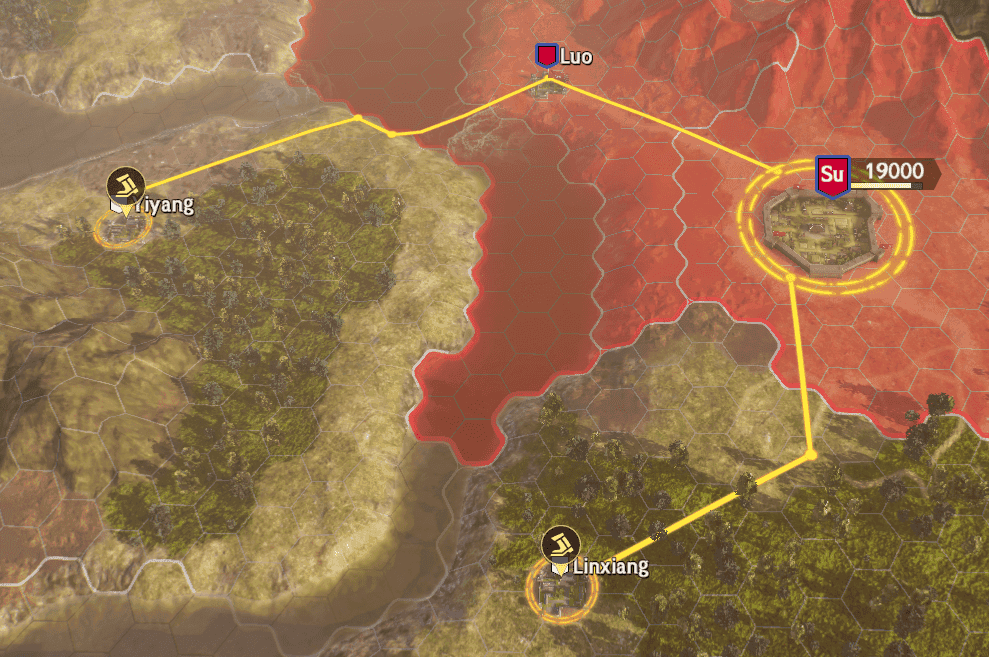
Identifying high-value targets is the first step in planning a successful conquest.
Core Unit Roles and Early Army Composition
Don't just recruit what's available—build a balanced retinue. Your core early force should be a mix of cheap, effective units that can handle any threat you'll face while expanding.
Start with a solid frontline of spear infantry. They're affordable, hold the line well against cavalry charges, and are buffed by having a Champion (green) general in your army. Behind them, place your archers. These are your damage dealers; focus fire on enemy infantry blobs to break their morale before they even reach your lines. Finally, include at least one unit of cavalry. Use them not for frontal charges, but for flanking maneuvers. Sweep around the battle to hit enemy archers in the rear or to chase down routing units.
In the early game, quality beats quantity. One well-supported, high-morale army is better than two understrength ones that drain your gold and food. Recruit to fill your general's retinue cap, then stop and build your economy.
The Strategist's Pivotal Role
Never leave home without a Strategist. Identified by their blue color, these fragile generals are your force multipliers. While they must be kept safely behind your melee lines, their benefits are game-changing: they increase your army's ammunition and supplies, enable powerful unit formations, and—most crucially—allow you to recruit trebuchets.
Trebuchets are not for open-field battles. They are your key to cracking fortified settlements. During a siege, target the enemy walls with your trebuchets to create breaches for your infantry, saving you from the costly and time-consuming task of scaling those walls. The Strategist role is to provide these long-range tools and deadly bonuses to your archers, letting you dictate the terms of engagement.
Conquest and Movement: Formations Matter
When you're ready to expand, how you move is as important as what you fight with. Use the [March] command to deploy your army, but first, select the right formation for your goal.
Need to grab territory quickly? The Awl formation provides high mobility, letting your unit dash to the core of an empty region to start the conquest process. If you want to claim more land as you move—perhaps to secure a buffer zone—the Crane formation allows you to conquer a wider swath during movement. Once your unit reaches a region's core, order it to Conquer to steadily increase your control each turn.
Winning the Battle Map
When the battle loads, pause. Assess the terrain advantage. Always try to position your archers and Strategist on high ground; it increases their range and damage. Use forests to hide units for ambushes or to protect vulnerable flanks. The in-game [F1] help menu can clarify these bonuses if you're unsure.
Here’s your battle rhythm: Let the enemy come to you. Hold your spear infantry in a defensive line on favorable ground. As they advance, rain arrows with your buffed archers. Once the enemy line is committed and weakened, unleash your cavalry from the sides to collapse their morale. Avoid direct, prolonged duels with enemy generals led by powerful officers; whittle them down with ranged fire and focused infantry attacks instead.
For attacking cities, don't rely on standard formations like Fish or Arrow. Organize a siege unit that includes a Siege Weapon formation. While weak in melee, these formations are tremendously effective against gates and walls, turning a grueling assault into a systematic demolition.
With these tactics, your early armies will become an unstoppable engine of expansion. Secure your borders, claim productive commanderies, and lay the foundation for your kingdom. Now go conquer.
War of the Three Kingdoms Rewards and Campaign Victory Conditions
The final stretch of your campaign is in sight. Your armies are strong, your economy is humming, but how do you actually win War of the Three Kingdoms? The path to victory isn’t just about painting the map; it’s a calculated race for legitimacy, prestige, and control over the very heart of China.

Campaign gameplay involves balancing expansion with resource rewards.
Your ultimate goal is to declare yourself Emperor, a status unlocked by amassing Prestige. This critical faction stat grows as you expand your territory, win key battles, and construct unique buildings like Yuan Shao’s Yuan Administration Office or Kong Rong’s Academy of Culture. Think of prestige as your faction’s reputation and legitimacy—once it hits the required threshold, you can proclaim a new dynasty and trigger the final, kingdom-spanning war. However, for some warlords like Kong Rong and Liu Biao, the rules are different. These factions cannot declare themselves Emperor and must instead achieve victory by capturing the Emperor's Capital by force, making their endgame a direct military scramble for the throne.
Press [F1] on any screen. This overlay shows you every executable command and offers detailed explanations of core mechanics, helping you navigate complex menus and make informed decisions as you push for victory.
Beyond the prestige race, securing your campaign’s longevity means capturing and developing key commanderies. Specializing regions for peasantry (green) or industry (grey) provides the economic backbone for your late-game armies. Remember, wars are expensive—fielding too many troops too early can cripple your economy. Use assignments like Tax Collection to boost local income and invest in infrastructure that increases public order and gold production. A stable, happy empire is one that can sustain the final push.
The spoils of war also fuel your rise. Winning battles isn’t just about eliminating enemies; it’s a key revenue stream. Factions like Zhang Yan excel here, gaining a +25% Post-Battle Income bonus from both manual and auto-resolved victories. This perk turns every successful engagement into a significant economic boost, perfect for funding the next offensive. Whether you’re securing a border or launching a major invasion, always consider the financial payoff of a fight.
Victory in War of the Three Kingdoms is a masterful blend of economic dominance, strategic conquest, and understanding your faction’s unique win condition. Build your prestige, manage your heartlands, and let every battle bring you one step closer to unifying China under your banner. The Mandate of Heaven awaits.