
How to Manage Faction Prestige in Total War: Three Kingdoms
In War of the Three Kingdoms, your journey to unify China isn't just measured by the lands you conquer, but by the political weight you carry. That weight is your Faction Rank, the definitive ladder of power you must climb to become Emperor. This guide will break down the core Prestige system that fuels your ascent, showing you how to manage it from a humble noble to the undisputed ruler of the land.

High Prestige reflects your faction's growing legitimacy and power in ancient China.
Understanding Faction Rank and Prestige
Think of your Faction Rank as your faction's political standing on the national stage. It’s your measure of progress, and advancing it unlocks game-changing bonuses like the ability to field more armies and appoint more ministers to your court. You can view your current rank and its benefits by clicking your faction leader’s portrait in the top-left corner of the campaign screen to open the Faction Summary panel.
To climb these ranks, you need Prestige. This crucial resource is your faction’s political currency, earned through concrete actions that demonstrate your growing power. The most straightforward way to gain it is through territorial expansion—every county you conquer adds to your prestige. But conquest isn't the only path. Upgrading your settlements is equally vital; each level of a commandery’s Town Center chain grants increasing prestige, as do government (yellow) building chains.
For a massive, one-time prestige boost, seek out the Imperial Jade Seal ancillary. Equipping this legendary item to one of your characters provides a huge spike in your political standing, potentially catapulting you forward a rank.
Customizing Your Advancement
In campaigns from the Fates Divided era onward, the system gets more strategic. Upon reaching a new prestige milestone, you won’t just get a static bonus. Instead, you’ll earn Prestige Points to allocate across five key categories on your Faction Screen: Assignments, Administrators, Trade Agreements, Spies, and Armies. This lets you tailor your faction’s development to your playstyle—whether you want more spies to undermine rivals or more armies to overwhelm them.
This customization also grants you critical control over the campaign’s major turning point. The dreaded Realm Divide, where your strongest allies turn into rivals, is triggered by reaching the King rank. With this system, you can strategically delay your declaration to build up your forces and economy, ensuring you're ready for the civil war when it comes.
A Note on Unique Factions
While most warlords follow the standard rank ladder (Noble, Marquis, Duke, King, Emperor), several factions have their own unique progression. Most notably, the Yellow Turban Rebellion doesn’t use Prestige at all. Instead, they accumulate Enlightenment, their version of this resource, primarily by researching new reforms and constructing specific philosophical buildings.
Other leaders like the bandit queen Zheng Jiang or the tyrannical Dong Zhuo also have bespoke rank trees that reflect their unique positions in the world, offering different bonuses and challenges as they rise to power.
Putting It All Together
Your strategy for managing prestige should be a blend of aggressive expansion and smart development. Focus on securing and upgrading a stable core of commanderies. Prioritize reforms and buildings that boost your prestige income, and always be on the lookout for valuable ancillaries like the Imperial Jade Seal. If you're playing with the reworked system, invest your Prestige Points to shore up your faction's weakest link or double down on its greatest strength.
By actively managing your Faction Rank and the Prestige that fuels it, you’re not just winning battles—you’re building an empire. With this foundation, you're ready to navigate the political landscape and claim your mandate.
How to Claim the Mandate of Heaven in War of the Three Kingdoms
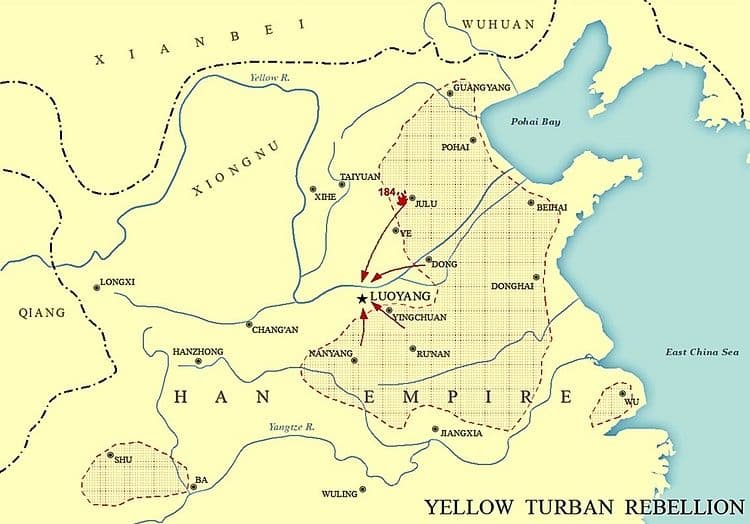
This is the ultimate goal—the celestial right to rule that all warlords in War of the Three Kingdoms ultimately fight for. But in the Mandate of Heaven DLC campaign, claiming this authority isn't just an endgame objective; it's a specific, multi-stage process woven into the narrative, with the fate of the Han Empire and the city of Luoyang at its heart.

Military conquest is essential for securing the Mandate of Heaven.
The Two-Path Victory
Your path to ultimate victory in Mandate of Heaven splits based on which side of history you choose to fight for. This isn't a vague "conquer everything" goal; it's a focused, story-driven objective.
- For Han Loyalists (Cao Cao, Liu Bei, Sun Jian, etc.): Your primary goal is to end the Mandate War by extinguishing the Yellow Turban threat. This means you must hunt down and destroy all three of the Zhang brothers' factions (Zhang Jue, Zhang Bao, and Zhang Liang). Once these mystic leaders are defeated, the rebellion is considered quelled, and you can focus on the power struggle that follows.
- For the Yellow Turbans (The Zhang Brothers): Your goal is to prove the Han has lost its divine right by seizing its heart. To win, you must capture the Han capital of Luoyang and control 50 counties/settlements. Taking the symbolic seat of power is your declaration of a new dynasty.
No matter which side you start on, the campaign's events will eventually converge on a single, monumental shift in power centered on Luoyang.
Luoyang: The Seat of Power
Luoyang, the capital of the Han Empire in the Central Plains, is more than just a wealthy city. It is the ultimate political prize. Controlling it is the key to declaring yourself the legitimate ruler of China.
Here's the critical timeline that unfolds, often around Turn 34:
- Emperor Liu Hong Dies: The ailing Han Emperor Liu Hong, based in Luoyang, will suffer a stroke and die. This event triggers a massive power vacuum.
- Dong Zhuo's Seizure: Shortly after, the warlord Dong Zhuo marches on the undefended capital. He seizes control of Luoyang, dissolves the Han Empire, and takes the child emperor Liu Xie hostage. This act shatters the empire into independent warlord states, mirroring the start of the classic 190 CE campaign.
- Your Opportunity: With the empire dissolved, the race is on. The faction that controls Luoyang holds immense symbolic power. For non-Yellow Turban factions, capturing it back from Dong Zhuo (or whoever holds it) and accumulating enough Prestige is your path to declaring your own Emperor and entering the final "Three Kingdoms" stage of the game.
If you're playing a southern faction like Sun Jian and feel detached from the early Mandate War, use the time to build a powerhouse economy and military. When the empire collapses on Turn 34-36, you'll be perfectly positioned to strike north at a weakened Luoyang or carve out your kingdom elsewhere.
The True Mandate of Heaven
After navigating the Mandate War and the collapse of the Han, the final, universal victory condition for every faction reasserts itself. This is the core Mandate of Heaven mechanic for the entire game: to become Emperor and defeat all other rival Emperors to become the sole ruler of China.
You achieve Emperor rank by accumulating enough Prestige (through conquest, buildings, and ancillaries). Once you or two other AI factions reach this rank, the final "Realm Divide" occurs, splitting the map into competing dynasties. Your final campaign objective is clear: eliminate all other crowned rivals.
Trust me, holding Luoyang when you make your claim feels like a historical inevitability. It’s the symbolic heart of your legitimacy, a fortress from which to command your final wars of unification. Whether you restore the Han's glory or forge a new dynasty from its ashes, your path to the Mandate of Heaven begins and ends with the destiny of this one city.
Best Strategies for the Dynamic Legitimacy and Faction Support Systems
You’ve captured territory and raised your banners, but the real challenge begins now—keeping your newly won lands from crumbling into rebellion. In War of the Three Kingdoms, holding a commandery is just as crucial as taking it, and it all hinges on two dynamic systems: Faction Support and Public Order.
Early game legitimacy challenges
Think of Faction Support as the loyalty meter for a newly captured commandery. When you first take a settlement, the populace is resentful and distrustful, so support starts negative. This low Faction Support directly penalizes Public Order and your army’s replenishment rate in that region. The good news? It naturally improves over time, eventually reaching a stable 100% as people accept your rule. The integration period is when you’re most vulnerable.
Always check the public order tooltip in a newly captured settlement. It will show you the exact penalty from negative Faction Support, so you know how long you need to babysit the region.
That’s where Public Order comes in. This is your commandery’s overall stability, visible in the commandery panel. Hover over the Public Order icon to see every factor affecting it. High taxation, low food reserves, negative Faction Support, and a swelling population can all drag it down. Conversely, you can boost it with specific military buildings, a strong garrison, and by stationing an army in the settlement.
Here’s the trick most guides miss: you can’t just conquer and leave. If you let Public Order bottom out at -100, a Rebellion will erupt. A full rebel army spawns and begins mustering fresh troops each turn. The quality of this army reflects the development level of your own buildings—so a rich, well-developed commandery will spawn a dangerous rebellion. They are automatically at war with you and will march on your capital.
If you’ve ever lost a rich province to an unexpected uprising, you’re not alone. The key is proactive management. After a conquest, station an army there temporarily. The mere presence of your troops provides a significant public order boost, buying you the precious time needed for Faction Support to recover. Monitor the factors, keep food stores positive, and consider lowering taxes until the region is fully integrated.
With a watchful eye on these two systems, you’ll transform freshly conquered land into a stable, productive part of your empire. Let’s secure your dominion.
How to Declare a Player-Led Empire and Custom Ranks
You've conquered territory and built your power base, but true supremacy in War of the Three Kingdoms isn't just about having the biggest army—it's about declaring your own empire and shaping its destiny. This is where the Fates Divided rank rework transforms a good campaign into a legendary one.

Campaign management in War of the Three Kingdoms.
The Faction Ranks Rework: Your Custom Kingdom
Previously, reaching 500 prestige triggered the Realm Divide event automatically, forcing you into a civil war against the game's other major powers. The Fates Divided update changed everything. Now, when you hit a new prestige milestone, you'll open the Faction Screen to find a new system: Prestige Point Allocation. This is your tool to build a kingdom in your image.
You'll spend these points across five distinct categories: Assignments, Administrators, Trade Agreements, Spies, and Armies. Early ranks like Second Marquis and Marquis offer around four points to distribute, with many more unlocking at the Duke and King ranks. Each category has two tiers of bonuses: a primary bonus that improves per level, and a secondary bonus that kicks in from level two. Maxing out a category grants powerful, faction-wide rewards.
Prioritize Armies and Assignments early. The army upkeep reduction and extra assignment slots let you expand faster and manage your growing territory more efficiently.
Here’s what you’re working towards in each category when fully upgraded:
- Assignments: 8 assignment slots, -25% character salary, +50% character experience gain.
- Administrators: 8 administrators, -15% administrator salary, +10 food production from prestige.
- Trade Agreements: 8 trade agreements, +25% trade influence, +25% diplomatic relations with all factions.
- Spies: 8 spies, +15 maximum cover while spying, -10% undercover network costs for spy actions.
- Armies: 8 armies, +15 satisfaction while commanding, -15% upkeep for all units.
Timing Your Rise: The Art of Delaying Kingship
The most strategic power this rework grants you is control over the Realm Divide. You can now postpone declaring yourself King until you are absolutely ready. Remember, hitting 500 prestige is the traditional trigger—once you or a rival crosses that threshold, the map fractures, alliances break, and the other major AI factions will declare themselves as rival kings, painting a target on your back.
With the new system, you can accumulate the prestige needed for the King rank but simply choose not to allocate the final points or confirm the title in the Faction Rank menu. This lets you build up your armies, secure key alliances, and fortify borders before unleashing the endgame chaos. It’s a game-changer for managing the campaign's pacing.
Declaring Your Empire and Custom Ranks
When you finally do ascend, your faction’s identity crystallizes. For many leaders, reaching King rank triggers a historic faction name change. The most famous example is Liu Bei, whose faction transforms into the Kingdom of Shu-Han upon his coronation, reflecting his legendary claim and cementing his place in history.
Your journey from a regional warlord to the sovereign of a custom-forged empire is now in your hands. By smartly allocating your Prestige Points and strategically timing your royal declaration, you enter the final struggle for China not as a participant, but as its architect.
Mandate of Heaven: Liu Bei Faction Guide
Welcome to the most humble of beginnings. In War of the Three Kingdoms, Liu Bei starts the Mandate of Heaven campaign not as a lord, but as a sandal maker near Pingyuan with nothing but his name and a dream of restoring Han glory. This is a campaign of incredible highs and brutal lows, demanding precision, patience, and a deep understanding of his unique mechanics. Trust me, if you can survive the first ten turns, you’ll have the foundation to forge the Kingdom of Shu-Han.

The Humble Start & Early Game Survival
Your opening moves are a delicate dance on a knife's edge. You begin landless, but with a powerful perk: a 50% reduction to militia unit upkeep. This is the core of your Zero Upkeep Militia strategy. By recruiting officers from defeated looter armies (who come with their own retinues) and filling your ranks with cheap militia, you can field a formidable force while paying only the initial deployment cost. This lets you punch far above your weight in the early chaos.
Here’s the critical path for the first six turns, based on a VH/VH Romance Mode playthrough:
- Turn 1: Defeat Shen Shi, capture and employ him. Recruit a few extra militia to fulfill an early quest.
- Turn 2: Deploy Shen Shi’s retinue, reinforce with militia, and sail to intercept a looter army near Henei City. Defeat it and employ that officer too. Begin marching northeast toward Pingyuan.
- Turn 3: Switch to normal stance and recruit more cheap militia as you enter Pingyuan's borders, triggering a looter army to spawn.
- Turn 4: Engage and defeat that looter army. Afterwards, recruit a full stack of militia and move towards Bohai.
- Turn 5: Sit outside Bohai's borders to replenish. Let Zhang Liang capture Pingyuan—you’ll take it back later.
- Turn 6: This is the moment. Enter Bohai's borders and defeat the final looter army. This triggers the legendary Oath in the Peach Garden event, spawning Guan Yu and Zhang Fei with their own armies.
⚠️ Watch out: There’s a known bug. If you defeat that final looter army on Turn 9, the event’s dual triggers can spawn duplicate versions of Guan Yu and Zhang Fei. Stick to Turn 6 for a clean (but still powerful) start.
Building Your Foundation: Unity & The Mandate War
With your sworn brothers at your side, the Mandate War truly begins. Your unique resource, Unity, is now your primary growth engine. You farm Unity by defeating rebels and Yellow Turban armies. A key strategy is constructing the Shu-Han Tax Collector building; it lowers Fervor and public order, practically guaranteeing rebel spawns in that commandery that you can then crush for consistent Unity gains.
Your first major quest requires you to defeat three Yellow Turban armies/garrisons and capture three settlements (including Pingyuan). Completing this rewards you with the town of Pingyuan for free and promotes you to Noble rank. Focus on the Zhang brothers:
- Zhang Bao often overextends into Han territory and can be easily surrounded.
- Zhang Jue usually marches on Han Fu's last settlement with a full stack—ambush him when he's in forced march stance.
- Huang Shao will cross the river from Dong Commandery to attack you near Pingyuan; leave an army in ambush stance for him.
Navigating Key Events & Securing Power
Your early campaign is punctuated by character-defining dilemmas. Choose wisely, as the traits they grant are permanent and powerful:
- Turn 3 – The Mulberry Tree: Choose "Sign of Fame & Honor" for the Kind trait (+2 resolve, +6 authority, +5 faction-wide public order) or "Omen of Tragedy" for the Tranquil trait (+12 resolve, armor, and replenishment).
- Turn 5 – Gifts from Liu Deran’s father: "Accept it Humbly" for 1,000 gold and the Humble trait, or "Think how to repay him" for the Charismatic trait.
- The Horse Merchants Event: Fires one turn after your brothers join. This event grants Liu Bei, Guan Yu, and Zhang Fei their legendary weapons, a massive power spike for your core characters.
As the Mandate War concludes with Zhang Jue's defeat, the landscape shifts. Dong Zhuo annexes Ding Yuan's lands (Turn 31), Emperor Liu Hong dies (Turn 34), and by Turn 36, Dong Zhuo seizes the capital and dissolves the empire. Be prepared for this free-for-all.
Unlike the 190 CE campaign, the event where Liu Bei inherits Tao Qian's lands is very difficult to trigger here. Don't rely on it. Also, Zhao Yun does not automatically join; you must hope he appears in your recruitment pool.
Marching Toward Shu-Han
Post-Mandate War, your path is one of calculated expansion and consolidation. Use your hard-earned Unity to annex willing factions and focus on building a stable economic base. Your early-game militia will need to be phased out for professional troops as you clash with the rising kingdoms. Remember, even after rescuing the emperor, Liu Bei’s destiny in this timeline is to found the Kingdom of Shu-Han, not to restore the Han Dynasty.
By mastering the rhythm of farming Unity, leveraging your legendary brothers, and carefully navigating early events, you transform Liu Bei’s story from one of desperation into an unstoppable march toward imperial legitimacy. The road from sandal maker to sovereign is long, but with this guide, you hold the blueprint.
Mandate of Heaven: Cao Cao and Liu Chong Strategies
You've mastered the core systems and weathered the Mandate War. Now, it's time to wield the unique tools of two very different Han scions: the manipulative Cao Cao and the princely Liu Chong. In War of the Three Kingdoms, these leaders don't just conquer—they define the very nature of your campaign through their distinct specializations.

Navigating the Han Empire map.
Cao Cao: The Hero of Chaos
Cao Cao’s power lies not in the sword, but in the scheme. His unique mechanic is Credibility, a resource you'll use to manipulate the political landscape. In the Mandate of Heaven campaign, this tool is initially subtle; you can only instigate proxy wars against independent rulers like Ma Teng and Han Sui. The real diplomatic free-for-all begins after Turn 36, when Dong Zhuo dissolves the Han Empire. That's when your Credibility becomes a weapon to turn factions against each other, allowing you to control the tempo of conquest without ever marching an army.
Your opening is a race against Sun Jian to claim the deserted Southlands. A critical early-game quest sends you to Yangzhou’s toolmaker, Lujiang’s lumber yard, and Poyang’s mine. Each stop presents a dilemma—like choosing to execute a thief for +5 Credibility or accept a bribe for 1,000 gold—that shapes your early path. The most pivotal choice comes after defeating the looter army at Poyang’s mine. You’ll be offered three destinies: forge your own path, succeed your father Cao Song to inherit his lands, or take nothing. Choosing to succeed your father is the smoothest route to establishing "Wei in Wu," giving you a settled power base immediately.
After inheriting Xindu, use ambush stance near your lumber yard. The besieging looter army will attack the settlement, letting your hidden army reinforce the garrison for an easy, crushing victory.
Once established, your economic engine is the Rice Farming Garrison. Convert the rice paddies in southern commanderies like Jian’an, Kuaiji, and Yuzhang into this unique building chain. It massively boosts your troop replenishment and generates surplus food, which you can trade for vast sums of gold to fuel your expansion.
Liu Chong: The Prince of Chen
As Liu Chong, the Prince of Chen, you play a defender of the Han with a focus on elite, ranged warfare. Your campaign is anchored by two unique systems: Fortitude and the Trophy Cabinet.
Fortitude is your faction's fighting spirit. It increases morale for your troops, grants bonus experience, and improves replenishment. You gain massive Fortitude by winning battles where you inflict more casualties than you suffer—making manual battles highly rewarding. However, it decays over time, pushing you to stay on the offensive to maintain your army's edge.
Your Trophy Cabinet is a collection of unlockable banners that provide powerful, permanent faction-wide buffs. You earn trophies by completing specific objectives, like winning 30 battles for the Jade Halberd Blade (+5 public order) or reaching Marquis rank for the Nushe Bifa (+25% ranged damage for crossbows). You can equip up to four at a time, letting you tailor your empire's bonuses to your current strategy.
Liu Chong starts with the fertile commanderies of Yingchuan and Chen. Your unique units, the Chen Royal Guard (heavy crossbow infantry) and Chen Peacekeepers (heavy melee cavalry), combined with ancillaries that boost ranged damage, make a crossbow-focused army your key to victory. Your early threat is Yuan Shu to the south, whose historical ambition led to Liu Chong's assassination—a fate you must avoid.
⚠️ Watch out: On Turn 8, the Mandate War begins. The Yellow Turban leader Zhang Bao often beelines for your Yingchuan farmland. Position an army in ambush stance by the riverbank to catch him and any other early invaders off guard.
Liu Chong’s campaign offers a choice around Turn 12: focus on war to actively hunt Yellow Turbans, or focus on peace to develop your lands. The peace path strengthens your economic heartland, letting you use your abundant food as a diplomatic and economic tool while your Han allies handle the northern rebellion.
With Cao Cao’s schemes or Liu Chong’s trophies secured, you’re not just surviving the Three Kingdoms era—you’re defining it. Choose your tools and carve your legacy.