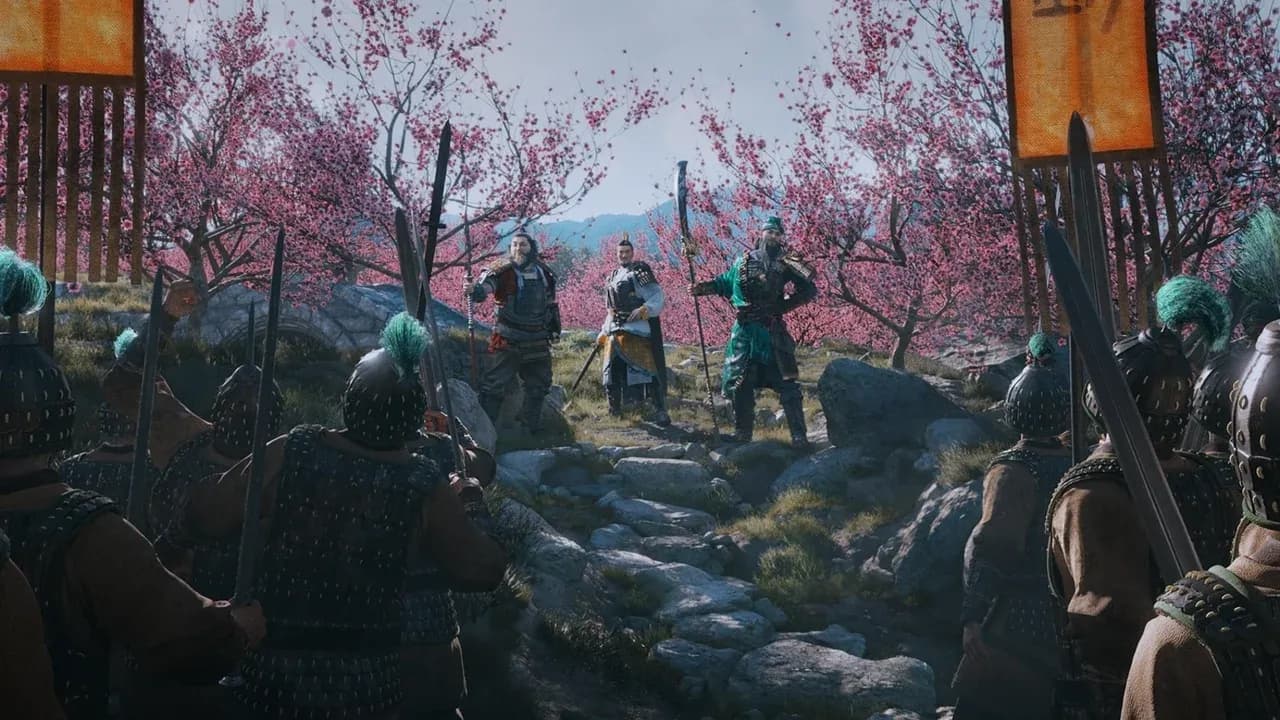
Total War: Three Kingdoms Identity: A Perfect Marriage of History and Legend
Total War: Three Kingdoms doesn't just adapt its legendary source material; it solves the fundamental tension between historical simulation and epic fantasy by offering two distinct, fully realized worlds in a single package. The game's opening gambit is a masterstroke of player agency: you don't just choose a warlord, you choose the very fabric of reality. The choice between Romance and Records mode is the game’s most profound design decision, a bifurcation that lets you decide whether you’re commanding a grounded historical army or orchestrating a mythic opera of demigod warriors. This isn’t a superficial toggle—it fundamentally reshapes the battlefield, the stakes of every campaign, and the emotional tenor of your conquest.
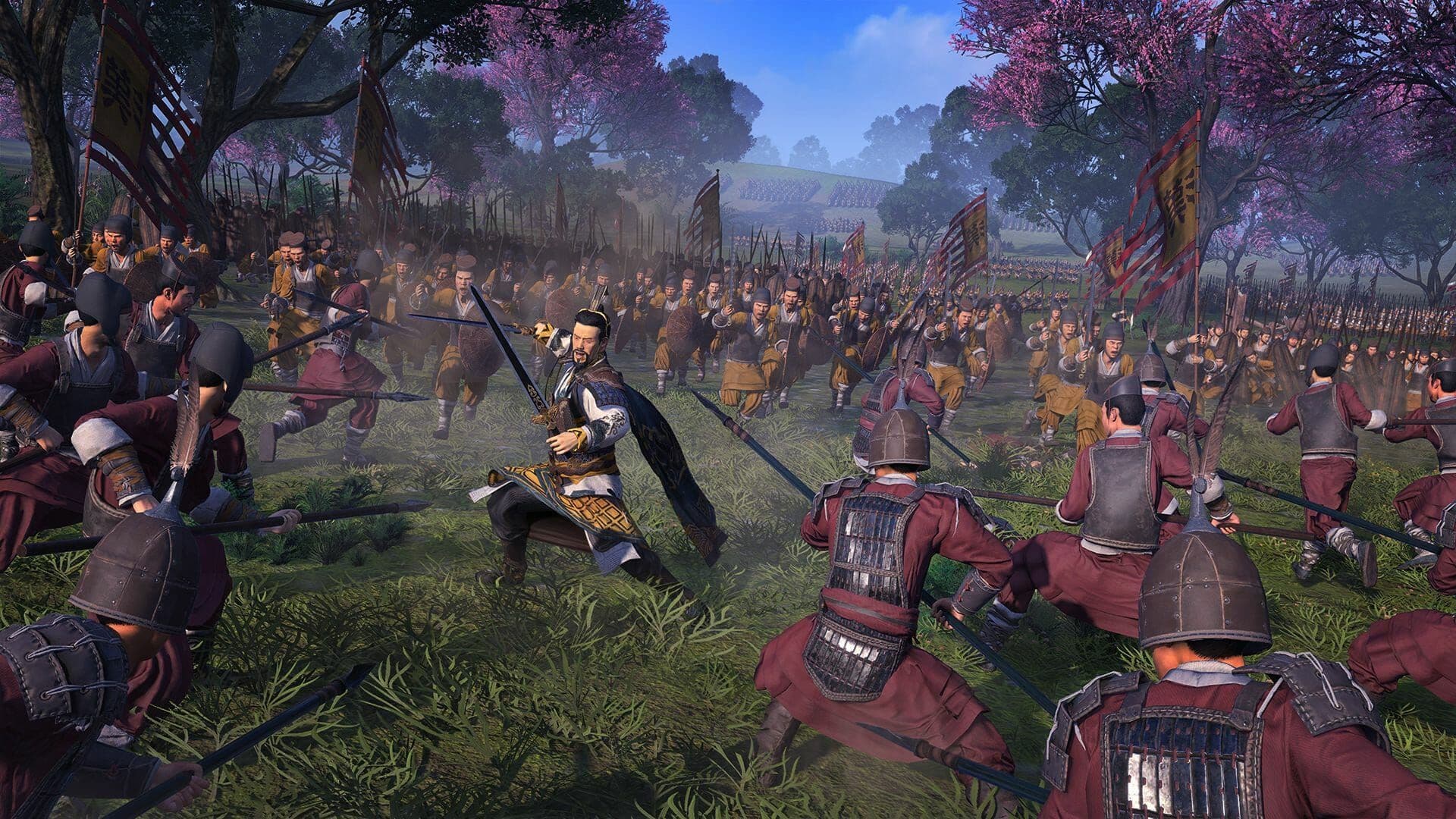
The game's art style blends historical grit with the vibrant aesthetics of Chinese legend.
The setting of 190 CE China, at the collapse of the Han dynasty, provides the perfect canvas for this duality. War of the Three Kingdoms brilliantly synthesizes the granular, empire-simulation roots of the series with a newfound, character-driven role-playing fantasy. On the campaign map, you’re managing food surpluses and diplomatic treaties with the cold calculus of a statesman. On the battlefield in Romance mode, you’re watching in awe as your champion general, Lu Bu, single-handedly shatters an enemy line before challenging their commander to a cinematic, Wushu-inspired duel. This marriage of scales—the macro of a crumbling empire and the micro of legendary heroes—is where the game finds its unique soul. It transforms dry historical troop movements into a human drama of ambition and betrayal.
The genius of this dual-mode system is that it respects both the purist who wants a historically grounded experience and the fantasist who wants to live the novel. It doesn't force one vision upon the other, but rather builds two complete games in one.
Romance mode is, by a wide critical consensus, the definitive way to play. It’s here that Creative Assembly fully embraces the spirit of the 14th-century novel, turning your generals into battlefield titans whose personal rivalries and heroic feats feel worthy of legend. A general can hold a gate against a hundred soldiers, and a well-timed duel can swing the morale of an entire army. This is the mode where the game’s much-praised character system sings loudest. In contrast, Records mode offers a more traditional Total War experience where generals are mortal leaders embedded in bodyguard units, and combat is a slower, more attritional affair. While a commendable inclusion for history buffs, it can feel like a slightly less distinct echo of past historical titles, lacking the unique, personality-driven spark that makes this entry so special.
Your journey into this fractured China begins with the selection of one of eleven legendary warlords, each a distinct strategic and narrative proposition. Cao Cao, the "Strategic Mastermind," plays a shadow game of diplomacy, using his unique Credibility resource to manipulate other factions into proxy wars. Sun Jian, the "Tiger of Jiangdong," thrives on martial prowess, his Heroism reducing military costs. This isn't just cosmetic flavor; these mechanics dictate your entire playstyle from turn one, setting the campaign's difficulty and narrative arc. Choosing the bandit queen Zheng Jiang, who grows stronger through chaos and sacking, is a fundamentally different—and far more aggressive—experience than guiding the virtuous Liu Bei, who starts with powerful sworn brothers but no home territory. This variety ensures that the opening hundred turns are not a repetitive grind, but a fresh puzzle defined by the warlord's unique tools and temperament.
By offering this foundational choice between history and legend, and then layering on top of it a roster of deeply asymmetric warlords, Total War: Three Kingdoms announces itself as a game of profound player expression. It understands that the appeal of this era isn't just in the dates and borders, but in the larger-than-life personalities who shaped them. The stage is set not just for conquest, but for a saga written by your hand, in the genre of your choosing.
Total War: Three Kingdoms Gameplay: The Evolution of Character-Driven Strategy
The heart of War of the Three Kingdoms isn't found in its sprawling map or its rock-paper-scissors unit roster, but in the people who inhabit it. This is a strategy game where the most critical resource isn't food or gold, but loyalty, and where an army's true strength is measured not just in spears, but in the bonds between the generals who wield them. Creative Assembly has finally built a campaign where your most powerful decisions are about personalities, not provinces.
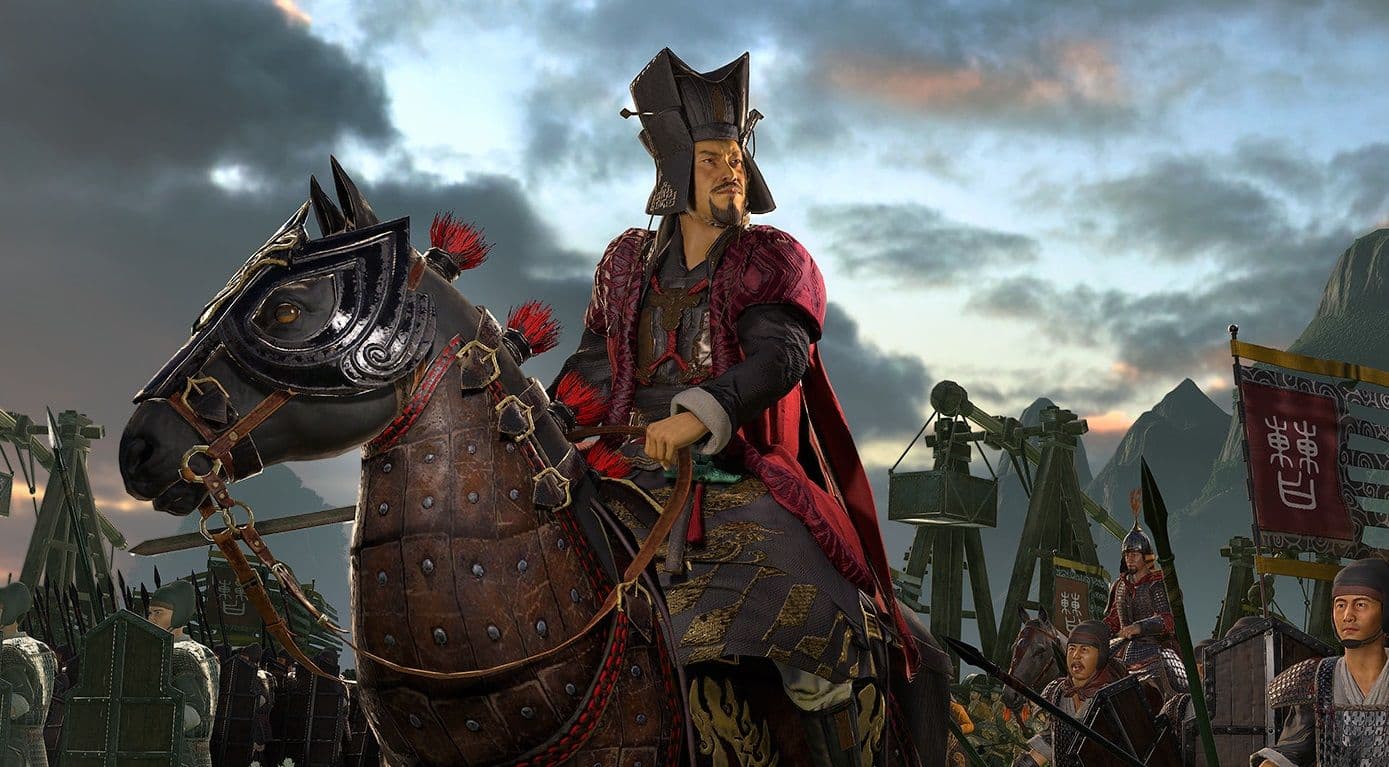
Individual leaders dictate the flow of both diplomacy and warfare.
At its core is the brilliant Guanxi system, a dynamic web of relationships that transforms your roster of generals from interchangeable stat blocks into a volatile, living court. Friendships forged in shared victories can lead to reckless, heroic charges if a sworn brother falls. Rivalries simmering in the same army cripple morale and efficiency. I once watched my faction heir, Cao Pi, and the legendary warrior Xiahou Yuan form a powerful political bloc within my own administration, united by shared traits of zeal and honor, subtly influencing every ministerial appointment I made. This system forces you to think like a ruler, not just a tactician. Promoting a talented but arrogant general to a high court position might placate him, but it could enrage his more humble rivals. The threat of a key character defecting—taking their entire personal retinue with them—hangs over every decision, adding a layer of human drama that Crusader Kings veterans will recognize and cherish.
This is the game's masterstroke: it makes management of people as strategically deep and engaging as management of an empire. Your greatest threats and most powerful tools are the personalities in your court.
This character-centric philosophy fundamentally reshapes army composition. Gone are the monolithic 20-unit doomstacks of old. Here, an army is a gathering of up to three generals, each commanding their personal retinue of six units. This 18-unit cap isn't a limitation—it's a design revelation. It encourages thoughtful, synergistic builds over brute force. You're not just recruiting spearmen; you're recruiting spearmen for your Vanguard general, who buffs their charge bonus. You're not just adding archers; you're adding the high-end crossbow units that only a Strategist-class general can recruit. The five general classes—Commander, Strategist, Vanguard, Champion, Sentinel—aren't cosmetic labels. They dictate your tactical identity. A Champion is a duelist, perfect for challenging enemy heroes. A Strategist unlocks advanced battlefield formations and siege engines. Building an army means assembling a complementary trio, like pairing a Sentinel's defensive auras with a Vanguard's shock cavalry, all orchestrated by a Commander's leadership bonuses. It’s a puzzle that remains satisfying for dozens of hours.
This personal connection extends into a satisfying RPG-like progression system. Your generals level up, unlocking new skills on branching trees that tailor them to specific roles. Equipping them with Ancillaries—unique weapons, armor, horses, and followers—visually changes their model on the battlefield and tangibly boosts their stats. Finding a legendary halberd for your Vanguard or a rare treatise for your Strategist feels meaningful because it directly empowers a character you've nurtured through multiple campaigns. They become your party members in a grand strategic RPG.
However, this intense focus on characters comes at a cost to the traditional spectacle of war. The unit diversity is, by Total War standards, notably narrow. With all factions drawing from the same Chinese cultural milieu, you'll see the same core types of swordsmen, spearmen, archers, and cavalry across hundreds of battles. The tactical depth relies almost entirely on the rock-paper-scissors interplay of these units and the heroes leading them. For players coming from the outrageous variety of Total War: Warhammer, with its dragons, dinosaurs, and steam tanks, the grounded realism here can feel repetitive by the late game. You master the interactions between unit types relatively early; the enduring challenge comes from managing the ever-shifting human elements layered on top.
Yet, that's precisely the point. War of the Three Kingdoms sacrifices some visual variety on the battlefield to achieve an unparalleled depth in the command tent. It asks you to care less about whether you have elite spear guards and more about whether those spears are led by a general who hates his co-commander. The game’s strategic soul isn't in the clash of anonymous regiments, but in the fraught alliances and personal ambitions of the individuals who bring them to war.
Diplomacy and Espionage: Outwitting Rivals in Ancient China
In War of the Three Kingdoms, the campaign map transforms from a mere board for moving armies into a vibrant theater of human ambition, where a well-placed word can be as decisive as a legion of spears. This is where the game earns its reputation as a strategic masterpiece, not through overwhelming force, but through an intricate dance of diplomacy and subterfuge that finally makes the spaces between battles as compelling as the clashes themselves.
The overhauled diplomacy system provides clear feedback on deal success probabilities.
The most immediate and welcome revolution is in the diplomacy interface itself. Creative Assembly has eradicated the frustrating guesswork that plagued earlier titles by introducing a supremely functional Quick Deal button and a Make it work option. Want to know exactly what it would take to secure a non-aggression pact with your powerful northern neighbor? A single click reveals the price, often a combination of food, gold, or a temporary alliance. If the deal is imbalanced, the Make it work function tells you precisely what extra concessions—be it an ancillary item or a chunk of territory—will bridge the gap. This transparency doesn’t simplify diplomacy; it empowers it. You spend less time deciphering hidden AI calculus and more time engaging in the actual political game, calculating whether paying 2,000 gold to keep Sun Jian off your back for ten turns is a smarter investment than recruiting two extra units of cavalry.
This is a fundamental quality-of-life improvement that every grand strategy game should adopt. It turns diplomacy from a murky art into a precise science of statecraft, where every relationship has a clear, negotiable value.
This robust toolset facilitates a diplomatic landscape of remarkable depth. The game moves far beyond simple peace treaties and trade agreements. You can form coalitions, multi-faction alliances with their own internal voting systems on admitting new members. Vassalage is a common and dynamic tool—weaker factions will readily submit, offering income in exchange for protection, but they often demand autonomy, limiting your direct control. The late-game escalation into the titular Three Kingdoms standoff is a brilliant narrative device that organically emerges from these systems, channeling the chaotic mid-game into a tense, three-way cold war. Most impressively, these interactions feel like genuine human exchanges. An ally you’ve propped up for decades might suddenly turn hostile after you capture a province they coveted, not because of a scripted event, but because their leader’s “Ambitious” trait finally overrode their sense of loyalty. The AI’s memory is long, and its actions are convincingly rooted in the personalities you’ve come to know.
This personality-driven diplomacy is supercharged by unique faction resources, which are the cornerstone of the game’s immense replayability. Playing as Cao Cao isn’t just a different starting position; it’s a different genre of strategy. His Credibility resource allows you to spend points to manipulate the relationship between any two other factions on the map. For 75 Credibility, you can instigate a devastating proxy war between two rivals, weakening them both without ever lifting a sword. In contrast, Sun Jian’s Heroism reduces recruitment and upkeep costs, favoring a more straightforward, expansionist playstyle. The Bandit Queen Zheng Jiang gains strength from chaos, incentivizing a campaign of hit-and-run raids. These mechanics aren’t minor bonuses; they dictate your entire diplomatic posture and force you to engage with systems you might otherwise ignore, ensuring that each warlord’s campaign tells a uniquely personal story of conquest.
However, for all its diplomatic brilliance, the game’s espionage system represents a rare stumble in communication. The mechanics of planting and managing spies are undoubtedly deep—you recruit a character from your court, send them to infiltrate another faction, and hope they rise to a position of influence. Once embedded, they consume a combination of global Undercover Network points and individual Cover to perform actions ranging from stealing funds to sabotaging armies. The potential for dramatic, narrative-driven betrayal is fantastic, like watching a trusted general you’ve nurtured for years suddenly defect and take their elite retinue with them. Yet, the game does a poor job of explaining the core loop. The relationship between Network and Cover is nebulous, feedback on a spy’s chance of being recruited or detected is minimal, and the interface buries critical information. You can play for dozens of hours and only vaguely understand how to reliably use spies, which renders this potentially rich layer of strategy frustratingly opaque for many players.
This complexity is somewhat mitigated by an AI that is generally more aggressive and politically savvy than in past Total War games. Factions actively seek vassals, form defensive coalitions against rising powers, and will dogpile a weakened enemy. You are rarely allowed to tech up in peace for long. That said, the diplomatic AI can still be gamed by a patient player with a deep treasury, as relentless gifts can eventually warm even the coldest relations. Furthermore, the late-game shift to the Three Kingdoms phase can sometimes feel predictably antagonistic, as the two rival kingdoms almost universally turn hostile, simplifying the intricate web of alliances into a binary showdown. Yet, these are minor quibbles in a system that, for the vast majority of the campaign, creates a dynamic, unpredictable, and deeply human political landscape that stands as the new gold standard for the genre.
The Art of War: Tactical Battles and Cinematic Duels
The battlefield is where War of the Three Kingdoms makes its most spectacular and, at times, most contradictory statements. It delivers breathtaking moments of cinematic heroism that feel ripped from a blockbuster, while the rank-and-file soldiers beneath these titans can sometimes feel like an afterthought. This is a real-time war engine designed to showcase legends, sometimes at the expense of the common soldier.
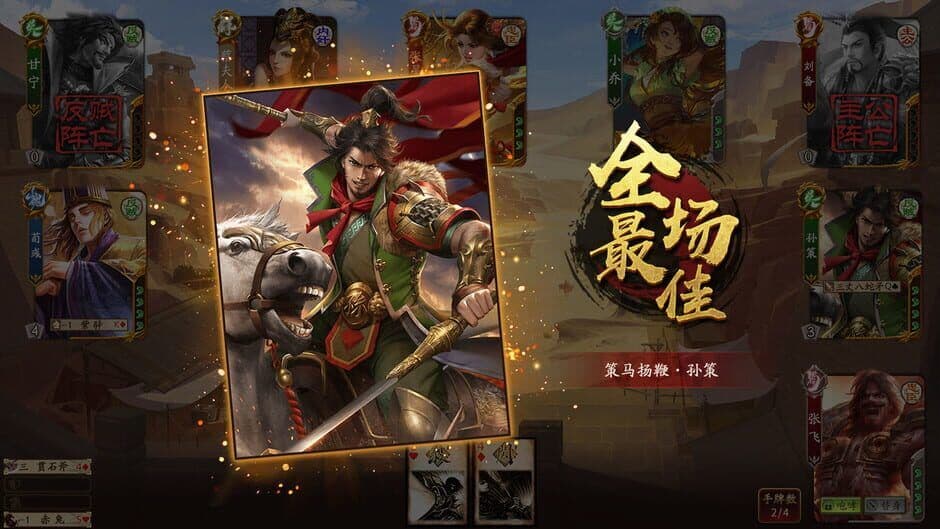
Real-time combat requires careful positioning and use of unit abilities.
At the heart of this spectacle is the dueling system, a brilliant and defining feature of Romance Mode. When rival generals lock eyes and issue a challenge, the battlefield transforms into a personal arena. The surrounding troops form a circle, health bars appear overhead, and the game delivers a stunning, Wushu-inspired one-on-one fight. This isn’t just visual flair; it’s a masterful tactical lever. Winning a duel can instantly shatter the enemy army’s morale, turning a precarious engagement into a rout. The moment I saw my Champion, Lady Bian, avenge her son by cutting down the Yellow Turban general He Yi in a flurry of blade strikes, the entire enemy line began to waver and flee. It’s a mechanic that perfectly marries the game’s character-driven narrative with tangible battlefield impact, making every legendary hero’s presence a strategic priority you must either counter or exploit.
The duels are the game’s most memorable set-pieces, transforming statistical combat into a personal, dramatic clash where the fate of thousands can hinge on a single sword stroke.
Beyond these heroic showdowns, the battle engine itself represents a polished, if familiar, iteration of the Total War formula. The retinue system discussed earlier pays dividends here, creating smaller, more manageable armies of 18 units that encourage thoughtful composition over brute-force doomstacks. The inclusion of special formations—unlocked by Strategist generals—adds a welcome layer of tactical depth, allowing spear walls to brace against cavalry or archers to spread into loose order. The visual presentation elevates these engagements considerably; night battles are illuminated by the gentle glow of soldiers’ lanterns, and seasonal changes see fights play out across snowy fields or rain-slicked grasslands. Terrain matters, with forests providing cover for ambushes and rivers creating natural chokepoints. It’s the best the historical battle system has ever looked and felt, running with a smoothness that puts earlier titles like Rome II to shame.
However, this polish highlights a stark contrast in attention to detail. While the generals perform their cinematic, motion-captured martial arts routines, the ordinary soldiers beneath them often engage in what can charitably be called “air-swiping.” Their combat animations lack the weight and impact of the heroes, frequently resulting in two units milling together with minimal visible contact until health bars deplete. After the visual fireworks of a duel, watching your frontline infantry vaguely wave their spears can feel like a jarring step down in fidelity. It’s a reminder that the game’s artistic resources were lavished on its starring characters, leaving the supporting cast with less convincing choreography.
This uneven focus becomes most apparent in the game’s most glaring omission: the complete absence of naval combat. Given the setting’s iconic rivers like the Yangtze, and the historical importance of naval power, the decision to relegate all sea encounters to auto-resolve feels like a significant missed opportunity. It strips a potential layer of strategic diversity from the campaign and reduces the rich Chinese geography to a landlocked puzzle. While the land battles are generally excellent, knowing that any army crossing a major waterway will trigger a bland calculation rather than a playable battle creates a tangible gap in the martial fantasy the game otherwise sells so well.
Ultimately, the visual and atmospheric triumph of War of the Three Kingdoms cannot be overstated. The watercolor-inspired campaign map is a work of art, shifting beautifully through the four seasons, with cherry blossoms in spring and golden leaves in autumn painting a living portrait of ancient China. The UI is a masterclass in clarity and thematic cohesion, using the Wu Xing (Five Elements) color-coding to intuitively tie units, buildings, and tech to their philosophical counterparts. This stunning presentation wraps the sometimes-uneven battle experience in a package so gorgeous you’re willing to forgive its shortcomings. The game makes you feel like a warlord in a legendary tapestry, even if the threads holding some parts of that tapestry together are thinner than others.
Technical Performance: A New Benchmark for Creative Assembly
For a series once infamous for its technical growing pains, War of the Three Kingdoms arrives as a revelation. This isn't just a polished game; it's a statement of intent, showcasing a level of technical refinement and thoughtful interface design that sets a new benchmark for the franchise and the strategy genre at large. Where titles like Rome II launched with crippling performance issues, this entry runs with a smooth confidence that finally matches the ambition of its design, letting you focus on statecraft rather than stuttering framerates.
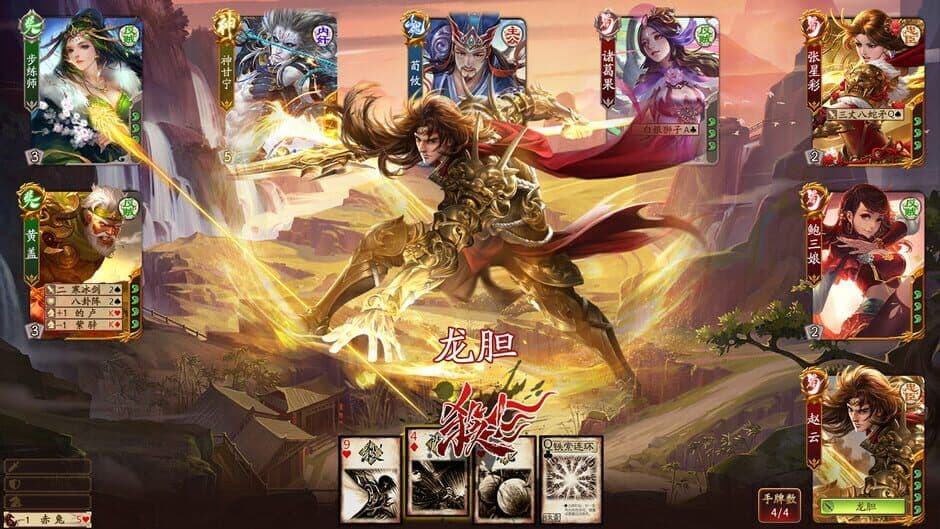
Performance remains stable even during large-scale tactical encounters.
The most immediately tangible improvement is raw performance. After years of players accepting chugging framerates in large-scale clashes as a Total War tax, War of the Three Kingdoms delivers a remarkably stable experience. Multiple reviewers noted framerates nearly 50% higher than Thrones of Britannia on identical hardware (a GTX 1070 and i7-4770K), even with settings on Ultra. On the campaign map, the beautiful watercolor landscapes scroll seamlessly, and in battles, the chaos of thousands of soldiers—lanterns glowing in night fights, duels erupting in particle effects—generally maintains a steady pace. This optimization is the silent hero of the experience, ensuring the game’s strategic and cinematic moments aren’t undermined by technical hiccups.
This is the first Total War in years where the spectacle on screen is consistently matched by the fluidity of the engine running it. The days of apologizing for the series' technical state are, finally, over.
This fluidity extends to loading times, provided you meet the game's one clear hardware recommendation: an SSD. Installing War of the Three Kingdoms on a solid-state drive results in snappy transitions, with campaign loads averaging under 20 seconds and battle loads often faster. However, the experience on a traditional HDD reverts to the lengthy waits the series is known for, with some reports of load times stretching past a minute. It’s a stark divide that effectively makes an SSD a soft requirement for a enjoyable, uninterrupted campaign flow. Once in the game, you’re greeted by what might be Creative Assembly’s single greatest achievement: a masterfully designed user interface. The Wu Xing (Five Elements) system isn’t just lore; it’s the backbone of an incredibly intuitive UX. By color-coding everything—green for Wood (spearmen, agriculture), red for Fire (cavalry, industry), and so on—the game creates a visual language that makes managing a complex empire instinctive. You immediately understand that a green building boosts your green units, and that a tech on the blue “Water” branch of the beautiful, tree-shaped reform tree will benefit your commerce. This thematic cohesion turns overwhelming bureaucracy into a manageable, even pleasurable, puzzle.
However, to witness this artistry in its full glory demands significant graphical horsepower. While well-optimized relative to its predecessors, achieving a stable 60fps at maximum settings and high resolutions still calls for top-tier hardware, with recommendations pointing to a GTX 1080 or better. Pushing the stunning unit details, expansive draw distances, and dynamic weather effects can bring even powerful rigs to their knees during massive, 40-unit siege battles. The trade-off is clear: you can have a flawless strategic experience on medium settings, or a breathtakingly cinematic one on Ultra, but securing both simultaneously remains a challenge for all but the most elite PCs.
The final layer of this technical package is auditory, and here player choice dramatically impacts immersion. The Chinese voice acting is widely and correctly praised as the definitive way to play. The performances carry a gravitas and authenticity that perfectly sell the drama of the court and the intensity of battlefield banter, making the world feel genuinely ancient and alive. In contrast, the English dub is frequently cited as underwhelming, with stilted deliveries that can undermine the very character drama the game works so hard to build. It’s a rare misstep in presentation, but one easily remedied by switching audio tracks—a simple setting that profoundly improves the narrative texture of your campaign.
Final Verdict: Is Total War: Three Kingdoms the Series' New Emperor?
The final test of any grand strategy game isn’t its opening moves, but its enduring legacy after the map is painted and the throne is claimed. War of the Three Kingdoms doesn’t just pass this test; it redefines the criteria, delivering a campaign that is both a monumental commitment and a deeply personal saga you’ll want to relive. This is where the game earns its reputation as a modern classic, a title that respects your time by ensuring no two conquests feel the same. The 60+ hour journey to unification is a masterclass in replayability, driven by the profound asymmetry of its warlords and the organic, tense escalation into the titular Three Kingdoms standoff. Playing as the diplomatic puppeteer Cao Cao, who can spend Credibility to start wars between his rivals, is a fundamentally different cerebral exercise from leading the martial powerhouse Sun Jian or the chaos-driven Bandit Queen Zheng Jiang. The late-game shift, where the two most powerful rivals declare themselves emperors alongside you, channels the sprawling mid-game chaos into a gripping, three-way cold war that feels earned, not scripted, ensuring the final act is as strategically demanding as the first.
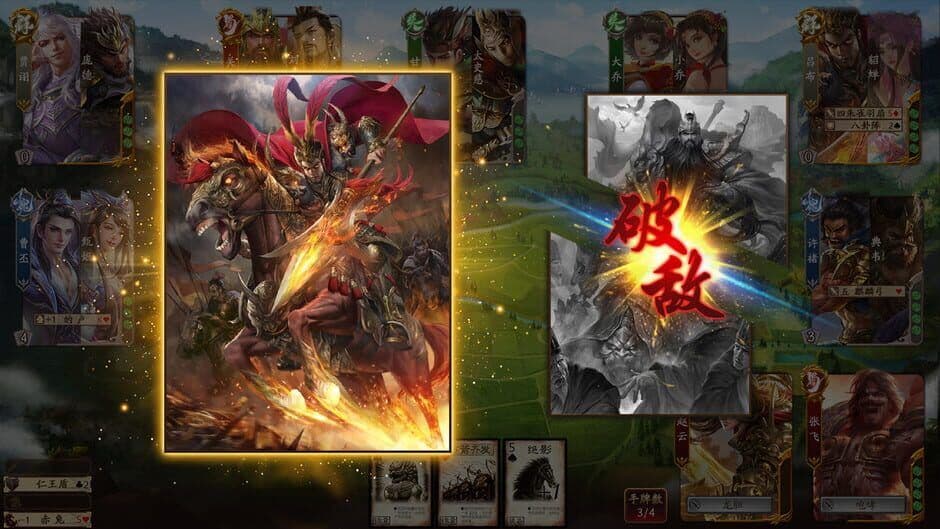
Unit variety and tactical formations remain central to the gameplay.
This is Creative Assembly’s most coherent and complete package in nearly a decade, a “greatest hits” compilation that marries Shogun 2’s thematic purity with Warhammer’s character obsession, all wrapped in a technical polish the series has long needed.
Its genius lies in its dual appeal. For newcomers intimidated by the genre’s complexity, War of the Three Kingdoms is the ideal entry point. The transparent diplomacy with its Quick Deal button, the intuitive Wu Xing color-coded UI, and the clear tooltips demystify empire management without dumbing it down. Yet, for veterans and lore nerds steeped in the Romance of the Three Kingdoms, it offers a bottomless well of strategic depth and narrative fan service. Managing the volatile Guanxi system in your court, where a spurned general can defect with his entire army, requires a Crusader Kings-level of interpersonal scheming. The game trusts you to handle both the macro and the micro, rewarding patience and cunning in equal measure.
Of course, no throne is won without compromise. The game’s focus on its legendary heroes and intricate diplomacy comes with tangible trade-offs. The unit variety is notably narrow compared to the fantastical rosters of Total War: Warhammer; you will see the same core types of Chinese infantry and cavalry across every faction, which can make late-game battles feel visually repetitive once you’ve mastered the rock-paper-scissors fundamentals. The espionage system, while deep, is poorly explained, leaving its mechanics of Undercover Network and Cover frustratingly opaque for many players. Furthermore, the brilliant diplomatic engine can sometimes engineer an anticlimax, as a powerful rival might surrender through negotiation rather than a final, epic siege, robbing you of a cathartic, blood-soaked finale.
Yet, these flaws are cracks in a marble palace. War of the Three Kingdoms stands as a landmark achievement, a game that successfully transplants the heart of a role-playing epic into the body of a grand strategy wargame. It is the definitive digital adaptation of its legendary source material and, without hyperbole, one of the finest historical strategy games ever crafted.
Final Score: 9.5/10 – A New Emperor Ascends
Pros:
- Revolutionary Diplomacy: Transparent, deep, and personality-driven, setting a new gold standard for the genre.
- Character-Driven Masterpiece: The Guanxi system and hero-centric design make empire management a human drama.
- Stunning Art Direction & UI: A watercolor painting come to life, with an interface that is both beautiful and brilliantly intuitive.
- Technical Redemption: Exceptional performance and optimization mark a return to form for the franchise.
- High Replayability: Asymmetric warlord mechanics and the dynamic Three Kingdoms endgame demand multiple campaigns.
Cons:
- Limited Unit Variety: Grounded realism leads to less visual diversity on the battlefield compared to fantasy entries.
- Opaque Espionage: A deep system hampered by confusing tutorials and poor player feedback.
- Occasionally Anticlimactic: The superb diplomacy can sometimes resolve the endgame without a satisfying final confrontation.