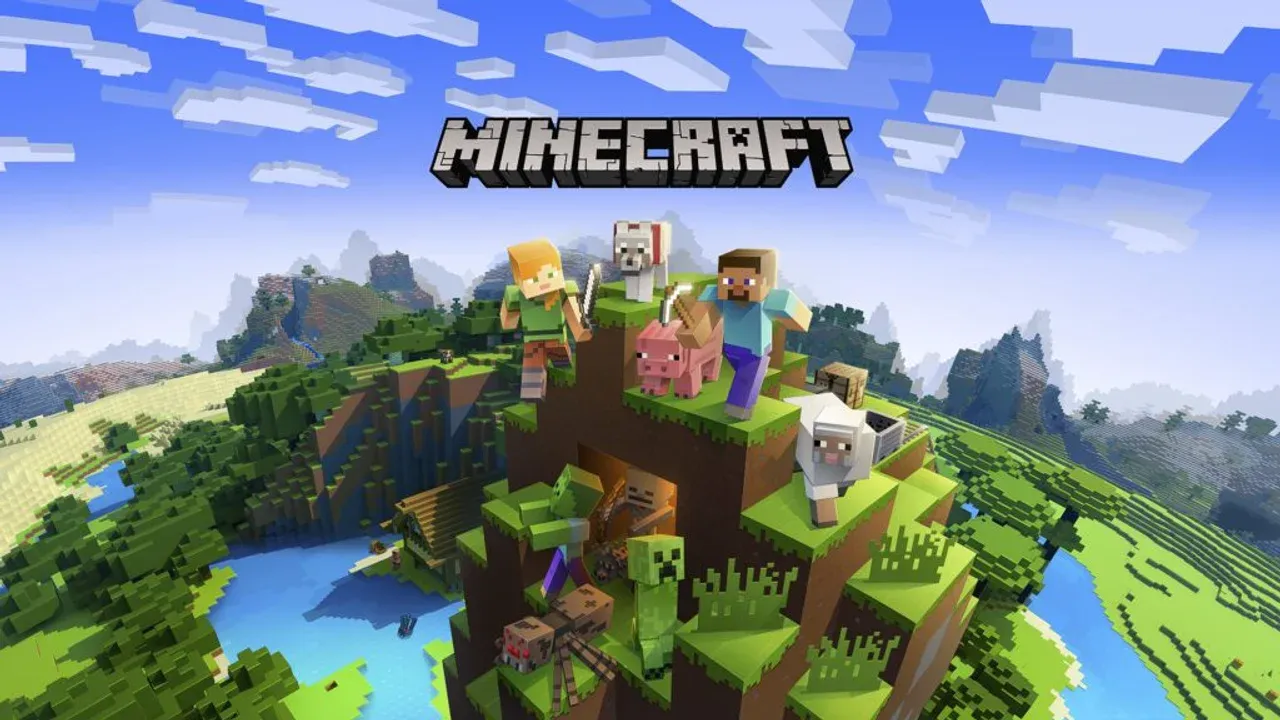
Minecraft Review: Why This Sandbox Remains the Greatest of All Time
To review Minecraft in 2026 is to critique a fundamental force of nature. This isn't just a game that sold well; it’s a cultural cornerstone that, since its indie genesis in 2009, has evolved into a digital language spoken by over 200 million active users. Its blocky, seemingly simple exterior belies a profound, generation-defining truth: Minecraft is less a directed experience and more a primordial toolkit for human imagination. Its core identity, unchanged at its heart, is built upon the most elegant and powerful loop in gaming: see a block, mine a block, place a block. This cycle of creation and destruction is the atomic unit of its genius, a permission slip to reshape an infinite world that has fueled its ascent to becoming the best-selling game of all time, with over 300 million copies sold.
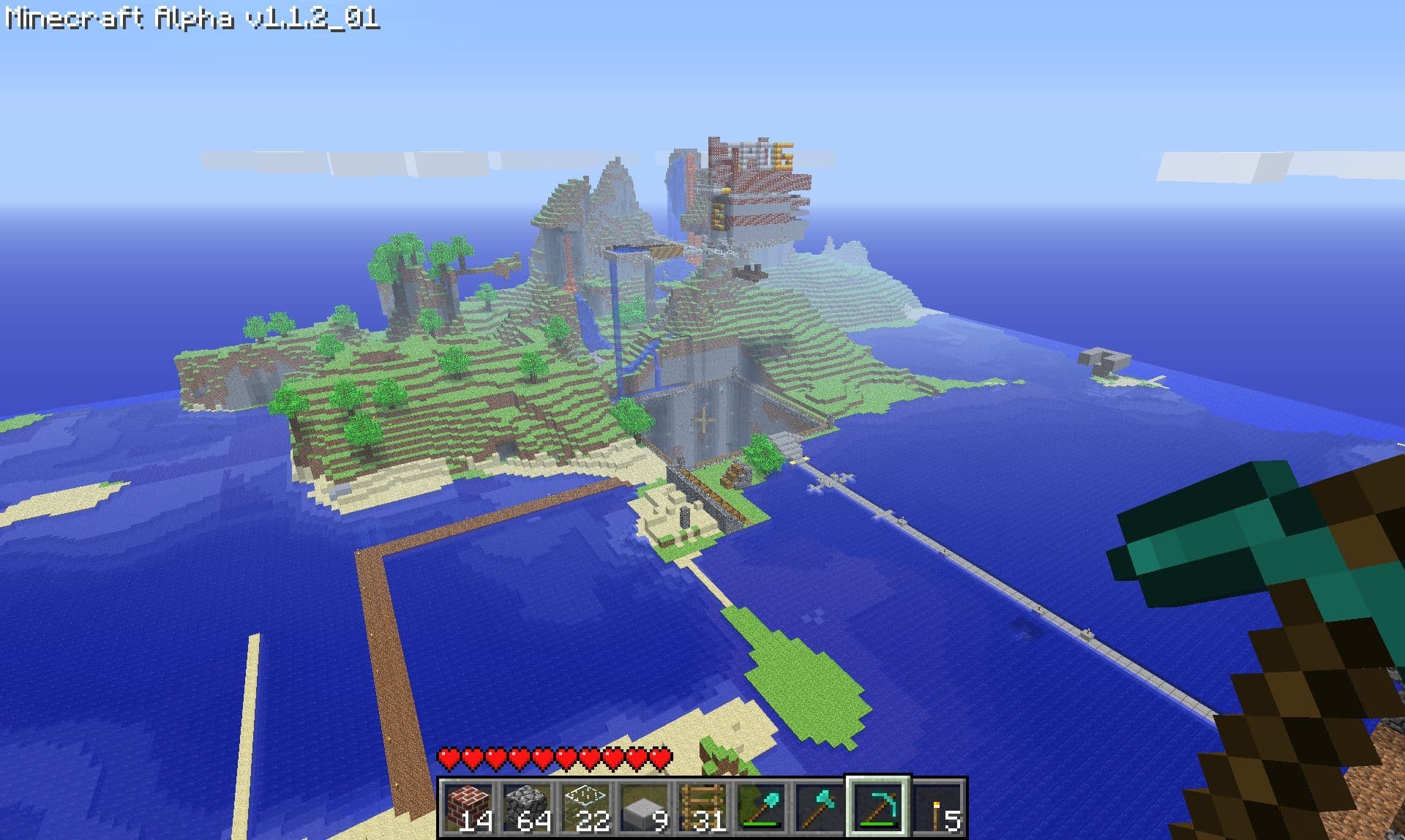
The limitless creativity of Minecraft's sandbox world.
That staggering commercial figure isn't just a statistic; it's a testament to the game's foundational design philosophy of radical player agency. Where most games hand you a quest log, Minecraft hands you a blank page. Your first night isn't scripted—it's a desperate scramble for wood and dirt, a panicked race against a sinking sun as groans echo in the dark. The victory of that first crude shelter, built by your own hands from resources you gathered, instills a sense of ownership no pre-rendered cutscene can match. This is the game’s core proposition: you are not following a story, you are writing one with pickaxes and perseverance. The so-called "end goal" of defeating the Ender Dragon exists, but as one critic noted, it feels like a "lame, unwelcome distraction" from the real draw—the freedom to build a tunnel to nowhere, a mountainside castle, or, as so many do, another rocky phallus.
This is the magic trick: Minecraft presents a universe of near-infinite possibility, yet makes you feel like every cobblestone in your fortress was earned. It’s a toybox of unparalleled scale that asks only one question: "What do you want to do today?"
This open-world "blank page" approach is why it has outlasted every trend and competitor. It doesn't just accommodate different playstyles; it is fundamentally built upon them. One player spends months perfecting a redstone-powered computer, another meticulously recreates the city of Paris, while a third simply enjoys the meditative peace of strip-mining at bedrock level. The game’s true narrative is the one you author, whether it’s a solitary tale of survival or a collaborative epic on a server with friends. This absolute commitment to player-defined purpose, supported by a world that is literally different for every person who plays, transformed a niche Java applet into a global phenomenon. It proved that given the right tools—a pickaxe, a crafting table, and a world without instructions—players would build wonders far beyond any developer's pre-written plot.
Survival vs. Creative: The Dual Heart of Minecraft Gameplay
The genius of Minecraft isn't that it offers a singular, perfect experience, but that it houses two diametrically opposed philosophies under one blocky roof. This is the game’s dual heart: Survival and Creative modes. One is a tense, systemic battle for existence where every block is earned through sweat and strategy. The other is a godlike sandbox of pure, unadulterated imagination. Together, they don’t just cater to different players; they represent the fundamental tension between challenge and creation that makes the game a universal language.
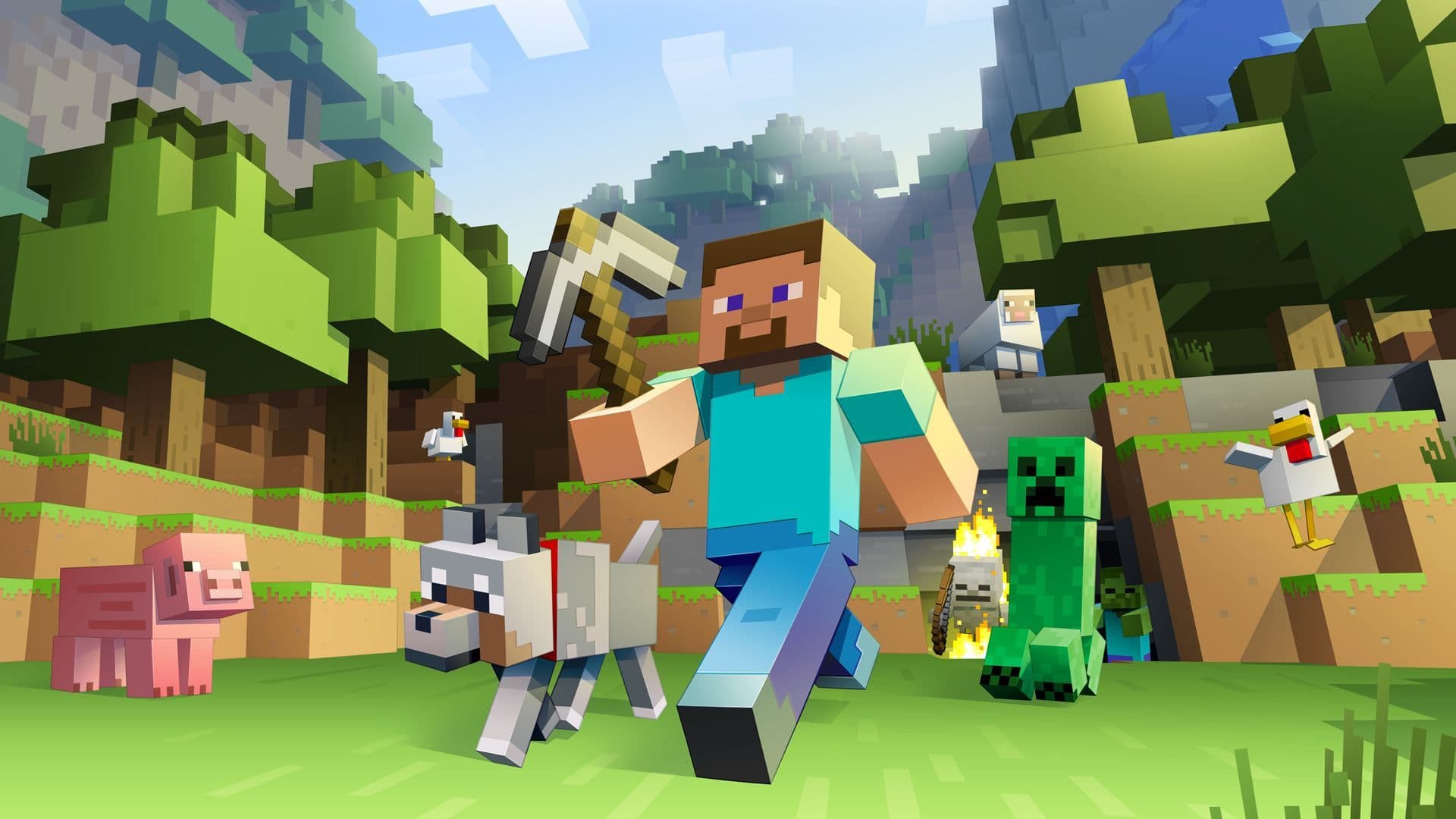
Survival mode focuses on resource gathering and interacting with the world's ecosystem.
Survival Mode is the crucible where the game's most powerful emotions are forged. You begin with nothing—a fragile avatar dropped into a world indifferent to your existence. The immediate scramble for wood before nightfall, the frantic digging of a hillside burrow as groans echo in the dark, the primal satisfaction of crafting your first stone sword: this is a loop that transforms digital resources into tangible pride. The systems are elegantly brutal. A hunger meter demands you hunt and farm, turning passive animals into necessary resources. The four-tier difficulty slider—from Peaceful (no monsters, no hunger) to Hard—allows you to calibrate the threat, but the core tenet remains: ownership is earned. That first cobblestone fortress isn’t just a structure; it’s a monument to the nights you spent cowering in a dirt hut, a trophy built from the very ores you risked life and limb to mine from monster-infested caves. The emergent stories born here are the game’s true narrative—like the PC Gamer reviewer’s tale of being ambushed by skeletal archers while navigating a hundred-meter waterfall in a deep cave, surviving the fall, and fighting their way home laden with precious ore. No quest marker prompted that; the systems did.
This is Minecraft at its most potent: a physics-driven story generator where your panic, ingenuity, and perseverance are the only script.
By contrast, Creative Mode is a declaration of absolute freedom. With infinite resources, flight, and invincibility, the only limit is your patience and imagination. This is where the game’s comparison to a box of digital LEGOs is most apt, but that undersells its function. Creative isn't just for children or casual builders; it's the essential testing ground for the community's most awe-inspiring projects—the fully functional CPUs, the scale replicas of cities, the impossible flying machines powered by redstone. It removes all friction between thought and form. Where Survival makes you earn each stained-glass pane, Creative hands you a palette and says "paint." For many, this is the true endgame: a serene, meditative space where the goal isn't to survive the world, but to perfect it.
This duality exposes the game’s one notable structural weakness. The official "endgame"—gathering rare materials to build a portal to The End and battle the Ender Dragon—feels like a vestigial limb. Critics have rightly called it a "lame, unwelcome distraction" and "not worth the effort." In a game about writing your own story, a prescribed final boss clash is philosophically at odds with the core sandbox. The journey to The End, involving trips to the hellish Nether, can be a compelling personal challenge for a Survival player, but the destination itself is an anticlimax, rewarding you with a poetic epilogue that many never see. The game’s true climax isn't a dragon fight; it's the moment you step back and admire the sprawling, fully-automated farm or the majestic castle you built entirely by hand. Minecraft understands this, which is why that boss is entirely optional—a concession to traditional game structure that the game’s own brilliant design renders beautifully superfluous.
Crafting and Progression: The Steep Learning Curve of a Blocky World
The true test of a sandbox game isn't how many toys it gives you, but how long it takes to figure out what they are. For years, Minecraft presented one of the steepest, most obtuse learning curves in mainstream gaming, rooted in its historically barebones approach to instruction. The game’s philosophy of discovery was radical: it dumped you into a world with no knowledge, no recipes, and only the primal urge to punch a tree. While this led to a profound sense of personal revelation for some, it created a notorious barrier that forced players to leave the game entirely to understand it. The crafting system was a puzzle with hundreds of solutions, none of which were written on the box. For a generation, the first essential tool in any Minecraft player's arsenal wasn't a wooden pickaxe—it was a browser tab open to the official Minecraft wiki.
The sandbox nature of Minecraft offers little guidance, requiring players to experiment.
This reliance on external resources wasn't a minor quirk; it was a fundamental design choice that defined the early experience. The sheer volume of crafting recipes—from the basic 2x2 grid for a wooden plank to the intricate 3x3 arrangements for a piston or a compass—was staggering. The game offered no in-game guide, expecting players to either guess the shape-based logic (a pickaxe looks like its head, a door is a vertical rectangle) or, more realistically, to look it up. As one critic bluntly stated, following a recipe verbatim from a wiki “diminishes the sense of accomplishment.” The process of mining your first diamond was exhilarating; the process of alt-tabbing to learn you needed three diamonds in a row to make a pickaxe was immersion-breaking clerical work. This was Minecraft at its most frustratingly archaic, a brilliant simulation hamstrung by its own refusal to document its rules.
Where this initial opacity pays dividends is in the game’s most celebrated system: redstone. This in-game wiring component, functioning as a form of electricity, transforms Minecraft from a building game into an engineering platform. The lack of hand-holding here is a feature, not a bug. Mastering redstone means understanding real-world concepts like circuits, logic gates, and even CPU architecture. Communities have built functioning computers, automated farms that harvest and replant themselves, and intricate trap-filled dungeons. The journey from connecting a lever to a door to designing a complex 4-bit calculator is Minecraft’s purest form of progression—a deep, systemic skill tree entirely defined by player curiosity and intellect.
Thankfully, Mojang has spent years sanding down these rough edges without dulling the spark of discovery. The pivotal change arrived in version 1.12 with the integrated crafting guide, a recipe book that unlocks as you gather new materials. This single quality-of-life update was a paradigm shift. It respected the player’s time by eliminating the wiki meta-game while preserving the thrill of unlocking new recipes through exploration. You still need to find the sugar cane or the lapis lazuli, but you no longer need to guess how to combine them. Recent updates have applied similar polish to redstone, making signals more predictable and interactions clearer, reducing the frustration when a complex contraption fails due to arcane timing issues. These are not concessions to casual play, but long-overdue acknowledgments that a game about limitless creation shouldn’t place its first limit at the door of a web browser.
The progression this systems mastery enables is Minecraft’s hidden narrative. You begin in a “stone age,” fashioning crude tools from wood and rock. Through exploration and experimentation, you advance through technological eras: smelting iron for armor, brewing potions for magic, enchanting gear with otherworldly powers, and ultimately constructing complex rail networks and redstone automata that feel like stepping into the 20th century. This isn’t guided by quest text but by an intrinsic drive to improve your standing in the world. That first night spent cowering in a dirt hut makes the eventual construction of a fully-lit, automated fortress with a minecart transit system feel like a civilization’s rise. It’s a personal tech tree, and every branch you climb is one you discovered for yourself.
Java vs. Bedrock: Navigating the Fragmented Minecraft Ecosystem
Navigating the Minecraft ecosystem in 2026 is less about choosing a game and more about selecting a platform philosophy. This isn't a simple matter of PC versus console; it's a fundamental fork in the road between open, community-driven potential and streamlined, corporate-managed accessibility. The split between Java Edition and Bedrock Edition is the game's most significant, and often most frustrating, fragmentation. Understanding the divide is essential, because which version you play dictates the entire texture of your experience, from how you mod your world to how you pay for it.
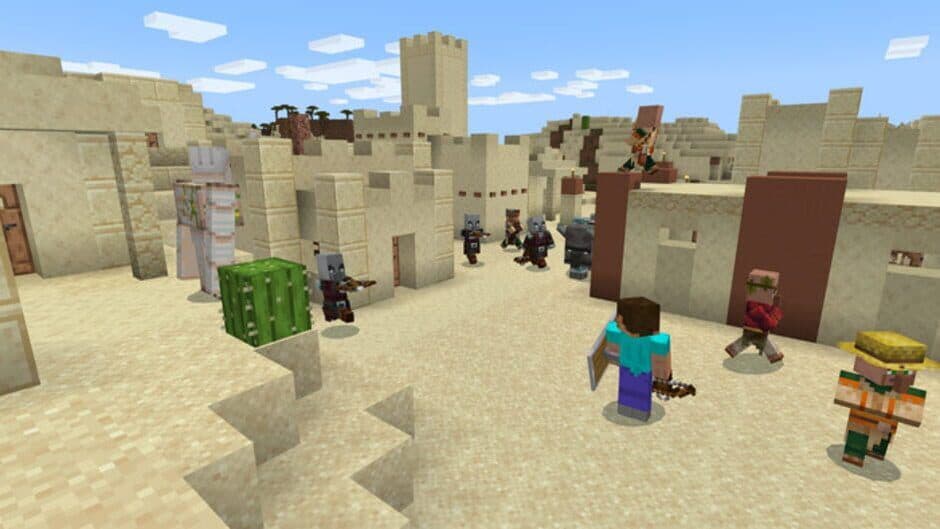
Official screenshots demonstrate the standard visual fidelity of the game.
Java Edition remains the purist's choice and the game's creative heart. This is the original codebase, the definitive version for PC, Mac, and Linux, and it carries the legacy of Minecraft as a player-owned sandbox. Its greatest strength is its nearly limitless modding support. Where Bedrock offers curated "add-ons," Java gives you direct access to the game's code, enabling total-conversion modpacks like "Create" and "Terralith" that can transform the game into an automation-focused factory builder or a world of breathtaking new biomes. The community-run server scene is also unparalleled here—massive hubs like Hypixel, hosting tens of thousands for custom minigames, are a testament to Java's open, player-driven ethos. However, this freedom comes with technical quirks. The integrated server client, even in single-player, can introduce slight but noticeable latency, a trade-off for the flexibility that allows any player to host a world for friends. For the dedicated builder, tinkerer, or community seeker, Java is non-negotiable; it is Minecraft in its most unconstrained, malleable form.
The Bedrock Edition, born from the mobile "Pocket Edition," represents a fundamentally different design priority: unification and control. Its crown jewel is the Better Together update philosophy, enabling seamless cross-play across Windows 10, Xbox, PlayStation, Switch, and mobile. This is a monumental achievement for accessibility, allowing a family to build together regardless of their hardware. The engine is generally smoother and more optimized, especially on lower-end devices, making it the obvious choice for console and mobile players. Yet, this walled-garden approach extends to its content. Modding is restricted to official "add-ons" distributed through the Bedrock Marketplace, a curated storefront that monetizes what the Java community gives away for free.
This brings us to the ecosystem's most contentious element: the Bedrock Marketplace and its virtual currency, Mcoins. Where Java's mod scene is a sprawling, anarchic bazaar of free creations, Bedrock's marketplace is a polished mall. Players use Mcoins (purchased with real money or earned slowly through promotions) to buy skin packs, texture sets, and adventure maps. While this model provides a safe, vetted stream of content and supports creators officially, it can feel aggressively monetized. The marketplace is front-and-center in the Bedrock UI, and the shift from Java's culture of shared, open-source projects to a premium microtransaction economy is stark. For players accustomed to downloading thousands of free mods with a click, Bedrock's approach feels restrictive; for parents seeking a controlled environment, it offers a safer, if more expensive, path.
The fragmentation is visually apparent in 2026. The Vibrant Visuals update, released for Bedrock in June 2025, delivered the most significant graphical overhaul in the game's history, enhancing lighting, water rendering, and atmospheric effects while preserving the iconic blocky style. Sunsets on Bedrock are now genuinely beautiful, and caves feel more atmospheric. As of April 2026, this update has not arrived for Java Edition. Java players are left with the older, flatter visuals unless they manually install community-made shader mods—a powerful option, but one that requires technical know-how and high-end hardware. This visual disparity is a sore point, highlighting Mojang's ongoing challenge in synchronizing the features of two fundamentally different codebases.
Ultimately, your choice hinges on what you value most. Do you prize absolute creative freedom, a vast ocean of free mods, and the raw, community-powered soul of the original? Java Edition is your world. Is your priority playing anywhere with anyone, enjoying a more stable performance out of the box, and accepting a curated, commercialized content ecosystem for that convenience? Then Bedrock Edition will serve you well. This split means there is no single, perfect version of Minecraft—only the one that best aligns with how you want to interact with its infinite possibilities.
The Power of Community: Servers, Mods, and Collaborative Wonders
If the core game is a box of infinite LEGOs, then the community is the global network of architects, engineers, and dreamers who built a cathedral from them. Minecraft’s true longevity isn't found in its official updates, but in the boundless creativity of its players. This is where a sandbox becomes a universe, extended through massive multiplayer servers, world-altering mods, and collaborative projects of staggering scale. The game provides the blocks, but the community provides the ambition, transforming a personal canvas into a shared, living culture.
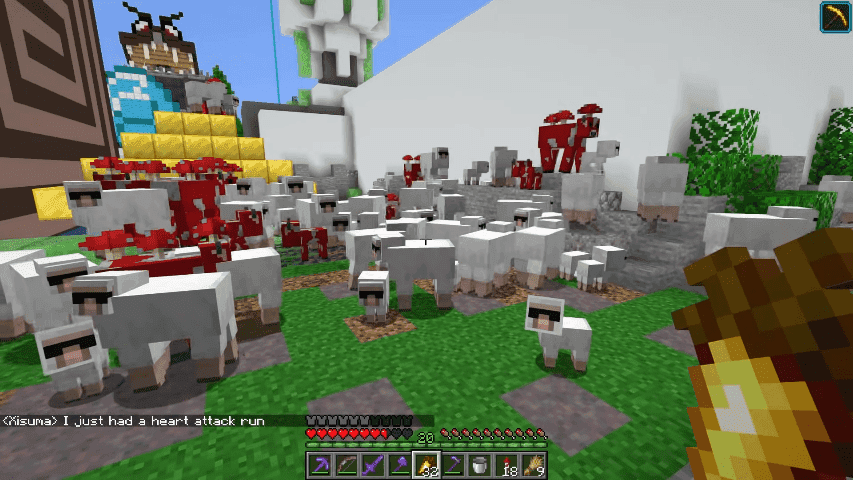
Hermitcraft is a prime example of high-level community collaboration.
The most visible monument to this ambition is the multiplayer server ecosystem, particularly the titanic hubs like Hypixel. These are not just persistent worlds but entire platforms built within Minecraft, hosting tens of thousands of concurrent players in custom-coded minigames—from battle arenas and parkour courses to fully-fledged RPGs. This is a game that has, through player ingenuity, spawned dozens of sub-genres within its own engine. The technical and social feat of maintaining a stable, engaging environment for a population larger than most MMOs is a testament to the game's robust, malleable foundation. It proves that Minecraft is less a singular title and more a foundational engine for social play, a digital town square where the community itself is the primary developer.
This player-as-developer ethos reaches its purest expression in the modding scene, particularly on the Java Edition. Here, the game’s code isn't just a tool, but a language. Total-conversion modpacks like Create—which transforms the game into a steampunk automation puzzle—or Terralith, which overhauls world generation with breathtaking, naturalistic biomes, don't just add content; they redefine the game's identity. They are the reason a player can spend a thousand hours in Minecraft and never touch vanilla survival. This is the community extending the game "miles beyond the base content," as one critic noted, offering experiences as diverse as magic-tech progression systems, hardcore survival overhauls, and adventure maps with cinematic storytelling. The modding scene is Minecraft’s perpetual innovation engine, ensuring the game is never truly "finished."
For more intimate collaboration, the magic unfolds on private servers and Realms. This is where the game's promise of shared creation becomes personal. The stories from platforms like Hermitcraft—where dozens of creators engage in year-long, emergent narratives like a "war" over ground types in a shopping district—showcase how simple game systems can fuel complex social dynamics and storytelling. On a smaller scale, the act of building a shared fortress with friends, where one specializes in redstone wiring, another in grand architecture, and a third in resource gathering, creates a sense of communal ownership and purpose that single-player can't replicate. It transforms the solitary struggle for survival into a collaborative civilization project.
Mojang's official answer to this demand for safe, accessible shared spaces is Minecraft Realms, a subscription-based, always-online server service. For families or friend groups wary of the technical overhead and potential toxicity of public servers, Realms provides a vital, curated solution. It removes the friction of port forwarding and IP addresses, offering a private, persistent world that’s accessible across platforms (within the Bedrock ecosystem). While the subscription model can feel like a tax on community for a game you already own, its value is in peace of mind—it’s a walled garden where the only griefers are your little brother, and the only rules are the ones you set. It formalizes the collaborative wonder, making it accessible to anyone, not just the technically savvy.
The power of Minecraft’s community, therefore, is its ability to operate at every scale: from the global phenomenon of Hypixel, down to the private, heartfelt world built by a parent and child on a Realm. It validates the game's core design of providing simple, interoperable systems. The developers gave players a consistent set of physics and blocks; the players returned with universities, computers, and nations. This symbiotic relationship is the ultimate reason the game feels eternally relevant. No matter how you choose to play—alone, with mods, or on a server with thousands—you are participating in a collective act of imagination that has long since escaped Mojang's original canvas. The game is the platform, but the community is the legacy.
Aesthetics and Atmosphere: The Beauty of Blocky Minimalism
To dismiss Minecraft’s visual presentation as merely “blocky” is to miss its genius. The game’s aesthetic isn’t a limitation of its 2009 origins; it’s a deliberate, foundational design choice that achieves a universal, timeless quality. The “brazenly generic graphic style,” as one critic perfectly described it, uses simple cubes and a muted, pixelated texture palette to create a visual language as neutral and interpretable as LEGO. This is not a world weighed down by a specific artistic vision or cultural theme; it is a blank, abstract canvas. A tree is recognizable not by photorealistic bark, but by its brown trunk and green cube foliage. A mountain is a jagged stack of gray and tan blocks. This visual minimalism is the key that unlocks the game’s creative potential—it removes the intimidation factor of high-fidelity art, making the act of building feel approachable and logical. You are not daunted by sculpting a perfect arch; you are stacking blocks. This simplicity ensures the game’s look remains cohesive and iconic, never dating itself in the chase for graphical realism, and allowing players from any age or background to project their imagination onto its grid.
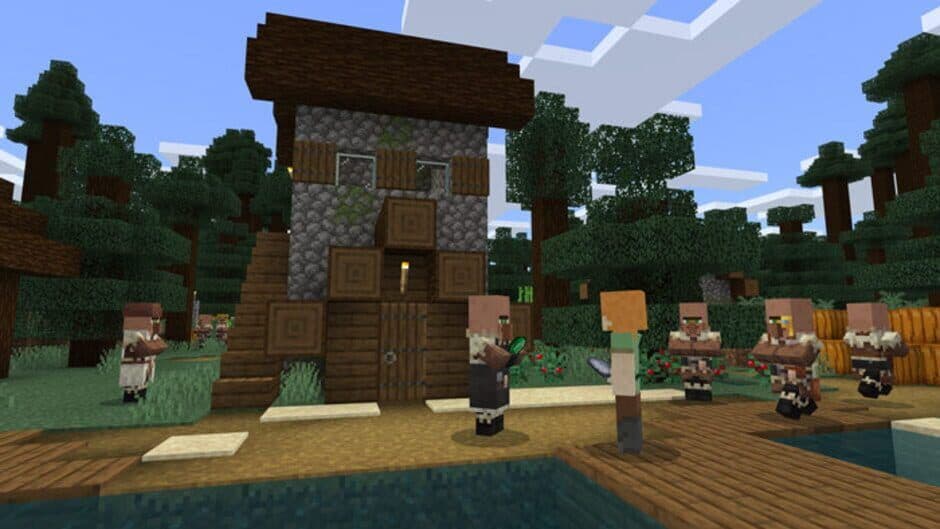
The simple geometry of Minecraft creates a surprisingly emotional atmosphere.
The true soul of this minimalist world, however, is breathed into it by its soundscape. The iconic, minimalist piano compositions by C418 and Lena Raine don’t just accompany play; they define its emotional texture. These sparse, melancholic melodies drift in during moments of quiet exploration—sunset over a new hill, a lonely trek across a frozen biome—creating a contemplative, almost meditative atmosphere. The music is sporadic, often letting the ambient sounds of wind, water, and animal calls take center stage, which makes its arrival feel like a personal reward for the player’s solitude. This audio design masterfully reinforces the game’s core theme of self-directed discovery. There are no heroic fanfares for slaying a dragon; instead, a gentle piano piece might play as you admire the castle you built stone by stone, imbuing your personal achievement with a profound, quiet dignity. It’s a soundtrack that earns a permanent spot on your playlist because it doesn’t feel like it’s scoring a game, but your own thoughts and accomplishments.
Where Minecraft once relied solely on player imagination for narrative, recent updates have introduced subtle, brilliant strokes of environmental storytelling that enrich the world without imposing a plot. The addition of structures like Ancient Cities in the deep dark, Trail Ruins buried in the earth, and the menacing presence of the Warden creature hint at a forgotten, advanced civilization that fell long before the player’s arrival. You don’t find history books or exposition dumps; you piece together clues from the unique sculk blocks, the ominous architecture, and the eerie silence that replaces the usual cave ambience. Different biomes, from the desolate badlands to the lush jungles with their ruined temples, suggest a world with a natural and unnatural past. This design respects the player’s agency—you can choose to theorize about the fallen builders or ignore their ruins entirely—while adding a layer of mysterious depth that makes the world feel genuinely lived-in, rather than just procedurally generated. It’s storytelling through archaeology, not cutscenes.
The one point where this timeless aesthetic shows its age is in the raw, unmodded visual experience, particularly on Java Edition. While the blocky style is a strength, the vanilla lighting can be flat, water is a static blue texture, and shadows are simplistic. Without the community’s ever-present solution of shader mods—which add dynamic lighting, realistic water refraction, and volumetric fog—the world can feel graphically primitive compared to modern titles. This gap has been officially acknowledged and partially addressed with the Vibrant Visuals update for Bedrock Edition, which introduced enhanced lighting, reflective water, and richer atmospheric effects. The painful caveat, as of 2026, is that this significant visual overhaul has not yet reached Java Edition, creating a frustrating disparity between the two versions. For Java purists, the core visual identity remains charmingly rustic, but it undeniably lacks the next-generation sheen that Bedrock players enjoy, a tangible reminder of the fragmentation within Minecraft’s own ecosystem. The game’ beauty is often best seen through the lens of its community’s enhancements, a testament to both its enduring moddability and its occasionally stagnant base presentation.
Final Verdict: Is Minecraft Still Worth Playing in 2026?
Is Minecraft still worth playing in 2026? The question itself feels quaint, like asking if a hammer is still useful for building a house. The answer isn't a simple yes or no, but a definitive declaration: Minecraft isn't just a game you "play"; it's a toolset for imagination, a platform for collaboration, and a cultural artifact that has transcended its medium. To evaluate its worth is to measure the value of creativity itself. After sixteen years and countless updates, its core proposition remains unmatched: for roughly $30, you are purchasing a universe of your own design, supported by a developer that has shifted from monolithic annual updates to a steady, engaging stream of themed game drops like "Tiny Takeover" and the upcoming "Chaos Cubed." This continuous evolution, coupled with its foundational strengths, cements its place as not just a worthwhile purchase, but an essential one for virtually anyone—provided you understand what you're signing up for.
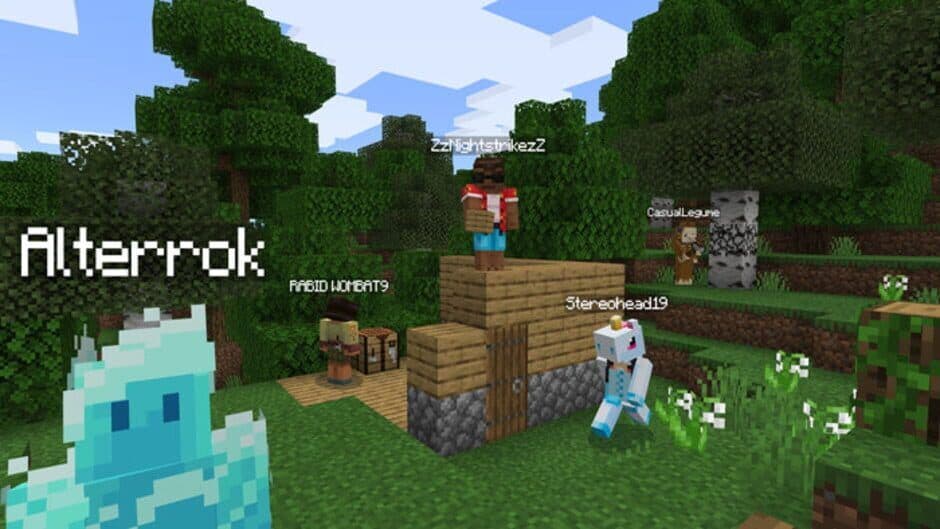
The depth of the sandbox remains unmatched.
The game’s value proposition is arguably the strongest in the industry. A single purchase grants access to a near-infinite creative canvas, a deep survival simulation, and a logic-engineering playground, all of which have been expanded for over a decade at no additional cost. The shift to smaller, more frequent updates has only improved this, making the world feel alive and responsive to community feedback. You aren't just buying a 2026 product; you're buying into a living ecosystem that has already delivered sixteen years of content and shows no signs of stopping. This stands in stark contrast to the live-service models of its competitors, where content drops are often locked behind battle passes or expansions. In Minecraft, the new sulfur caves biome or the adorable baby mob overhaul arrives for everyone, forever.
This is the ultimate testament to Minecraft's design: it outlasts and outgrows every trend. While games like Terraria, Valheim, and Lego Fortnite offer compelling takes on the survival-crafting genre, they ultimately feel like contained experiences with a beginning, middle, and end. Minecraft is the platform upon which those experiences can be built, not the experience itself.
However, that unparalleled freedom comes with the caveats we've dissected throughout this review. The initial learning curve remains steep for newcomers navigating crafting recipes and survival systems, despite the welcome addition of the in-game recipe book. The fragmentation between Java and Bedrock editions is a persistent headache, creating a tangible visual and philosophical divide—enjoying the beautiful Vibrant Visuals update still requires choosing the Bedrock platform and its commercialized Marketplace over Java’s modding paradise. Furthermore, players seeking a traditionally structured "game" will find the prescribed endgame—the trek to defeat the Ender Dragon—to be an underwhelming, almost philosophically contradictory climax in a title about writing your own story. These aren't minor quibbles; they are real friction points that define the experience. Minecraft asks for your patience and your proactive curiosity. If you demand guided objectives and hand-held progression, you will be lost and frustrated. If you can embrace the open-ended question at its core, you will find a home.
Ultimately, Minecraft’s audience is as broad as human creativity itself. It is essential for the tinkerer who sees redstone not as wiring but as a logic puzzle, for the artist who views the world as a blank sculpture, and for the survivor who finds profound satisfaction in earning every brick of their fortress. It’s a powerful tool for educators and parents, teaching concepts of geometry, logic, and collaborative project management in an engaging sandbox. The community ensures there is always a new way to play, whether through massive multiplayer servers, intricate modpacks, or intimate Realms with friends. The game’s true verdict is written not in a review, but in the countless worlds generated every minute—in the sprawling cities, the hidden bases, the foolish towers built by first-time players, and the silent cathedrals constructed block by patient block. In 2026, Minecraft is not a relic; it is the foundation.
Final Verdict
Pros:
- Unparalleled Creative Freedom: The simple block-and-grid system removes all barriers between imagination and creation, enabling everything from dirt huts to functional computers.
- Exceptional Value & Longevity: A one-time purchase provides over a decade of substantial, free updates and access to a near-infinite, procedurally generated world.
- Powerful, Diverse Community: From mods that reinvent the game to massive multiplayer servers hosting tens of thousands, the player base continuously expands the experience.
- Dual-Heart Philosophy: The separate but complementary Survival and Creative modes cater to fundamentally different playstyles, making the game accessible to both challenge-seekers and pure builders.
Cons:
- Steep Initial Learning Curve: Despite improvements, new players still face a daunting lack of direction, often requiring external resources to understand core systems like crafting.
- Fragmented Ecosystem: The divide between Java and Bedrock editions creates confusion, visual disparity, and forces a choice between open modding and seamless cross-play.
- Underdeveloped "Game" Elements: The official endgame and boss fights feel like vestigial, unsatisfying additions in a sandbox about player-defined goals.
- Monetization in Bedrock: The Marketplace model, while curated and safe, can feel aggressively commercial compared to Java’s culture of free, community-driven mods.