The useful difference between these two checkpoints and the larger Dixie Highway border camp is not a guaranteed pile of military loot. It is the possibility of turning a first breach from Valley Station into a repeatable road crossing, provided the Louisville-facing gate is still usable when you return. That makes the route valuable for the right survivor, but it does not make it quiet or universally safe.
This guide covers the vanilla Build 42.20 map as checked on August 1, 2026: the Louisville Road checkpoint at (13425,4073), the Ernest Cooper Road checkpoint at (14525,4017), the named road approach, the sledgehammer-versus-welding setup decision, and what the barracks, firearms, and communications tents can reasonably promise. Older Build 41 access reports are treated as historical context, not proof of current gate behavior.
Where the Louisville Road and Ernest Cooper Road Checkpoints Sit
For this guide, use the vanilla Build 42.20 map checked on August 1, 2026.
Valley Station lies south of Louisville, and Dixie Highway is the principal southern road connection into the city. The Louisville Road checkpoint sits at (13425,4073), while the Ernest Cooper Road checkpoint is at (14525,4017). They are two separate southern Louisville road entrances, not alternate names for the larger Dixie Highway border camp.
From Valley Station, the checked route to the Ernest Cooper Road checkpoint runs along Dixie Highway → Appletree Lane → Bearcamp Road → Washington Road → Ernest Cooper Road. The Louisville Road checkpoint at (13425,4073) is a separate entrance, so use the official current map to align the final approach with the checkpoint you intend to reach rather than assuming the Ernest Cooper Road chain reaches both. The official current map is the authority for the exact turn and checkpoint alignment; older Build 41 and Build 42.19 guides may show different access behavior and should be treated as historical context.
The route matters because it keeps the two small checkpoints distinct from the main Dixie Highway camp. You are planning for a road-specific entry near the Louisville perimeter, not repeating the larger camp’s breach or loot loop. If you are driving from Valley Station, follow the named road chain and confirm which checkpoint your approach reaches before committing to the barrier.
Once you have the target entrance identified, the next decision is which complete setup can open its Valley Station-side barrier.
Pick the Breach Tool Before You Leave Valley Station
Both checkpoints are sealed from the Valley Station side, so identify your breaching setup before you leave. You have two supported approaches:
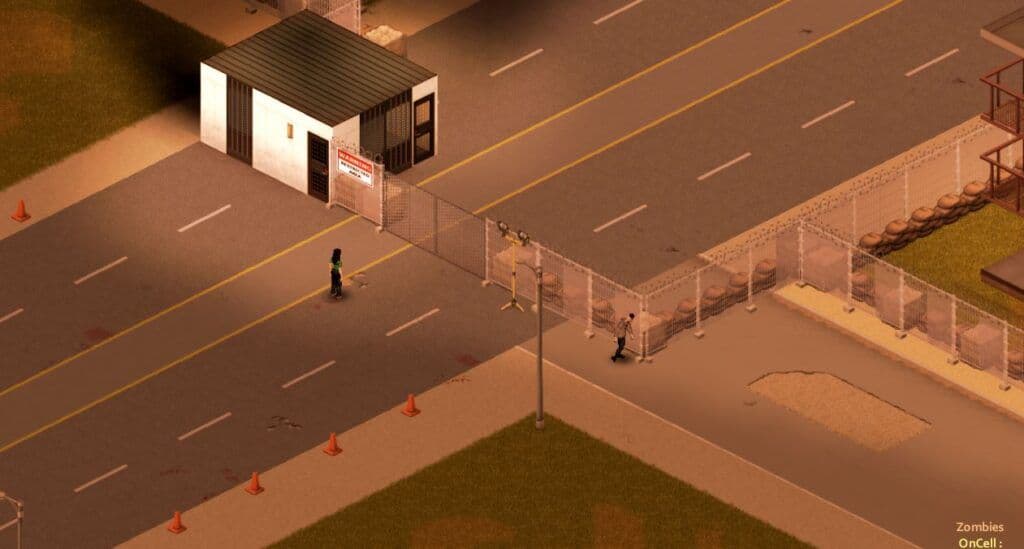
Historical Build 41.60 gate context; verify the current Build 42.20 barrier in your save.
- Sledgehammer: Use it for the destructive route through the barrier.
- Welding setup: Bring a Welding Torch or blowtorch together with a Welding Mask. The torch alone is not the complete alternative.
Choose the method your survivor can actually carry and use. If you are planning to keep a vehicle with you, open the road checkpoint barrier itself. A person-sized fence gap may let you cross on foot, but it should not be treated as vehicle-capable access.
Treat older Build 41.60 gate and barricade reports as historical context; your current Build 42.20 save decides whether a barrier, gate, or approach is usable.
Before departing Valley Station, check the relevant tool setup in your inventory and confirm that your vehicle plan matches the opening you intend to make. A sledgehammer gives you the destructive option; a torch-and-mask setup gives you the welding option. Either way, the first crossing is a prepared breach, not an assumption that the checkpoint opens freely from your side.
Once the barrier is open, you can assess the checkpoint’s three military tent categories and decide whether the first trip justified making the route reusable.
Search Barracks, Firearms, and Communications Tents as Categories
Once the barrier is open, search the three tent categories by role rather than expecting a fixed military loot table.
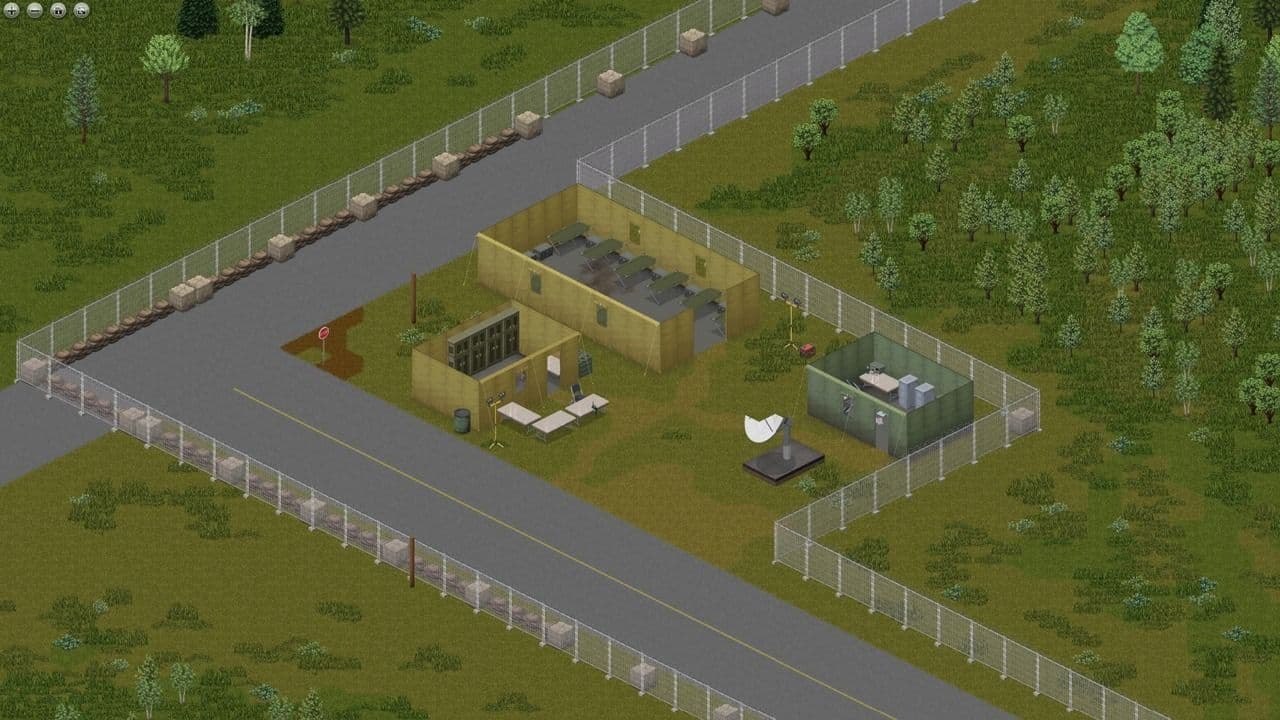
A compact checkpoint layout with barracks and a communications-like structure; the source does not identify this as either target checkpoint.
- Barracks: Look for military clothing, ammunition, knives, holsters, and occasional firearms.
- Firearms tents: Prioritize these for weapon and ammunition opportunities.
- Communications tents: Check for radios, electronics, ammunition, and occasional firearms.
These are category-level expectations, not guarantees. Loot is randomized, affected by Sandbox settings, and a map pin does not guarantee a specific container or item. Older reports also focus mainly on the larger military checkpoint, not verified Build 42.20 loot tables for these two smaller checkpoints, so do not promise a weapon, ammunition count, or named item before opening a container.
Search all three categories when the trip justifies it, then carry only what the current loot roll supports. What you find on the first visit helps determine whether opening the checkpoint has created a useful route asset for future trips.
Open the Gate Once, Then Treat Re-entry as Conditional
The checkpoint’s main advantage begins after the first breach. Once you have opened the Valley Station-side barrier and crossed through, check the Louisville-facing gate before leaving. If it is usable, that gate can turn the checkpoint into a practical route for later crossings.
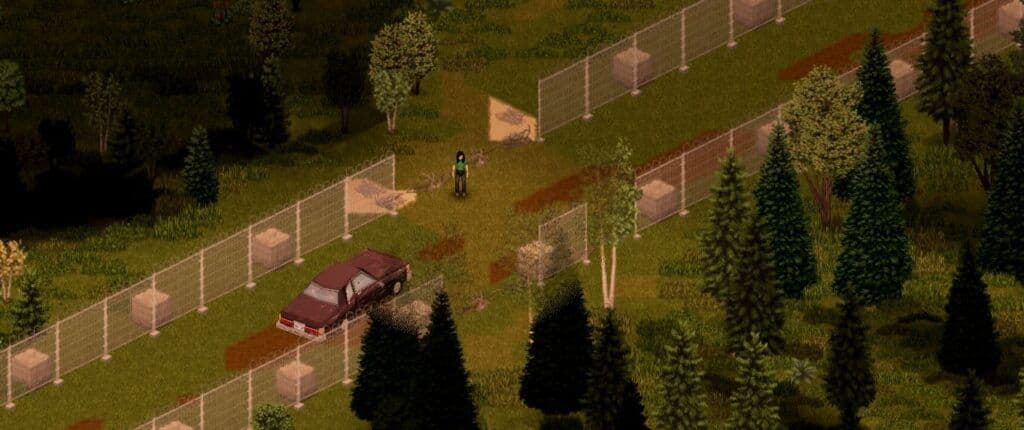
Historical Build 41.60 fence-gap comparison; it is not proof of current Build 42.20 vehicle access.
Treat this as two separate phases: first, breach the checkpoint from the Valley Station side; later, re-enter through the Louisville-facing gate when its current state allows it. The gate is not guaranteed to remain open, indestructible, or usable in every save, so confirm it before planning a return trip around it.
For example, on your first visit, open the barrier, pass through, and verify the far-side gate. On subsequent trips, use that crossing while it remains accessible. If the gate is blocked or unreliable, keep another Louisville approach or perimeter opening as your fallback. Louisville has multiple ways in, so these checkpoints are repeatable options—not mandatory routes for every later trip.
Use the Checkpoints as Reusable Options, Not a Quiet Shortcut
“Quiet way” is too strong. Military areas can carry substantial zombie pressure, and a contemporary Build 42.20 account describes abandoning a vehicle and fighting through a horde at a Louisville checkpoint. That does not establish the population at either target checkpoint, but it does show why the approach can become a combat problem before the gate is useful.
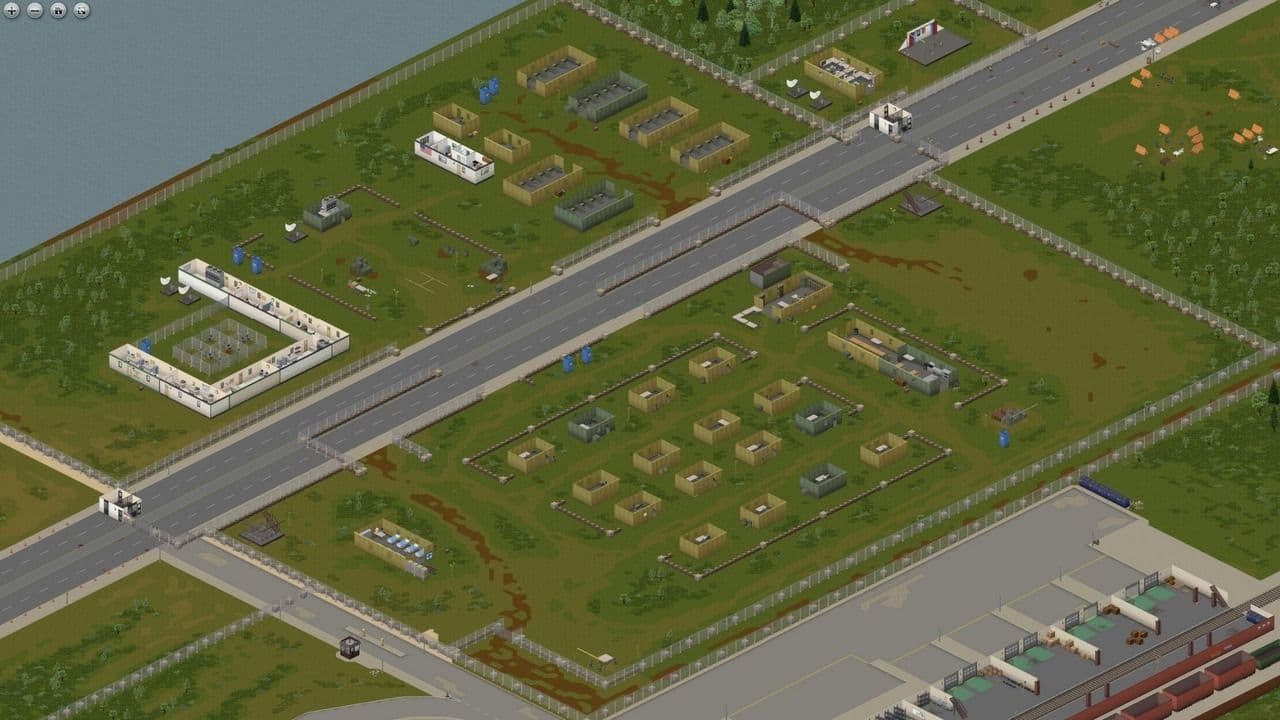
A larger military checkpoint used only as scale and risk context, not as one of the two target checkpoints.
The smaller layout may look less imposing than the large Dixie Highway border camp, but appearance is not evidence of lower zombie density. No current comparison proves that either checkpoint is safer or quieter, so choose it for route convenience rather than an assumed population advantage.
Use the checkpoint when you are already on the Dixie Highway route, have a vehicle-compatible opening plan and the complete breaching setup, and confirm the Louisville-facing gate is usable. Postpone the crossing or choose another Louisville entrance if a horde has gathered, the approach is blocked, the gate is uncertain, or you cannot bring the required tools. These are repeatable options, not mandatory routes for every later trip.
Apply the same Build 42.20 boundary to reports about gates, breaches, vehicles, and perimeter behavior: older Build 41 and Build 42.19 accounts are historical context, not current proof. In practice, use the checkpoint when its road position and current gate state make the trip worthwhile, and retain another Louisville approach whenever the risk cancels out the convenience.