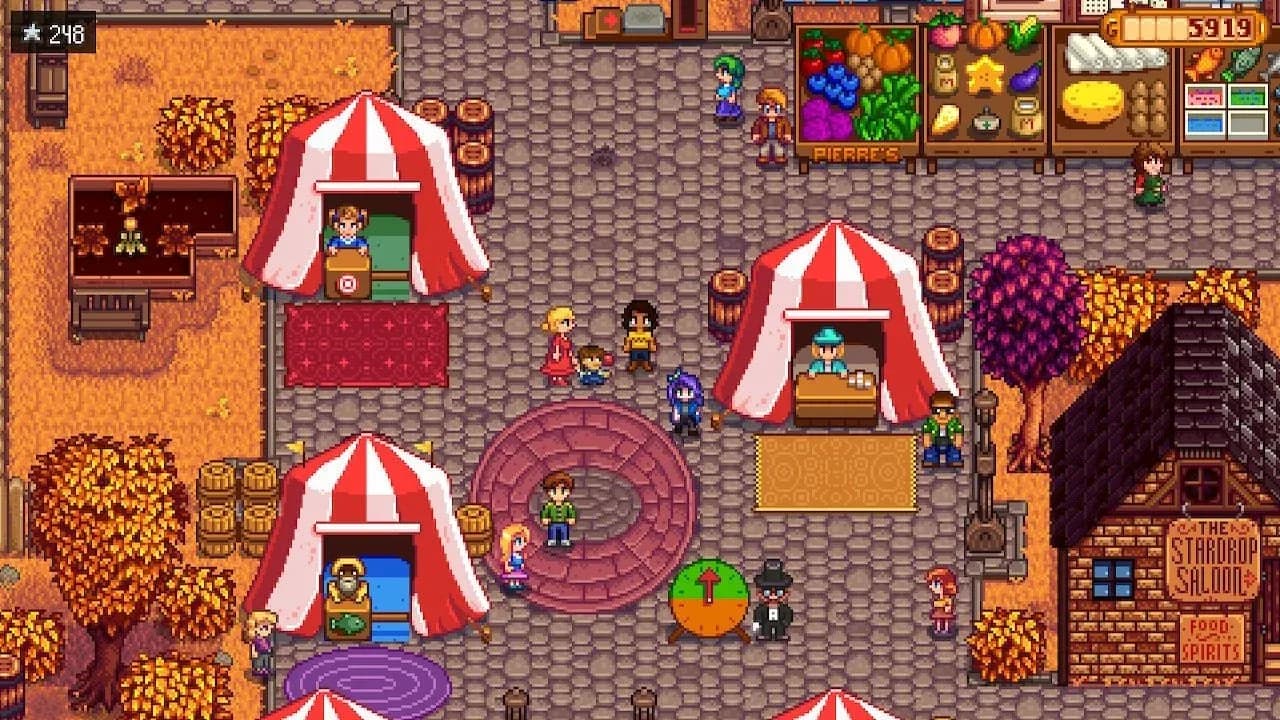
Stardew Valley's Core Loop: Escaping the Rat Race for Rural Perfectionism
Stardew Valley begins with an act of quiet rebellion. You don't just inherit a farm; you flee a life where people are literally dying at their desks. The game’s opening salvo against the soulless Joja Corporation isn't subtle, but it is potent. It frames the entire experience not as a pastoral fantasy, but as a deliberate, often arduous choice to build something tangible over the abstract grind of corporate life. This premise is the bedrock of the game’s psychology, transforming every weed pulled and every parsnip watered from a chore into a statement of self-determination.
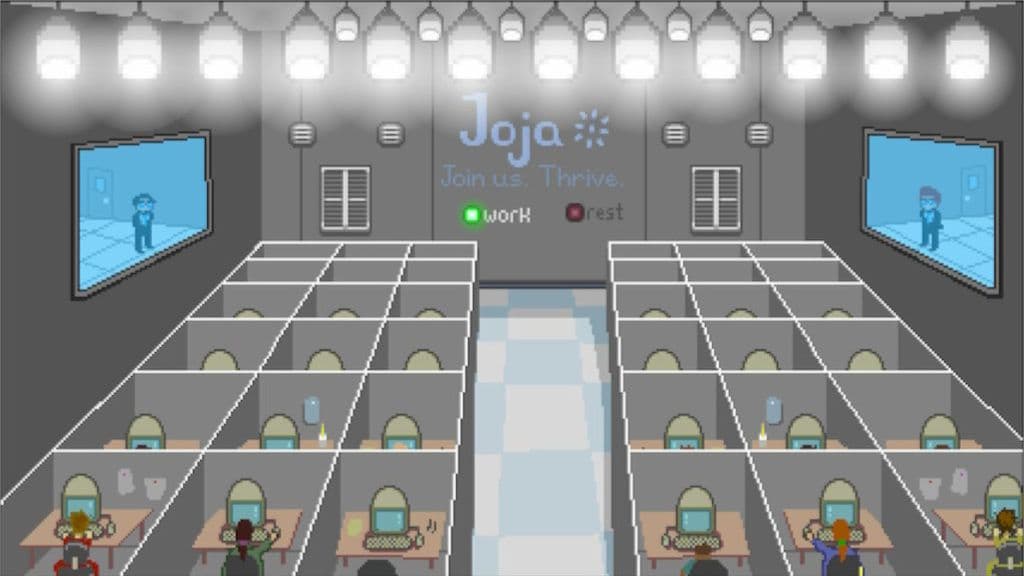
The corporate 'rat race' that serves as the game's opening premise.
That statement, however, is deceptively stressful. Stardew Valley masterfully disguises its high-stakes time management loop beneath a blanket of cozy pixel art and a gentle soundtrack. The tension arises from the game's most brilliant, and occasionally punishing, design choice: the in-game day. Each day lasts a mere 10-20 real-world minutes, a ticking clock that forces you to constantly prioritize. Do you spend your limited morning energy watering your newly planted cauliflower seeds, or do you head to the mines to gather ore for a tool upgrade? The game presents you with a dozen valid paths every morning and only enough time to walk two of them. This creates an "obsessive urge" to strategize, making each day feel like a miniature puzzle to solve before the 2 AM collapse.
This is where the game earns its reputation: it's a 'cozy' aesthetic wrapped around a deeply engaging time-management challenge. The satisfaction isn't in relaxation, but in efficient optimization.
For newcomers, this freedom is a double-edged sword. The tutorial is notoriously basic, covering little beyond how to till soil and plant the 15 parsnip seeds Mayor Lewis gives you. It leaves critical systems—like how to feed your chickens, the importance of checking the calendar for birthdays, or the punishing consequences of passing out from exhaustion—for you to discover, often through failure. Forgetting to gift Jodi her loved cauliflower in Spring could mean waiting an entire in-game year to grow it again, a lesson in seasonal planning that the game trusts you to learn the hard way. This hands-off approach can lead to early frustration, but it also fosters a powerful sense of discovery and ownership over your burgeoning farm life.
The strategic depth of this loop becomes apparent through these seasonal stakes. The world of Pelican Town operates on a rigid annual calendar. Miss planting a specific crop in its one-season window, and a Community Center bundle—the game's primary long-term goal—could remain incomplete for another 11 in-game months. This isn't just about patience; it's about foresight. It teaches you to plan your farm like a chessboard, thinking several moves ahead. Will you have enough gold to buy Strawberry Seeds at the Egg Festival on Spring 13? Did you save that Catfish you caught on a rainy day for a later quest, or did you sell it for quick cash? Every decision carries weight, transforming the simple act of farming into a rewarding exercise in logistics and foresight.
Farming and Progression: From Manual Labor to Automated Efficiency
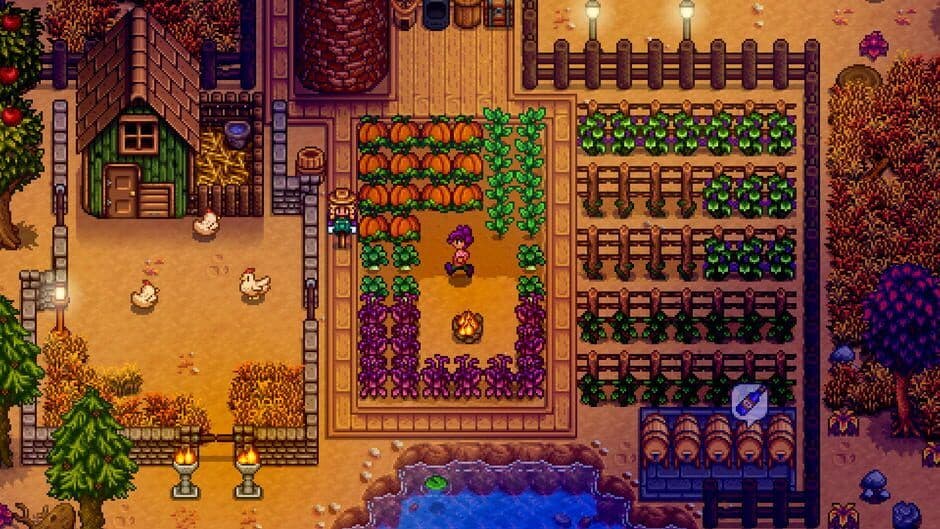
The first season in Stardew Valley is a lesson in humble, physical labor. You don’t just plant a seed; you dedicate a precious chunk of your limited morning stamina to swinging a basic watering can forty times. This is farming stripped of any romanticism—an “achingly slow” process of clearing rocks, tilling soil, and manually hydrating each individual crop. The game’s early economy is, frankly, brutal. The 15 parsnip seeds gifted by Mayor Lewis feel like a lifeline, and their four-day growth cycle is an eternity when every gold piece matters. This deliberate pacing isn’t a flaw; it’s foundational. It makes you feel the weight of every action, transforming the simple act of harvesting your first batch of produce into a genuine triumph. You haven’t just grown a vegetable; you’ve proven you can survive.
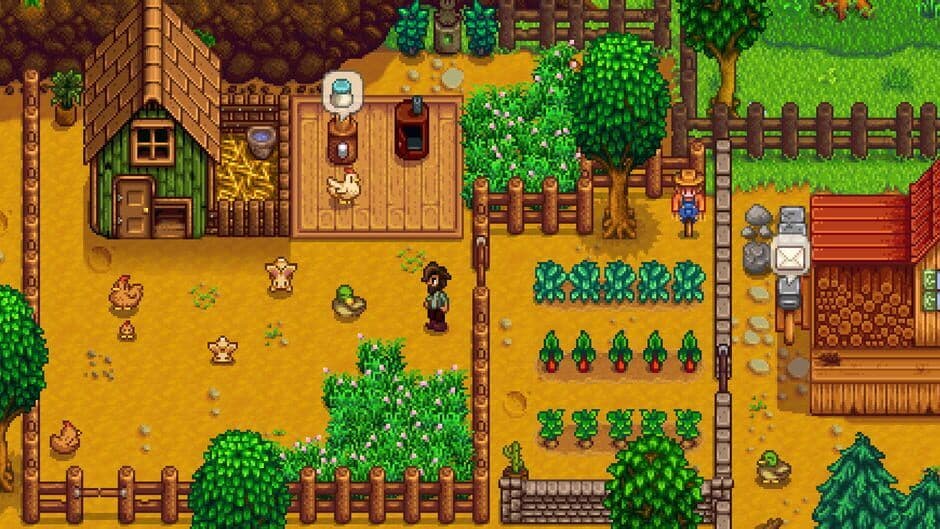
Official look at the core farming gameplay.
This grueling manual phase, however, is the setup for one of gaming’s most satisfying progression arcs. Stardew Valley brilliantly incentivizes you to work your way out of the very chores it initially glorifies. The path to automation is paved with ore from the mines. Upgrading your hoe and watering can from copper to steel doesn’t just make them more durable; it fundamentally changes your relationship with the land. A steel hoe tills three squares at once, and an upgraded watering can can hydrate a 3x3 grid, turning a morning of tedious clicking into a matter of minutes. The true revolution, however, comes from crafting. Building your first Quality Sprinkler—which waters the eight tiles around it every morning—is a transcendent moment. It’s the game handing you back your most precious resource: time.
This is the core genius of Stardew Valley’s farming loop. The grind of the first spring isn't pointless; it's the necessary friction that makes the eventual automation feel earned, not given.
Where this progression system stumbles slightly is with the stamina meter. In the early game, it’s a punishingly effective limiter, forcing you to choose between chopping one more tree or having enough energy to water your crops. The threat of passing out and losing money or items is real. Yet, as your skills level up and you find Stardrops that permanently increase your energy pool, the system largely fades into irrelevance. By mid-game, with a kitchen full of cooked meals and a maxed-out bar, stamina ceases to be a meaningful constraint. It’s a clever tutorial system that teaches resource management, but its designed obsolescence can make those early struggles feel like a distant, somewhat artificial memory.
Livestock management follows a similar high-investment, high-reward trajectory. Building a coop or barn represents a major financial commitment, and animals like chickens, cows, and pigs require daily feeding, petting, and—in the case of barn animals—milking or shearing. This daily maintenance loop creates a steady, reliable income stream from eggs, milk, and truffles, but it also anchors you to the farm each morning. The companionship is a reward in itself—naming your first chicken and watching it mature creates a surprising attachment—but the system’s true depth is unlocked, again, through crafting. A simple egg isn’t just for selling; it’s raw material for a Mayonnaise Machine. Milk becomes cheese. This is where Stardew Valley’s farming transcends mere cultivation and becomes a light industrial operation.
The crafting system is the engine that transforms a humble homestead into a thriving artisan business. It’s not just about sprinklers and mayonnaise makers. You’ll build Preserves Jars to turn blueberries into jam, Kegs to ferment fruit into valuable wine, and Aging Barrels to produce legendary-quality cheese and ancient fruit wine. This creates a deeply engaging economic mini-game: do you sell your raw strawberries for quick cash, or process them into higher-value jam over time? This choice between immediate liquidity and long-term investment adds a strategic layer to every harvest. The system elegantly ties every activity together—mining provides ore for machines, farming provides the raw goods, and foraging provides supplemental resources—making your expanding farm feel like a complex, interconnected organism. In Stardew Valley, progression isn’t just about buying a bigger backpack; it’s about systematically engineering your way from subsistence living to agricultural mastery.
Beyond the Fields: Mining, Fishing, and the Combat Grind
If farming is the beating heart of Stardew Valley, then the mines are its nervous system—a source of constant, essential stimuli that powers the entire body. This is where the game’s cozy veneer cracks to reveal a surprisingly tense dungeon-crawler, one that demands preparation and punishes carelessness. Venturing beyond the fields is not a casual side activity; it’s a mandatory, high-stakes expedition to fuel the very progression that makes farm life sustainable.
The environment changes with the seasons, affecting fishing and foraging.
The mining loop is a masterclass in risk-reward design. The local cave offers over 120 procedurally generated floors, each a gauntlet of rocks to smash and monsters to fend off. The primary draw is ore—copper, iron, gold, and iridium—the lifeblood of your farm’s evolution. Without it, you cannot upgrade your tools, craft essential machines like sprinklers, or build the barns that house your livestock. This creates a powerful, tangible feedback loop: a successful mining run directly translates to more efficient mornings and greater profits back home. The tension is palpable. Each floor deeper introduces more dangerous enemies, from simple slimes to teleporting shadows, and running out of health or energy means passing out, potentially losing cash and hard-won treasure. The game teaches you to prepare like a true adventurer: packing stat-boosting food like Pumpkin Soup and ensuring your weapon is up to the task before descending. It’s a brilliant way to break the farming monotony, transforming a rainy day into a high-stakes resource-gathering mission.
The solemn, atmospheric music of the mines is a subtle stroke of genius. It encourages a relaxed focus on the beauty of the underground—the glint of ore, the glow of gems—rather than pure stress, making the grind feel contemplative, not frantic.
Where this pillar stumbles is in its combat mechanics. The swordplay is unapologetically basic—a simple hack-and-slash affair with a rudimentary swing. While serviceable for clearing paths through rocks and the occasional slime, it lacks the depth or feedback to remain engaging over dozens of hours in the deeper Skull Cavern. The challenge doesn’t come from skillful parries or complex enemy patterns, but from managing groups and your positioning, which can be undermined by a sometimes-finicky lock-on system. For players who dive into the mines primarily for combat, this can feel like a repetitive grind, a means to an end rather than a rewarding activity in itself. The joy here is in the mystery of what lies on the next floor and the satisfaction of finding that rare iridium node, not in the act of swinging your sword.
In stark contrast, fishing is a minigame of surprising nuance and divisive appeal. It’s a tense, skill-based challenge where you must keep a green bar aligned with a bouncing fish icon, each species exhibiting unique, predictable movement patterns. A common Carp bobs gently, while a legendary Catfish on a rainy day darts and dives with frantic aggression. Mastering these patterns is immensely rewarding, transforming a quiet afternoon at the mountain lake into a test of focus and timing. The system is a perfect example of Stardew Valley’s design philosophy: a seemingly simple activity reveals hidden depth for those willing to engage. It provides not just a source of income and quest items, but also a calming, almost meditative counterpoint to the chaos of the mines or the busywork of the farm.
The true brilliance of Stardew Valley’s secondary activities is how they seamlessly feed the core farming loop. This is not a collection of disconnected minigames. The ore you mine becomes the bars that upgrade your watering can. The fish you catch can be cooked into meals that boost your mining skill for more efficient ore collection, or used as gifts to deepen relationships that unlock new recipes. Resources are currency in a closed, interconnected economy. Completing bundles in the Community Center often requires items from all disciplines—a specific gem from the mines, a rare fish from the ocean, a quality crop from your fields. This design ensures that time spent fishing or fighting never feels wasted; it’s always an investment in the larger project of building your perfect farm and restoring the valley.
This interconnectedness extends deep into the post-game. After repairing Willy’s boat, you unlock Ginger Island, a sprawling new area that represents the ultimate test of your multi-skilled mastery. Here, the game introduces the Perfection tracker, a daunting 100% completion checklist that demands excellence in every facet: maxing out all skills, catching every fish, shipping every item, and forging deep friendships. It’s a monumental task that can easily push total playtime beyond 100 hours, offering a compelling goal for completionists long after the Community Center is restored. Ginger Island itself is a reward, filled with new crops, puzzles, and a dungeon that recontextualizes the basic combat with more demanding enemies. It’s a testament to the game’s enduring design that, even after mastering the mainland, it can introduce a new frontier that makes all those learned skills feel vital again. In Stardew Valley, there is always another field to tend, another fish to catch, and another floor to mine—not as chores, but as invitations to a life fully lived.
The Heart of Pelican Town: Social Simulation and Character Depth
Pelican Town is where Stardew Valley graduates from a brilliant farming simulator to a poignant life simulator. The initial social landscape mirrors that of any small town: archetypes are easy to spot. You have the jock, the video-game-loving goth girl, the reclusive artist, the grumpy old man. The genius lies not in these first impressions, but in how systematically the game dismantles them. Building friendships isn't just about unlocking new dialogue; it's an act of communal archaeology, slowly brushing away the topsoil to reveal the "messy" personal lives and quiet traumas buried beneath. The mayor has a secret lover, a father named Kent returns from war with palpable PTSD, and the town's homeless forager, Linus, isn't a joke but a man with profound wisdom about living deliberately. This narrative depth transforms Pelican Town from a set of quest-giving waypoints into a place that feels genuinely, complexly alive.
Romance and friendship options add significant depth to the gameplay.
The primary tool for this excavation is the heart meter system, a relationship progression bar filled through daily chats and, most effectively, gift-giving. This is where the social simulation's mechanical seams are most visible. The system encourages a form of affectionate stalking—memorizing weekly schedules to ambush characters with their loved items, turning the organic process of getting to know someone into a calculated experience-point grind. It can feel transactional, reducing nuanced relationships to a checklist of preferred commodities. However, to dismiss it entirely is to miss its subtle purpose. The grind forces engagement. You don't accidentally learn that Pam, the struggling mother, loves Pale Ale; you learn it by trying, failing, and consulting the community, a process that, however gamified, still requires you to think about these characters as individuals with specific tastes and histories.
Where this system truly sings is in its payoff: the heart events. These cutscenes are the game's narrative reward, and they are masterfully deployed. A friendship with the sculptor Leah might culminate in helping her stand up to a dismissive ex, while getting close to Shane reveals a harrowing struggle with depression and alcoholism. These aren't just story beats; they are emotional revelations earned through your consistent, if mechanically simplistic, effort.
This foundation supports the game's most celebrated feature: its radical inclusivity. Stardew Valley offers twelve eligible partners for romance and marriage, and it erases heteronormative barriers entirely. You can court any character regardless of your farmer's gender, and marriage is followed by the option to adopt children. In 2016, this was a quietly revolutionary design choice that rejected the tired tropes of the genre it was reviving. It doesn't make a spectacle of its progressivism; it simply presents it as the natural state of the world. This normalization is its greatest strength, allowing players to see themselves in the story without friction or caveats, making the fantasy of building a life in the valley feel genuinely accessible to all.
A fair critique, however, is that while the characters gain depth, their initial appeal as romantic partners can be uneven. Some, like the adventurous Abigail or the kind-hearted doctor Harvey, present compelling hooks from the outset. Others can feel deliberately abrasive or one-note until you push through their outer shells. This isn't a flaw in writing—people are complicated—but it does mean the romantic pool might feel shallow to players seeking immediately charismatic partners. The game asks for investment before it offers attraction, a design that brilliantly mirrors real human connection but may frustrate players looking for a more conventional dating-sim experience.
All of these personal stories unfold against the game's central, environmentalist narrative: the fight for Pelican Town's soul between communal restoration and corporate takeover. The Community Center, a dilapidated hub, can be restored by donating specific bundles of local goods, from seasonal crops to foraged gems. The alternative is purchasing a JojaMart membership, which converts the center into a sterile warehouse for a fee. This isn't a subtle metaphor, but it's an effective one. The choice reframes every activity on your farm. That cauliflower you're growing isn't just for profit; it's a brick in the wall against the very corporate monotony you fled. Restoring the center through collective, local effort feels different than writing a Joja check—it ties your agricultural success directly to the town's cultural rejuvenation. In Stardew Valley, your most meaningful crop isn't parsnips or pumpkins; it's community.
Art, Sound, and Technical State: A Modern Classic's Presentation
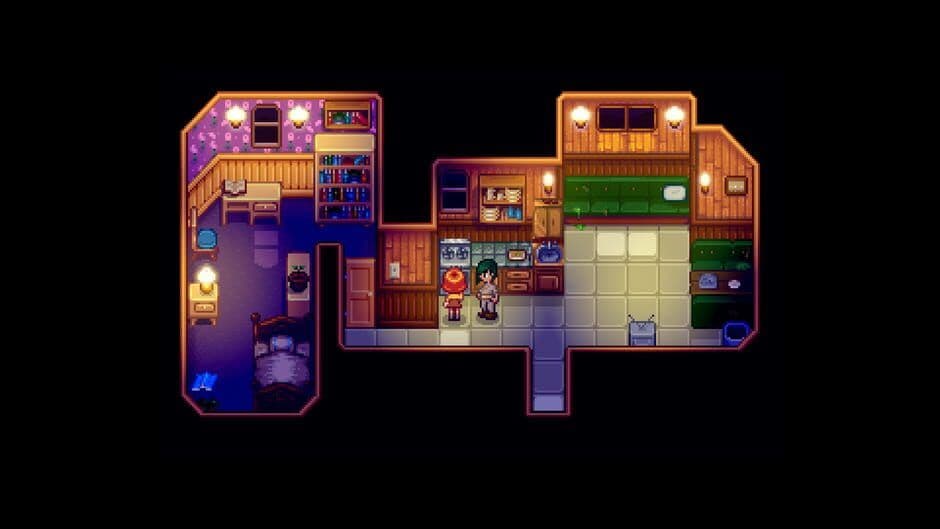
The presentation of Stardew Valley is a masterclass in cohesive, timeless design, where every aesthetic choice reinforces the game's core fantasy of escape and renewal. This isn't a game that wows with technical prowess; it earns its "modern classic" status through a perfectly harmonized 16-bit art style and a soundtrack that doesn't just accompany your days but defines their emotional texture. The visual identity is an immediate comfort, a "brightly welcoming" homage to SNES-era RPGs like Secret of Mana. While it may lack the intricate detail of its inspirations, its strength lies in clarity and charm—the distinct silhouettes of seasonal trees, the gentle sway of crops in the breeze, and the warm glow of a farmhouse window at night. This pixelated world feels handcrafted, not dated, and its simplicity ensures the art never distracts from the game's true purpose: making you feel at home in Pelican Town.
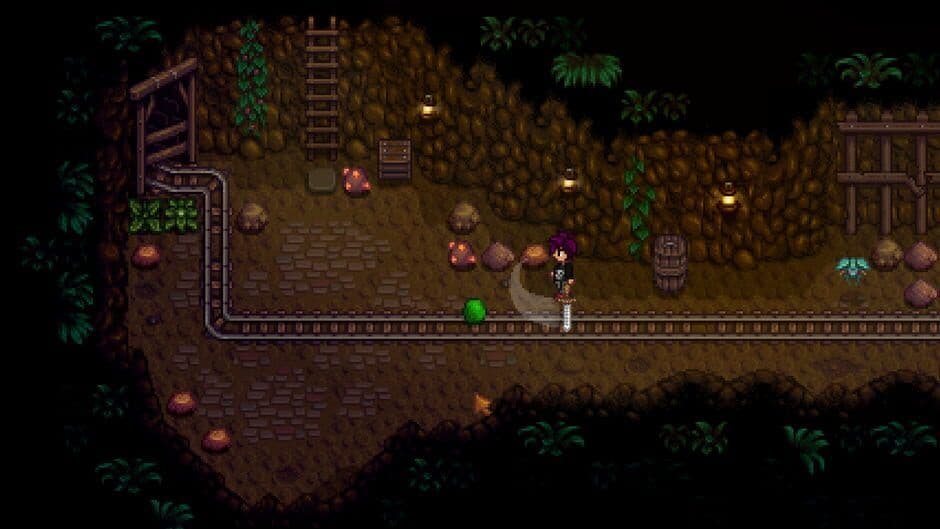
Dynamic lighting adds depth to the 2D pixel art style.
The soundtrack is the game's secret weapon, a "divine" collection of seasonal leitmotifs that perfectly calibrates your mood. The hopeful, budding melodies of Spring give way to the lazy, sun-drenched chords of Summer, which then transition into the melancholic, reflective tones of Autumn.
This audio design is active, not passive. The shift in music when you descend into the mines—from pastoral field themes to solemn, echoing cavern tunes—subtly reframes the experience from a chore to a contemplative exploration. It’s hard to overstate how these tracks burrow into your memory; hearing the Summer theme can instantly conjure the satisfaction of a perfectly watered field, proving the soundtrack is as much a part of Stardew Valley’s identity as its pixelated parsnips.
Technically, the game is a marvel of optimization and accessibility. On its primary platforms of PC and Nintendo Switch, performance is flawless, maintaining a smooth, stable framerate that makes the Switch version feel like the "perfect platform" for its pick-up-and-play nature. The true test of any port, however, is on mobile, and here Stardew Valley shows a rare, forgivable seam. While the core experience is miraculously intact—the full, uncompromised game for a mere $4.99—the touch controls for combat are fairly described as "wonky." The auto-attack function struggles with faster enemies, and manual combat with a tap-to-move scheme feels awkward. On a standard iPhone screen, the touch targets can be frustratingly small. It’s a significant concession, but one that highlights the inherent challenge of translating a complex PC game to a touchscreen, and for every other activity—farming, fishing, chatting—the mobile port remains an incredible achievement.
This enduring polish is a direct result of developer Eric "ConcernedApe" Barone's unprecedented post-launch support. For nearly a decade, Stardew Valley has received substantial free updates, from the foundational addition of co-op multiplayer in update 1.3 to the sprawling end-game content of Ginger Island in 1.5 and the new festivals and items of the recent 1.6 patch. This isn't mere bug-fixing; it's a continuous reinvestment in the game's world, adding new farms like the Meadowlands, new goals like the Perfection tracker, and quirky secrets like elusive raccoons. This commitment has transformed the game from a complete package into a living one, ensuring that even veterans returning after years have new reasons to fall in love with the valley all over again.
On PC, this longevity is supercharged by one of gaming's most vibrant modding communities. The base game's already massive 100-hour journey can be expanded exponentially with total conversions like Stardew Valley Expanded and Ridgeside Village, which add new characters, areas, and narratives that feel authentically woven into the original tapestry. More importantly, mods allow players to tailor the experience to their tastes, addressing subjective criticisms head-on. Find the stamina system too punishing? There's a mod for that. Wish your spouse had more dialogue? There's a mod for that, too. This ecosystem doesn't just fix perceived flaws; it celebrates the game's foundational strength by letting the community build their own perfect version of pastoral life, arguably making the PC version the definitive way to play for the truly dedicated. In Stardew Valley, the presentation is never just skin-deep; it's the warm, inviting, and endlessly supported shell that houses one of gaming's most generous and enduring hearts.
Stardew Valley Verdict: Is This Still the Best Farming Sim?
So, is Stardew Valley still the best farming sim? The question feels almost redundant. The game didn't just capture a genre; it redefined its potential, proving that a "cozy" aesthetic could house a deeply demanding and mechanically rich simulation. The real verdict isn't about whether it's the best—it's about understanding why, nearly a decade later, it remains the definitive model against which all others are measured, and where its own pastoral fantasy finally shows its seams.
The value proposition is staggering. For a single upfront cost—often as low as $14.99—you are purchasing a lifestyle simulator that can easily consume over 100 hours of your life before you even glance at its true endgame Perfection tracker. This isn't empty content; it's a dense, interwoven tapestry of systems where mining feeds farming, farming fuels friendships, and friendships unlock new areas. The sheer volume of meaningful activities, from restoring the Community Center to unlocking Ginger Island, creates a sense of boundless possibility that few games at any price point can match. Combined with eight years of substantial, free updates that have added everything from multiplayer to entire new continents, Stardew Valley stands as one of gaming's most generous offerings.
This generosity is matched by a design philosophy that elevates it above its genre peers. Where games like Animal Crossing prioritize decoration and collection on a real-time clock, Stardew Valley is a game of active, efficient management. Its 10-20 minute days are a constant, thrilling pressure cooker of choice. This isn't passive relaxation; it's the satisfaction of solving a daily optimization puzzle, of knowing that your strategic planning for the Egg Festival or a rainy-day mining expedition paid off. It offers the cozy fantasy of rural life but grounds it in a tangible, rewarding grind that demands your engagement, making every harvested crop and repaired bridge feel earned.
The uncomfortable truth, however, is that the game’s anti-capitalist narrative can ultimately be subverted by its own mechanics. You can escape the Joja Corporation desk job only to build a ruthlessly efficient, multi-million-gold winery empire, becoming a slave to the very "churning agricultural machine" you created.
This points to the game's most valid critique: a potential late-game motivation crisis. Once you've achieved massive wealth, married your chosen partner, and automated your farm into a self-sustaining engine, the core "why" can begin to evaporate. The daily loop of checking on Kegs and petting animals can transition from rewarding routine to empty chore. For some players, this is the natural, satisfying endpoint. For completionists, the Perfection grind offers a monumental goal, but it’s a checklist that exchanges organic discovery for systematic ticking of boxes. The magic of the first year—that desperate, beautiful struggle to build something from nothing—is inherently difficult to recapture once you’ve reached the top of the mountain.
Yet, to focus solely on that endgame fatigue is to miss the forest for the perfectly cultivated trees. Stardew Valley is a journey, not just a destination, and that journey is crafted with an almost peerless level of care. Its legacy is secured not by any single element, but by the masterful synergy of its parts: the addictive, strategic core loop; the surprisingly deep character writing that turns stereotypes into friends with trauma and dreams; the incredible post-launch support that treats the game as a living project; and the profoundly rewarding progression from swinging a rusty watering can to presiding over an automated artisan homestead. It is a game that understands the fantasy isn't just about owning land, but about belonging to a place and a community.
Stardew Valley is, without hyperbole, a modern classic. It is the definitive farming simulator because it transcends the genre, offering a poignant, inclusive, and endlessly engaging meditation on work, community, and what it means to build a good life. Its few flaws—the basic combat, the sparse tutorial, the potential for late-game repetition—are cracks in a monument, not faults in its foundation. You don't just play this game; you move into it. And for anyone with even a passing interest in life sims, it remains an essential, permanent homecoming.
Pros:
- An incredibly addictive and strategic core gameplay loop that masterfully blends cozy aesthetics with engaging time management.
- Deep, rewarding character writing that transforms Pelican Town's residents from archetypes into complex individuals.
- A staggering amount of content and meaningful progression, supported by years of substantial free updates.
- Radically inclusive design that normalizes same-sex relationships and adoption.
- A perfectly harmonized presentation with a timeless pixel-art style and a divine, mood-setting soundtrack.
Cons:
- Simple, repetitive combat that lacks depth and can feel like a grind.
- A very basic tutorial that leaves new players to discover many crucial mechanics through trial and error.
- The potential for motivation to wane in the late game once wealth is achieved and core goals are completed.