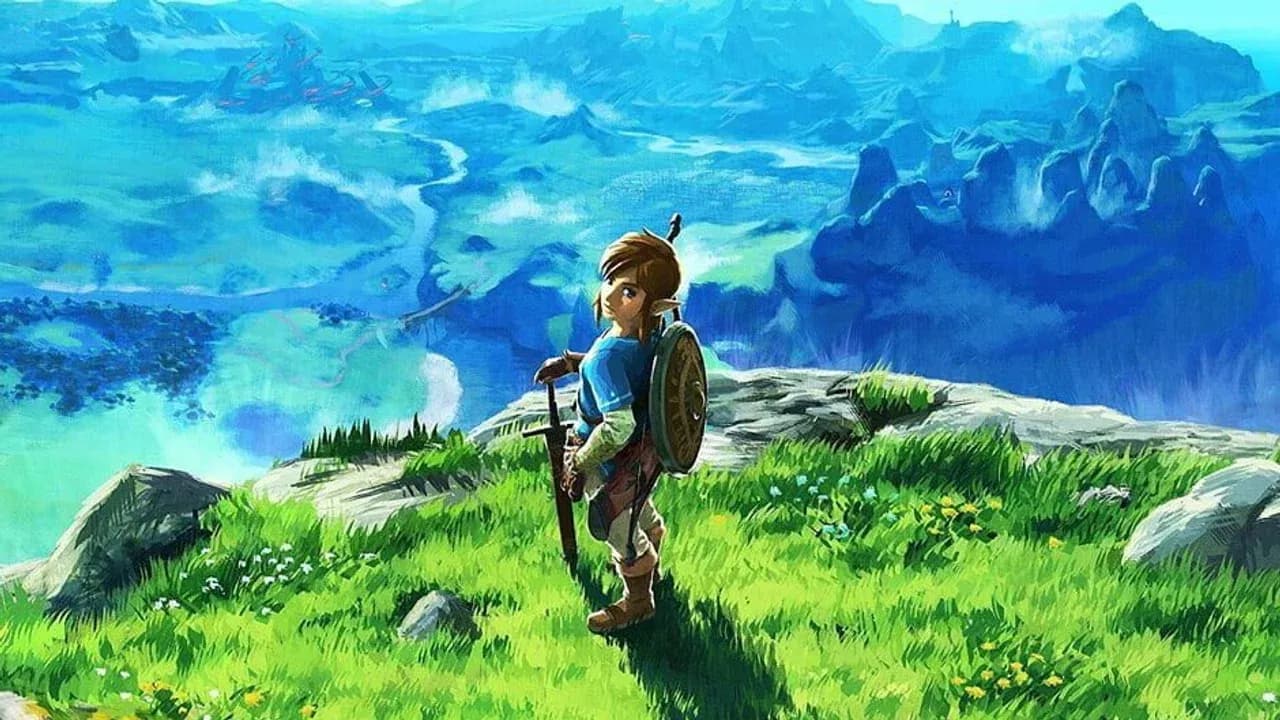
Breath of the Wild Review: A Radical Return to the Series' Roots
The Legend of Zelda: Breath of the Wild begins not with a story, but with silence. You awaken on a cliff, and the vast, ruined kingdom of Hyrule stretches to every horizon. There is no quest marker, no guiding voice, only the wind and a profound, almost intimidating, sense of possibility. This opening moment is a promise and a thesis: the game trusts you to find your own path, to be an active participant in its world rather than a passenger on a guided tour. It is a radical declaration of intent for a series that, by its own admission, had begun to calcify—a return to the raw, untamed spirit of exploration that defined the 1986 original, achieved by systematically dismantling three decades of established Zelda conventions.
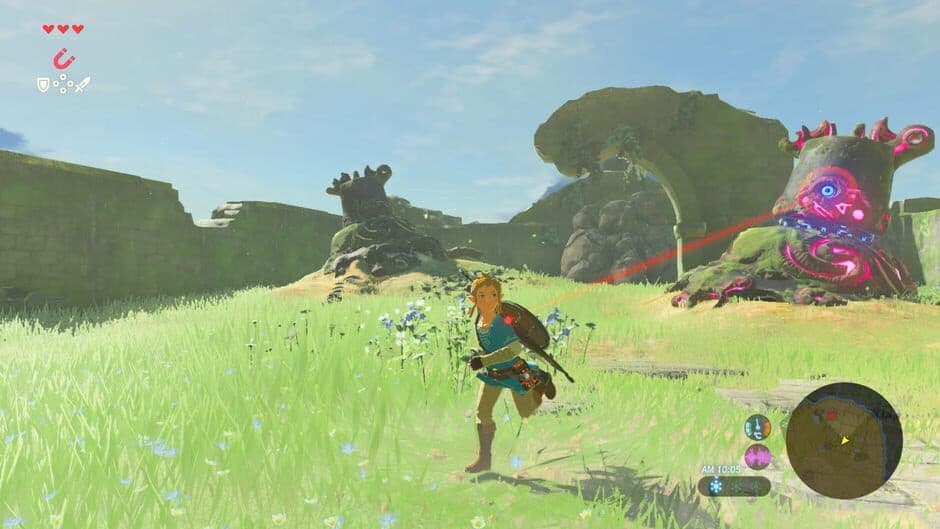
Breath of the Wild returns to the open-ended exploration of the original 1986 game.
This shift is a fundamental reimagining of the series' design philosophy. Where previous entries like Ocarina of Time or Skyward Sword relied on additive design—layering bespoke puzzles and gated areas that funneled players down a predetermined path—Breath of the Wild embraces multiplicative design. The developers didn't craft a thousand intricate locks and keys; they built a handful of robust, universal tools and a world governed by consistent, real-world physics. The result is a sandbox of emergent gameplay where solutions are discovered, not supplied. Need to cross a river? You can chop down a tree for a bridge, use Cryonis to create ice pillars, or even use Stasis on a log to launch yourself across. The game provides the rules, and your ingenuity writes the script.
This philosophy represents a complete inversion of the series’ structure. In Breath of the Wild, the world itself is the dungeon, and your curiosity is the primary quest giver.
This break from convention is most stark when contrasted with its immediate predecessor, Skyward Sword. That game, tethered to Wii motion controls, offered a "very directed experience" that some critics now view as an evolutionary dead end for the franchise. Its world felt like a series of obstacle courses, each area locked behind specific items and narrative beats. Breath of the Wild surgically removes those barriers. Impassable walls become scalable cliffs. The linear sequence of events is shattered, replaced by a single, distant goal—the silhouette of Hyrule Castle—that you can approach from any angle, at any time. The game’s bravery lies in handing you the core Sheikah Slate abilities on the Great Plateau and declaring you ready for anything; there is no late-game item that unlocks "true" exploration, because the ability to explore is the game's foundational principle.
This return to a free-form structure is a deliberate homage to the 1986 NES classic. Director Hidemaro Fujibayashi and his team looked back to a game where Link began in a clearing without a sword, where dungeons could be tackled out of order, and where burning the right bush could unveil a hidden secret. Breath of the Wild captures that same sense of being an uncharted wilderness. It strips away the ceremonial gating and overbearing tutorials that had become series staples, replacing them with a sophisticated visual language—using triangular landforms and distinct orange lighting to guide the eye—that feels organic rather than instructive. It’s a homecoming to the series' roots, not through nostalgia, but by resurrecting its core tenet: that wonder is born from discovery, not direction.
In doing so, The Legend of Zelda: Breath of the Wild achieves what many open-world games merely gesture toward: it makes the landscape the primary source of motivation and reward. This isn't a world cluttered with map icons begging to be cleared; it's a Platonic ideal of an adventure game where every hill promises a new vista, every strange rock formation might hide a Korok, and the journey is consistently more compelling than the destination. The game’s genius is in understanding that true freedom isn't just about a lack of walls—it's about filling that boundless space with consistent, interactive rules that make every player's story feel uniquely their own.
Mastering the Great Plateau: The Best Tutorial in Modern Gaming?
From the moment you step out of the Shrine of Resurrection, The Legend of Zelda: Breath of the Wild is teaching you, but you’d never call it a tutorial. The Great Plateau is a masterclass in implicit instruction, a self-contained microcosm of Hyrule that functions as both a thrilling opening adventure and a brilliantly disguised bootcamp. It’s here that the game’s radical design philosophy crystallizes, transforming what could have been a mandatory onboarding sequence into the first—and arguably best—example of the freedom to come.
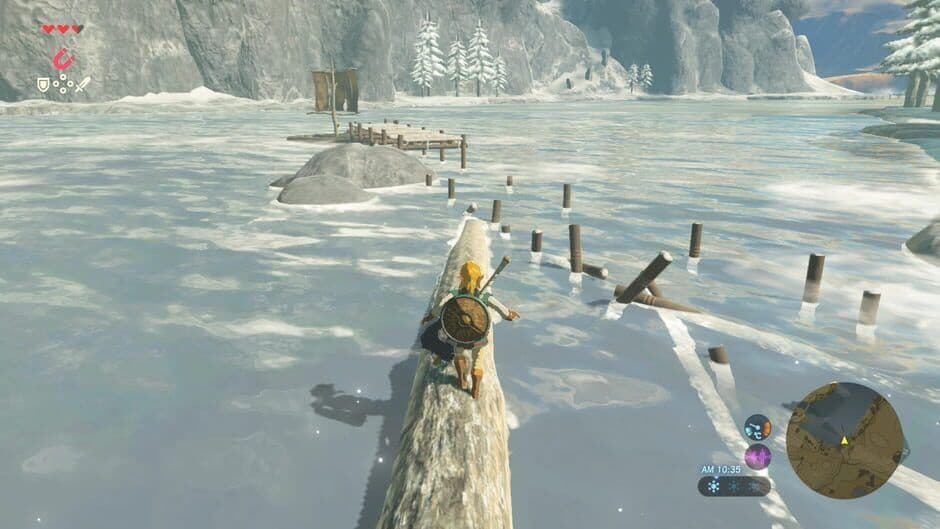
Environmental storytelling guides players through the game's opening hours.
This opening area is a dramatic inversion of the traditional Zelda starting zone. Where Kokiri Forest or Outset Island were secluded, idyllic safe havens, the Great Plateau is a central, elevated stage overlooking the entire ruined kingdom. You can see Hyrule Castle smoldering in the distance and strange structures dotting the landscape, but the sheer cliffs surrounding you promise instant death. This establishes the game’s primary, elegant gate: the Paraglider. An old man will give it to you, but only after you conquer four Shrines. This is Breath of the Wild’s one major concession to linearity, and its genius lies in what it unlocks. Completing these Shrines doesn’t just grant an exit—it bestows the four core Sheikah Slate runes: Magnesis, Stasis, Cryonis, and Remote Bombs. From that moment forward, you possess every tool theoretically needed to complete the entire game. No late-game hookshot or iron boots will ever gate your progress; the only barriers left are your own courage and ingenuity.
This is the game’s most profound vote of confidence in the player. By handing you the complete toolkit in the first hour, Breath of the Wild declares that your power comes from understanding systems, not collecting keys.
The journey to acquire these powers is where the tutorial seamlessly bleeds into adventure. Each Shrine is a focused lesson, but the path to them teaches everything else. To reach the freezing peak of Mount Hylia, you must learn to cook warming meals or hunt for the Old Man’s spicy pepper recipe. A group of Bokoblins guarding a treasure chest near a cliff isn’t just a combat encounter—it’s a physics puzzle waiting to be solved with a well-placed Magnesis-lifted boulder. The game introduces stamina management, weather effects, and material gathering not through pop-ups, but through environmental necessity. You aren’t told that metal attracts lightning; you discover it the hard way during a thunderstorm, or by noticing the old man’s hint about dropping a metallic weapon. This commitment to organic discovery ensures that the Plateau feels like a living part of the world, not a developer-constructed training room.
Guiding this exploration is the sophisticated visual language discussed in the series’ roots. The shrines themselves glow with a distinct orange light, a hue meticulously avoided elsewhere in the environment to make them unmissable landmarks. The alien curves of Sheikah architecture stand out against the natural rock. Even the landscape employs a subtle “triangle rule,” where oddly shaped peaks and divots subtly draw your eye, often concealing a Korok seed. You’re learning to read the world’s cues without a single UI marker, a skill that will define the next hundred hours. For veterans of guided open worlds, this initial silence can be daunting, but it’s precisely this trust that makes every subsequent discovery feel earned. The Great Plateau doesn’t hold your hand; it gives you a compass and teaches you how to navigate by the stars. By the time you finally step off its edge and into the true vastness of Hyrule, you’re not just equipped with tools—you’re empowered with a mindset.
The Physics and Chemistry of Hyrule: A Living, Reactive World
The true magic of The Legend of Zelda: Breath of the Wild isn't in its vistas, but in its verbs. This is a world that doesn't just exist for you to look at—it reacts, bends, and sometimes explodes under the weight of your curiosity. The game’s reputation as a living sandbox is built on the seamless, often invisible, interplay of two technical marvels: a robust physics engine and a bespoke chemistry engine. Together, they transform Hyrule from a beautiful backdrop into a consistent, predictable, and endlessly manipulable playspace where your wildest ideas have a fighting chance of working.
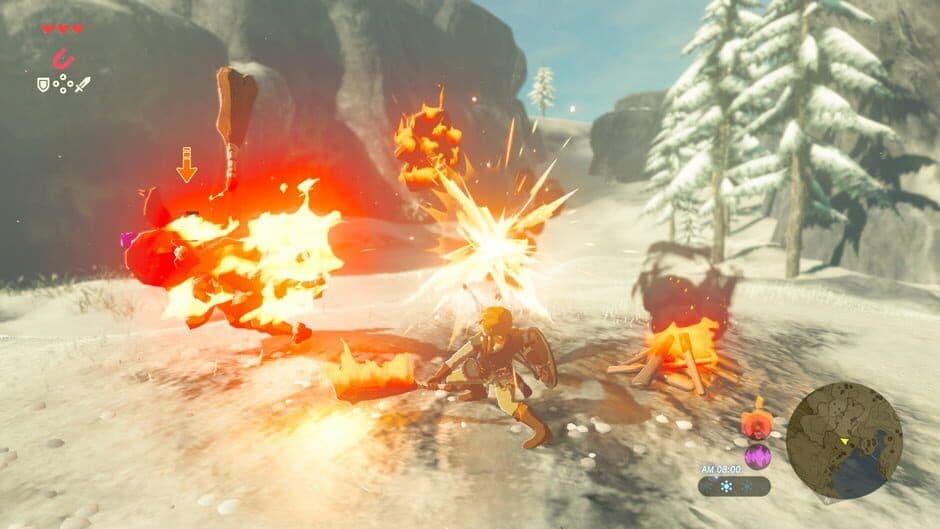
Emergent gameplay possibilities
At its core, the Havok physics engine governs the tangible weight of the world. This isn't just about objects falling when dropped; it's about the kinetic chain reaction that defines moment-to-moment play. A boulder perched on a hill isn't set dressing—it's a potential weapon you can dislodge with a bomb or a well-timed Stasis strike, watching it roll downhill to crush a Bokoblin camp. The multiplicative gameplay philosophy shines here, where simple elements combine in complex ways. Need to cross a chasm? The game doesn't offer a single solution. You could use Magnesis to build a bridge from metal panels, launch yourself across with a tree trunk and Stasis, or even painstakingly create a staircase of Cryonis ice blocks up a waterfall. This consistent physicality means the lessons learned in minute one remain valid in hour one hundred. The legendary stories of players rolling a boulder from the Great Plateau all the way to Ganon’s doorstep aren't myths; they are the ultimate testament to a system that never says "you can't," only "you might have to try."
This consistency is the game's greatest gift to player creativity. By grounding its systems in real-world logic—metal conducts electricity, wood burns, wind pushes objects—Breath of the Wild leverages your existing intuition as its primary tutorial.
Complementing the physics is Nintendo's custom-built chemistry engine, a system that defines how elements like fire, ice, electricity, and water interact with every object and creature. This is where the world feels truly alive. Set grass ablaze with a fire arrow, and the resulting updraft will give your paraglider a boost. Drop a chunk of meat in the snowy Hebra region, and it will freeze into preserved food. Throw a metal sword during a thunderstorm, and you’ll quickly learn why that’s a catastrophically bad idea. These aren't scripted events but emergent outcomes of universal rules. The chemistry engine intertwines with physics to create hundreds of interactive possibilities: a burning torch can ignite an explosive barrel, the blast can send a metal crate flying, and that crate could land in water and conduct electricity to stun a nearby enemy. It’s a dazzling domino effect of cause and consequence that makes you feel like a genius for simply paying attention to the environment.
However, this commitment to systemic realism has a notorious cost: rain. When storms roll in, rock surfaces become slippery, making climbing not just slower but often impossible. No armor or elixir can fully negate this, forcing you to wait out the weather or find an alternative route. For a game built on the freedom to climb anything, this can feel like a punitive restriction. It’s a rare instance where the simulation arguably undermines the power fantasy, transforming a moment of exploration into a test of patience. While it adds to the world's authenticity and forces creative problem-solving—perhaps you'll use Cryonis on a nearby waterfall instead—the frequency of rainfall in certain regions can grind progress to a frustrating halt.
Yet, even this friction reinforces the game's core brilliance. Every interaction, even the frustrating ones, stems from a predictable, understandable rule. The Legend of Zelda: Breath of the Wild doesn't cheat. It presents a world that operates with a steadfast internal logic, and then gives you the tools to exploit it. The joy isn't in being told you're clever for solving a pre-built puzzle; it's in the genuine, self-discovered cleverness of using a Octorok balloon to lift a puzzle slab, or cooking a dubious "dubious food" because you threw every ingredient you had into a pot just to see what would happen. This is a world that listens, reacts, and remembers—not with AI sentience, but with the beautiful, chaotic reliability of chemistry and physics.
Exploration and Progression: Why Every Action in Breath of the Wild Matters
The Legend of Zelda: Breath of the Wild’s most radical proposition isn’t that you can go anywhere, but that every step you take will be rewarded. This is the game’s core gameplay covenant, a masterful system of Evergreen Relevancy that ensures the world never becomes obsolete. Your power grows, but so do the challenges and the quality of rewards, creating a loop where a curious glance off the beaten path in hour fifty can be as thrilling as it was in hour five. This is achieved through a delicate balance of permanent upgrades—more hearts, more stamina—and a constant, dynamic churn of temporary gear, enforced by the game’s most divisive mechanic: weapon durability.
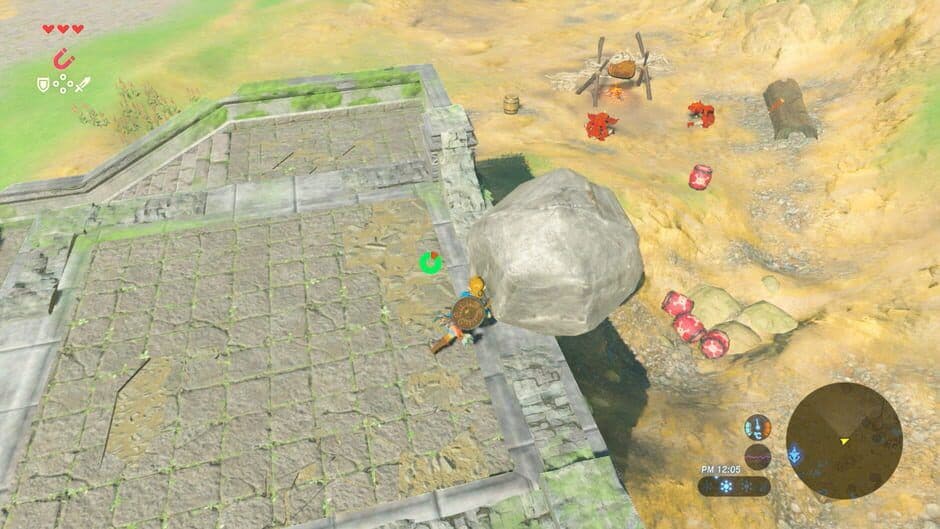
Weapon management is central to the game's progression.
This system is a deliberate, often brutal, design choice. Your Boko Club will shatter after a dozen swings, your Royal Broadsword will eventually explode in your hands, and even the legendary Master Sword needs a ten-minute nap after overuse. The intent is to force improvisation and deep engagement with the game’s physics and chemistry engines. You can’t hoard one overpowered sword and brute-force every encounter; you must adapt, using a Korok Leaf to blow enemies off cliffs, dropping metal boxes on them with Magnesis, or luring them into explosive barrel traps. This creates incredible emergent stories and ensures combat never devolves into a repetitive button-mash. However, the execution can feel punishing. Finding a powerful weapon often leads to the perverse incentive of saving it “for later,” only for it to break during a trivial skirmish, a feeling of waste that contradicts the game’s ethos of joyful experimentation. For some, this constant breakage undermines the power fantasy; for the designers, it’s the essential engine that keeps the scavenger-hunt gameplay loop spinning for over a hundred hours.
The genius of durability is that it transforms the landscape itself into a loot table. You’re not just looking at a mountain—you’re scanning it for ore deposits to mine, or a Hinox to slumber-steal a weapon from, because you know you’ll need a new sword soon.
Progression in Breath of the Wild operates on a second, crucial axis: survivability. Beyond hitting harder, you must learn to endure Hyrule’s elemental extremes. The stamina wheel governs your ability to explore, making a long climb or a desperate paraglider escape as much a resource-management puzzle as a test of skill. The game’s weather and temperature systems aren’t just atmospheric—they’re gatekeepers. You’ll freeze on Mount Lanayru without the right gear or elixirs, and your metal equipment becomes a deadly liability in the Faron thunderstorm. This creates a compelling gear-based progression where finding the Snowquill Tunic or crafting a Fireproof Elixir feels as impactful as finding a new sword, because it literally unlocks new regions of the map. It’s a constant, engaging layer of preparation that makes the world feel authentically hostile and your growing mastery over it deeply satisfying.
The reward for engaging with this dangerous world is often a Korok Seed. These subtle environmental puzzles—a pattern of rocks to complete, a lone flower to chase, an acorn in a log to shoot—are the game’s lifeblood of exploration. They are perfectly tuned for incidental discovery, taking just a minute to solve and providing a tiny, consistent hit of accomplishment. Their primary function is to feed back into the durability loop: you trade seeds to the maraca-shaking Hestu to expand your weapon, bow, and shield inventories. This direct connection is brilliant—the more you explore, the more seeds you find, the more weapons you can carry, which mitigates the stress of durability and encourages you to engage with the very system that necessitates the expansion. It’s a self-perpetuating cycle of curiosity and reward.
Guiding your eye toward these secrets and points of interest is the game’s sophisticated, invisible hand. The triangle rule in landscape design is a subtle masterpiece. Mountains and hills are predominantly triangular, with large triangles serving as landmarks, medium ones creating visual barriers for surprise, and small, irregular triangles with odd peaks or divots subtly drawing your attention. You might not know why that peculiar rock formation looks interesting, but you’ll climb it anyway—and find a Korok hiding on top. Combined with the consistent visual language of glowing orange shrines and distinct Sheikah architecture, The Legend of Zelda: Breath of the Wild teaches you to navigate by its environmental cues rather than a minimap full of icons. This is why the world feels discovered, not checklist-driven. Every hill holds potential, because the game has meticulously designed your gaze to believe it.
Shrines, Divine Beasts, and the Narrative of a Healing World
For all its masterful world-building, The Legend of Zelda: Breath of the Wild’s structural ambitions are where its design philosophy meets its most practical—and occasionally problematic—execution. The game replaces traditional Zelda dungeons with two distinct tiers of content: 120 bite-sized Shrines and four colossal Divine Beasts. This architecture brilliantly serves the game’s freedom-first ethos, but it also exposes the narrative and climax to a degree of dilution that the sprawling overworld effortlessly avoids.
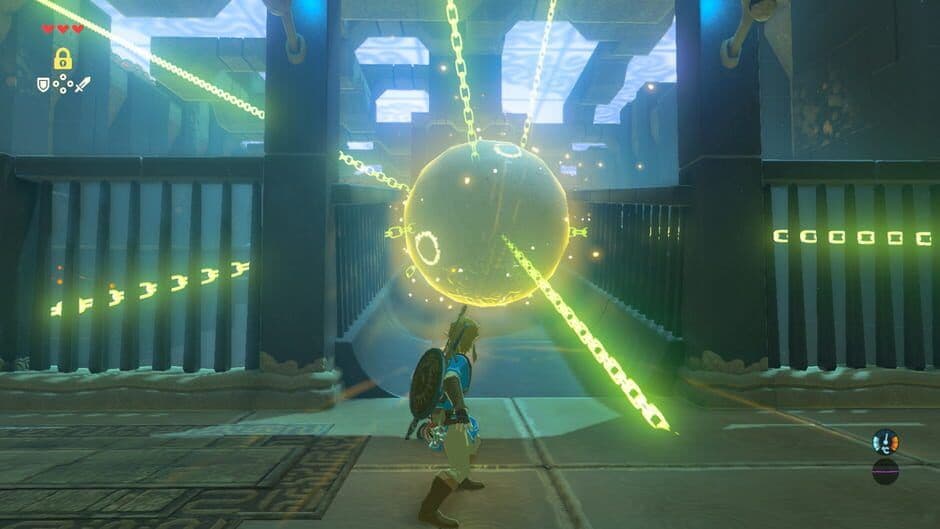
The narrative of a healing world is told through its sprawling, ruined vistas.
The Shrines are the game's workhorse content, and their design is a direct extension of the multiplicative gameplay philosophy. These are not dungeons but focused, 5-10 minute logic puzzles that test your understanding of the Sheikah Slate’s universal tools. Their genius lies in thematic variety over mechanical gating. A shrine might be built around the concept of “wind,” requiring you to use a Korok Leaf to sail a raft or guide a giant metal ball through a maze. Another might focus on “conductivity,” tasking you with creating a circuit using metal objects. This approach ensures that progression is never about finding a new key item, but about deepening your mastery of the core systems you’ve had since the Great Plateau. While the 20 “Test of Strength” combat shrines can feel repetitive, and a handful of motion-control puzzles are notoriously clunky, the majority are elegant proof-of-concept labs for the game’s physics and chemistry engines. They are perfectly paced rewards scattered across the map, offering a consistent, satisfying hit of accomplishment that never overstays its welcome.
Where the Shrine design falters is in its aesthetic uniformity. The identical blue-and-orange Sheikah aesthetic, while thematically coherent, means these spaces lack the memorable visual identity of classic Zelda dungeons like the Forest Temple or the Water Temple. You solve a brilliant puzzle, but you’re unlikely to remember the room it was in.
The Divine Beasts represent the game’s attempt at grand, legacy dungeon-scale challenges. Each is a magnificent, moving puzzle box—a giant mechanical animal you can manipulate from the inside. Tilting Vah Medoh to create new pathways or rotating Vah Naboris to align electrical circuits is a thrilling spatial puzzle that makes you feel like you’re commandeering a living fortress. This is Breath of the Wild’s dungeon design at its most ambitious, successfully translating the series’ love of environmental manipulation into its new systemic language. However, the structure becomes formulaic: locate a map, activate five terminals, fight a Blight Ganon. While the journey to each Beast and the cultural context of the Rito, Gerudo, Zora, and Goron peoples are richly realized, the dungeons themselves can blur together in memory, their unique gimmicks overshadowed by a repetitive victory lap.
This repetition culminates in the game’s most significant shortcoming: its boss design. The four Blight Ganon encounters, while technically distinct—Waterblight uses ice spears, Thunderblight is lightning-fast—are functionally similar damage-sponge affairs that lack the theatricality and multi-phase grandeur of Zelda’s best. They feel like heightened versions of the Guardian Scouts from the Test of Strength shrines, not epic capstones to a region’s story. This issue crescendos in the final confrontation with Calamity Ganon. The fight is mechanically “fine,” with Ganon using twisted versions of the Sheikah Slate abilities you’ve mastered, but it lacks the overwhelming emotional weight and difficulty spike one expects from a century-spanning climax. The second phase, a sprawling spectral boar battle on Hyrule Field, is visually stunning but mechanically simplistic. For a game that makes the journey so profoundly personal, the destination feels oddly impersonal and perfunctory.
This narrative distance is Breath of the Wild’s other great compromise. The story of a world healing from a cataclysm 100 years past is a powerful backdrop, and the fragmented memories Link recovers are beautifully shot vignettes. Yet, the present-tense narrative suffers from a structural dissonance. The Champions—Mipha, Daruk, Revali, and Urbosa—are charismatic in flashbacks but feel underdeveloped as presences in the current quest. Their spirits offer one-note assistance after their respective dungeons, reducing them to gameplay functions. Furthermore, the choice to pair fully voiced, emotional cutscenes with a perpetually silent Link creates jarring, unnatural interactions. Zelda pours her heart out to a statue, and while the environmental storytelling is superb, the central dramatic relationships can feel thin, lacking the interactive depth of the world itself.
Yet, in its quietest moments, the game’s narrative and atmospheric genius is undeniable. This is largely due to its revolutionary sound design. In the open “Wild,” the soundtrack often recedes to near-silence, emphasizing the breathtaking foley work: the crunch of gravel under Link’s boots, the rustle of grass in the wind, the distant howl of a wolf. When music does surface, it’s minimal—a few sparse piano notes that feel less like a score and more like the landscape itself sighing. This creates an unparalleled sense of solitude and space, making Hyrule feel truly vast and untamed. The full orchestra is reserved for settlements, Divine Beasts, and climactic battles, making those moments land with tremendous impact. It’s a masterclass in auditory restraint that makes the world, not a cinematic plot, the story’s true emotional core.
Final Verdict: Is Breath of the Wild Still the Open-World Standard?
Seven years on, the question isn't whether The Legend of Zelda: Breath of the Wild is a great game—that verdict was rendered within its first hour on the Great Plateau. The real question is whether its philosophy of radical player freedom still defines the open-world standard. The answer is a qualified yes, but with the crucial caveat that its most profound lessons have proven almost too difficult for the industry to follow. This is a game whose DNA is visible in titles from Elden Ring to Sable, yet whose complete vision remains uniquely, stubbornly its own.
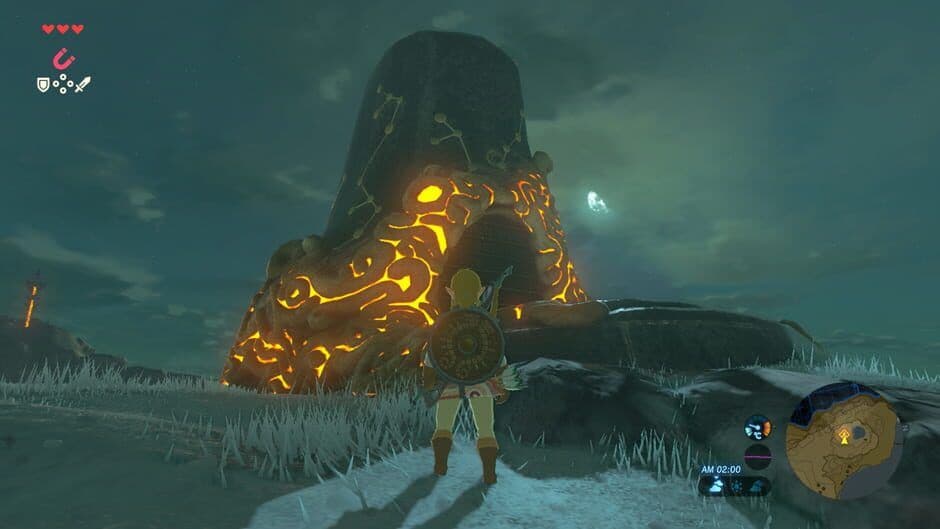
Unmatched freedom of movement.
Breath of the Wild’s greatest legacy is the permission it gave other developers to trust their players. It proved that a world could be compelling not because of the quests plastered over it, but because of the consistent, interactive rules that governed it.
This trust is its core value proposition. The game’s 100+ hour runtime isn't padded with checklist busywork; it's filled with the sheer joy of existing in a space where every action has purpose and every curiosity is rewarded. You don't climb a mountain because a map icon told you to; you climb it because you saw a strange rock formation at the peak, and the act of climbing itself—managing your stamina, scanning for handholds, weathering a sudden storm—is engaging. The reward might be a Korok seed, a shrine, a breathtaking vista, or simply the satisfaction of having done it. This is a game that understands intrinsic motivation, making its vast world feel not like a chore to be completed, but a wilderness to be understood. For players who crave wonder and self-directed discovery, this is still the pinnacle. The experience of paragliding off a peak you just scaled, spotting a dragon in the distance, and altering your course mid-air to investigate remains unmatched in its sense of pure, untethered adventure.
However, this very design makes Breath of the Wild a potentially frustrating experience for players who prefer a tightly directed narrative or a clear power progression. The story of Zelda and the Champions is told in fragmented, non-linear memories, and the present-day quest is minimalist to the point of being ghostly. If you need a strong narrative throughline to propel you forward, the silence of Hyrule can feel isolating rather than immersive. Similarly, the controversial weapon durability system, while brilliant for encouraging systemic improvisation, actively works against the traditional RPG fantasy of building a beloved, permanent arsenal. Finding a powerful Royal Guard's Sword only to have it shatter during a skirmish with a Moblin can feel punishing, a friction that some players never reconcile themselves to. This is a game that asks you to find joy in the loop of acquisition and loss, not in the security of permanent accumulation.
Technically, the experience is mostly sublime, but it’s not without its seams, particularly on its original hardware. The art style is timeless, using a painterly, pastel-like aesthetic to ensure readability and performance, but frame rate drops were noticeable in dense areas like the Korok Forest or during complex physics interactions involving multiple explosions. These hitches rarely broke the game, but they were a reminder of the ambitious systems running under the hood. A more concrete blemish comes from the handful of motion-control shrines. Requiring precise tilts of the Switch or GamePad to guide a ball through a maze, these puzzles traded the game's elegant physics for finicky, imprecise gyro controls. They stand out as a rare moment where Breath of the Wild’s commitment to hardware gimmickry undermined its otherwise flawless systemic design.
And yet, these criticisms pale against the game's monumental achievements. Its influence is a testament to its quality. Elden Ring’s guiding grace points and vast, secret-filled landscapes are a direct spiritual successor. Sable and Tchia cite it as the inspiration for their own "go-anywhere" climbing and focus on player-driven exploration. These games learned the right lesson: it’s not about copying the glider or the art style, but about building a world that is consistently readable and interactable, then having the courage to step back. Where many imitators stumbled—like Immortals Fenyx Rising with its checklist-heavy "Far Sight"—was in layering conventional quest structures over a Breath of the Wild-like shell, missing the point entirely. The magic is in the subtraction, not the addition.
So, is The Legend of Zelda: Breath of the Wild still the standard? For the feeling of setting out into an unknown world with nothing but your wits and the promise of adventure, absolutely. It is a masterpiece of systemic game design and player agency. Its weaknesses in narrative thrust and boss variety are real, but they are trade-offs for a scale of freedom that few games have dared to attempt, and even fewer have matched. It is less a game to be beaten and more a world to be lived in—a quality that ensures its place not just as a classic, but as a enduring benchmark.
Pros:
- Unparalleled sense of freedom and emergent gameplay powered by masterful physics and chemistry engines.
- A world designed for organic discovery, where exploration is consistently its own reward.
- A timeless art style and revolutionary sound design that create an immense sense of atmosphere and place.
- A profound trust in the player that influenced a generation of open-world design.
Cons:
- The weapon durability system, while purposeful, can feel punishing and counter to traditional power fantasies.
- Boss battles, including the final confrontation, lack the epic scale and variety of the series' best.
- The fragmented, memory-based narrative may frustrate players seeking a strong, directed story.