Spoilers for Cyberpunk 2077's main story and endings.
The Relic turns V's survival into a property dispute. After the Heist, V is alive because an Arasaka biochip is repairing their body while rewriting their brain with Johnny Silverhand's engram. The technology does not simply preserve a person; it creates two claims on the same life.
That is Cyberpunk 2077's most unsettling idea about immortality. The game is not asking whether a digital copy can talk, remember, or feel. Johnny clearly does all three. It is asking what happens when the copy has a corporation behind it, a body it can inherit, and a living person who refuses to call the process resurrection.
By the time V reaches the balcony at Misty's, body, memory, and ownership have become separate things. The endings matter because they make V choose which one to protect.
The Relic makes survival a question of ownership
The Heist gives V a prototype biochip built around a future Arasaka wants to sell: a person's mind can continue after the body fails. When the Relic is slotted into V's head, its nanites repair the fatal damage from Dex's bullet and begin restructuring V's neural pathways around Johnny's engram. Johnny is not a harmless recording waiting to be played. He is the active pattern the chip is making V's brain accommodate.
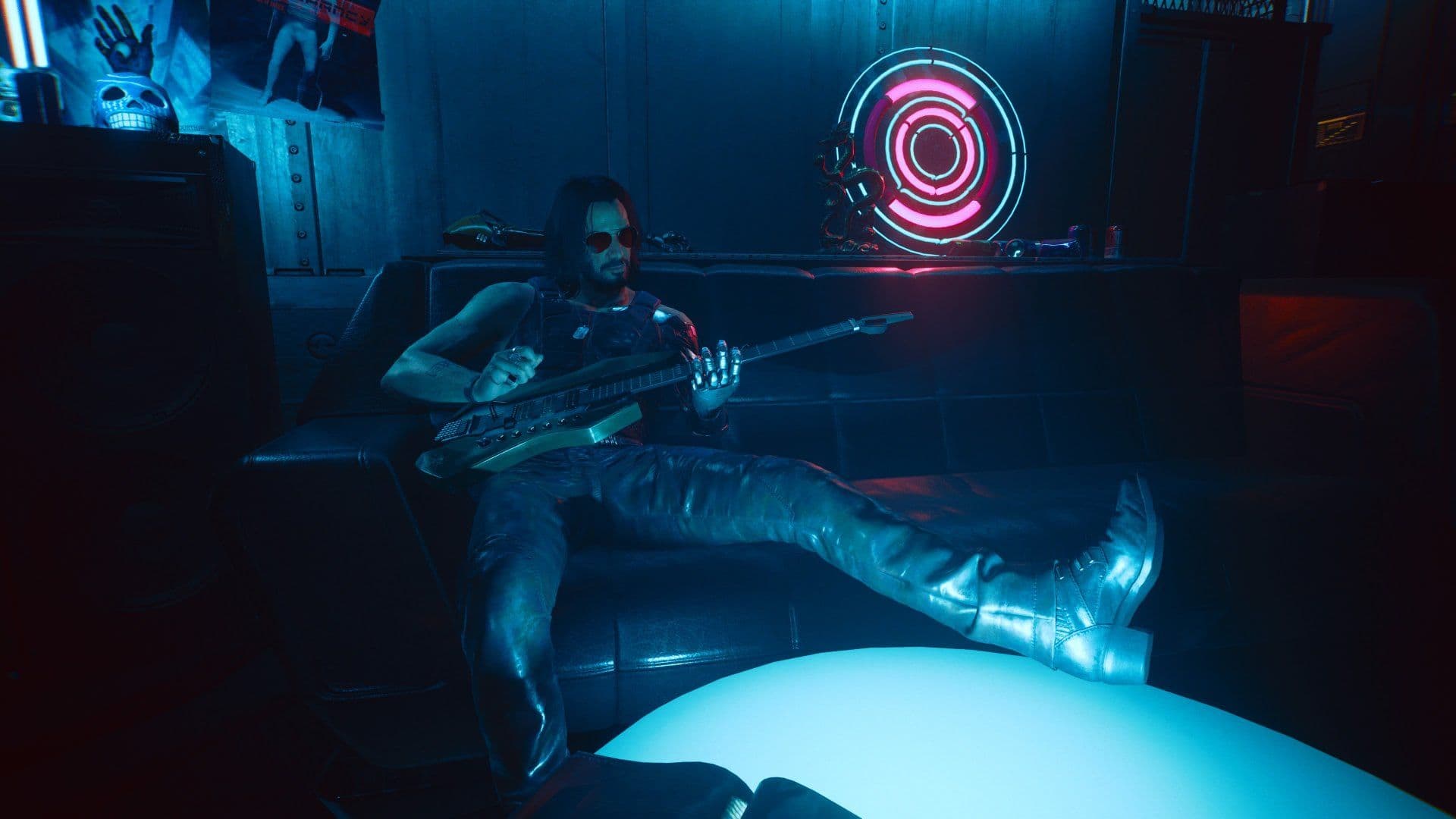
Johnny's engram is a person with memories, not a neutral backup.
That makes the conflict more precise than possession. Johnny has the memories and convictions of the man who died, but he is also a version produced by Soulkiller and kept as data for decades. V remains the living person who was shot, yet their body is becoming more compatible with someone else's mind. Both can point to evidence that they are the rightful owner of the life in front of them.
The game's trick is to make neither side disposable. If Johnny were only a hallucination, V could ignore him. If the Relic were only a backup, V could remove it. Instead, the chip gives Johnny enough presence to become a person in the room while making V's survival depend on treating that person as an intruder. The technology succeeds at continuation by turning identity into a conflict.
Mikoshi turns a person into a corporate service
Soulkiller and Mikoshi show what Arasaka means by preservation. Soulkiller digitizes a consciousness into an engram; Mikoshi stores those digital personalities inside an infrastructure Arasaka controls. A human life becomes portable, but the company owns the place where portability ends.
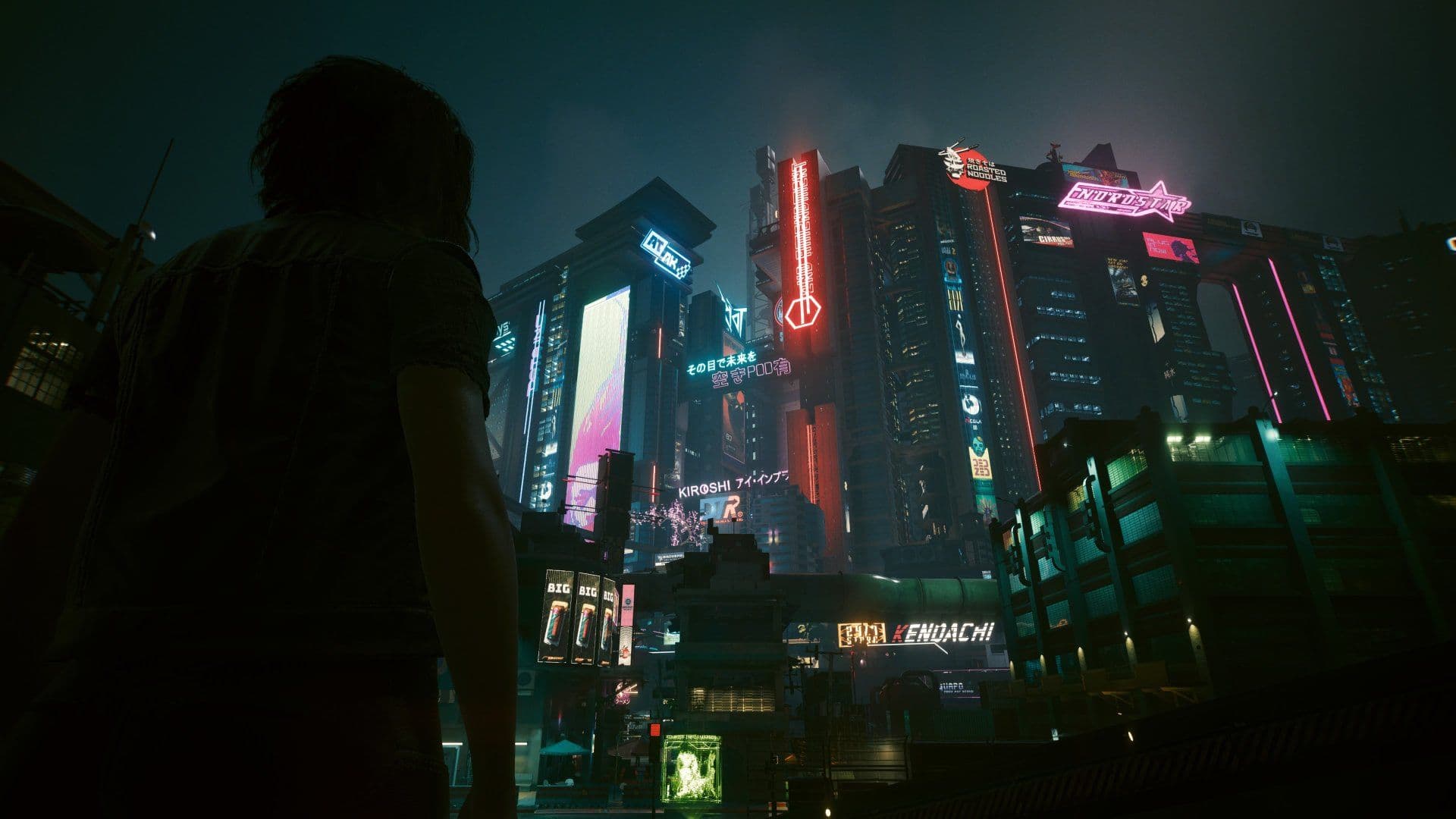
Arasaka's promise of permanence begins with control of the infrastructure.
The Devil ending makes that arrangement concrete. After V accepts Hanako Arasaka's deal and undergoes surgery to remove the Relic, Arasaka offers a final decision: return to Earth with an uncertain future, or join Secure Your Soul and become an engram like Johnny. The offer sounds like a choice between life and death, but it is also a choice about custody. V can keep a body that may not recover, or hand their continued existence to the same system that stored Johnny.
That is why Mikoshi is not a hopeful afterlife. It is an archive with an owner. Arasaka can promise that a version of V will remain available, but it cannot promise that the version will remain free, embodied, or able to define what counts as its own life. The company's miracle is therefore perfectly consistent with Night City's economics: permanence is offered only after the person has become a managed service.
The game does not need to call this a scam. It puts the contract at the end of a desperate medical procedure and lets the player notice what the contract cannot return. The body is not a file. Access is not autonomy. A preserved mind is still vulnerable to whoever controls the system that preserves it.
The Star and Temperance make the copy personal
The Aldecaldo route gives the Relic problem a different shape. If V calls Panam and the Nomads, they fight into Arasaka Tower together, reach Mikoshi with Alt Cunningham's help, and face the same division: return to V's body or let Johnny keep it while V leaves with Alt. The Star ending sends V away from Night City with the Aldecaldos. Temperance gives the body to Johnny, while V's consciousness follows Alt beyond the Blackwall.
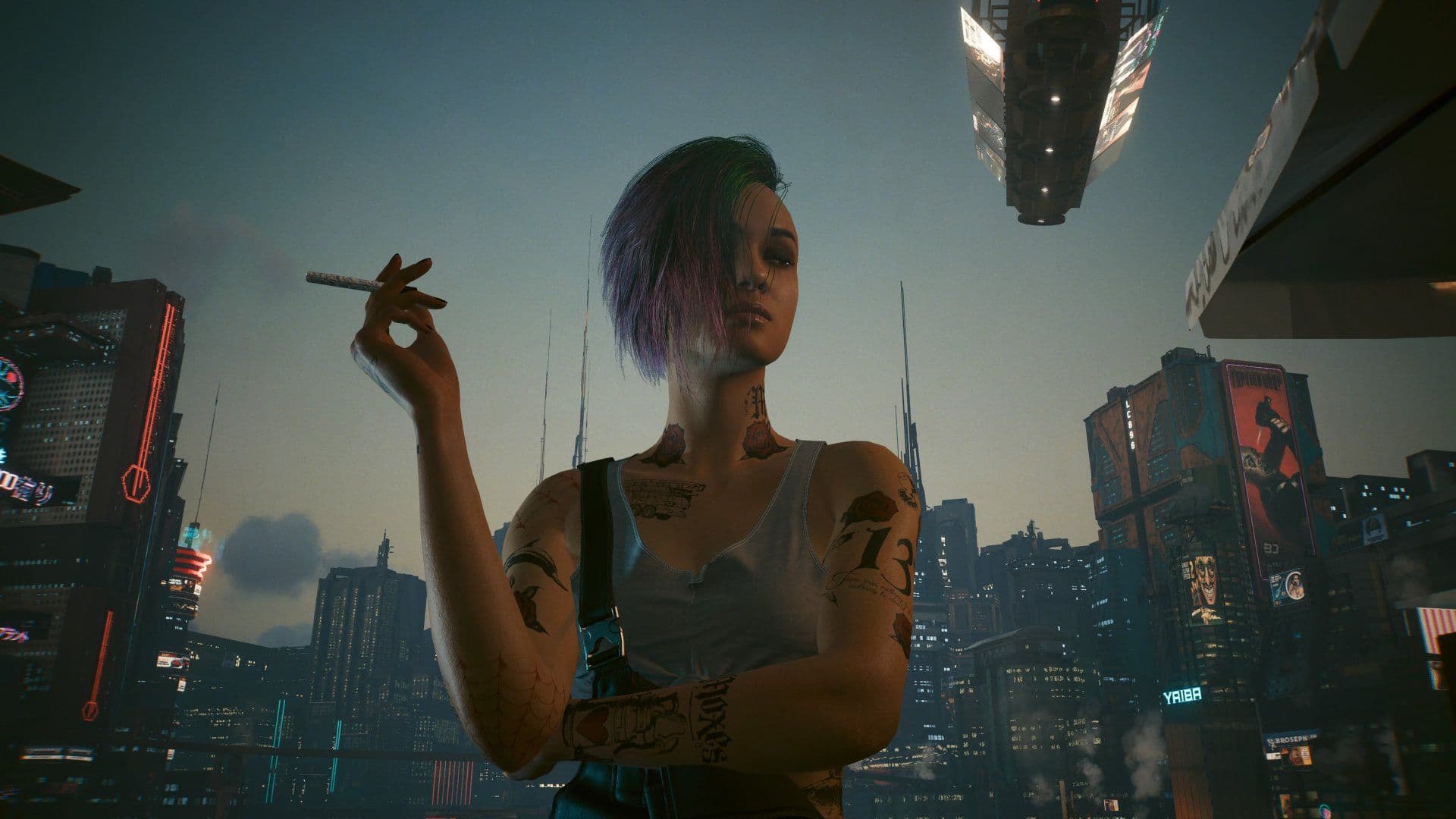
The people around V are part of what the endings put at stake.
Those are not interchangeable versions of the same escape. The Star treats V's remaining physical life—and the people willing to share it—as worth defending, even though the game has already made that future finite. Temperance treats Johnny's chance to live in the altered body as worth more than V's claim to it. The decision is not made by checking which engram has the better backup. It is made between people who have spent the story changing one another.
The credits reinforce that point. The messages from V's friends change with the route, and the people who call do not react to an abstract engram; they react to the consequences that reach them. Panam's response to Temperance is not a philosophical footnote. It is the emotional proof that V's identity was also a network of promises, relationships, and expectations.
Cyberpunk 2077 therefore treats a copy as a relationship rather than a backup. Johnny can inherit V's body, but he cannot inherit V's entire place in the world. V can leave with an engram beyond the Blackwall, but that does not erase the cost of abandoning the people who knew them. Continuity is never just a technical result.
Johnny's legend is the trap
Dexter DeShawn's early question—whether V would prefer a quiet life or a blaze of glory—sounds like a setup for the mercenary fantasy. The endings reveal it as the story's central warning. Night City teaches people to chase a legend because a legend looks like a way to outlive the body. Johnny is the proof that it works and the proof that it fails.
Johnny's name survived. His music, clothes, gun, car, and image still circulate through the city. The person who carried that name did not come back intact; Arasaka extracted an engram, stored it, and eventually put it on the Relic. The city got a usable Johnny Silverhand while Johnny got decades of isolation and a body he never owned.
V is offered the same bargain in different forms. The Sun and its Path of Glory make V a legend while leaving their future uncertain. The Star makes V choose the Aldecaldos over the city's myth of individual ascent. Temperance lets Johnny walk away in V's body, forcing him to live with a legacy that no longer belongs to the original man.
That is why the game's corporate dystopia reaches beyond Arasaka. Night City does not need to invent immortality; it only needs to make being forgotten frightening enough that people will sign away the right to define themselves. Johnny's engram is not a victory over death. It is a warning about what fame looks like after ownership has changed hands.
The final choice is about consent, not continuity
At the point of no return, the useful question is not which ending proves that a soul exists. The game has already shown that a convincing continuation is possible. The harder question is who is allowed to consent to the continuation: V, Johnny, or the corporation that built the machine.
The Devil makes V's future conditional on Arasaka's custody. The Star preserves V's claim to their body but not their certainty of a long life. Temperance gives Johnny the body and sends V beyond the Blackwall. None of those outcomes restores the world before the Heist, because the Relic has made that world impossible.
Cyberpunk 2077's answer is bleak but specific: identity is not what survives unchanged. It is the claim a person can still make over their body, their memories, and the people who recognize them. If a system offers eternity only after taking that claim away, it has not defeated death. It has acquired you.