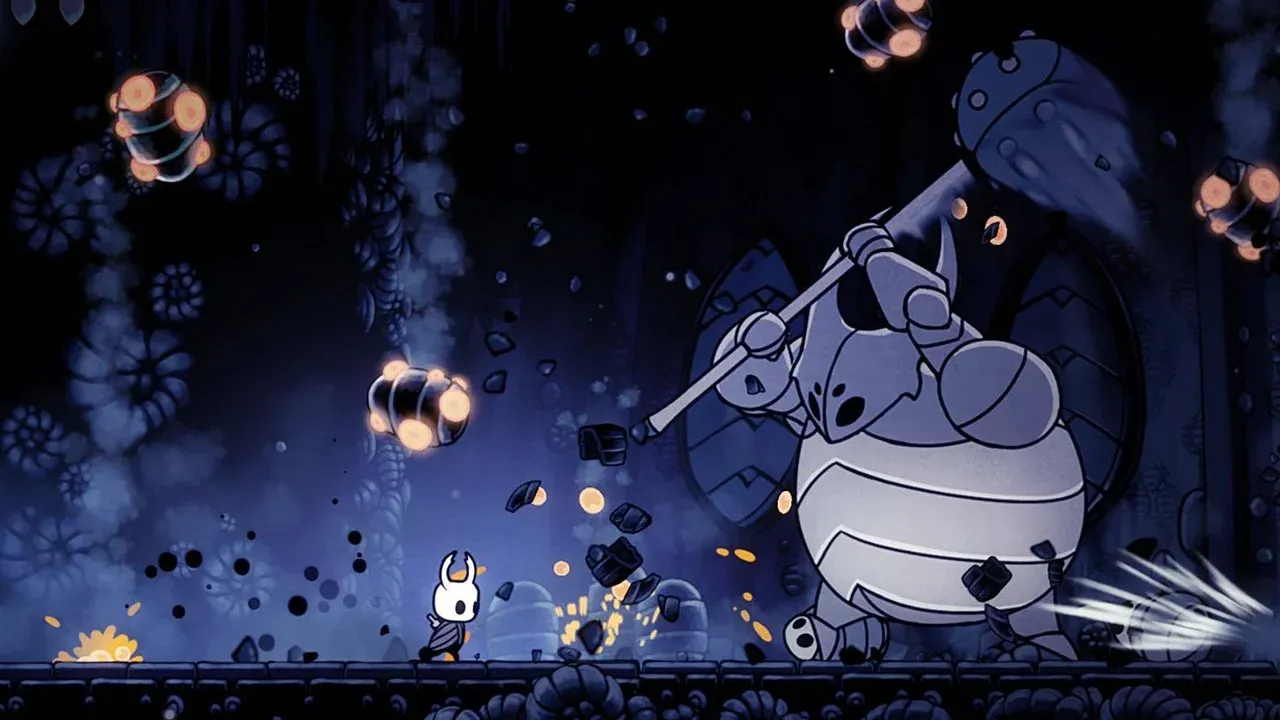
Hollow Knight Introduction: Entering the Ruined Kingdom of Hallownest
Hollow Knight doesn’t introduce itself so much as it drops you down a well into the dark and dares you to climb back out. This isn’t a game that holds your hand; it’s a game that respects your intelligence enough to let you get lost, and trusts your perseverance enough to let you stay that way for a while. From the moment you descend from the melancholy, wind-swept town of Dirtmouth into the caverns of Hallownest, you are given a simple toolset—a jump, a slash—and a vast, silent kingdom to explore. This is a masterclass in atmospheric world-building and a brutal test of will, all wrapped in a stunning, hand-drawn aesthetic that belies its modest origins.
The identity of Hollow Knight is immediately clear: this is a 2D action-platformer built on the sturdy bones of the Metroidvania genre, but its soul is uniquely its own. It trades in the gothic castles and sci-fi corridors of its predecessors for a subterranean insect kingdom, a world of chitin and carapace rendered with breathtaking, hand-drawn artistry. This choice is more than aesthetic; it informs every aspect of the experience, from the quirky, tragic characters you meet to the very logic of its sprawling map. The game’s confidence is staggering, especially considering its developer, Team Cherry, was a core team of just three people. That such a monumental, polished world—one often favorably compared to AAA productions—emerged from such a small studio is the first of many minor miracles this game performs.

The protagonist, known as the Knight, is the player's vessel for exploration.
This initial confidence, however, comes with a steep and deliberate cost. The opening hours in the Forgotten Crossroads are, by design, Hollow Knight at its most withholding and potentially frustrating.
The game operates on a "sink-or-swim" philosophy. You are given no map, no objective marker, and no real direction beyond a vague imperative to explore. Your only guide is the occasional hum of the cartographer Cornifer, whose maps you must purchase and whose pages only fill in as you explore and then rest at a bench. To even see your own position on that map, you must find and equip the Compass charm, consuming one of your precious ability slots. For the first few hours, you are quite literally navigating in the dark, a design choice that can feel punishingly obtuse. This isn't a flaw in the traditional sense—it's a deliberate barrier meant to filter players, ensuring that those who proceed are the ones willing to embrace the game's demanding, discovery-driven ethos. For some, this will be a deal-breaker. For others, it's the moment the game earns their trust, transforming aimless wandering into purposeful exploration.
This demanding introduction is a calculated risk, and it pays off by making every subsequent discovery feel earned. When you finally stumble from the muted blues of the Crossroads into the vibrant, overgrown Greenpath, the sense of revelation is palpable. The world opens up not through quest logs, but through your own growing competence and curiosity. And what a world it is. For a mere $15 at launch, Hollow Knight offers a staggering volume of content: a main quest spanning 25-30 hours, with completionists easily looking at 40-60 hours to uncover every secret, boss, and hidden ending. This isn't padding; it's density. The value proposition is almost absurd, positioning the game not as a charming indie diversion, but as a foundational pillar of its genre that demands to be taken as seriously as any big-budget release.
Hollow Knight Combat and Mechanics: Simple Tools, Infinite Depth
Hollow Knight presents its combat not as a fireworks display of complex inputs, but as a brutal, elegant conversation. You have a jump, a dash, and a nail—a simple, chunky slash that lands with a satisfying, tactile thwack. The genius is in the feedback: every hit causes a slight recoil for both you and your foe, a physical negotiation of space that makes each swing feel weighty and deliberate. This isn't a system you mash through; it's one you learn to dance within, mastering the dodge-swing-dodge rhythm until it becomes second nature. The controls are so responsive and precise that every death feels earned, a direct result of a mistimed dodge or a greedy swing rather than any input lag or unfair mechanic.
This foundation is elevated by the brilliant Soul mechanic, a masterclass in risk-reward design. Striking enemies fills a Soul meter, a resource with two competing uses: powerful, screen-clearing spells or a slow, vulnerable channel to heal a single mask of health. In the heat of a boss fight, this creates a constant, nerve-wracking calculus. Do you spend your hard-earned Soul on a desperate heal, risking interruption and losing it all, or do you gamble on an offensive burst to end the fight sooner? This system ingeniously ties aggression to survival—being low on health forces you back into the fray to build Soul, perpetuating a thrilling loop of tension and release. It transforms healing from a passive menu action into an active, strategic decision.
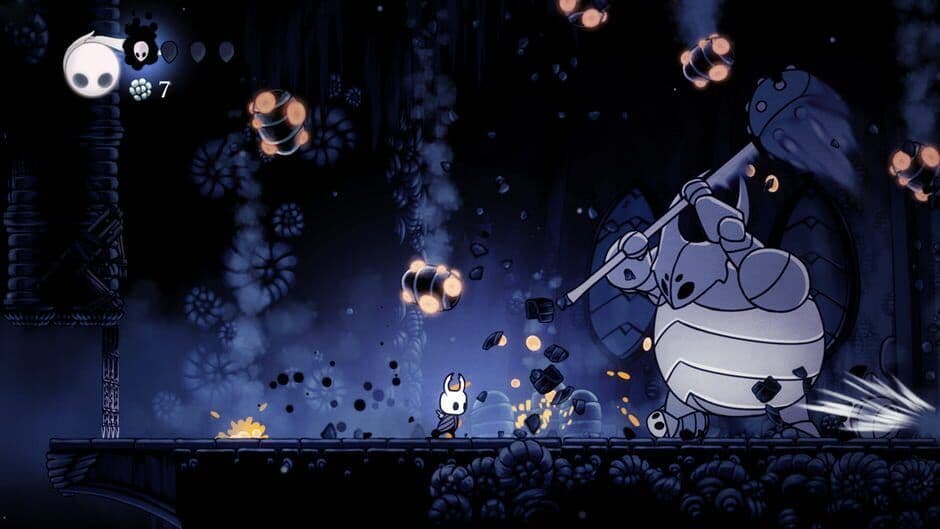
The core combat loop involves precise strikes and careful dodging.
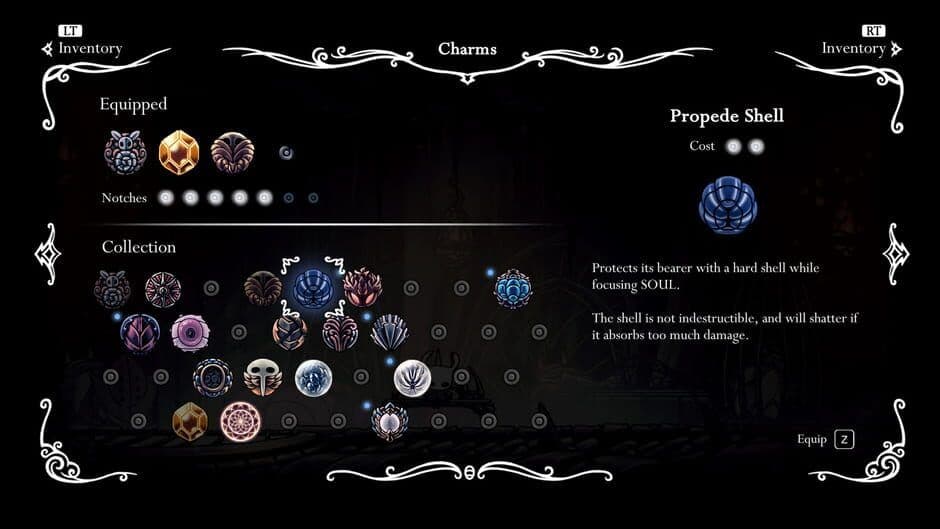
The true depth of Hollow Knight's combat, however, emerges from its Charm system. This isn't a simple upgrade tree but a playground for player expression, offering near-infinite ways to reshape your knight.
Charms are equippable modifiers that consume a limited number of notches. Their effects range from simple stat boosts to radical playstyle alterations. You can double your health at the cost of being unable to heal, summon a swarm of vengeful spirits when hit, extend your nail's reach, or even turn your dash into a damaging blast. There is no single "right" build. I found myself constantly swapping charms based on the challenge: a loadout focused on fast nail strikes for general exploration, a tanky configuration for a relentless boss, or a charm that passively collected the currency Geo when I needed funds. The option to Overcharm—equipping charms beyond your notch limit at the cost of taking double damage—adds another layer of high-stakes customization for experts. This system ensures that after dozens of hours, you're still discovering potent new synergies.
This experimentation is vital because Hollow Knight throws a staggering variety of challenges at you. The game boasts a bestiary of over 150 unique creatures, and nearly every one demands a slight adjustment in your approach. You'll learn to pogo-bounce on spiked enemies with your nail, time your dashes through the projectile patterns of flying husks, and patiently wait for openings against heavily armored beetles. This enemy diversity ensures that exploration never becomes monotonous; each new biome introduces fresh tactical puzzles to solve. The consequence for failure is famously stern, borrowing a page from the Soulsborne playbook: upon death, you leave behind a Shade containing all your accumulated Geo. To recover your wealth and restore your full Soul vessel, you must trek back to your point of death and defeat your own ghostly remnant. This mechanic turns every death into a high-stakes retrieval mission, adding a palpable layer of dread to dangerous areas and making successful recovery a mini-victory in itself.
While punishing, these systems collectively foster a profound sense of player growth. Your power increase comes less from finding a bigger sword and more from internalizing the rhythm of combat, smartly managing your Soul, and tailoring your charm loadout to the task at hand. Hollow Knight gives you simple tools, but the depth it coaxes from them is infinite. By the time you're seamlessly integrating spells, healing, and nail arts into a single fluid encounter, you realize the game hasn't been holding your hand—it's been teaching you a language, and you've finally become fluent.
World Design in Hollow Knight: The Labyrinthine Beauty of Hallownest
Navigating Hallownest isn't just about getting from point A to point B—it's about learning a new way to see. Hollow Knight replaces the traditional open-world checklist with a sprawling, interconnected labyrinth that demands your attention and rewards your memory. This isn't a world you traverse; it's a world you internalize, piece by piece, until its winding caverns feel less like a maze and more like home.
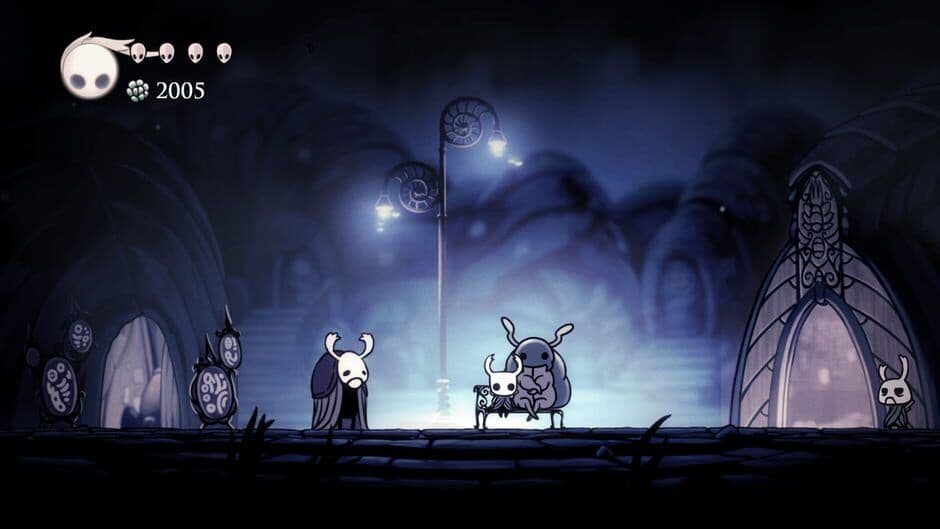
The game's world is praised for its interconnected and atmospheric design.
The genius of the level design lies in its cohesive, three-dimensional logic. Hollow Knight’s map of approximately 16 regions isn't just a series of side-scrolling screens stitched together; it's a vertical, breathing ecosystem. The most celebrated example is the City of Tears, an underground metropolis under perpetual rain. The source of that rain isn't explained in a cutscene—it’s discovered organically when you later find the serene Blue Lake resting directly above it in the overworld. These environmental epiphanies are the game's primary narrative device, transforming simple geography into profound storytelling. Every new connection, whether it’s a crumbling elevator shaft or a hidden passage behind a breakable wall, feels like solving a piece of Hallownest’s tragic history yourself.
This commitment to environmental storytelling is matched by an unparalleled sense of place in each distinct biome. You don't just pass through the humid, overgrown Greenpath or the oppressive, spider-infested Deepnest—you feel them.
The atmosphere is a masterful synthesis of art, sound, and design. In Fog Canyon, bubbles float through the air and the audio becomes muffled, creating a disorienting, ethereal silence. The fungal platforms of the Fungal Wastes bounce you erratically upward, while the haunting, piano-driven score of the City of Tears sells the melancholy of a drowned civilization. Each area introduces not just new visual palettes but new physical rules and enemy behaviors, ensuring that exploration remains tense and engaging for dozens of hours. You’re not just filling a map; you’re conducting a survey of a dead world’s varied, beautiful corpse.
To manage this colossal space, Hollow Knight employs a fast-travel system that is flavorful rather than functional. The Stagways, a network of tunnels navigated by the melancholy Last Stag, aren't just teleporters. Each station is a small narrative beat, with the Stag himself reminiscing about the kingdom's busier days as you unlock them. Similarly, the rickety trams and elevators you activate become permanent shortcuts, physically changing the world and reducing tedious backtracking. These systems are cleverly integrated into the lore, making the act of travel feel like part of the restoration effort rather than a menu convenience.
The staggering scope of Hollow Knight is most apparent in its optional content. A significant portion of the game's best moments—entire areas, brutal bosses, and deep lore—are completely missable. You can reach one of the three endings without ever setting foot in the grueling platforming gauntlet of the White Palace or discovering the hidden nightmare realm that houses the Nightmare King Grimm. This design philosophy transforms completion from a chore into a genuine series of revelations. There is no filler here; every secret feels uniquely crafted and significant. The knowledge that the most challenging and rewarding content is hidden just off the beaten path makes every unexplored corridor tantalizing.
For some, the initial lack of guidance—needing to find the mapmaker Cornifer in each zone and equip a charm just to see your location—will be a barrier. But this is the point. Hollow Knight trusts you to build a cognitive map through observation and repetition. By the time you’ve unlocked the double-jump and dash, you’re not just moving faster; you’re thinking in three dimensions, recalling how the Royal Waterways connect to the City of Tears, or which elevator in the Forgotten Crossroads leads back to Dirtmouth. The world’s complexity becomes your competence. This is the core reward loop of Hollow Knight: the labyrinth is intimidating until you realize you’ve been learning its language all along, and the moment it clicks is one of the most empowering feelings in modern gaming.
Boss Battles and Difficulty: Is Hollow Knight Too Hard?
In Hollow Knight, mastery is not given; it is forged in the white-hot crucible of failure. The game’s reputation for difficulty is not an accident of design but its foundational principle, a gauntlet thrown down for players to either overcome or walk away from. This isn't difficulty for its own sake—it's a meticulously calibrated system where every death feels like a lesson written in your own blood, and every victory tastes sweeter for the struggle. The boss battles are the crown jewels of this philosophy, but the path to them is paved with a relentless demand for player improvement.
Exploration in Hollow Knight often leads to unexpected and difficult boss fights.
The core tenet of Hollow Knight's challenge is its brutal fairness. Enemies, from common grunts to towering bosses, operate on strict, learnable patterns. There is no stat-grinding shortcut to victory; your power growth is almost entirely internal. A boss that destroys you in thirty seconds on your first attempt becomes a predictable dance by your tenth, as you internalize the tells for its three-phase combo or the safe spot during its screen-filling laser. This is where the game’s precise, responsive controls pay their highest dividend. When you die to the Mantis Lords or the Watcher Knights, you know it was because you dashed a frame too late or got greedy with an extra slash, not because the game cheated. This creates a virtuous, addictive cycle of failure and refinement that is the soul of the experience.
The boss design is arguably Hollow Knight's single greatest achievement. With around thirty unique encounters, each one is a self-contained thesis on a different aspect of combat.
They are not mere health sponges but intricate puzzles of movement and timing. The Broken Vessel tests your ability to manage swarming adds while dodging a central foe. The Hornet rematch is a blistering lesson in aggression and spacing. The colossal Dung Defender turns the arena itself into a weapon with his tunneling attacks. Each victory is a badge of honor, and the sheer variety ensures the challenge never grows stale. This excellence extends even to the game's platforming, most notoriously in the optional White Palace. This area temporarily sheds the Metroidvania guise to become a Super Meat Boy-style gauntlet of spinning saw blades and spike walls, demanding pixel-perfect precision with your nail-bounce and dash. It’s a grueling, optional test that proves Hollow Knight is as much a platformer as it is an action game, and conquering it provides one of the most potent feelings of accomplishment in the entire genre.
However, this impeccable design occasionally stumbles on a mundane logistical issue: bench placement. Benches serve as save points, healing stations, and charm-swapping hubs, but they are sometimes positioned frustratingly far from major boss rooms. The trek back to a difficult fight like the Traitor Lord or the Soul Master can become a tedious, momentum-killing chore after a dozen attempts. While the journey often includes shortcuts to unlock, the repetition can grate. This isn't a flaw in the combat or the bosses themselves, but in the pacing surrounding them. It’s the one area where the game’s otherwise perfect sense of "fairness" can feel unnecessarily punitive, testing patience as much as skill.
For those who crave the ultimate test, Hollow Knight’s endgame content, much of it added via free updates like the Godmaster DLC, is a staggering feat of endurance. This is where the game transitions from challenging to legendary. Godmaster presents boss rushes and rematches with brutal modifiers, demanding flawless execution against the entire roster. It all builds toward the infamous "true" final boss, an encounter so demanding it requires near-perfect pattern memorization, reflexive dodging, and unshakable mental fortitude across multiple, escalating phases. This is Hollow Knight at its most extreme and uncompromising, a victory lap reserved only for the most dedicated.
Is Hollow Knight too hard? The answer depends entirely on what you seek. It is undeniably demanding, with an initial learning curve that deliberately filters out players unwilling to embrace its sink-or-swim ethos. Yet, its difficulty is almost always in service of a profound, earned satisfaction. It never feels cheap, only exacting. For every moment of controller-gripping frustration, there are a dozen more of exhilarating triumph, each one proof that you, the player, have grown smarter and more capable. In a landscape often obsessed with accessibility, Hollow Knight stands as a monument to the power of challenge earned and overcome.
Art, Sound, and Narrative: The Melancholy Soul of a Dying World
Hallownest is a corpse, but it's a beautiful one. Hollow Knight doesn't just tell a story of a fallen kingdom; it makes you feel the weight of that tragedy in every muted color palette, every somber piano note, and every crumbling archway. The game’s aesthetic isn't a backdrop—it’s the primary narrator, weaving a tale of grandeur and decay through a masterful synthesis of art, sound, and environmental silence. This is a world that communicates its history not through exposition, but through the melancholic soul it wears on its sleeve.
The hand-drawn art style is the first and most enduring lie the game tells you. The characters are adorable bug-people, rendered with a charming, almost storybook simplicity. Yet, this cuteness is the foil for a world of profound sadness. The beauty is in the decay: the way subtle lighting effects cut through the oppressive darkness of Deepnest, or how the parallax scrolling in the City of Tears creates a dizzying sense of depth as rain perpetually falls past distant, empty windows. Each of the roughly 16 biomes possesses a distinct visual language—the claustrophobic, earthy browns of the tunnels, the sickly orange glow of the Fungal Wastes, the ethereal, bubble-filled silence of Fog Canyon. This isn't just visual variety; it’s environmental psychology. You don't just see you're in a dangerous area; the art makes you feel it in your gut.
The soundtrack, composed by Christopher Larkin, is the emotional anchor that prevents this descent into darkness from becoming a dirge. It’s a work of elegiac genius, shifting seamlessly to define the personality of every space.
The lonely, windswept melody of Dirtmouth establishes the tone of a journey already lost. The haunting, rain-soaked piano of the City of Tears doesn't just accompany your exploration—it embodies the profound sorrow of a civilization drowned in its own majesty. Boss themes, like the frantic strings of the Hornet fight, elevate combat into a dramatic duel. Larkin’s score is never manipulative; it’s empathetic, giving musical voice to the ruins you traverse. The sound design complements this perfectly, from the satisfying thwack of your nail to the unsettling, skittering echoes in deep caves. The invented insect languages of the NPCs, mere babbles and hums, somehow convey more personality than pages of dialogue could. You understand the cartographer Cornifer’s cheerful dedication from his contented humming long before you find his map.
This leads to the game's narrative philosophy, a clear and brilliant debt to the Soulsborne genre. Hollow Knight’s story is not presented but discovered. The grand tragedy of the Pale King, the Radiance, and the Hollow Knight itself is scattered across the kingdom in the form of dreamnail dialogues, cryptic inscriptions on walls, and the very architecture you navigate. You learn why the City of Tears is perpetually raining not from a cutscene, but by discovering the serene Blue Lake resting directly above it. The history of the Mantis Tribe’s honor is told through the respectful bow of its lords before combat and the sealed-off village you find later. This passive, lore-driven approach demands investment, turning every player into an archaeologist piecing together a fractured history. For some, this will feel opaque and unsatisfying. For those who engage, it creates a powerful, personal connection to the lore—the story you uncover feels uniquely yours.
The characters you meet in this dying world are its bittersweet heart. They are not quest-givers but survivors, each clinging to their own faded purpose. The boastful, delusional Zote the Mighty, with his 57 precepts of “greatness,” provides comic relief that slowly curdles into pathos. The weary traveler Quirrel offers moments of quiet camaraderie in the vast loneliness. Even the fast-travel system is personified through The Last Stag, whose melancholic recollections of a busier kingdom turn a mechanical convenience into a poignant narrative beat. These interactions are brief, often optional, and all the more memorable for it. They are glimpses of life in the ruins, and their quirky, often tragic stories make the world feel authentically lived-in, not just designed.
The cumulative effect of these elements is an atmosphere of unparalleled cohesion. The art, sound, and narrative delivery aren't separate components; they are strands of the same tapestry. The muted colors tell the same story as the mournful music, which is echoed in the sparse, tragic dialogue. This synergy is Hollow Knight’s most remarkable achievement. It forges an emotional resonance that lingers long after the controller is set down, transforming a challenging action-platformer into a poignant exploration of legacy, sacrifice, and silence. The kingdom of Hallownest is dead, but through its art and sound, it has never felt more alive.
Final Verdict: Is Hollow Knight the Best Metroidvania Ever Made?
So, is Hollow Knight the best Metroidvania ever made? The question is almost a trap, inviting tribal genre wars, but after synthesizing its vast achievements and few deliberate flaws, the answer tilts decisively toward yes. This isn’t a victory won through innovation alone, but through an almost obsessive refinement of the genre’s core tenets—exploration, combat, and atmosphere—executed with a level of polish and density that shames most AAA productions. Hollow Knight doesn’t just belong in the pantheon with Super Metroid and Castlevania: Symphony of the Night; it confidently carves its own throne beside them, offering a distinct, somber, and monumental experience that redefines what a $15 game can be.
The sheer scale of the commitment is the first clue to its greatness. A main quest will consume a disciplined player 25-30 hours, but that figure is almost a lie of omission. To truly complete Hollow Knight—to find its multiple endings, conquer every optional boss like the brutal Nightmare King Grimm, survive the platforming gauntlet of the White Palace, and master the post-game Godmaster challenges—easily pushes playtime past 40, even 60 hours. Crucially, this isn’t bloated with repetitive tasks. It’s a staggering density of hand-crafted content, where every hidden chamber and secret boss feels uniquely significant. This incredible value proposition transforms it from a great game into an essential one, a world you don’t just finish but inhabit.
Where Hollow Knight separates itself from its legendary predecessors is in its uncompromising, cohesive vision. It trades gothic sci-fi and vampire castles for a unified aesthetic of melancholy and decay, making its world feel not just explored, but emotionally understood.
This holistic mastery comes with clear boundaries for its audience. This is not a game for the passive player seeking a guided tour. It is built explicitly for those who crave the thrill of genuine discovery and the satisfaction of skill earned through failure. The slow, map-less opening hours in the Forgotten Crossroads and the need to equip a charm just to see your location are deliberate filters. They ensure that those who persevere are the ones who will fully appreciate the game’s greatest reward: the profound sense of competence that comes from internalizing Hallownest’s labyrinthine logic yourself. If you need constant waypoints and forgiving checkpoints, this will frustrate you. If you want to be treated as an intelligent explorer capable of solving a vast, silent puzzle, it is a revelation.
Comparisons to genre titans are inevitable, and Hollow Knight stands tall in every category. Its world is more vast, interconnected, and environmentally logical than Super Metroid’s Zebes. Its combat, deepened by the Soul and Charm systems, offers more mechanical nuance and player expression than Symphony of the Night’s RPG-lite approach. Its atmosphere, woven from hand-drawn art, Christopher Larkin’s haunting score, and Souls-like environmental storytelling, creates a cohesive mood that arguably surpasses both in sheer emotional resonance. It learns from their lessons—the thrill of ability-gated progression, the joy of a growing moveset—and distills them into a purer, more challenging form.
No masterpiece is flawless, and Hollow Knight’s strengths are inextricably linked to its few, significant cons. The initial hours can be a slog, with the dull Forgotten Crossroads and the hunt for the cartographer Cornifer testing patience before the beauty of Greenpath or City of Tears is revealed. The map system, while brilliant for fostering self-reliance, is legitimately punishing for newcomers, potentially leading to hours of disoriented wandering. Finally, while the boss design is exemplary, the occasionally long run-back from a distant bench to a boss arena can feel like a punitive tax on failure, testing patience as much as skill. These are not oversights but deliberate, high-stakes design choices that define the experience—for better and for worse.
Ultimately, Hollow Knight earns its reputation not by being perfect for everyone, but by being a near-perfect execution of a specific, demanding vision. It is a game of immense confidence that trusts the player with its silence and rewards that trust with one of the most rich, satisfying, and beautifully melancholic worlds ever crafted in the medium. It is a landmark achievement.
Pros:
- A masterfully interconnected world where environmental storytelling and logical geography create constant, organic discovery.
- Tight, precise combat deepened immensely by the brilliant risk-reward Soul mechanic and incredibly versatile Charm system.
- An unparalleled value proposition, offering a densely packed 40-60+ hour adventure of consistently high-quality content for a minimal price.
- Exceptional, cohesive atmosphere built from stunning hand-drawn art, a melancholic, iconic soundtrack, and poignant, minimalist storytelling.
Cons:
- A slow, deliberately obtuse opening that can frustrate players before the game reveals its true depth and beauty.
- The punishing map system, requiring purchase and a charm slot for basic location tracking, creates a steep initial barrier to exploration.
- Occasional long treks from save benches to boss rooms can disrupt the flow and test patience during difficult encounters.