Build 42's leather chain looks like a conveyor belt — hook, beam, barrel, rack — and the shopping list backs that up. Four stations cost six planks, eight nails, six long sticks and eight units of twine between them, and only one of them has a skill gate. But the chain is not where the difficulty sits. What it actually asks of you is a single irreversible decision, taken at station two, about a hide you will not be able to use for another week, with nothing on screen at the time to tell you which answer is right. Scrape the fur off and that hide becomes the only leather in the game that makes a Large Bellows. Leave it on and it becomes a jacket, and your forge waits for the next deer.
The Hook Gates Your Leather; Butchering Doesn't
Field-butchering a deer with a knife gets you venison. It does not get you leather. The butcher hook is what unlocks harvesting an unprocessed hide from a large animal, and it is the one station in the chain with a real gate on it: Carpentry 3, plus two planks, two nails and a Large Hook, driven with any hammer that is not a club hammer — club hammers cannot drive nails. Building it pays 30 Carpentry XP, and it cannot be picked up again afterwards, so put it where you want your slaughter yard permanently.
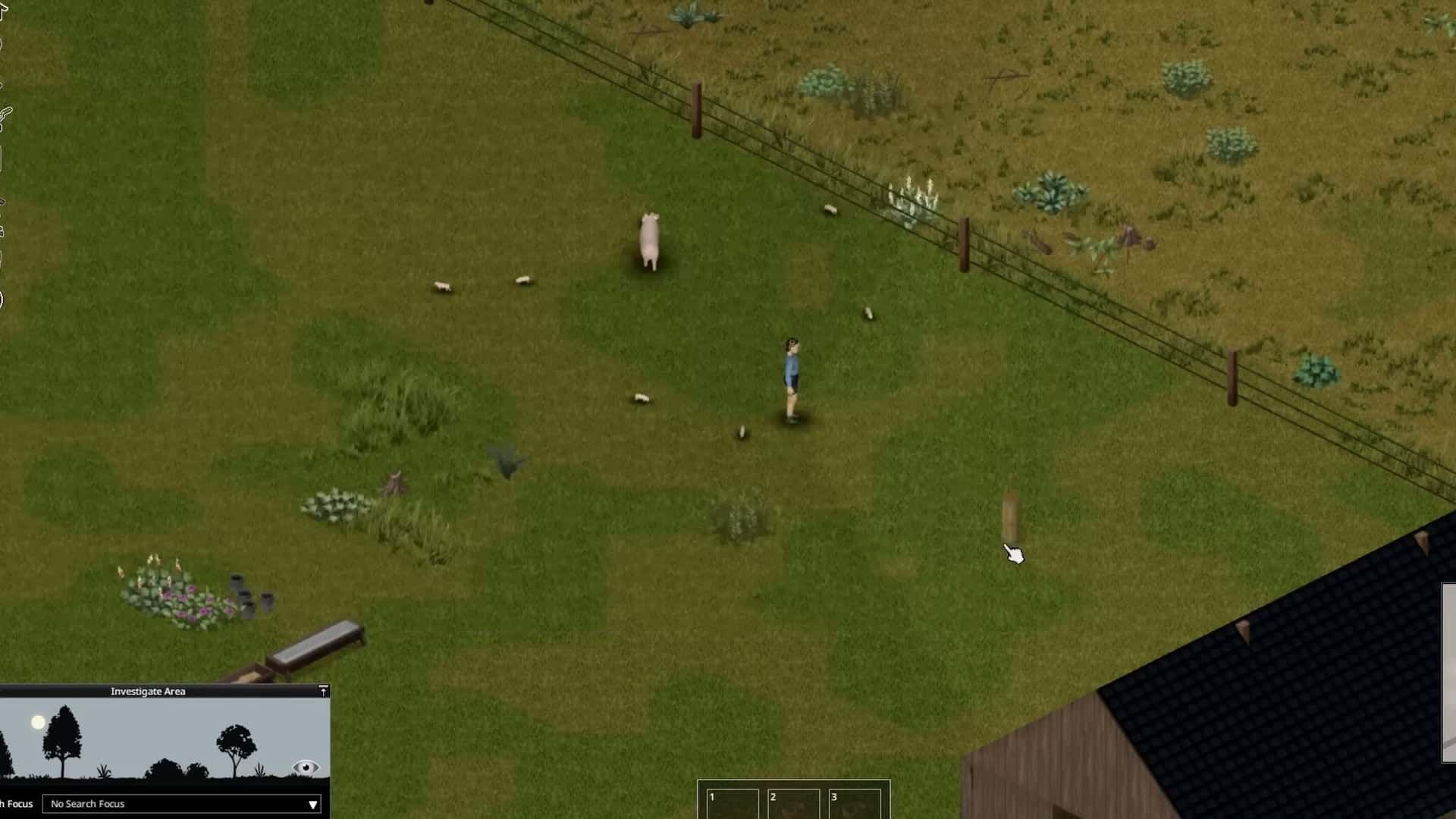
Pigs, sheep and deer all carry a medium hide — but only a butcher hook turns a corpse into one.
Carry the corpse to the hook, right-click it, and add the corpse. The animal hangs, and the menu offers to drain blood, harvest leather, harvest meat and harvest the head. The leather, the head and — once the stripped skeleton drops to the ground and you harvest it for animal bone — the bone are the three the leather chain needs. Note the label mismatch while you are here: the menu says leather, but what lands in your inventory is a Deer Hide (Unprocessed). That distinction becomes load-bearing further down.
One thing you do not need is a butcher. The Butchering skill governs the cut quality of meat and nothing else — a level-0 survivor and a level-10 rancher pull the same hide off the same doe. Level Butchering because you want better venison, not because you want better leather.
One Deer Carries Its Own Tanning Kit
The tanning agent is not something you loot. Slice the head you harvested — a dull knife will do, the recipe accepts dull knives, sharp knives and cleavers alike — and you get the skull and an animal brain. One animal brain plus 300 mL of water makes a Bowl of Brain Tan: no workstation, no skill, no magazine. That bowl tans exactly one hide, and here is the part worth planning around: it tans one hide regardless of that hide's size. A rabbit costs you the same brain as a cow.
The head is on a clock. A doe head is fresh for five days and rotten at seven, so it is not something to park in a crate while you go and grind Carpentry up to the level that lets you build the hook. Build the hook first, hunt second.
Bone closes the loop, and it closes it in the only direction that works. Every operation at the softening beam consumes fleshing-tool durability, and there are two tools. The iron Fleshing Tool is forged at a Primitive Furnace from three charcoal and one medium smeltable iron, using a crucible and tongs, and has a maximum condition of 10. The Bone Fleshing Tool is cut from a single animal bone with a knife, a cleaver or a saw, lasts half as long at condition 5, and is auto-learnt at Carving 4 or read out of Tool Use of Early Man — and it needs no furnace at all. Since most survivors run this chain precisely because they want a forge, bone is not the poor man's option. It is the only one that does not require the thing you are trying to build.
The Option to De-Fur Expires at the Barrel
The softening beam itself is two planks and two nails and a hammer, no skill required, which makes it the cheapest station in the chain and by some distance the most consequential.
It takes two operations. Remove Flesh is mandatory: it turns Deer Hide (Unprocessed) into Deer Hide (Furred), and until it is done the tannin barrel will not accept the hide at all. Remove Fur is optional: it turns Deer Hide (Furred) into Medium Hide (Crude), a generic, species-blind piece of leather.
"Optional" is doing a great deal of work in that sentence, because the option expires. Remove Fur only matches the tag an untanned hide carries. A tanned one carries a different tag entirely, so once a hide has been through the tannin barrel the recipe stops appearing — not greyed out, simply absent from the menu. There is no un-tanning, and no salvage: the hide is what you made it.
The game does mark the boundary in plain text. Before the barrel every state of the item is called a Hide; after it, every state is called Leather. If the name in your inventory still says Hide, you can still change your mind.
So the beam is where you commit, and this is what you are committing to:
- Crude leather only: the Large Bellows, Western Boots, and elbow pads. Everything gated behind the forge lives in this list.
- Crude or furred, either works: hide jackets, hide pants, hide boots, hide dresses, small leather backpacks, and cutting a piece down into leather strips — a medium leather yields twelve.
Read that as an asymmetry rather than a trade-off. Furred leather buys you nothing that crude leather does not also buy; it only costs you the handful of recipes crude leather has to itself. If you are unsure what a hide is for, scrape it. The one honest reason to leave the fur on is that you have already decided this particular hide is becoming clothing and you want the fur on the finished garment.
The Rack You Need Depends on the Fur You Left
The tannin barrel is another two planks and two nails, and it wants three things: the hide, the Bowl of Brain Tan as an ingredient, and a plain bowl on hand as the tool. What comes out is wet, and wet leather goes on a drying rack that has to match its size.
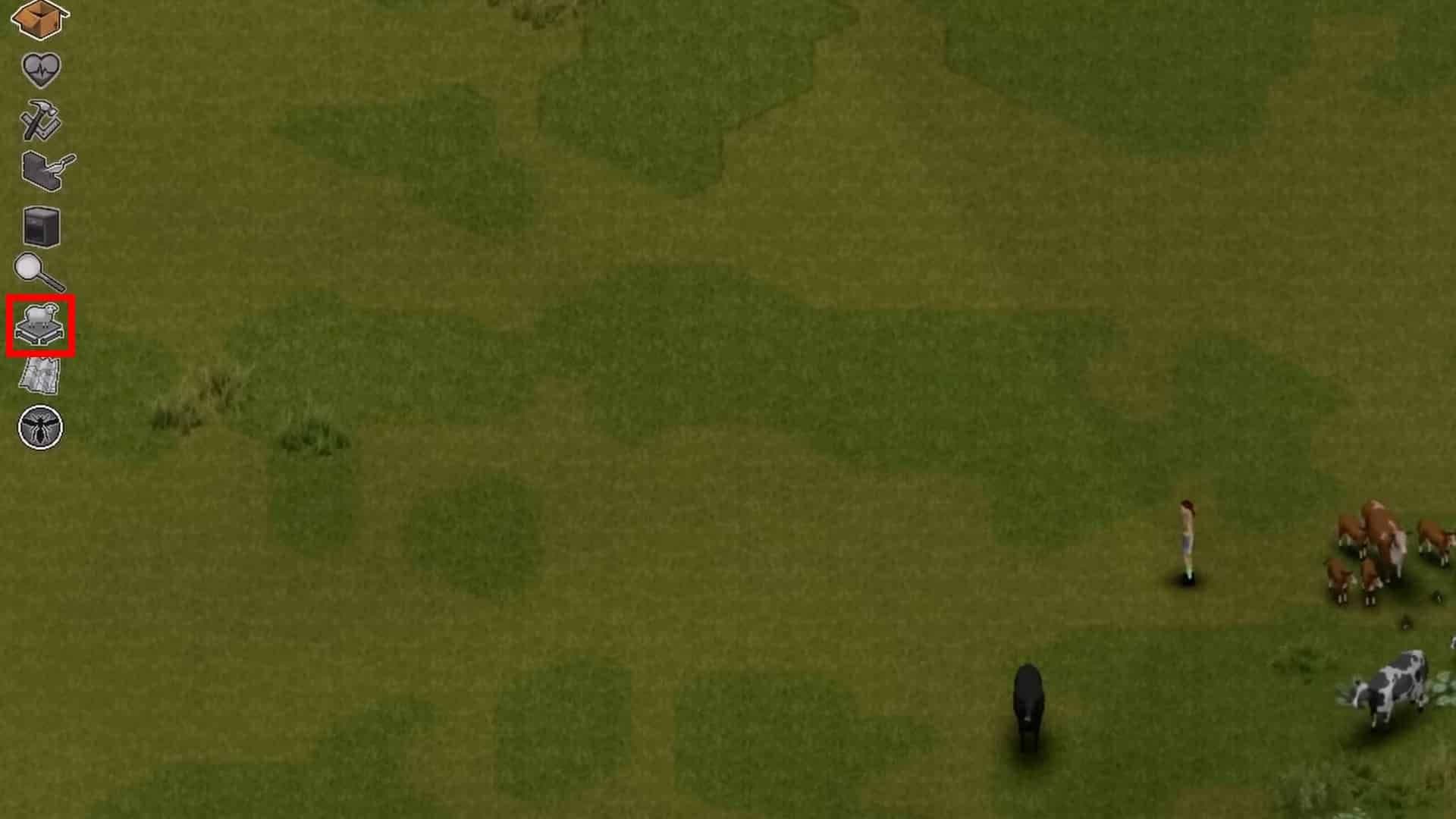
Cattle are the large-hide class: their leather dries on the large rack and halves into two mediums.
This is where the decision you made at the softening beam bites a second time. A de-furred deer hide leaves the barrel as Medium Leather (Crude, Wet) and dries on the medium rack. A furred one leaves the barrel as Deer Leather (Furred, Wet), which the item data sizes as large, and dries on the large rack — the same class as an Angus or a Holstein. Every other stage of a deer's hide and leather, from the corpse to the finished piece, is sized medium; the wet furred state is the lone exception, which reads like an oversight in the item data but is what the game actually checks. The consequence is concrete either way: keeping the fur commits you to building a second, bigger rack for an animal the medium rack would otherwise have covered.
Racks are cheap — six long sticks, eight units of twine and two nails each, plus a hammer and a saw. Building the wrong one and discovering it a week later is not.
Then you wait, and the wait is weather-dependent in a way the recipe does not advertise:
- 19.5–21 °C (67.1–69.8 °F): the stated rate — seven days.
- Up to 39 °C (102.2 °F): progressively faster, capping at double speed.
- Below 4.5 °C (40 °F): drying stops outright.
- Rain on an exposed hide: the timer pauses rather than merely slowing.
A hide hung out in late autumn in Knox County can therefore sit there until spring. Put the racks under a roof, and start any hide you actually need before the cold arrives.
Every Forge Station Eats a Bellows
One Medium Leather (Crude), plus two planks, two nails and two medium handles, makes a Large Bellows on any crafting surface with a hammer and a saw. It wants Carpentry 1 and no magazine, and pays 15 Carpentry XP.
The bellows is the gate, and it is consumed rather than kept. Building the Advanced Forge eats one, along with thirty stone blocks, concrete, a blacksmith anvil, a large bucket and a log, laid with a mason's trowel and read out of Modern Blacksmithing at Home. Building the Blast Furnace eats another, with forty stone blocks and concrete, out of Medieval Blacksmithing. Two stations, two bellows, two crude tanned medium hides — and around two weeks of drying if you only own one rack. Anyone planning a metalworking base should have hides in the barrel well before the stone is quarried.
If clothing is where you are headed instead, the tailoring ladder is shorter than it looks:
- Hide dress — Tailoring 2, no magazine.
- Hide pants — Tailoring 3, Ancient Tailoring.
- Hide boots and hide jackets — Tailoring 4, Medieval Peasant Clothing.
- Small leather backpack — Tailoring 5, Fun in the Woods!
- Western Boots — Tailoring 7 and Carving 2 with a pair to research from, or 9 and 4 to learn outright, from Cowboy Living.
And if you can reach a cow rather than a deer, the arithmetic changes completely. Halving leather is free — a sharp knife or scissors on a crafting surface — and a large leather halves into two mediums. A de-furred cow hide therefore dries once on one large rack, splits into two Medium Leather (Crude), and covers the Advanced Forge and the Blast Furnace from a single animal, on a single brain. The deer is the hide you can hunt; the cow is the hide worth building a ranch for.