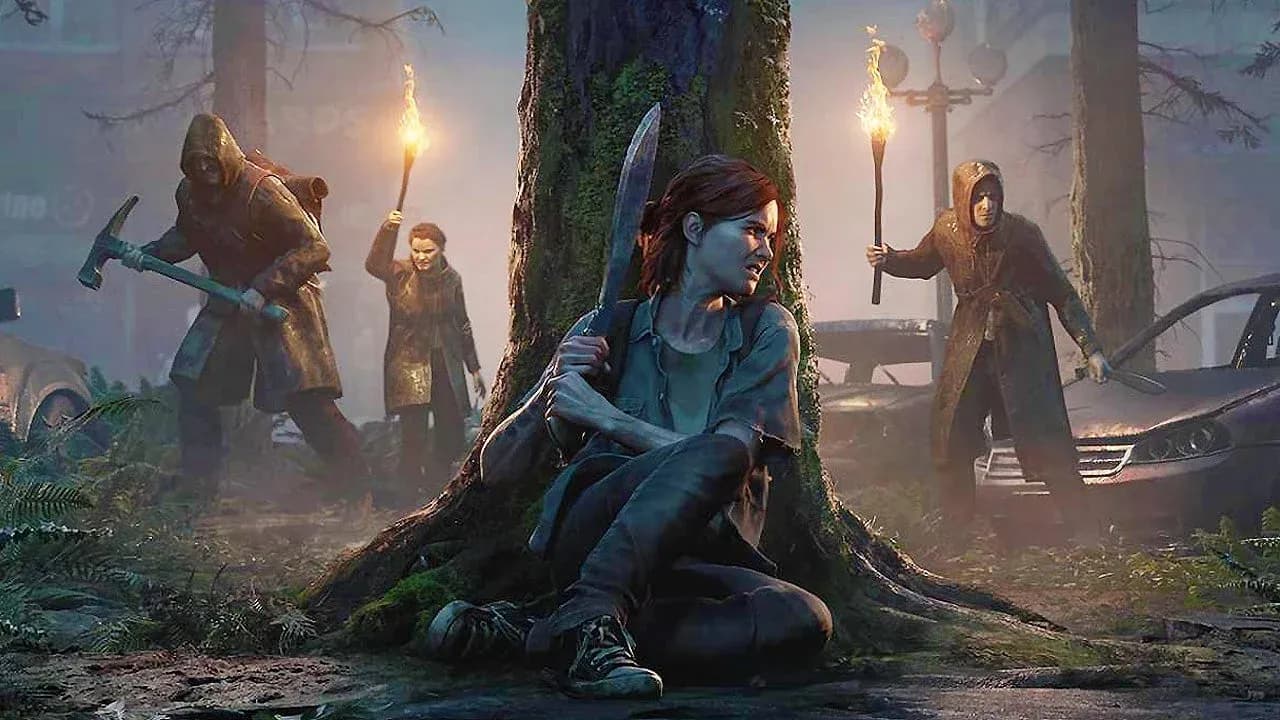
The Last of Us Part II Narrative: A Daring and Divisive Masterclass
The Last of Us Part II begins by shattering the quiet peace it so carefully builds. This isn’t a sequel about hope, but a meticulously crafted, emotionally ruinous character study that dares to ask players not just to witness a cycle of violence, but to become its engine. Naughty Dog’s narrative ambition here is staggering, constructing a profound and complex story that knowingly explores the clichés of the revenge genre—the ‘eye for an eye’ escalation, guilt by association—only to systematically dismantle them through a radical structural gambit. The result is a masterclass in character realism, where every brutal act is tethered to a fully realized person, forcing an empathy that is as challenging as it is essential. This is not a game you simply play; it’s a story you endure, and its divisive power stems directly from its refusal to offer easy catharsis or clear moral footing.
The complex relationship between Ellie and Abby is central to the game's divisive story.
Where The Last of Us Part II earns its reputation as a landmark in storytelling is in its unwavering commitment to character over plot. The game’s central thesis—that violence is a cyclical, self-consuming force—is delivered not through grand speeches, but through the indelible humanity of its cast. Naughty Dog focuses on creating fully realized characters, demanding that players accept them as they are and participate in their questionable actions. This makes the experience more affecting than any passive medium could achieve. You aren’t just watching Ellie’s descent; you are steering her through it, crafting shivs and lining up headshots in service of a rage that becomes increasingly hollow. The game’s genius lies in making you complicit, then holding up a mirror to that complicity through its supporting cast. Dina, portrayed with charming warmth by Shannon Woodward, isn’t just a love interest; she is Ellie’s tether to a gentler world, and her presence makes every step deeper into brutality feel like a personal betrayal of that potential future.
The narrative’s most daring and controversial stroke is its radical perspective shift, a structural choice that recontextualizes everything that came before. It’s here that The Last of Us Part II fully explores the consequences of Joel’s final decision from the first game.
This pivot is the core of the empathy experiment. By forcing players to inhabit the life and motivations of Abby—a character introduced as the ultimate antagonist—the game argues that no one views themselves as the villain. Laura Bailey’s performance is crucial, imbuing Abby with a legitimate, arguably noble drive that echoes Joel’s own paternal logic. Her story arc is as carefully drawn as Ellie’s, and the game dedicates nearly half of its 25-30 hour runtime to ensuring you understand why. This is where the narrative pacing becomes a point of contention. For some, this extended detour can feel like the game “outstays its welcome,” creating a sensation of two distinct stories painfully intertwined. The momentum of Ellie’s quest in Seattle is deliberately halted, and the reset of character progression as you start building Abby from scratch can test patience. Yet, this structural friction is intentional; the discomfort you feel at being pulled away from your goal mirrors the game’s central theme about breaking entrenched cycles. It’s a high-stakes gamble that doesn’t fully work for everyone, but its ambition is undeniable.
The emotional weight of this entire odyssey rests on performances of raw, vulnerable power. Ashley Johnson delivers a career-defining turn as Ellie, capturing a riveting spectrum from brittle, snarky defensiveness to unfiltered rage and devastating grief. You feel every fracture in her soul. Troy Baker’s return as Joel is equally masterful, portraying the weary guilt of a man living with the cost of his love in quieter, more heartbreaking moments. Their scenes together, particularly in flashbacks like the poignant museum birthday trip, are some of the game’s most human, serving as painful reminders of what has been lost. These performances, combined with Naughty Dog’s peerless animation, create characters that feel tragically, authentically alive. They are why, even when the narrative’s bleakness threatens to become overwhelming or its pacing tests your resolve, The Last of Us Part II remains an unforgettable, essential tragedy. It is a game less concerned with whether you enjoyed your time than with ensuring you never forget the cost of it.
The Last of Us Part II Gameplay: Refined Stealth and Brutal Combat
The Last of Us Part II’s combat isn’t just a tool for progression; it’s the brutal, mechanical heartbeat of its thematic argument. Where the first game’s clunky, desperate violence was a means to an end, this sequel elevates every swing, shot, and stealth kill into a statement, forcing you to feel the physical and moral weight of Ellie’s quest. This is achieved not through narrative monologues, but through a suite of refined, punishing, and deeply intelligent gameplay systems that represent Naughty Dog’s most fluid and responsive design to date.
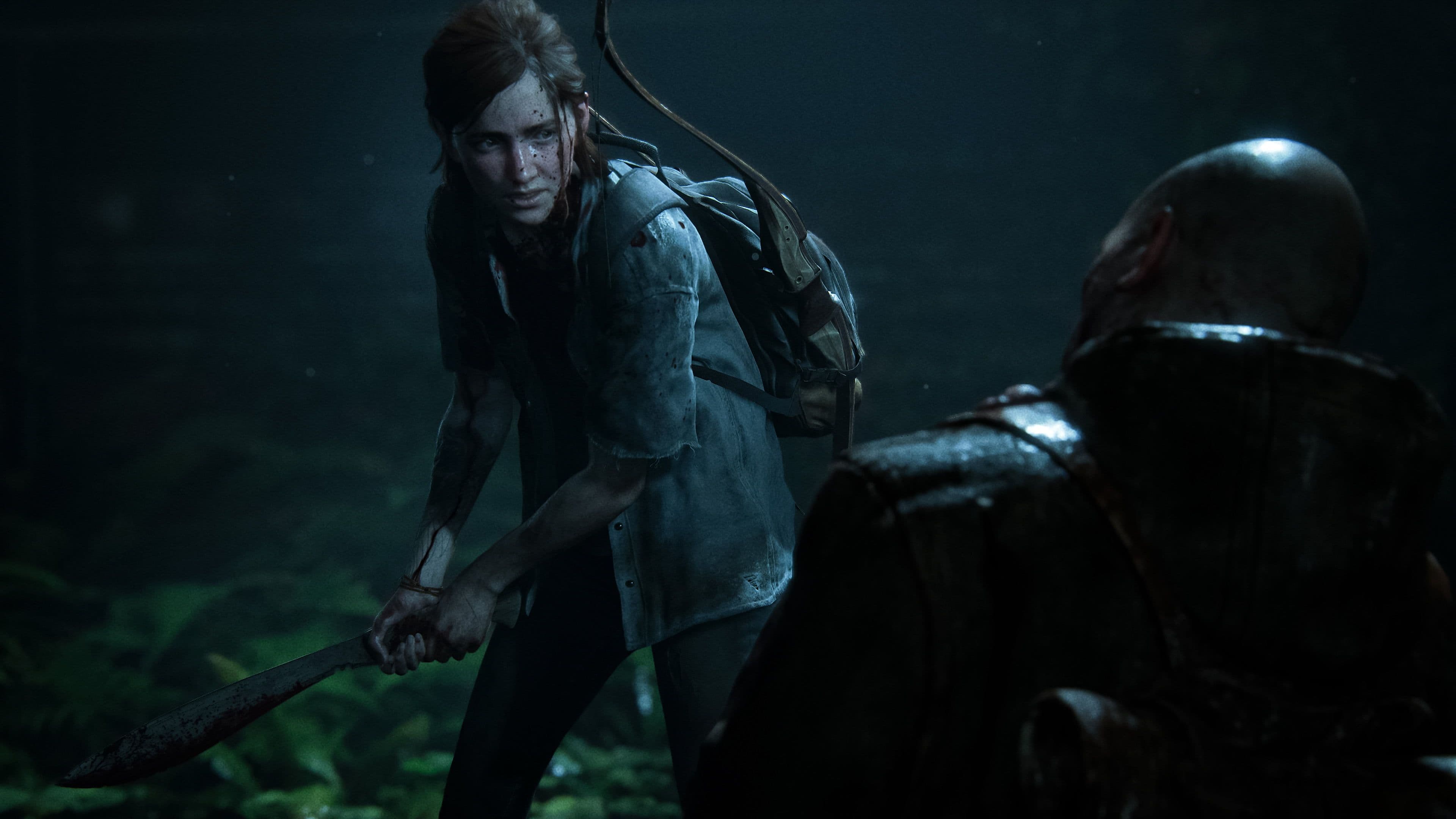
The sequel features visceral and high-stakes combat encounters against the infected.
Ellie’s enhanced mobility is the foundation of this evolution. The simple addition of a jump button and a prone stance transforms her from a survivor into a predator. She’s no longer Joel, a tank who could absorb punishment; she’s a ghost and a guerrilla fighter. You can shimmy up ropes to gain a vertical advantage, vault through windows for a quick escape, or silently crawl under cars and through tall grass, breaking line-of-sight in an instant. This agility makes stealth not just viable, but often the most compelling approach. The level design, featuring multi-tiered malls and ruined skyscrapers, becomes a complex puzzle box where you can orchestrate encounters from the shadows, using distractions to pit the Washington Liberation Front (WLF) against the infected. The dodge mechanic, a crucial addition for melee, turns frantic scrambles into calculated duels, allowing you to weave between a Seraphite’s axe swings before countering with your own switchblade. This isn’t just an improvement; it’s a complete reimagining of movement that makes every space feel alive with tactical possibility.
The violence itself is intentionally, stomach-churningly brutal. Melee kills are slow, clumsy, and visceral—a far cry from the slick executions of other action games. A shotgun blast doesn’t just down an enemy; it paints the environment. This graphic fidelity isn’t for spectacle; it’s a deliberate, uncomfortable mirror held up to the player. The game wants you to wince, to question whether pulling the trigger was necessary.
This thematic reinforcement is amplified by some of the smartest enemy AI in the genre. Factions aren’t just visual paletteswaps; they demand different tactics. The WLF are vocal, militaristic, and heavily armed, calling out your position and executing coordinated flanks. The Seraphites (or Scars) are eerily quiet, using whistles to communicate and favoring bows and melee weapons, forcing you to rely on visual cues in dense foliage. Most critically, every enemy is humanized. They have names, and when you pick one off from the shadows, their companions will cry out in grief, altering their patrol patterns and calling for the fallen by name. The introduction of dogs, which can track your scent trail, adds a terrifying layer of pressure, making stealth a tense game of constant repositioning rather than a static waiting game. You’re not clearing checkpoints of faceless goons; you’re dismantling a community, and the game never lets you forget it.
The infected, meanwhile, have evolved into a more diverse and terrifying threat. Beyond the classic Runners and Clickers, the game introduces Stalkers that cloak themselves from Ellie’s listening ability, forcing paranoid, close-quarters encounters in dark spaces. The new Shambler is a tank-like horror that belches corrosive spore clouds, turning tight corridors into deadly hazard zones. These enemies ensure that the survival-horror tension never fully dissipates, even when you’re kitted out with late-game weaponry. The pinnacle of The Last of Us Part II’s combat design is when these systems collide—luring a pack of infected into a WLF patrol and watching the chaos unfold from a hidden perch is a masterclass in emergent, systemic storytelling. It’s in these moments that the game’s refined stealth and brutal combat cease to feel like separate modes and instead fuse into a singular, harrowing expression of its world.
World Design and Exploration in The Last of Us Part II
The Last of Us Part II’s world isn’t just a backdrop for its harrowing story; it’s a co-narrator, a meticulously crafted character in its own right whose decaying beauty and oppressive scale mirror Ellie’s fractured psyche. Naughty Dog moves beyond the linear corridors of the original, weaving its themes of loss and consequence directly into the fabric of Seattle’s ruins. This is environmental storytelling operating at its peak, where every overgrown street and ransacked apartment isn’t just a combat arena but a silent testament to a world that ended, and the desperate, often brutal lives carved out in its wake.
The Seattle Sewers level highlights the game's complex environmental navigation and water physics.
The game’s level design is a masterclass in turning spaces into stories. Locations like the multi-tiered Seraphite mall or the flooded, vine-choked skyscraper offices are more than set dressing; they are complex, vertical puzzle boxes that reward exploration and tactical thinking. You’ll navigate them not just with a gun, but with your eyes, scanning for ropes to swing across chasms, boards to vault to higher ground, or crawl spaces to slip through—all mechanics that leverage Ellie’s newfound agility. This verticality transforms combat from a flat shootout into a three-dimensional chess match. You can drop silently from a balcony for a stealth kill, use a broken escalator as a choke point, or flee upwards to break an enemy’s line of sight. The design intention is clear: to make you feel like a predator using the environment itself as a weapon, a feeling that becomes particularly potent when you use the chaos to pit the WLF against a pack of Clickers.
Where The Last of Us Part II truly innovates is in its brief but impactful foray into semi-open world design. A dilapidated downtown district of Seattle opens up, allowing you to explore ruined storefronts, overgrown parks, and flooded basements at your own pace, guided only by environmental clues and a desire to scavenge.
This zone is a masterstroke of pacing. After hours of intense, linear forward momentum, it offers a moment of breath and player agency. You’re free to track down a music shop for a guitar string or investigate a bank for supplies, each location housing self-contained micro-narratives told through scattered notes, photographs, and frozen-in-time scenes. Finding the story of two lovers who didn’t survive the outbreak, or piecing together the final days of a community through their calendars and diaries, provides a haunting counterpoint to Ellie’s singular, violent focus. It grounds the apocalypse in intimate human tragedy, making the world feel lived-in and real without ever feeling like aimless open-world padding. The reward isn’t just a better gun; it’s a deeper, more melancholic understanding of the cost of survival.
This attention to detail extends to the game’s contextual puzzles, which feel like a natural evolution from the first game’s often-criticized palette-moving segments. Here, obstacles are woven into the environment and your expanded toolkit. You might need to maneuver a floating pallet through a flooded basement, use your rope to rappel down a cliff face, or carefully navigate a field of tripwires rigged to Seraphite traps. These moments are less about stopping the action to solve an abstract logic problem and more about engaging with the world as Ellie would—improvised, physical, and tense. They serve as vital pockets of quiet tension between the brutal combat encounters, allowing the atmosphere and the weight of your actions to settle.
For a game so focused on forward momentum, The Last of Us Part II is surprisingly generous with its runtime, clocking in at approximately 25-30 hours for a first playthrough—roughly ten hours longer than its predecessor. This expanded scope is a double-edged sword. It allows for the deep character work of Abby’s parallel journey and the rich environmental exploration, but it also means the pacing can feel deliberate, even grueling, especially on the path to its bleak conclusion. The world’s sheer density of detail justifies much of this length, as thorough players will be rewarded with a richer, more tragic tapestry of stories. Yet, it’s undeniable that the game’s commitment to its somber tone and methodical exploration will test some players’ endurance. In The Last of Us Part II, the world isn’t just a place you pass through; it’s a grave you are asked to dig through, uncovering layer after layer of beauty and ruin until you’re left with nothing but the dirt under your nails and the memory of what was lost.
Technical Prowess: Visuals, Audio, and Accessibility in Part II
The Last of Us Part II is a technical marvel, a game whose every pixel and soundwave is meticulously engineered to serve its punishing emotional thesis. Where other titles might treat graphical fidelity and audio design as features to be marketed, Naughty Dog wields them as precision instruments of immersion and discomfort. This is a world so tactile and oppressive that you can feel the chill of the Pacific Northwest rain seeping through the screen, and a soundscape so rich it turns every snapped twig into a potential death sentence.
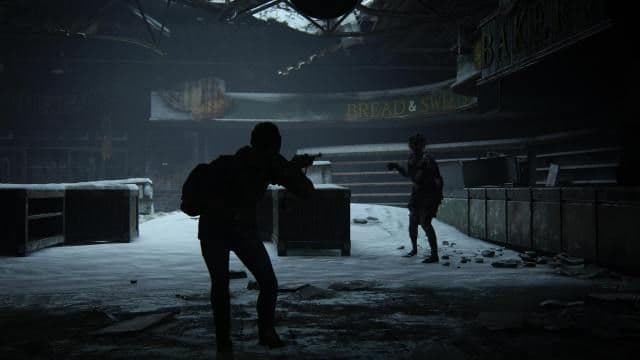
The Remastered version offers a high-fidelity 4K mode for enhanced visual clarity.
The visual presentation is less about spectacle and more about suffocating authenticity. It’s a world where beauty and decay are inextricably linked, each serving the narrative’s bleak heart.
The leap from the original is staggering, even on the PlayStation 4 hardware for which it was built. Character models are rendered with near-photorealistic detail—you see every fleck of mud on Ellie’s jacket, every strained tendon in Abby’s arms, and the subtle, heartbreaking shifts in expression that sell performances already operating at an award-winning level. The environments are the true star, however. Seattle is a monument to haunting emptiness, a flooded, overgrown corpse of a city where lush greenery violently reclaims concrete and glass. The lighting, especially during the game’s perpetual drizzle, is a masterclass in atmosphere, casting long shadows in ruined offices and glistening off sodden streets to mask both threats and paths forward. This isn’t just pretty; it’s functional, shaping the mood and directly informing your stealth tactics. The Remastered version on PS5 sharpens this further, offering a choice between a 4K/30fps fidelity mode and a buttery-smooth 60fps performance mode, with the ultimate experience being an unlocked framerate on a 120Hz VRR display. Yet, even on a base PS4, the game maintains a flawless, stable performance, a testament to optimization so thorough it feels like black magic.
The audio design is equally purposeful and immersive. Gustavo Santaolalla’s sparse, melancholic score acts as the game’s bruised soul, arriving only in key moments to underscore a loss or a fleeting memory, making its absence in the tense exploration just as powerful. The ambient soundscape, however, is where the true tension lies. The patter of rain masks the guttural clicks of nearby Infected. The distant whistle of a Seraphite or the shouted commands of a WLF patrol gives you crucial tactical information before you see a single enemy. The gruesome, wet sound of a melee kill is intentionally sickening, a sonic punch to the gut that reinforces the cost of every violent action. This meticulous layering of diegetic sound turns listening from a simple gameplay mechanic (Listen Mode) into a vital, immersive act of survival.
Perhaps The Last of Us Part II’s most significant and industry-leading achievement is its accessibility suite. This is not a token menu of large text options; it’s a comprehensive toolkit that redefines inclusivity in AAA gaming. Players can fine-tune nearly every aspect of the experience, from creating fully customized difficulty settings (making resources plentiful while keeping combat deadly) to enabling extensive combat and traversal assists. The standout feature is the high-contrast mode, which strips away environmental textures to highlight interactable objects, enemies, and allies in stark colors. This isn’t just an aid for visually impaired players; it’s a brilliantly pragmatic tool for any player who wants to focus on the tense cat-and-mouse of stealth without pixel-hunting for a ladder in a dark room. By building these options into the core design, Naughty Dog ensured the game’s challenging story could be experienced by the widest possible audience, setting a new standard others are still scrambling to meet.
For those returning via the PS5 remaster, the value proposition is compelling. The $10 upgrade for existing owners adds the excellent ‘No Return’ roguelike mode, which distills the game’s superb combat into tense, randomized runs, and the fascinating ‘Lost Levels’ that offer a glimpse into the developer’s editorial process with commentary. For new players, the package is the definitive way to experience one of the generation’s most technically accomplished titles. In The Last of Us Part II, the technical craft never calls attention to itself for its own sake. Every graphical flourish, every ambient sound, and every accessibility toggle exists in service of pulling you deeper into its harrowing world, ensuring you feel every moment of its devastating journey in the most visceral way possible.
The Last of Us Part II Verdict: A Bleak, Beautiful, and Essential Tragedy
The Last of Us Part II is not a game you play to feel good; it’s a game you endure to feel something profound, and its final, haunting moments are a testament to an artistic vision that prioritizes emotional truth over player comfort. This is the uncomfortable core of the experience: a meticulously crafted, technically flawless journey into the darkest recesses of grief and rage that will either resonate as a masterpiece or repel as a punishing ordeal. The game’s ultimate power lies in its radical empathy experiment, a design philosophy that bleeds into every mechanic. Every enemy you gun down or silently garrote has a name, called out in anguish by their comrades. Dogs that track your scent have handlers who mourn them. This isn’t just world-building; it’s a systematic deconstruction of the power fantasy, forcing you to confront the human cost of Ellie’s—and by extension, your—single-minded quest. The brilliance is in how this guilt is weaponized not through cutscenes, but through gameplay. Hearing a WLF soldier sob “I got you, Rachel…” over a body you left in the grass creates a moral friction that no other game in its genre dares to attempt.
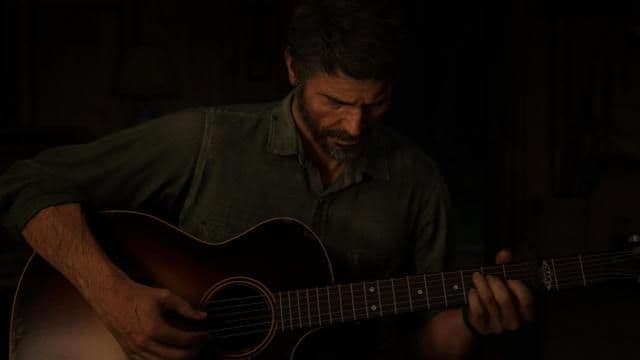
Abby's perspective is central to the game's exploration of empathy and revenge.
The game’s most significant gamble—and its most common point of failure for some—is the belief that forcing you to live another’s story can fundamentally change your perspective. It’s a high-wire act of narrative that doesn’t just ask for your empathy; it demands it.
Where this ambitious design occasionally stumbles is in the inherent tension between its authored story and its systemic gameplay. While the narrative brilliantly humanizes specific characters like Abby and her friends, the most narratively impactful kills are often reserved for scripted sequences or quick-time events. This can create a disconnect where the freedom to approach combat with stealth or creativity clashes with the predetermined, brutal outcomes of the story’s key beats. You might spend an hour cleverly avoiding conflict, only for the game to then force you into a cutscene where Ellie commits a horrifying act of violence. For some, this protects the narrative’s authorial intent; for others, it highlights a ludonarrative dissonance where the gruesome, systemic violence of the core gameplay loop can feel oddly disconnected from the story’s carefully curated emotional punches.
This friction defines the target audience for The Last of Us Part II. It is categorically not for players seeking traditional escapism or a power fantasy. It is best suited for those willing to engage with a challenging, mature character study that functions more as an interactive tragedy than a conventional action-adventure. The commitment required is substantial—emotionally, over its bleak 25-30 hour runtime, and intellectually, in wrestling with its morally complex, often infuriating characters. If you come seeking the warm, paternal dynamic of the first game, you will find only its ghost and the devastating consequences of its lie. The game asks you not to like its characters at every turn, but to understand them, and that is a far more demanding, and for many, more rewarding, proposition.
Final Verdict
The Last of Us Part II is a landmark achievement in interactive storytelling and a defining title of its generation. It represents the peak of Naughty Dog’s technical craft, woven into a narrative of unparalleled ambition and emotional courage. While its divisive nature and unrelenting bleakness guarantee it won’t be universally loved, its refusal to offer easy answers or cathartic violence cements its status as an essential, unforgettable experience. It’s a game that will be debated, analyzed, and remembered long after more conventionally enjoyable titles have faded, precisely because it dares to make you feel the weight of every single life taken in its ruined world.
Pros
- Unparalleled technical polish, from its photorealistic visuals and flawless performance to its industry-leading accessibility suite.
- Emotionally shattering performances, led by Ashley Johnson’s career-defining turn, that ground even the most brutal moments in raw humanity.
- Deep, refined, and intensely satisfying stealth-action gameplay that makes every encounter a tense, tactical puzzle.
Cons
- The relentlessly bleak tone can lead to emotional fatigue, bordering on “misery porn” for some players.
- Controversial narrative structure and character choices may alienate fans attached to the first game’s core dynamic.
- A disconnect between player-agency in combat and scripted story beats can occasionally undermine the very empathy the game works so hard to build.