Valheim uses its runestones to turn a survival system into an argument about memory. Odin erases a slain Viking’s past, then asks that same warrior to inherit his enemies and his history. The only record left behind, though, belongs to damaged survivors: settlers, fighters, mourners, and a kingdom trying to explain its ruin.
That is why the stones are more interesting as voices than as a timeline. Ulf, Harald, Astrid, and Björn do not tell the same story because they are not trying to preserve the same thing. One wants a dry house, one wants a name, one wants a son, and one measures how much will a warrior can lose before the bed stays empty.
A Runestone Is a Witness, Not a Timeline
The game puts several kinds of writing on the same red-lettered stones. Some are practical warnings about weather, creatures, or where not to build. Others point toward a Forsaken altar. Others remember a dead companion, a battle, or a kingdom that no longer exists. The format makes them look equally authoritative, but their purposes are different.
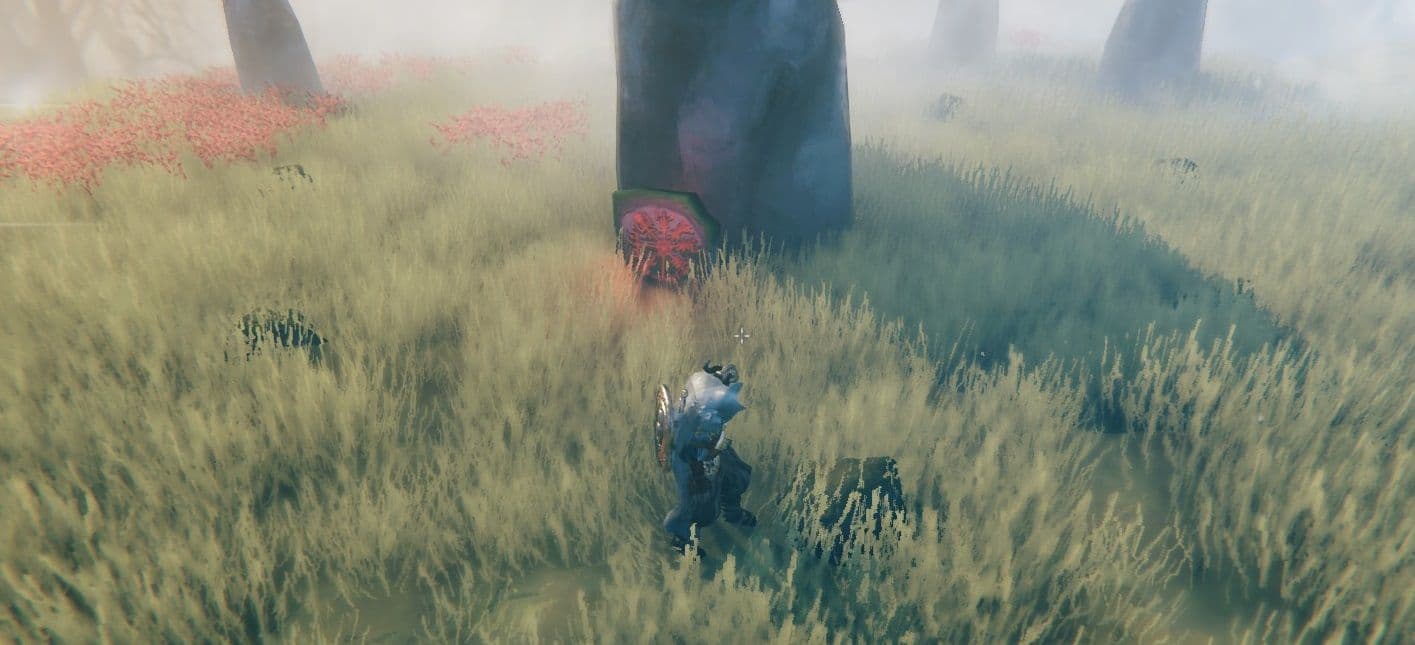
A runestone can be a marker, warning, or personal record.
An anonymous Black Forest stone says the people carried to Valheim by the Valkyries were not the first to live there. The writer has seen underground halls and ruined cities, then asks whether the new arrivals will meet the same fate. A separate Plains stone says warriors can cease to be reborn when their will fails. Neither inscription supplies a chronology. Together, they show a population that understands Valheim through remains and disappearance.
The same split appears in the stones that sound like exposition. A draugr inscription turns a dead people into a warning for the living. A Yggdrasil verse frames the Forsaken as a danger to the remaining worlds. An altar marker reduces an ancient enemy to the action required to summon it. The text is lore, but each speaker is also trying to make the next survivor behave differently.
That is why the first-person markers matter. “These are the words of Ulf” identifies a person behind the advice; it does not certify an omniscient narrator. The runestones are an archive assembled by survivors who disagree about what their world means.
Ulf, Harald, and Astrid Turn Survival into Identity
Ulf is the archive’s most persistent and least heroic voice. His Meadows stone explains roofs and doors. His Swamp warning tells travelers not to build beside murky water. In the Ashlands, he complains that most things are on fire and the fishing is poor. A Mountain stone even records a drake stopping to leave a pile of animal bones. Ulf remembers Valheim through chores, discomfort, and the next place he intends to settle; the joke is his way of refusing the epic scale imposed on him.
Harald remembers through damage. In the Black Forest, he identifies himself as a coastal man who knows almost nothing about Midgard except that he was a warrior, then leaves a stone so his name will survive. In the Plains, he counts his losses across the bosses: an eye to Eikthyr, a shield hand in the forest, and a leg to Moder. His body becomes a map of progression, but the important question is what comes after the next sleep: where will he wake?
Astrid’s memory returns under pressure from Odin. In the Mountains, she describes waking after the Allfather’s words freeze into pebbles around her and thawing them in her hands, one word at a time. The command is blunt—“Slay the Forsaken. Chain their heads. I will come.”—but her later Ashlands inscription is not about conquest. The raven has returned the memory of her son, and Astrid will die as many times as necessary to see him again.
Björn, introduced in the Ashlands as a former farmer, supplies the cost of that persistence. He has watched warriors throw themselves at the beast until their beds lie empty, losing a little of their will each time. Ulf, Harald, Astrid, and Björn therefore turn the same survival loop into four identities: endure the next inconvenience, preserve a name, recover a relationship, or decide whether endurance is still worth the cost.
Odin’s Mission Changes When the God Goes Silent
Valheim’s stones repeat Odin’s authority, but they do not agree on what that authority feels like. One voice says the gods abandoned the world. Another says every warrior is one of Odin’s hands. A Plains inscription insists that Odin is neither a loving father nor a gold-banded liege lord: his enemies are simply your enemies, so his honour becomes yours when you fight them.
Those are not interchangeable statements. The first is a complaint from people waiting for an absent god. The second is a conversion narrative, in which repeated violence becomes proof that Odin is present inside the warrior. The third is recruitment language: it removes obedience and affection from the bargain and replaces them with shared opposition.
The reward is unstable too. You arrive to earn Valhalla, but the stones insist that rebirth is conditional. Some dead warriors wake in their own homes; others disappear when their will fails. Returning is therefore more than a mechanic inside the fiction. It is the story’s test for whether a person still belongs to the world Odin has made into a proving ground.
Odin becomes most visible through interpretation. He does not need to answer every inscription because the people writing them already translate his silence into duty, resentment, pride, or a reason to keep fighting. A later complaint that the gods are distant does not cancel Astrid’s command. It records what the command sounds like after years of carrying it out.
The Winter Child Turns Ashlands Lore into Civil War
The Ashlands stones make that disagreement political. Their sequence begins with the Winter Child, found naked in northern snow and brought to the King of the Emerald Flame as a good omen. The king coils around the sleeping child, listening for words nobody else can hear. His justice becomes wrath, his caution becomes fear, and laws are made to be broken so punishment can grow harsher.
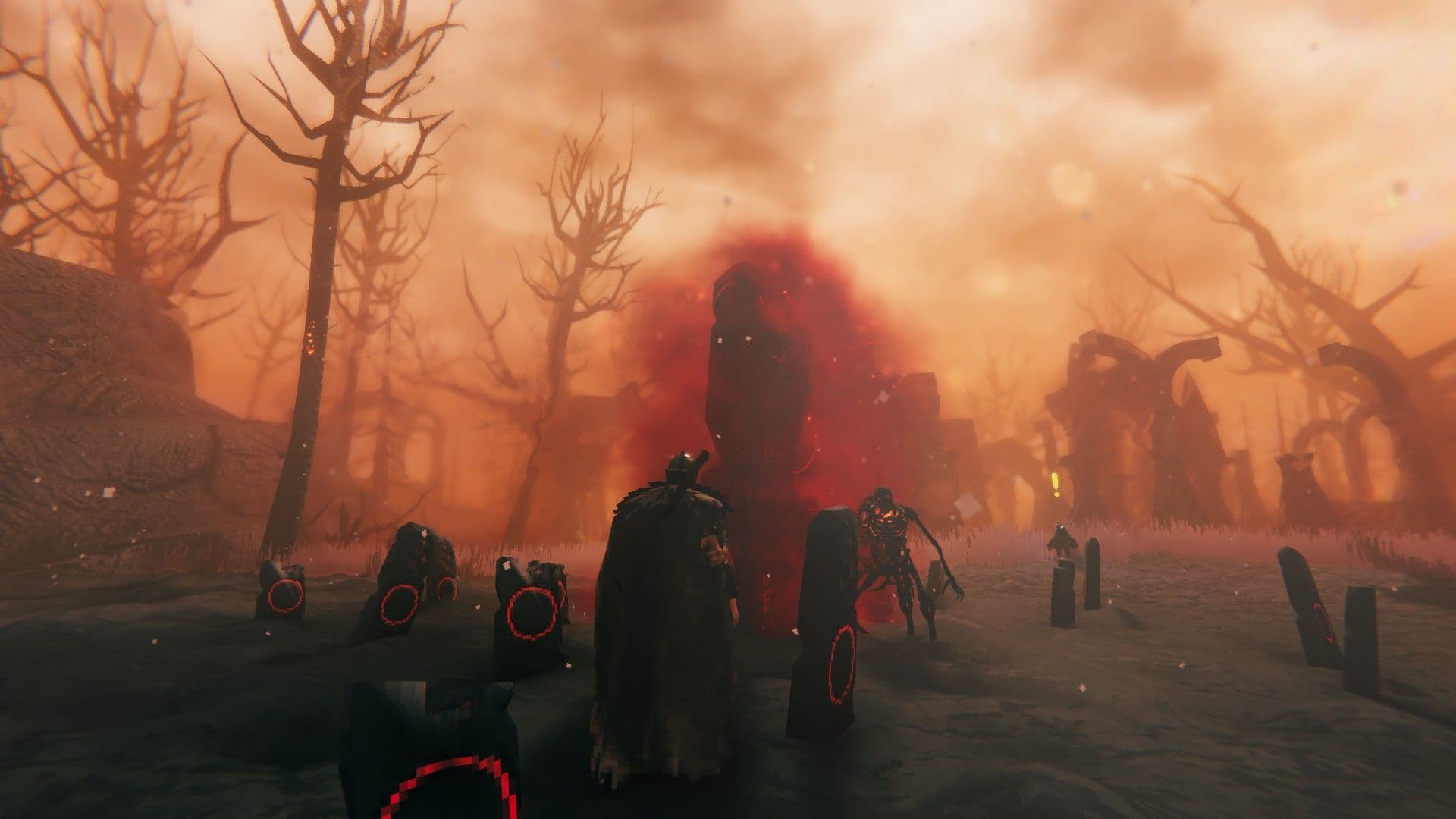
The Ashlands stones frame a kingdom’s collapse through competing voices.
The next turn is betrayal. When the king leaves to visit the wizard king of the Fulings, his thegns burn the palace with the child inside. The inscription says the fire lasts nine days. When the king returns, he answers it with a greater fire, razes the city, and brings war to the land. Brothers fight brothers; sisters fight sisters; the Kingdom of the Emerald Flame tears itself apart.
The surviving stones cannot settle on the king’s status. One calls him a noble beast and wise king whose death will be a mercy. Another says the gods abandoned the world and that prayers to the king have turned to ash. A third argues that free people still need a powerful ruler because without him there is only death. These are rival positions from inside the same ruin, not a neutral account of Fader’s fall.
Fire is the archive’s governing image because it describes both the land and the politics. The Ashlands text that begins “War is a fire” treats people as fuel, while the drake inscription describes fire as a blessing that becomes a curse when it burns a person into a creature caught between life and death. Destruction does not end when the flames go out; it keeps moving through bodies, loyalties, and the stories survivors choose to preserve.
Eight or Seven? Valheim’s Archive Refuses to Agree
The game leaves one disagreement in plain sight. The English localization export generated from Valheim 0.221.12 says Odin banished eight creatures to Valheim. The Spanish export for the same runestone says seven. The current Forsaken roster contains seven bosses, so the mismatch is an internal text inconsistency, not evidence of a secret eighth boss.
That fault line is useful because it exposes the wrong way to read the stones. A lore text can preserve an old count, a translation can diverge, and a speaker can mistake propaganda for memory. The answer is not to invent a missing name or force every inscription into agreement. The contradiction is part of the archive’s shape.
Ulf’s complaints, Harald’s injuries, Astrid’s recovered memories, Björn’s exhausted resolve, and the Ashlands’ rival accounts all sit beside official-sounding explanations without becoming one official history. A runestone is most revealing when its speaker’s purpose and blind spot remain visible in the words.