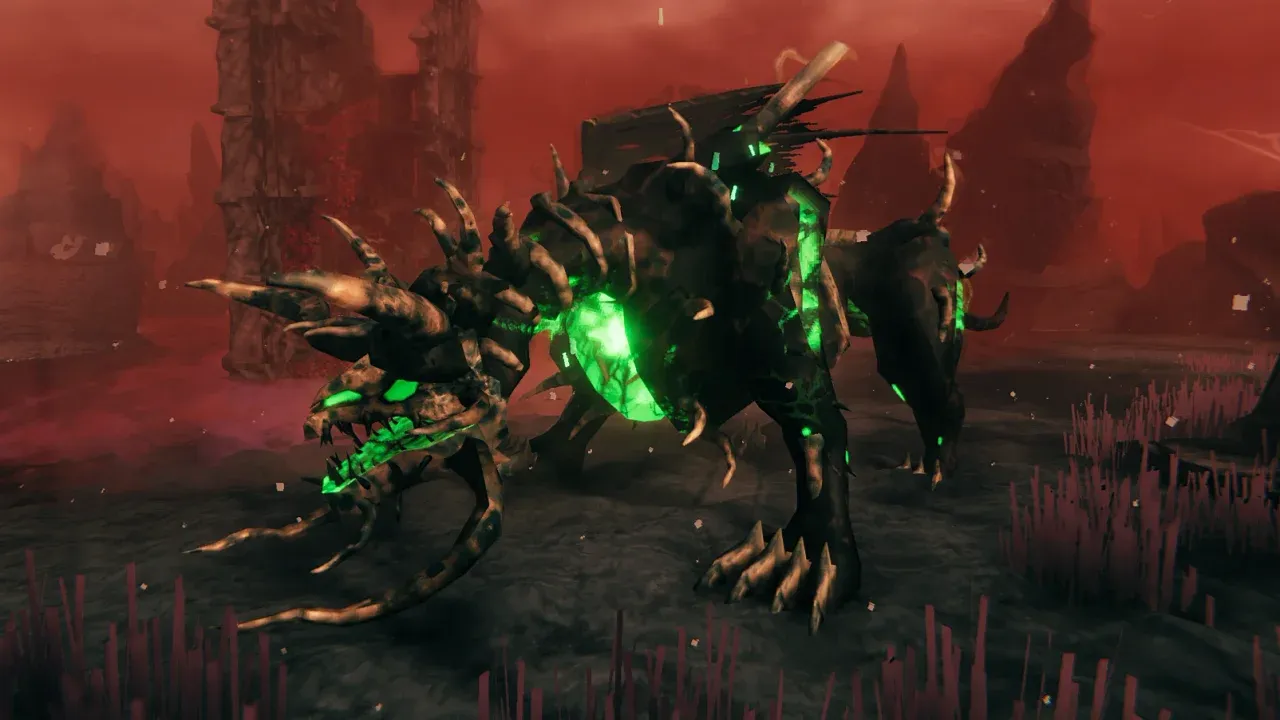
Every other Forsaken in Valheim arrives already condemned. A Meadows runestone tells you so on your first afternoon: Odin threw down the Vanir, the giants and the creatures older than any others, and the greatest of them "could not be killed but were instead Forsaken, exiled here to Valheim for eternity." Eikthyr, The Elder, Bonemass, Moder, Yagluth, The Queen — prisoners, every one, sentenced long before a Valkyrie dropped you off.
Fader is not that. Fader was a king who lived in Valheim, ruled subjects in Valheim, and came apart in front of a population that survived him and carved down what it had seen. That makes the Ashlands runestones the most complete account of anything in this game — and it is complete about everything except one participant. The city is accounted for. The rebels are accounted for. The loyalists, the army, the king himself: all accounted for, and the king is still walking around where you can reach him. The boy the whole disaster is attributed to is not accounted for at all. He was carried in out of the snow, and the record simply stops mentioning him.
The Only Forsaken With a Paper Trail
Every other biome's stones are written by outsiders looking in. Odin's recruiters ("Sons and daughters of Odin, rejoice!"), dead Vikings signing their own memorials — Ulf, Harald, Astrid, Björn, each with a stone of their own — and an unnamed narrator explaining a Greydwarf or a Draugr to whoever wanders past next. None of them lived through the thing they describe.
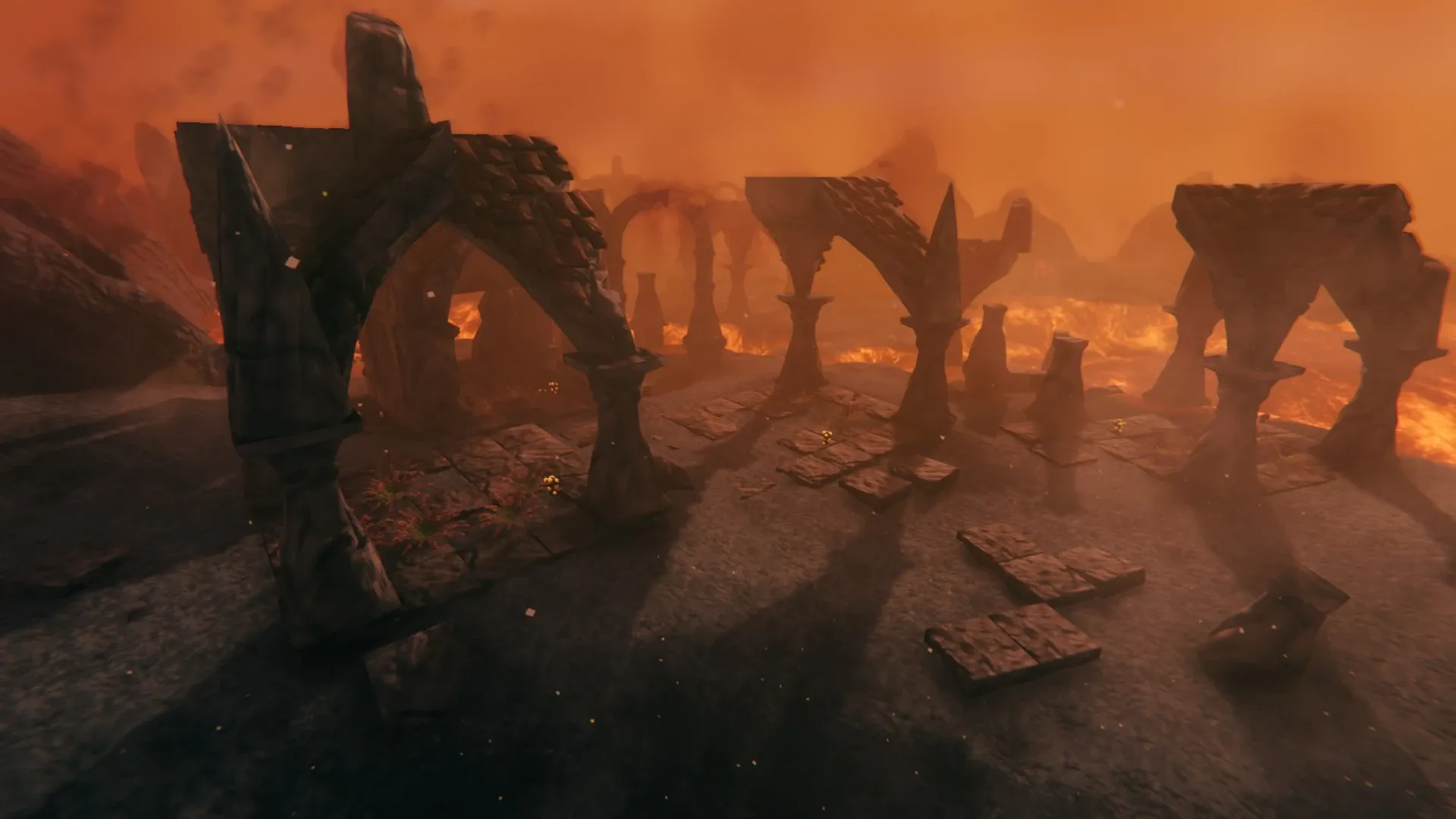
The Ashlands are one long ruin, and the stones scattered through it are the kingdom's own account of how it got that way.
The Ashlands stones are written by citizens, about their own city, in the first person plural. "Our scouts." "All of us who were alive at that time." "The land of our birth." They are memorials rather than diaries — carved afterwards, by people who already knew how it ended — and that is exactly what makes them useful. A survivor writing with hindsight puts the blame where they have decided it belongs. The Ashlands carry thirteen runestone texts; the Winter Child appears in three, and the collapse he set off in two more.
They also know they will be read later. One of them opens by addressing you directly — "Know, child unborn, that this was once the greatest kingdom in all Valheim" — and ends by setting the stone among rubble in the hope that "future ages take warning from us."
You are the future age, and the warning is not about the fire. Everyone in Valheim can see the fire; it covers a whole biome and it is still burning. The warning is about what a kingdom of fire took in from the cold and made comfortable.
The Stones Date the Change Before the Fire
Three of the Ashlands runestones form a sequence, and because they are scattered across the biome you will find them out of order, between Charred ambushes. Reassembled, they read like a deposition.
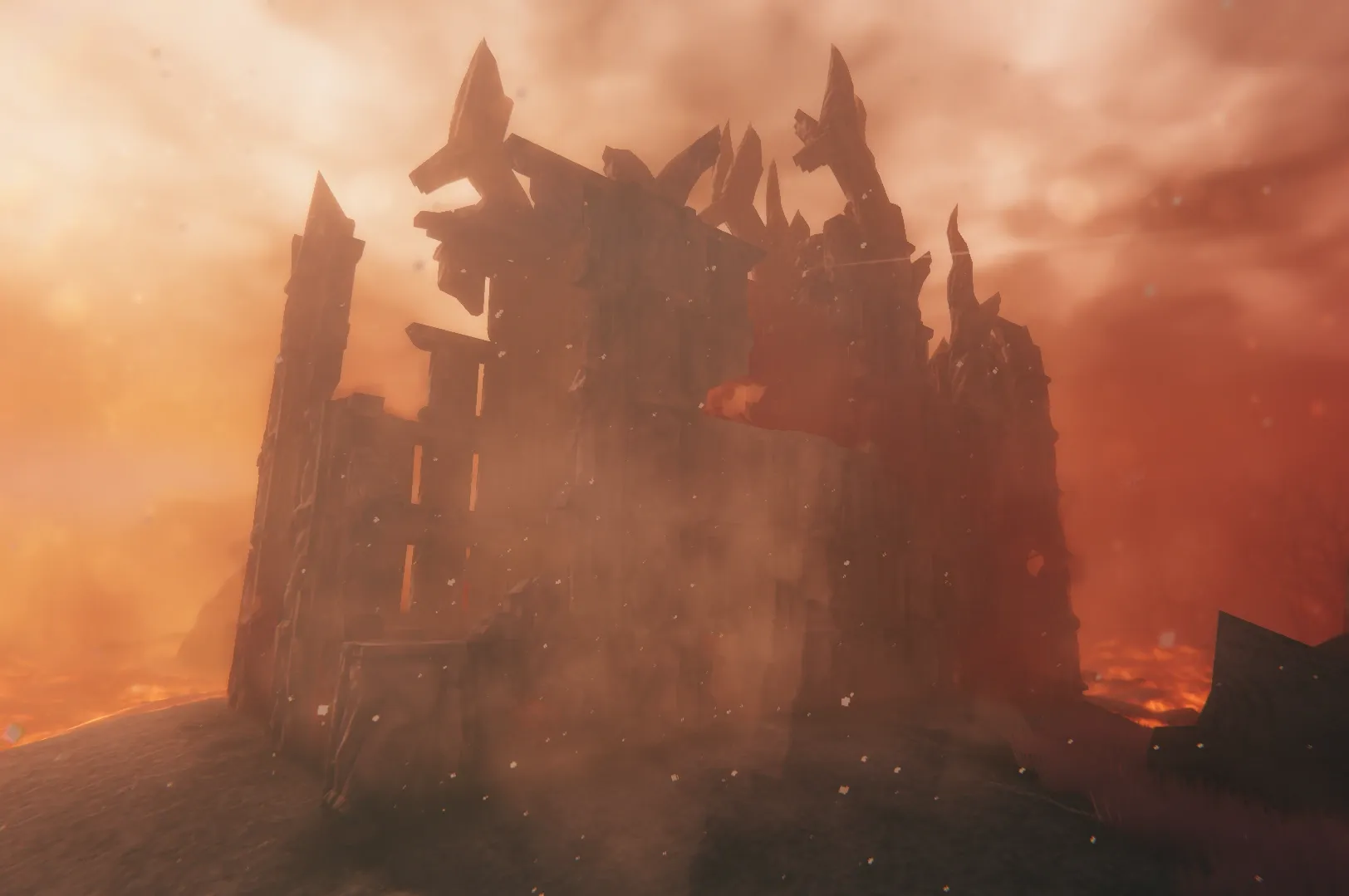
The Kingdom of the Emerald Flame's architecture outlasted its people by centuries.
The finding. "In the forests of the far North, our scouts came across a sleeping boy, sitting naked in the deep snow with his back to a tree. They wrapped him in furs and brought him back to the king, asleep all the while with only his eyelids moving. We named him the Winter Child and we took him to be a good omen. May the gods have mercy on fools."
Two details do enormous work. A boy sitting naked in deep snow in the far north, asleep and unharmed, is already something that does not need warmth to live — the scouts logged it as a curiosity because they had no reason yet to read it as anything else. And that closing line is written from the far end of the story. Whoever carved this knew how it ended and called their own people fools for the welcome.
The change. "It was known throughout the land that the two would often sit together as if in talk, the king coiled about the sleeping child with his face close, straining to catch any murmured words." Coiled: he is a great beast here, not a man, and a later stone — written by a visitor reading these same stones — calls him "a noble beast and a wise king." The child never wakes. Whatever he says he says in his sleep, and the most powerful thing in the kingdom spends its days with its head lowered, close enough to catch it.
Then the government curdles. Justice hardened into wrath, caution into fear, and the stone is precise about the mechanism: "Laws were passed that must be broken and each time the lawbreakers were punished more harshly. Tyranny came in a spiral, like a great storm." Those are not harsh laws. Laws that must be broken are laws written to be impossible to obey, and their only product is offenders. The kingdom had started manufacturing guilt.
The obvious rival explanation is that the coup radicalised him — that a king who comes home to a burnt palace and a dead ward would turn on his people, child or no child. The stones close that door themselves. The change is dated to the meetings, not the fire: "all saw the change in the king" while the boy was still alive and asleep in the palace, years before anyone put a torch to it. The thegns did not create the tyrant. They reacted to one.
The coup. The king left to visit the wizard king of the Fulings, and his own thegns rose against him and torched the palace with the Winter Child inside. "All of us who were alive at that time heard the shriek that sounded for the nine days of the fire and echoed in the city's streets for many weeks longer."
Notice who they did not attack. The king was out of the country and on the road, unguarded, in the company of Yagluth. The wizard king of the Fulings is the ancient sorcerer the Plains stones say Odin tore in half and cast into Valheim to bleed into the earth, and the King of the Emerald Flame was on visiting terms with him, and his thegns had a clear shot at him while he was there. They took a different one. They burned a single target in a single building: the sleeping guest. This was not a regicide, it was an extraction, and by the stone's own accounting it worked — "Those were the last good days any of us knew, before the return of our king."
The answer. He came home to a burnt hall, swore to show his enemies a fire greater than the spark they had kindled, and made good on it: his breath took the city to the ground, and then he brought war to the whole land. Some subjects stayed loyal and many tried to quench his fury; brothers fought brothers, sisters fought sisters, and the Kingdom of the Emerald Flame tore itself apart. Only charred ruins remain, the stone finishes, and inside them not even the dead can rest.
The Fight Is the Crime, Played Back at You
You get into the arena the way you get into most things in the Ashlands, with a pickaxe and a lot of walking: three Bells, each forged from three Bell fragments, taken two to four at a time from the Bell Altar in the central tower of a Charred Fortress. Nine fragments means at least three fortresses, and the vegvisir that marks the arena on your map has a 50% chance of sitting in one of those same towers.
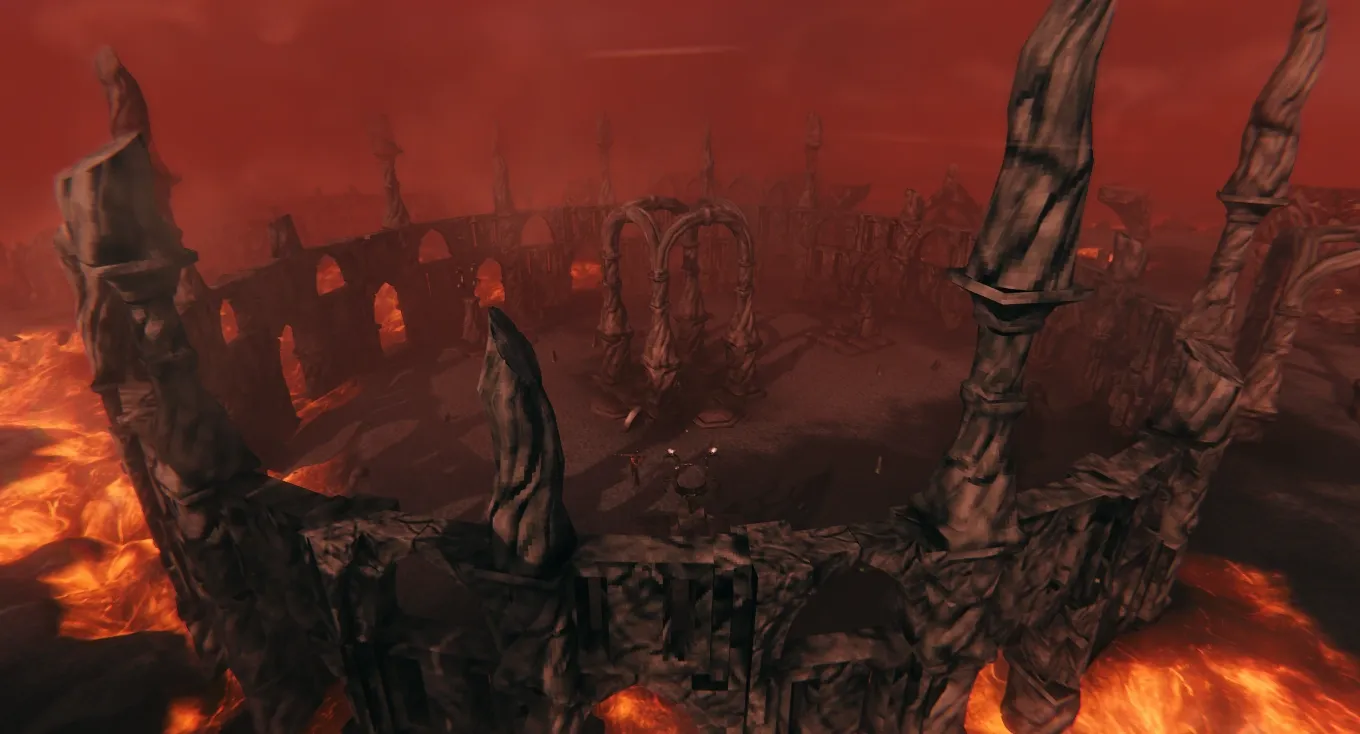
The Emerald Flame arena, where three Bells summon the king who razed the city around it.
What waits there is the argument the game makes with numbers instead of prose.
Fader has 25,000 health solo, another 7,500 for every extra player, and cannot be staggered. He is immune to Fire, immune to Spirit, and resistant to Pierce. His signature attacks deal exactly those two damage types together: the fissure that erupts under your feet does 120 Fire and 80 Spirit, and the meteors and the wall of fire carry the same pairing.
The Charred are the other half of that equation. Every variant of them — Warrior, Marksman, Twitcher, Warlock — is very resistant to Fire and weak to Spirit. The drake fire that made them is not the part that can kill them. The Spirit half is, the half that is death rather than heat. Fader is immune to both, which makes him the only thing in the Ashlands that his own fire cannot reach.
He also keeps making Charred while you fight him. His roar spits eight glowing orbs into the air, each landing as a 50-health Charred Warrior or Charred Marksman, and he goes on roaring after the field is full and the summons stop appearing. Those summons take friendly-fire damage from his own attacks. He is manufacturing burned people out of the air in front of you and then dropping fire on them, exactly as he did to the city, and he has kept doing it for the centuries since anyone was left to write it down.
The stones already told you what you are looking at. A grand drake's pure fire "has the power to give life and quicken the dead earth," but for anyone caught in it the blessing is a curse: they are "killed and quickened at the same time, caught forever between death and life," with flames for flesh and agony in every moment. "They cannot be destroyed, only pitied." The Charred Warriors patrolling those lava fields are that kingdom's citizens, still alight.
Killing Him Doesn't Contain the Fire, It Distributes It
Here is the part of the reward nobody puts on the highlight reel. Defeating Fader disables two world events — "The undead army marches" and "The dead have been summoned." It also unlocks Charred Warriors and Charred Marksmen spawning at night in the Meadows, the Black Forest, the Swamp, the Mountains and the Plains, without stars, up to three at a time, despawning at dawn.
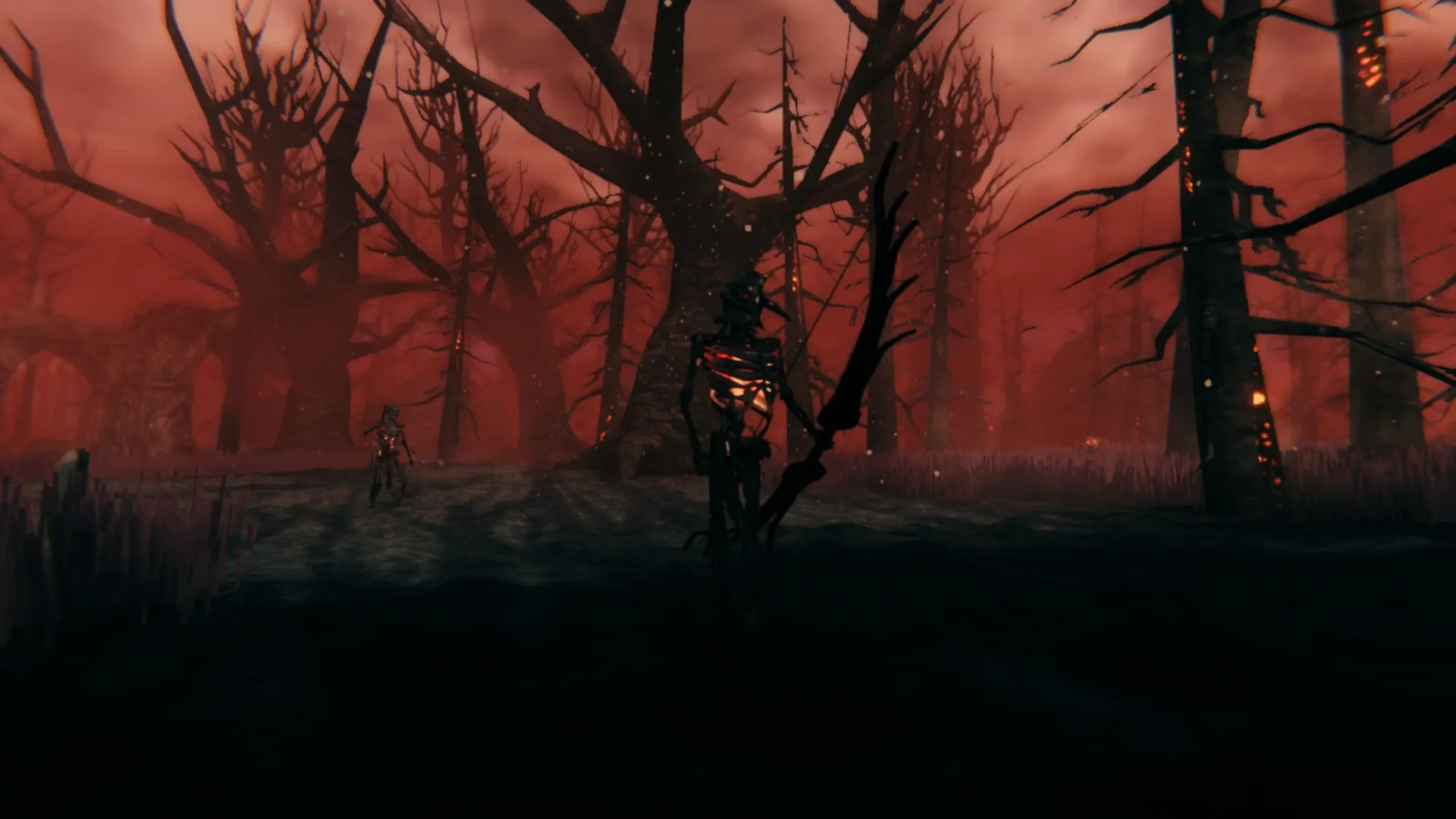
After Fader dies, Charred Marksmen like this one start appearing at night in the Meadows, Black Forest, Swamp, Mountains and Plains.
That is a trade, and it is worth pricing before you make it. You retire two scripted sieges and pick up a permanent nightly presence of the Ashlands' dead in the five biomes where your base, your farm, your portal hub and your longship actually are. The fire leaves the Ashlands the moment the king dies, which is precisely the behaviour the stones recorded the first time: the razing did not stop at the city, it "brought war to all the land."
So spawn-proof before you ring the third bell, not after. Any player-base structure suppresses spawns within a 20-metre radius; a workbench draws the circle for you, and campfires do the same job for a fraction of the wood. Walk your main base, your outposts and your portal stops while the only thing at stake is an evening of placement.
There is a real prize on the other side of it. Mounting Fader's trophy on his stone at the Sacrificial Stones grants a Forsaken power that gives you and nearby allies fire resistance and cuts your stagger meter in half for 300 seconds — the obvious power to walk into a new biome with.
But look at which stone recommends the kill. Of all the Ashlands texts, exactly one is written by an outsider like you: "It is hard to believe the creature who stalks this ruined city was once a noble beast and a wise king. Yet we will not stay our hands on this account. When we kill him, we will count it a mercy." Every other stone in that biome belongs to someone who lived there. The only voice proposing the kill is the one that arrived five minutes ago, that got the history second-hand off these same stones, and that will not be sleeping in the Meadows afterwards to find out what mercy costs.
The One Witness Nobody Ever Found
Count the bodies. The city: razed. The thegns: burned. The loyalists and the rebels: they killed each other. The king: still walking, and nine bell fragments away from you. The Winter Child: nothing.
The record says the palace was torched with him inside, then a shriek that ran for nine days and echoed in the streets for weeks after, then silence. He is never mentioned again — not in the razing stone, not in the outsider's stone about the creature that stalks the ruins, and not in the drake-fire stone, which goes out of its way to explain what happens to everything else caught in that kind of flame. A shriek that lasts nine days is not the sound of something dying in a fire either. It is the sound of something with the leisure to keep making it.
And every property the stones do record argues that a burning building was never going to be enough. He was found sitting naked and unharmed in deep snow, in a forest in the far north, asleep with only his eyelids moving. Fire is all the King of the Emerald Flame ever had. Cold is where the boy came from, and cold is the one thing his hosts never tried on him.
The far north is the Deep North, the last biome, and Iron Gate has dated it: Valheim 1.0 lands on 9 September 2026, the biome and the game's exit from Early Access arriving together. Iron Gate has said nothing about the Winter Child being in it, and this article is not going to pretend otherwise. What the Ashlands stones establish is narrower and much harder to argue with. Valheim's best-documented catastrophe has exactly one participant it never buries, the biome that produced him is the one still sealed, and both of those facts have been sitting in the Ashlands since May 2024 waiting for the map to open.
Kill him when you are ready. Just do it knowing that his fire has never once stayed where it was lit — not in the palace, not in the city, and not in the Ashlands.