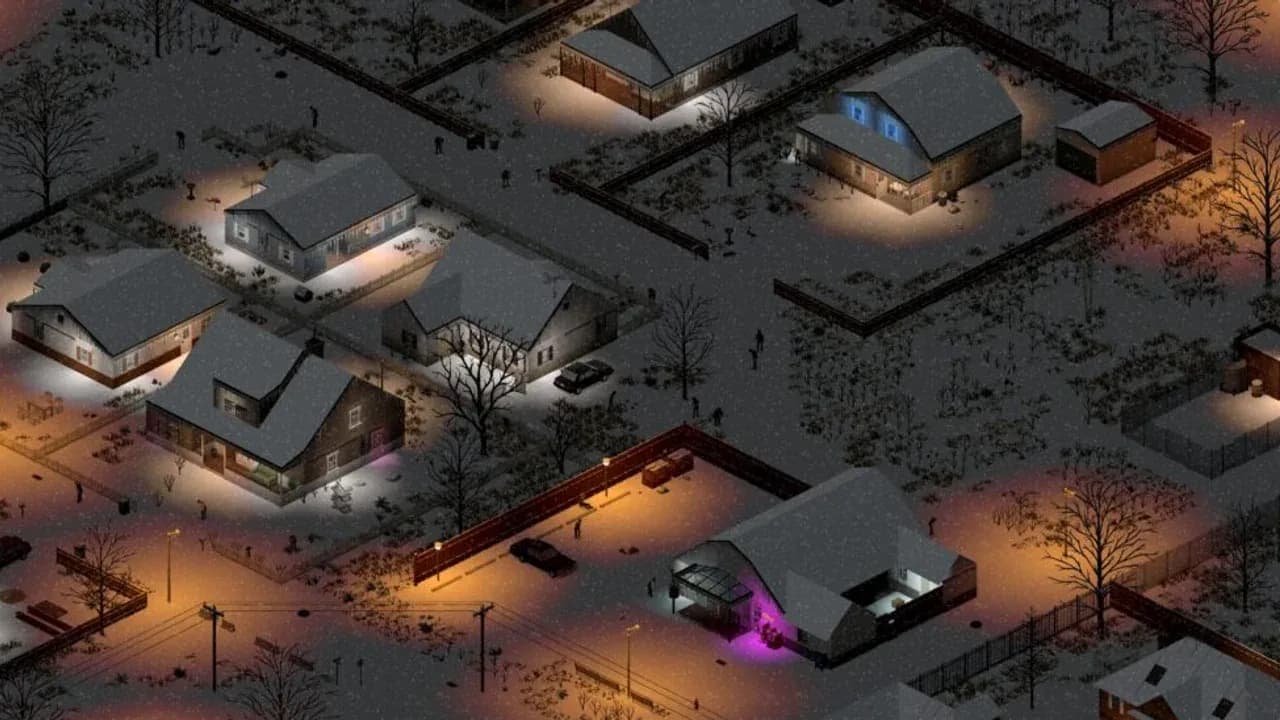
The useful question after a Project Zomboid power cut is not “which heat source ranks first?” It is “which source still solves my current problem?” An oven can be the fastest, hottest option while the grid is alive, but that advantage disappears when the mains go down unless a generator is carrying the circuit. A propane barbecue, charcoal barbecue, old stove, fireplace, or campfire trades that convenience for fuel, placement, and fire-behavior decisions.
This guide compares the complete vanilla Build 42 source set—oven, microwave, propane and charcoal barbecues, old stove, fireplace, and campfire—against the axes that matter in a real base: fuel sustainability, indoor containment, fire spread, qualitative heat ceiling, portability, and tainted-water work. Stable Build 42 is 42.20, but several detailed community references still describe earlier 42 revisions, so exact temperatures, burn times, and some water interactions stay qualified. The final choice is organized by base phase and priority rather than forced into one universal ranking.
The timing matters. The Automated Emergency Broadcast System gives advance warning of the approaching power loss, so the last powered window is when you should cook, preserve perishables, gather fuel, and decide whether your post-cutoff plan is a contained appliance, a portable grill, a wood-fueled fixture, or an emergency campfire. For water, “can cook” is not the same as “purifies every container”: heat a supported container and confirm that the tainted icon disappears before you drink it.
After the Power Cuts, the Source Taxonomy Matters More Than a Single Ranking
The comparison starts with a version boundary. This article targets stable Build 42.20, but the most detailed heat-source pages and community guides were written against earlier 42 revisions, including 42.19, 42.13.x, 42.5.1, 42.2.0 and Build 41. Treat their durable categories as useful evidence, not as permission to copy every old number or behavior into a 42.20 save.
“Every heat source” therefore means seven practical classes: the oven, microwave, propane barbecue, charcoal barbecue, old stove (the Build 42 name for the antique oven), fireplace and campfire. They split into two power states. The oven and microwave are mains appliances; after the cutoff they remain options only when a generator is powering the circuit. Propane and charcoal barbecues, old stoves, fireplaces and campfires are the non-electric candidates that matter when the grid itself is no longer available.
The AEBS gives you a useful last window to make that distinction actionable. “Power fluctuations detected” arrives two days before the grid failure, followed by “Systems failing. Network compromised.” one day before. Use those remaining powered days for fuel, car batteries and perishable-food triage, then secure the source category your planned base can actually support. A generator-backed oven extends the powered state; it does not make the oven independent of electricity. The AEBS does not announce the water shutoff, so heat planning and water planning cannot be treated as the same countdown.
No single ranking can settle those tradeoffs. Heat ceiling, fuel sustainability, indoor containment, fire spread, portability and a verified path for tainted water are separate tests; a source can win rapid cooking while powered and lose once fuel, placement or water-container behavior becomes the limit. The comparison therefore uses use-case decisions: first separate powered heat from non-electric heat, then compare the surviving sources by the limit that matters to your base.
Ovens and Microwaves Deliver the Most Controlled Heat Until the Grid Is Gone
During the last powered window, the oven is the baseline every other source has to trade against. It uses electricity only, but the comparative heat-source evidence places it at the highest qualitative maximum temperature and describes it as the fastest cooker. Its lower setting is useful for defrosting without cooking the food, and its alarm helps prevent a meal from being forgotten. Heat also remains after the oven is switched off. That combination makes it the best powered choice when you need to process food quickly, provided you stay nearby enough to deal with food that burns: a burning item can create a fire risk.

The microwave is still a high-control appliance, but it solves a narrower problem. It also uses electricity only and is described as reaching a higher qualitative maximum than most sources, though not the oven’s top tier in the supplied comparison. Its temperature control, door-open shutoff, alarm and low encumbrance make it convenient for small, deliberate jobs. A microwave-safe bottle or mug can serve as the controlled small-container path while the grid is on; metal can cause a fire, and burned food can do the same. Opening the door stops the microwave, which gives you a simple way to interrupt a cycle before a mistake becomes a hazard.
Those heat rankings are qualitative, not a hidden temperature table. No public source in the research packet supplies authoritative per-source Build 42.20 ceiling values. The official IsoHeatSource documentation exposes temperature and radius as engine fields, but it does not publish the values assigned to the oven, microwave or other sources. You can therefore say that the oven has the strongest supported qualitative ceiling, that the microwave sits above most alternatives, and that the other source classes occupy the lower or slower tier; you cannot honestly attach a precise 42.20 number to any of them.
In practice, use the oven for rapid food cooking and the microwave for compatible, controlled small-container heating while mains power—or a generator carrying the circuit—is available. Neither appliance is an independent post-cutoff solution. Once that powered state ends, the advantage changes from maximum controlled heat to finding a finite or burnable fuel source you can keep supplying.
Propane and Charcoal Barbecues Are the Practical Non-Electric Middle Ground
Propane is the easier non-electric workflow when you already have the right tank. The barbecue uses an installed propane tank rather than mains power, and the specialist Build 42 workflow does not require a lighter or matches to start it. The supplied English sources report the tank at 10 encumbrance, but that figure is patch-sensitive and conflicts with the Spanish locale; treat it as a source-reported value, not a confirmed stable 42.20 mechanic. The important limit is not a promised number of meals: the appliance drains the tank at a variable rate, so its runtime depends on how the barbecue is being used. Once that tank is empty, the convenience ends with it.
The charcoal barbecue is less dependent on one particular fuel item. Build 42’s “Destroy for Fuel” interaction lets it accept charcoal, wood and other burnable inputs, giving you more ways to turn a mixed stockpile into cooking time. That makes it practical when you can gather burnables but do not have a propane tank or a rare old stove. It is still a fuel-fed appliance, though: you need an accepted input available, and the current fuel line is the useful measure of what remains.
Do not turn the conflicting charcoal figures into a schedule. One reference displays charcoal as 30 minutes per use, while the Build 42.19 BBQ guide gives an approximate formula of minutes ≈ fuel weight × 60 × ratio; with charcoal weight 0.8 and a ratio of 2.0, that works out to roughly 96 minutes. Those figures come from different source versions and presentations, so they are not interchangeable guarantees for a stable 42.20 save. Read the live fuel line after adding fuel instead of copying either number into a stockpile plan.
The choice is clearest in the first days after the cutoff. If you have a propane tank and want the least complicated non-electric setup, use the propane barbecue and monitor its finite reserve. If you have charcoal, wood or other accepted burnables but no rare old stove, the charcoal barbecue gives that broader stockpile a practical outlet; its advantage is fuel flexibility, not a guaranteed burn duration. Both options cover non-electric cooking, but neither should be treated as a universal answer for runtime.
Choose propane when installed-tank convenience matters and the remaining supply is finite but visible. Choose charcoal when your base can support a mixed or replenishable burnable stockpile, and let the current in-game fuel line—not an old duration table—decide how much time you actually have. If dependable wood is available and you want a lasting indoor source rather than a portable grill, the next comparison is the old stove versus the fireplace.
Old Stoves and Fireplaces Are the Long-Term Indoor Wood-Fuel Candidates
Once you have dependable wood and a settled indoor base, the choice is no longer between a finite tank and a portable grill. The old stove and fireplace are the long-term non-electric candidates in the supplied heat-source taxonomy: both accept fuel, provide warmth and light, and keep serving the base after the mains have disappeared. Their important difference is operational. The old stove is a movable appliance; the fireplace is a permanent part of the room.
The old stove is Build 42's name for the antique oven. The supplied old-stove page reports encumbrance 40 and capacity 15, but it is only updated through B42.2.0 and asks for current B42 verification, so treat those as patch-sensitive source-reported values rather than confirmed stable 42.20 mechanics. It takes wood or paper through the Destroy for Fuel interaction before you ignite it. That makes it useful when you are still deciding where the base's cooking and warmth station should live. It also makes the order of operations matter: moving the stove can destroy its remaining fuel. Reposition it while it is empty, settle on the room and access route, then fuel it only after you are confident it belongs there.
The fireplace removes that transport problem by removing transport altogether. It is immovable, non-electric and fuel-fed, so choosing one is partly a location decision: a fireplace in the right room can anchor a long-term base, while one in a poor room cannot be carried to a better wall later. The comparative taxonomy describes its fire as contained and non-spreading while it supplies warmth and light. The old stove is the more flexible option before placement is settled; the fireplace is the more permanent option once the building already gives you the room you want.
There is a second qualification around the old stove. Build 42 community reports describe fuel-handling bugs and fuel loss when the appliance is picked up. That history is a reason to preserve a live-save check and avoid moving a fueled stove, not evidence that every old stove fails or that the fireplace has identical behavior. Treat the appliance's current fuel state as something to inspect after setup, especially when a patch or save version differs from the references behind these reports.
For a settled base with a suitable fireplace, keep the fixed appliance where it is useful and build the room around that decision. If no fireplace is available, secure an old stove only after weighing the source-reported inventory values, available wood supply and the risk of losing fuel if you move it. In the supplied taxonomy, both are conditional long-term indoor wood-fuel candidates: the old stove offers repositioning flexibility before fueling, while the fireplace fits a building whose layout is already right.
Campfires Buy Portability by Accepting Open-Fire Risk
When you have no appliance to salvage—or need heat away from the base—a campfire has the lowest acquisition barrier of the remaining options. Build it from three stones, add fuel and an ignition method, and it provides warmth and light without electricity. You can extinguish it instantly, which makes it useful as a first-night fallback or a temporary stop on a remote supply run rather than a permanent fixture you must keep supplied.
Picture reaching a remote building with food but no barbecue, old stove or fireplace. A three-stone fire can give you a working cooking and warmth point immediately, but the setup still depends on burnable fuel and a way to light it. Rain can extinguish the fire, so check the weather before treating it as your only emergency plan. Place it as far as practical from flammable flooring and nearby objects, especially when the fire is being used beside a temporary shelter.
Do not turn that portability into a universal indoor rule. The supplied English PZwiki page describes indoor campfire placement as possible but warns that it can spread to adjacent flammable floors; the Spanish page says a campfire cannot be used indoors. Both references are older than stable Build 42.20, so the current behavior remains unresolved here. Verify it in the target save and settings before putting one inside a base, and assume the placement is hazardous until that check is complete.
Use the campfire when portability matters more than containment.
Indoor Safety Depends on Containment, Reachable Flammables and Placement
The answer begins with what a fire can reach. In Project Zomboid, fire spreads when spreadable material is available, and it can reach structures, survivors and zombies. A wooden floor or other wooden structure is more likely to become ash than brick, stone or metal; those harder materials can catch and then go out. Rain and fog can also influence fire behavior. That makes “indoors” a placement decision, not a guarantee that the room itself will protect you.
The supplied heat-source comparison gives several appliances a useful in-game advantage: propane and charcoal barbecues, old stoves and fireplaces are described as indoor-safe or as not spreading fire when food burns. Read that wording narrowly. Those pages carry older or mixed Build 42 revision signals, so the descriptions are qualitative gameplay evidence rather than a universal 42.20 promise. They also do not turn a game mechanic into real-world carbon-monoxide or ventilation advice; “safe indoors” here means the reported behavior of the appliance in the game.
The practical contrast is a contained appliance in a fire-sensitive room versus a campfire beside flammable flooring. The supplied references describe BBQs, old stoves and fireplaces as more contained or non-spreading when food burns, but those labels are patch-stale qualitative evidence, not a current 42.20 safety ranking. In a wooden base, make the decision gate the current-save behavior and the removal of reachable flammables. A campfire still exposes the room to an open flame: keep spreadable flooring, furniture and nearby objects as far away as the building allows, and do not treat the fire's footprint as harmless just because the player is standing indoors. The relevant question is not only whether the source cooks, but whether a failure has something reachable to consume.
This is also why the source pages should not be flattened into a permanent safety ranking. Patch state, fire-related settings and the surrounding clutter can change how much confidence you should place in an old “non-spreading” label, while weather conditions such as rain or fog can influence fire behavior. If the base is fire-sensitive, prefer the most contained available source and remove reachable flammables before lighting it. Keep an open fire for situations where its portability matters, and place it away from spreadable material rather than relying on a categorical indoor-safety label.
Boiling Tainted Water Is a Source-and-Container Test, Not a Blanket Feature
Cooking food does not prove that a heat source has made tainted water safe. In Build 42, water from a rain collector or other tainted source must be heated in a suitable container until the tainted icon disappears. If the icon is still present, treat the water as unsafe, even if the appliance has successfully cooked something else. Water Purification Tablets are the separate fallback when the heat path is unavailable or fails.
The container determines which heat path you can test. The near-current Build 42.19 guide used in the research lists cooking pots and kettles at 1.5 L and a metal bucket at 10 L for oven, stove and campfire routes. Its microwave examples are smaller and more restricted: a water bottle holds 1 L and a mug 0.2 L. Those figures describe the guide's version and source paths, not a promise that every container works in every appliance. Use a container the current game accepts for that source, then check the water itself.
The microwave has the clearest restriction. Use a microwave-safe bottle or mug; never put metal cookware in it, because metal can cause a fire. On the supported paths in the near-current guide, some metal containers are listed for an oven, old stove or campfire. Do not generalize that positive result to a propane barbecue, charcoal barbecue or fireplace: each unverified source/container pairing remains conditional. The research does not contain an authoritative table proving that every one of those sources purifies every listed container. “Can cook” and “can purify” must remain separate claims.
Build 42's history gives you a reason to test rather than trust a list. In an early 42.0 report, a saucepan containing tainted water failed to purify on a fueled old stove while other containers reportedly succeeded. Community reproductions also describe campfire, BBQ, pot and bucket combinations that leave the taint in place, with conflicting reports about whether waiting or changing the setup fixes it. One reported workaround is to add the container after an old stove or charcoal grill is already lit; propane BBQ and campfire were not confirmed by that report. Treat that sequence as troubleshooting, not as a universal mechanic.
For tainted rainwater after the shutoff, use this pass/fail check:
- Fill a supported container with the tainted water.
- Put it on the matching source—or use a microwave-safe bottle or mug for the microwave—and start the heat. Do not use metal in the microwave.
- Wait, then inspect the item for the tainted icon. Cooking activity or a running fire is not enough; the icon must disappear.
- If it remains, do not drink or cook with that water. Try another supported container or the cautious source/container-order workaround reported for old stoves and charcoal grills, or use Water Purification Tablets.
Plumbing does not remove this check. A plumbed sink can route water from a collector after the shutoff, but the related Build 42 guidance still warns that its tainted status is disputed. Draw a bottle and inspect the icon instead of assuming that the sink has purified the reservoir.
The useful result is a verified pair: this source, with this container, in this save, cleared the taint. Until that test succeeds, keep the water conditional and keep tablets or a known-good container path available. With that boundary established, the remaining choice is which source fits the base phase and the problem you need it to solve.
Choose the Heat Source That Matches the Base Phase, Not a Universal Ranking
The right choice changes as the base moves from powered convenience to post-cutoff routine. There is no single winner because the source that cooks fastest is not automatically the one that lasts longest, travels best, contains fire most comfortably or gives you a verified water path. Use the phase and priority that describe your base now:
| Base phase or priority | Best-fit source | Decision to make |
|---|---|---|
| Grid still on, rapid food cooking | Oven | Use it when speed and the strongest supported qualitative heat ceiling matter. It is still a powered source, so treat the cutoff—or the end of generator power—as the point when this choice expires. |
| Grid still on, controlled small-container heating | Microwave | Use a compatible microwave-safe bottle or mug for a small water job, then check that the tainted icon disappears. This is a controlled powered workflow, not a reason to put metal in the microwave or to assume every container follows the same path. |
| First days after the cutoff, no settled wood appliance | Propane BBQ, charcoal BBQ or campfire | Pick the option your available fuel and placement can support. Propane favors a survivor who already has a tank; charcoal favors a mixed burnable stockpile; a campfire covers a portable emergency need. Their fuel, fire and water behavior are different, so the first workable source is not automatically the long-term answer. |
| Finite fuel with the least complicated non-electric workflow | Propane BBQ | Choose it when installed-tank convenience matters and you accept a finite reserve. Let the appliance's live fuel line determine the remaining time rather than planning around a universal meal count. |
| Charcoal, wood or other burnables already stockpiled | Charcoal BBQ | Choose it when the base can keep feeding a broader burnable-fuel supply. Read the current in-game fuel line; conflicting duration figures are not a reliable schedule for the current save. |
| Settled indoor base with dependable wood | Old stove or fireplace | Favor the old stove when repositioning flexibility matters before it is fueled; favor a fireplace when the building already has the right permanent room. Keep the old stove's reported fuel-handling problems and the fireplace's immovability in the decision. |
| Portable or emergency heat away from the base | Campfire | Use the craftable fallback when carrying or finding an appliance is not practical. Account for ignition and rain, and keep the open fire away from spreadable flooring and nearby objects. |
| Fire-sensitive base | The most contained available BBQ, old stove or fireplace | Verify the current-save behavior of the available BBQ, old stove or fireplace, then remove reachable flammables. Keep a campfire farther from spreadable material rather than relying on an absolute “safe indoors” label. |
| Tainted rainwater | A verified source-and-container pair | Heat a supported container and rely on the result only after the tainted icon disappears. If it remains, treat the water as unsafe, try a cautious documented workaround or use Water Purification Tablets. |
Choose the source that solves the base's present problem while its limitation is still manageable. Make the water test before you commit the base to that source, and keep the fallback ready whenever the exact source-and-container pair has not cleared the icon.